



The Social Security Fund (SSF) is Nepal's government-backed social protection program that provides financial security and welfare benefits to eligible contributors. One of its most valuable benefits is medical insurance coverage, which helps reduce healthcare costs for employees enrolled in the system.
SSF medical insurance supports contributors by reimbursing eligible healthcare expenses incurred during medical treatment. The program helps workers access healthcare services without bearing the full financial burden of hospitalization, consultations, medicines, and diagnostic procedures.
Individuals who regularly contribute to SSF through their employers and meet the eligibility requirements can generally apply for medical insurance reimbursement under the scheme.
In this blog
What Is SSF Medical Insurance in Nepal?
SSF Medical Insurance in Nepal is a healthcare benefit provided by the Social Security Fund (SSF) that reimburses eligible medical expenses incurred by registered contributors. It is designed to reduce the financial burden of healthcare costs by covering approved treatments, hospital services, diagnostic tests, and prescription medicines according to SSF guidelines.
The coverage includes various medical expenses such as doctor consultations, hospitalization costs, laboratory tests, emergency treatment, and prescribed medications. Eligible contributors can claim reimbursement up to the annual limits set by SSF, allowing them to access essential healthcare services while receiving financial protection through Nepal's social security system.
Who Is Eligible to Claim Medical Insurance from SSF?
Eligible contributors who meet SSF participation requirements can claim medical insurance benefits. Applicants must satisfy the fund's contribution and enrollment conditions before reimbursement can be approved.
Common eligibility requirements include:
- Employees enrolled in the SSF program
- Active contributors meeting required contribution periods
- Individuals whose employers regularly deposit SSF contributions
- Eligible dependents if covered under applicable SSF provisions
- Contributors complying with claim submission requirements.
Documents Required to Claim Medical Insurance from SSF in Nepal
Proper documentation is one of the most important parts of the claim process. Incomplete paperwork is among the most common reasons claims face delays or rejection.
Generally required documents include:
- SSF membership information
- Medical bills and original invoices
- Doctor prescriptions
- Medical reports and test results
- Hospital discharge summary
- Claim application form
- Citizenship or identification documents if required
- Bank account details for reimbursement
- Supporting treatment records
Keeping copies of all documents before submission is a good practice for future reference and verification.
How to Claim Medical Insurance from SSF in Nepal
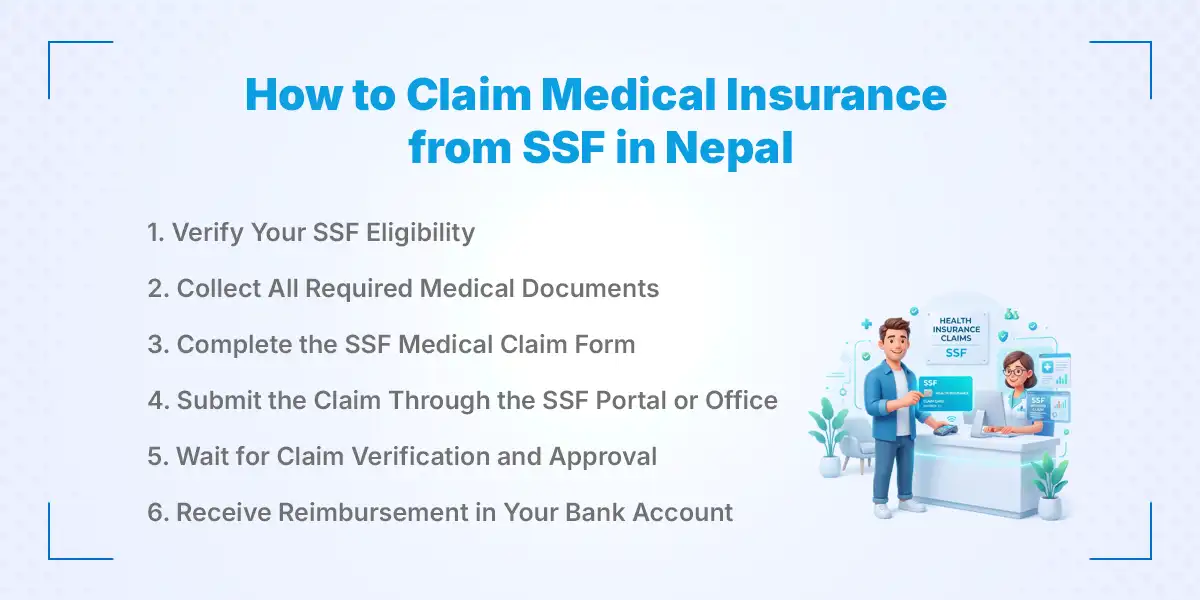
To claim medical insurance from SSF in Nepal, eligible contributors must collect the required medical documents, complete the claim application, and submit it through the SSF portal or designated SSF office for verification and reimbursement. Once the claim is approved, the eligible reimbursement amount is transferred directly to the contributor's registered bank account.
The process begins by confirming your SSF eligibility and ensuring that your employer has regularly deposited SSF contributions. After receiving medical treatment, gather all supporting documents, including medical bills, prescriptions, diagnostic reports, hospital discharge summaries, and bank account details. Submit the completed claim form along with the required documents, monitor the claim status during verification, and wait for approval and reimbursement from the Social Security Fund.
1. Verify Your SSF Eligibility
Before preparing your claim, confirm that you meet all SSF eligibility requirements. Review your contribution status and ensure your employer has regularly deposited contributions into the fund. Check whether the medical treatment falls under approved coverage categories. Verifying eligibility early helps avoid unnecessary claim rejection and processing delays.
2. Collect All Required Medical Documents
Gather every document related to your treatment before starting the application process. Ensure medical bills, prescriptions, reports, and discharge summaries are complete and clearly readable. Organize documents according to treatment dates and expense categories for easier verification. Accurate documentation strengthens your claim and reduces the likelihood of additional information requests.
3. Complete the SSF Medical Claim Form
Fill out the official claim form using accurate personal and medical information. Double-check contributor details, treatment dates, hospital information, and reimbursement amounts before submission. Ensure all mandatory sections are completed to avoid administrative delays. Any inconsistency between the form and supporting documents may result in further review.
4. Submit the Claim Through the SSF Portal or Office
Submit your completed application through the designated SSF platform or authorized office. Upload digital copies if applying online and ensure files meet required quality standards. Keep acknowledgment receipts or submission confirmations for future tracking. Proper submission ensures your claim enters the verification process without complications.
5. Wait for Claim Verification and Approval
SSF reviews submitted documents to confirm eligibility and validate medical expenses. Verification may involve checking treatment records, contribution history, and supporting evidence. Additional information may be requested if documents are incomplete or unclear. Responding promptly to requests can help accelerate approval.
6. Receive Reimbursement in Your Bank Account
After approval, eligible reimbursement amounts are transferred to the bank account provided during application. Processing timelines can vary depending on claim volume and verification requirements. Monitor your account and claim status regularly during this stage. Retain all records even after reimbursement has been completed.
Online Process to Claim SSF Medical Insurance
The SSF online claim system allows contributors to submit applications without visiting an office. Digital submission improves convenience and helps applicants track claim progress more efficiently.
The online process generally includes:
- Logging into the SSF portal
- Accessing medical claim services
- Completing the digital application form
- Uploading supporting documents
- Reviewing submission details
- Tracking claim status online
Common online issues include unreadable document uploads, incomplete applications, incorrect contributor information, and technical upload errors.
Medical Expenses Covered Under SSF Nepal
SSF medical insurance generally covers approved healthcare expenses related to diagnosis and treatment. Coverage helps contributors reduce out-of-pocket medical costs and receive financial support when healthcare needs arise.
Covered expenses may include:
- Hospitalization costs
- Doctor consultation fees
- Diagnostic and laboratory tests
- Prescription medicines
- Emergency medical treatment
- Approved medical procedures
- Treatment-related healthcare services
Contributors should verify current coverage guidelines before filing a claim because policies may be updated over time.
Medical Expenses Not Covered by SSF
Not every healthcare expense qualifies for reimbursement under SSF. Understanding exclusions helps contributors avoid submitting ineligible claims.
Common exclusions may include:
- Non-approved treatments
- Cosmetic or elective procedures
- Expenses lacking supporting documentation
- Unauthorized medical services
- Claims submitted outside permitted timelines
- Treatments excluded under SSF guidelines
Reviewing official policy exclusions before applying can improve claim accuracy and approval rates.
How Long Does SSF Take to Process Medical Insurance Claims?
SSF medical insurance claim processing times vary depending on claim complexity and document verification requirements. Complete and accurate submissions generally move through the system more efficiently.
Factors affecting processing speed include:
- Document completeness
- Accuracy of submitted information
- Claim volume at the time of submission
- Verification requirements
- Additional information requests
Applicants can typically monitor progress through available SSF claim tracking systems or by contacting relevant support channels.
Benefits of Claiming Medical Insurance Through SSF Nepal
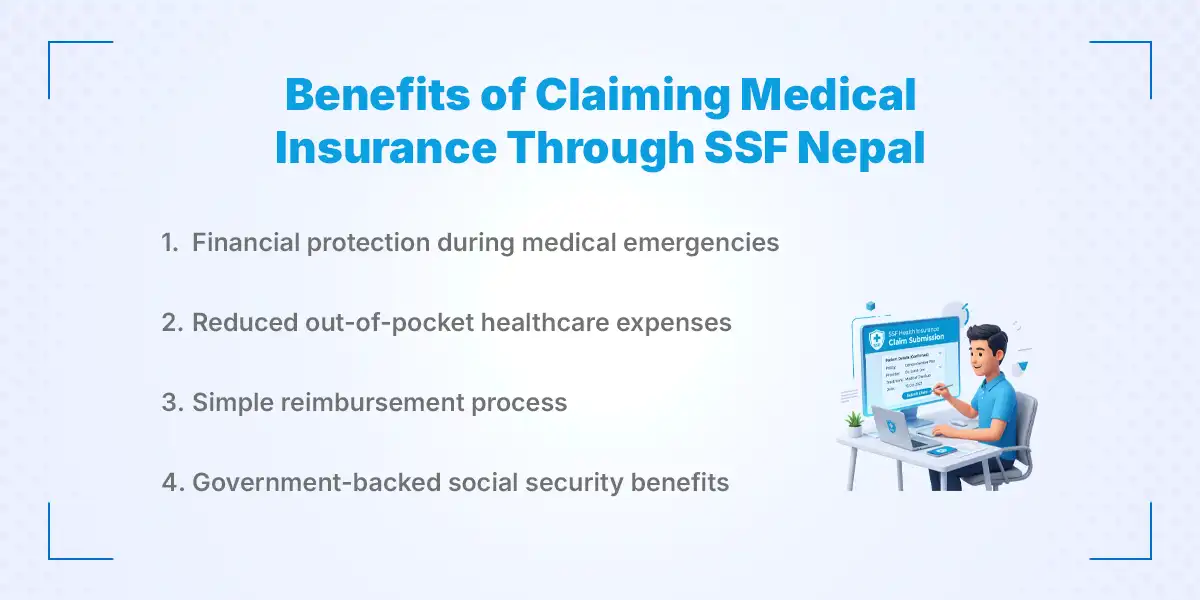
Claiming medical insurance through Nepal's Social Security Fund (SSF) helps contributors reduce healthcare expenses and receive financial support during medical emergencies. The program provides reimbursement for eligible medical costs, making healthcare more affordable and accessible for enrolled employees.
1. Financial Protection During Medical Emergencies
Medical emergencies can result in significant healthcare expenses that place financial pressure on individuals and families. SSF medical insurance helps cover eligible treatment costs, reducing the financial burden during unexpected health situations.
2. Reduced Out-of-Pocket Healthcare Expenses
SSF medical insurance reimburses approved medical expenses such as consultations, diagnostic tests, hospitalization, and prescribed medicines. This allows contributors to spend less from their personal savings when receiving necessary medical treatment.
3. Simple Reimbursement Process
The SSF claim process is designed to be straightforward when contributors submit the required documents correctly. By providing medical bills, prescriptions, and claim forms, eligible members can apply for reimbursement through the SSF system and track their claim status.
4. Government-Backed Social Security Benefits
As a government-supported program, SSF provides contributors with reliable social security protection and healthcare benefits. This support enhances financial security and ensures workers have access to medical assistance when needed.
SSF Medical Insurance Claim vs Private Health Insurance in Nepal
Both SSF medical insurance and private health insurance provide healthcare-related financial protection, but they differ in coverage structure, cost, and claim procedures.
| Feature | SSF Medical Insurance | Private Health Insurance |
|---|---|---|
| Funding Source | Social Security Contributions | Individual Premiums |
| Eligibility | Eligible SSF Contributors | Policyholders |
| Coverage Terms | Government Program Rules | Insurance Policy Terms |
| Claim Process | SSF Reimbursement Procedure | Insurer Claim Procedure |
| Cost Structure | Contribution-Based | Premium-Based |
| Administration | Government System | Private Insurance Company |
Conclusion
Successfully claiming medical insurance from SSF in Nepal depends on understanding eligibility requirements, preparing complete documentation, and following the correct submission process. Contributors who maintain accurate records and submit claims promptly generally experience smoother reimbursement outcomes.
The most important action is to verify eligibility, keep organized medical records, and submit complete applications within required timelines. If you are looking for career opportunities, employment guidance, and professional support in Nepal, Kumarijob can help connect job seekers with employers while providing valuable career resources for long-term professional growth.
Frequently Asked Questions
Submit your comments

Get Our App On



How to Become an Auditor in Nepal
VIEW DETAILS
What Is the Salary of a Spa Therapist in Nepal?
VIEW DETAILS
How to Start a Career as a Game Developer in Nepal
VIEW DETAILS
What Is the Salary of a Brand Manager in Nepal?
VIEW DETAILS


Loading Comments...