


Motion design has become an important part of digital marketing, advertising, social media, product design, and online content. As businesses in Nepal invest more in digital content, the need for designers who can combine graphic design with animation is also growing.
If you are interested in becoming a motion designer in Nepal, you do not necessarily need a specific degree or advanced coding knowledge. You need a strong understanding of design and animation, practical software skills, a good portfolio, and the ability to turn creative ideas into useful visual content.
This guide explains how to become a motion designer in Nepal, what skills and software you need, where you can find jobs, and what career opportunities you can explore.
In this blog
What Is a Motion Designer?
A motion designer is a creative professional who creates animated visual content using graphic design, typography, illustrations, shapes, images, video, and sound. Their work can appear in advertisements, social media videos, product demonstrations, presentations, websites, mobile applications, and brand campaigns.
Motion design is related to animation, but the two are not exactly the same. Traditional animation often focuses on character movement and storytelling, while motion design typically focuses on moving graphic elements to communicate ideas visually.
For example, a motion designer may animate a company logo, create an explainer video, produce a social media advertisement, or design an animated interface element.
What Does a Motion Designer Do?
A motion designer creates animated visual content for different digital and marketing needs. Their work can include explainer videos, social media advertisements, animated interfaces, and branded content, often in collaboration with designers, marketers, and clients.
1. Create Motion Graphics and Explainer Videos
Motion designers create explainer videos that use animation, text, illustrations, and other visual elements to explain products, services, or concepts. These videos can help businesses communicate complex ideas in a simple and engaging format.
2. Design Social Media and Advertising Content
Motion designers create short animated content for platforms such as Facebook, Instagram, and TikTok. They may turn existing brand visuals into animated advertisements, promotional videos, or social media content.
3. Animate UI and Digital Products
Motion designers can create animations for digital products, including button interactions, loading states, onboarding transitions, and other interface elements. These animations can make digital experiences more engaging and visually polished.
4. Work With Designers, Marketers, and Clients
Motion designers often work with other creative and marketing professionals throughout a project. They may receive design assets from graphic designers, follow messaging from marketers, and revise animations based on client feedback.
Motion Designer vs Graphic Designer: What's the Difference?
A graphic designer creates static visual content such as posters, logos, and layouts, while a motion designer creates animated visuals by adding movement, timing, and transitions. Both use design principles, but motion design adds animation and time-based storytelling.
| Aspect | Graphic Designer | Motion Designer |
|---|---|---|
| Output | Static images and layouts | Animated videos and moving graphics |
| Core skills | Composition, typography, color | Animation, timing, motion, editing |
| Common tools | Photoshop, Illustrator | After Effects, Premiere Pro |
| Typical deliverables | Posters, banners, brochures | Explainer videos, animated ads, UI motion |
Motion designers often use graphic design principles as the foundation for their work, but they also need to understand movement, timing, transitions, and animation. At the beginning of your career, do not limit yourself to motion design alone. Explore other creative jobs in Nepal to discover related opportunities and gain broader experience in the creative industry.
What Skills Do You Need to Become a Motion Designer in Nepal?
To become a motion designer, you need a combination of design fundamentals, animation principles, visual storytelling, and communication skills. Learning software is important, but strong motion design also depends on how effectively you use these skills to communicate an idea.
1. Design Fundamentals
Composition, color theory, typography, and layout provide the foundation for motion design. These skills help you create visual content that remains clear, balanced, and visually appealing when elements are animated.
2. Animation Principles
Motion designers need to understand concepts such as timing, easing, anticipation, and squash and stretch. Applying these principles helps animations feel natural and communicate movement effectively.
3. Storytelling and Visual Communication
Motion designers often use animation to explain products, services, or complex ideas. The ability to organize information into a clear visual story can be just as important as knowing how to use animation software.
4. Communication and Revision Skills
Motion designers often work with clients, designers, marketers, and other team members. Understanding feedback, asking clear questions, and making revisions accurately can help keep projects on track.
If you have built enough confidence and skills as a beginner, start applying for internship opportunities in Nepal, where you may find positions such as motion designer.
How to Become a Motion Designer in Nepal: A Step-by-Step Path
Becoming a motion designer requires a combination of design knowledge, animation skills, software practice, and portfolio development. You can build these skills gradually by following a structured learning path.
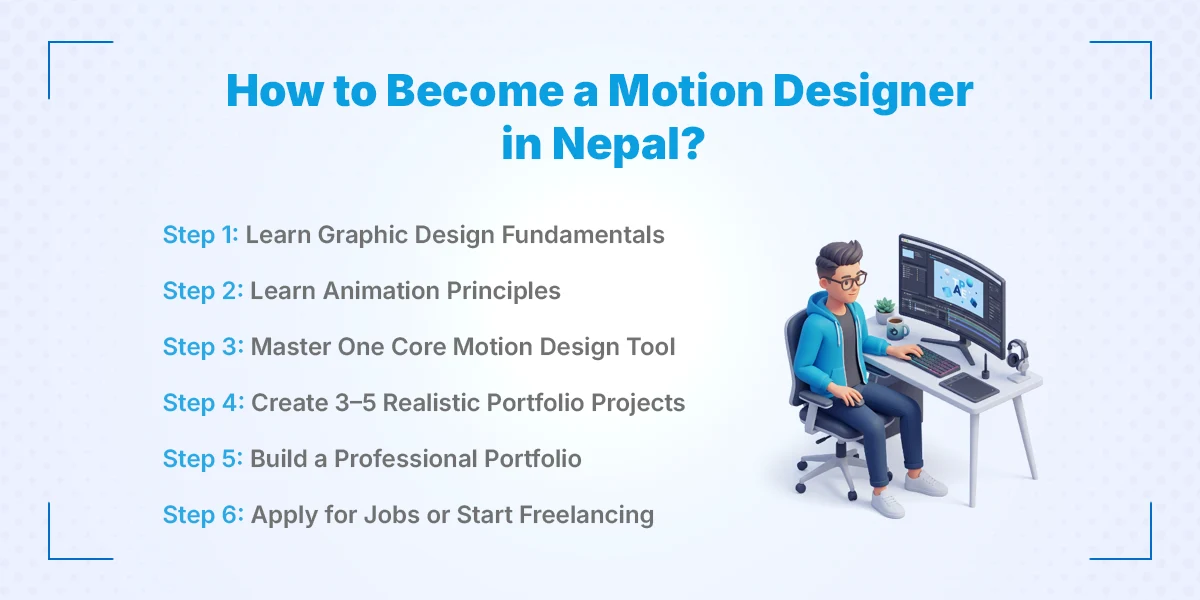
Step 1: Learn Graphic Design Fundamentals
Start with composition, typography, colour, and layout before moving into advanced animation. Strong design fundamentals help you create better visual content.
Step 2: Learn Animation Principles
Study key animation concepts such as timing, easing, anticipation, and squash and stretch. These principles apply across different animation tools and help make motion feel more natural.
Step 3: Master a Core Motion Design Tool
Choose one professional tool and learn it thoroughly instead of trying to learn several programs at once. Adobe After Effects is widely used for motion graphics, while other tools can be added as your skills develop.
Step 4: Create Realistic Portfolio Projects
Build three to five projects that demonstrate different motion design skills. You could create a product explainer, animated advertisement, brand animation, or UI animation based on realistic business scenarios.
Step 5: Build a Professional Portfolio
Present your strongest projects on platforms such as Behance or on a personal portfolio website. Include a short explanation of your role, creative process, and the tools used for each project.
Step 6: Apply for Jobs or Start Freelancing
Once you have a portfolio, look for motion design opportunities at creative agencies, IT companies, and other businesses, or explore freelance platforms such as Fiverr and Upwork. Focus on opportunities that match your current skills and portfolio. You can also apply through popular job portals like Kumari Job if you are eligible.
What Tools and Software Should a Motion Designer Learn?
Motion designers typically use a combination of animation, video editing, graphic design, and interactive design tools. The right tools depend on the type of projects you want to create, so it is usually better to master the core tools first and add others as needed.
1. Core Motion Design Software
Adobe After Effects is widely used for creating motion graphics, explainer videos, animated advertisements, and visual effects. Premiere Pro can be used alongside it for video editing and assembling longer projects.
2. Design Tools
Adobe Illustrator and Photoshop are useful for creating and preparing static assets such as illustrations, icons, characters, backgrounds, and other visual elements before they are animated.
3. Interactive Motion Tools
Figma is useful for designing interfaces and exploring UI animations and interactions. Lottie can be used to export certain animations in a lightweight format for websites and mobile applications.
4. Collaboration and Review Tools
Motion designers may use tools such as Frame.io, Google Drive, or other file-sharing and review platforms to share work and collect feedback. These tools can make it easier to manage revisions and keep project files organized.
Where Can Motion Designers Work in Nepal?
Motion designers can work across advertising, technology, media, and creative industries in Nepal. They can also find freelance and remote opportunities with clients outside Nepal.
Advertising and Digital Marketing Agencies: Motion designers can create animated advertisements, social media content, and explainer videos for agency clients.
IT and Software Companies: Software companies may hire motion designers for IT jobs in Nepal to create product demonstrations, explainer videos, onboarding animations, and other visual content.
Media and Production Studios: Production houses may need motion designers for title sequences, lower thirds, visual effects, and other post-production animation.
In-House Creative Teams: Larger businesses may employ motion designers as part of their internal marketing or creative teams to produce branded content and promotional materials.
Freelance and Remote Work: Motion designers can offer services through platforms such as Upwork and Fiverr or work directly with remote clients from other countries.
How Much Does a Motion Designer Earn in Nepal?
Salaries for motion designers often correlate with different job levels. Motion designer salaries in Nepal can vary based on experience, skills, employer, portfolio, and type of work. Freelance income can vary even more depending on the number and location of clients.
| Experience Level | Typical Monthly Salary | General Description |
|---|---|---|
| Entry-Level | NPR 20,000–40,000 | Fresh designers with basic skills and a small portfolio |
| Mid-Level | NPR 40,000–70,000 | Designers with around 2–4 years of experience and a strong portfolio |
| Senior-Level | NPR 70,000–1,00,000+ | Experienced designers or creative leads with advanced skills |
| Freelance | Varies | Income depends on project rates, workload, and client location |
Freelance motion designers may earn more or less than salaried professionals depending on their clients, projects, and workload, so freelance income is generally less predictable.
How to Build a Motion Design Portfolio That Gets Noticed
A strong motion design portfolio should demonstrate both creative ability and practical skills. Focus on showing a variety of work, a clear process, and only your strongest projects.
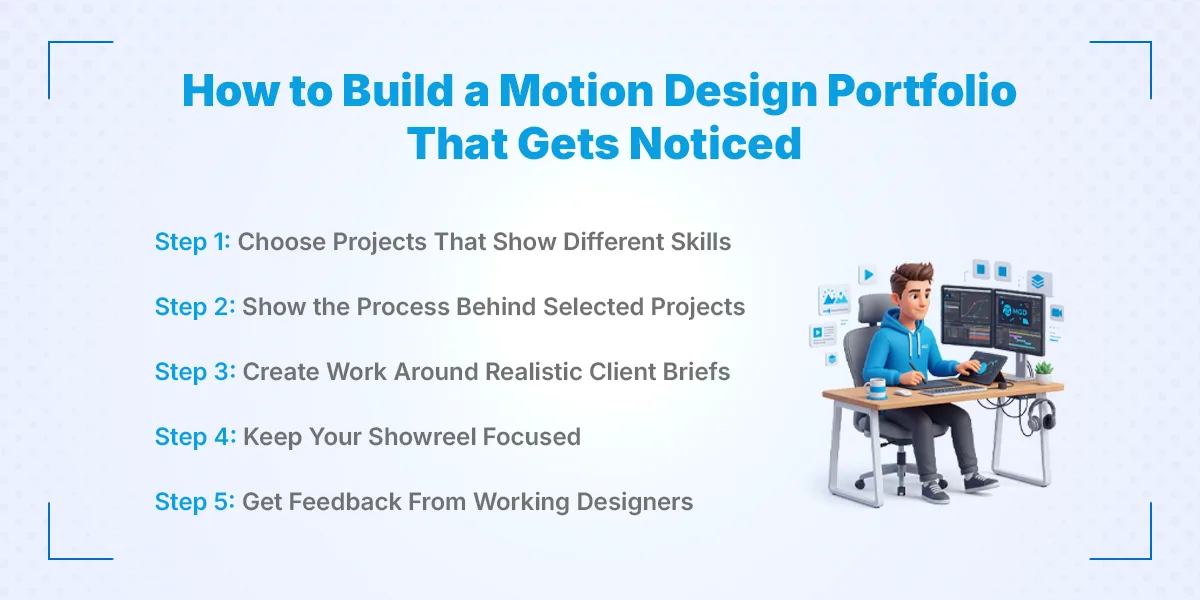
Step 1: Choose Projects That Show Different Skills
Include different types of work, such as an explainer video, social media advertisement, UI animation, or brand animation. A varied portfolio gives potential employers or clients a better understanding of your abilities.
Step 2: Show the Process Behind Selected Projects
Include a short breakdown of how you developed selected projects. Showing concepts, storyboards, design elements, or animation stages can demonstrate your creative process beyond the final result.
Step 3: Create Work Around Realistic Client Briefs
Create portfolio projects based on realistic business needs rather than generic concepts. For example, you could develop an animated advertisement or product explainer for a fictional Nepali business.
Step 4: Keep Your Showreel Focused
Create a short showreel featuring your strongest work instead of including every project you have completed. A focused reel makes it easier for employers and clients to quickly understand your skills.
Step 5: Get Feedback From Working Designers
Ask experienced designers or motion professionals to review your portfolio and provide constructive feedback. Use their suggestions to improve the quality, presentation, and clarity of your work.
Is Motion Design a Good Career Choice in Nepal?
Motion design can be a suitable career for people who enjoy visual design, animation, and digital content creation. Opportunities are available across advertising agencies, IT companies, media studios, in-house creative teams, and freelance work.
Building a career in motion design also requires continuous learning and practice. Designers need to develop their creative and technical skills, build a strong portfolio, and become comfortable with client feedback, revisions, deadlines, and changing project requirements.
Conclusion
Learning how to become a motion designer in Nepal is less about mastering every animation tool and more about building a strong combination of design fundamentals, animation skills, creative thinking, and practical experience.
Start with graphic design, learn animation principles, master one core tool, and create several original portfolio projects based on realistic briefs. As your skills develop, you can explore agency roles, in-house positions, freelance work, product animation, and international remote opportunities.
The goal is not simply to learn motion design software. It is to become someone who can use motion to communicate an idea clearly and solve a real creative problem. Ready to showcase your talent to top employers? Register as a jobseeker on Kumari Job today and start applying for the latest creative roles.
Frequently Asked Questions
Submit your comments

Get Our App On



How to Become an Auditor in Nepal
VIEW DETAILS
What Is the Salary of a Spa Therapist in Nepal?
VIEW DETAILS
How to Start a Career as a Game Developer in Nepal
VIEW DETAILS
What Is the Salary of a Brand Manager in Nepal?
VIEW DETAILS


Loading Comments...