

Leave policy in Nepal explains the rules and rights employees have for taking time off from work. Under the Nepal Labour Act 2074, employees working in both private and government sectors can receive different types of leave, including annual leave, sick leave, casual leave, maternity leave, and public holidays. These leave provisions help employees maintain a healthy work-life balance while protecting their legal employment rights.
Understanding leave policy in Nepal is important for employees, employers, HR professionals, and business owners. A clear leave policy helps companies follow labour laws, reduce workplace conflicts, and improve employee satisfaction. It also ensures that workers understand their rights related to paid leave, unpaid leave, leave encashment, and workplace benefits under Nepalese labour regulations.
In this blog
What is the Leave Policy in Nepal?
Leave policy in Nepal refers to the set of rules and regulations that define how employees can take time off from work while protecting their salary, benefits, and job rights. The Nepal Labour Act 2074 includes different types of employee leave, such as annual leave, sick leave, casual leave, maternity leave, paternity leave, and public holidays. These rules help create a fair working environment for both employers and employees.
The main purpose of employee leave benefits in Nepal is to support workers’ health, family responsibilities, and work-life balance. A proper leave policy also helps companies manage attendance, maintain productivity, and follow legal labour requirements. Employees working in private companies, government offices, factories, organisations, and registered businesses are generally eligible for leave facilities under Nepalese labour law.
1. Employees Covered Under Nepal Labour Law
The Nepal Labour Act covers most employees working in the formal sectors such as private companies, industries, corporate offices, hotels, schools, banks, and registered organisations. Both full-time and some contract-based employees may receive leave benefits depending on their employment agreement. Workers in government offices are also covered under separate civil service regulations.
In many companies, employee eligibility for leave depends on factors such as working duration, contract terms, and attendance records. For example, permanent employees usually receive full leave benefits, while temporary workers may receive limited leave facilities. Employers must clearly mention leave rules in employment contracts and HR policies.
2. Public vs Private Sector Leave Policies
Public and private sector leave policies in Nepal are similar in some areas but different in terms of benefits and flexibility. Government employees often receive more leave days, additional facilities, and structured approval systems compared to private-sector employees. Private companies may create customised leave policies based on company size, industry, and operational needs.
For example, civil servants in Nepal may receive longer annual leave and additional festival holidays under government rules. In contrast, startups and private businesses may provide flexible leave systems, remote work options, or performance-based leave benefits. Employees should always review company policies before joining an organisation.
3. Employer Responsibilities Regarding Leave
Employers in Nepal must provide leave facilities according to the Nepal Labour Act and company policies. They are responsible for maintaining accurate leave records, approving valid leave requests, and ensuring employees receive their legal leave benefits. Companies must also communicate leave rules clearly to all staff members.
If employers fail to follow labour laws related to employee leave, they may face legal complaints, penalties, or workplace disputes. Many businesses now use digital HR systems to track leave balances and improve transparency. A clear leave management process helps employers maintain fairness, reduce confusion, and improve employee trust.
Types of Leave in Nepal
The leave policy in Nepal includes different types of leave designed to support employees’ health, family responsibilities, personal needs, and work-life balance. Under the Nepal Labour Act 2074, employees may receive paid leave, unpaid leave, public holidays, and special leave benefits depending on their job position and employment terms. Understanding these leave categories helps employees use their rights properly and helps employers maintain legal compliance.
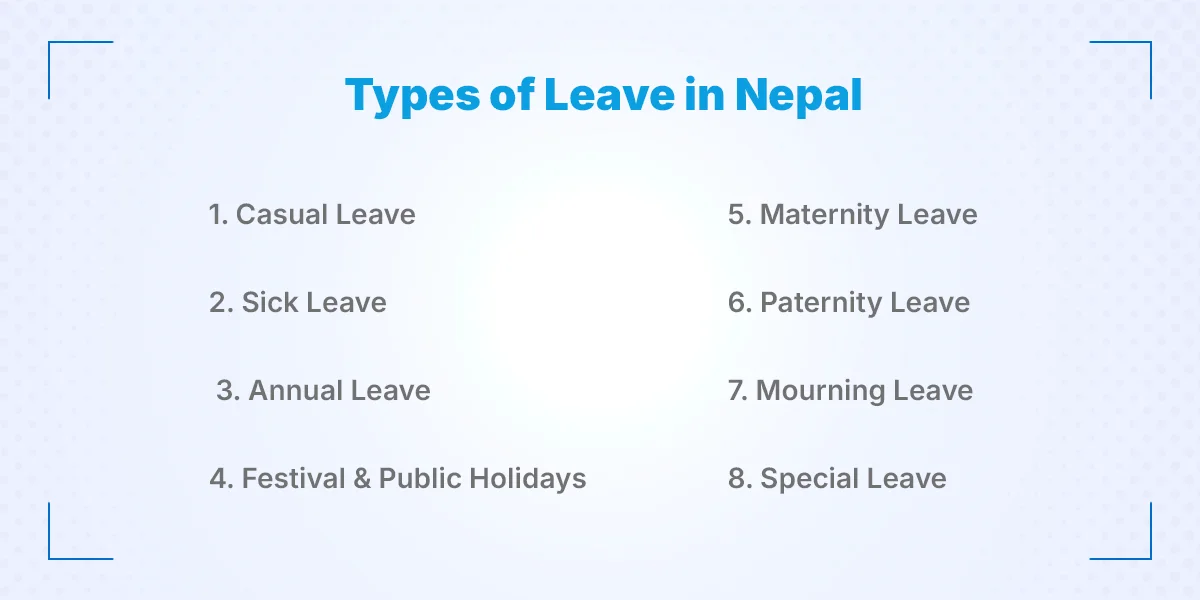
1. Casual Leave
Casual leave in Nepal is provided for short-term personal needs, emergencies, or urgent situations. Employees usually receive a limited number of casual leave days each year according to company policy and labour regulations. This leave is commonly used for personal work, family matters, or unexpected events.
In most organisations, employees must inform their supervisor or HR department before taking casual leave. Some companies allow same-day leave requests during emergencies, while others require advance approval. Employers may reject casual leave if it affects important business operations or workload management.
2. Sick Leave
Sick leave allows employees to take time off when they are physically or mentally unwell and unable to perform their work duties. The Nepal Labour Act provides sick leave benefits to support employee health and workplace well-being. Employees can use this leave for illness, injury, medical treatment, or recovery.
Many companies require a medical certificate if an employee takes sick leave for multiple days. A doctor’s recommendation helps employers verify the health condition and maintain proper leave records. Some organisations also provide paid medical leave as part of employee welfare benefits.
3. Annual Leave
Annual leave in Nepal refers to paid vacation leave provided to employees after completing a certain working period. This leave helps employees rest, travel, and maintain a healthy balance between personal life and work responsibilities. Permanent employees usually receive annual leave benefits under labour law and company policy.
Unused annual leave may sometimes be carried forward to the next year, depending on organisational rules. Some employers also offer leave encashment for unused leave days when employees resign or retire. Proper leave planning helps companies manage staffing and employee productivity more effectively.
4. Festival and Public Holidays
Festivals and public holidays are officially recognised non-working days provided by the Government of Nepal. Employees receive these holidays to celebrate national festivals, religious events, and important public occasions. Major holidays in Nepal include Dashain, Tihar, Holi, Buddha Jayanti, and Constitution Day.
Both government and private organisations generally follow the official holiday calendar issued by authorities. However, the number of public holidays may differ between sectors and industries. Some businesses operating during public holidays may provide overtime pay or alternative leave benefits to employees.
5. Maternity Leave
Maternity leave in Nepal is provided to female employees during pregnancy and childbirth to protect their health and childcare responsibilities. The Nepal Labour Act includes paid maternity leave provisions for eligible female workers in both public and private sectors. This leave helps mothers recover physically and care for newborn children.
Employers must ensure that female employees are not treated unfairly because of pregnancy or maternity leave usage. Many organisations also provide additional support, such as flexible working arrangements or breastfeeding facilities. Maternity protection plays an important role in promoting workplace equality and employee well-being.
6. Paternity Leave
Paternity leave allows fathers to take leave after the birth of a child to support their family and newborn care responsibilities. Some organisations in Nepal provide paid paternity leave as part of employee welfare policies. Government employees may receive specific paternity leave benefits under civil service regulations.
Employees usually need to submit proof of childbirth or an official request to receive paternity leave approval. The duration of leave may vary depending on company policy and employment type. Paternity leave helps improve family support, employee satisfaction, and work-life balance.
7. Mourning Leave
Mourning leave, also called bereavement leave, is provided when an employee loses a close family member. This leave gives employees time to attend funeral ceremonies, family gatherings, and emotional recovery. Many organisations include mourning leave in their HR policies to support employee well-being during difficult situations.
The number of mourning leave days may vary depending on the company and the relationship with the deceased family member. Employees may need to inform management immediately and provide supporting information if requested. Compassionate leave policies help organisations build a supportive workplace culture.
8. Special Leave
Special leave in Nepal covers situations that are not included under regular leave categories. Employees may receive special leave for higher education, professional training, marriage ceremonies, emergency situations, or important personal responsibilities. Some organisations also provide leave for social, cultural, or community activities.
The rules for special leave usually depend on company HR policies and management approval. Certain employers may offer paid special leave, while others provide unpaid leave options. Flexible leave policies help organisations attract skilled employees and improve long-term employee retention.
Leave Policy Under Nepal Labour Act 2074
The Leave Policy under the Nepal Labour Act 2074 explains the legal rights of employees to receive different types of leave while working in Nepal. The Labour Act includes provisions for annual leave, sick leave, casual leave, maternity leave, public holidays, and other employee benefits. These rules are designed to protect workers’ rights, improve workplace conditions, and ensure fair treatment in both private and formal employment sectors.
Under the Nepal Labour Act, employers are legally required to provide leave facilities according to government regulations and employment agreements. Companies must maintain proper leave records, approve eligible leave requests, and provide paid leave where required by law. Employers are also responsible for informing employees about company leave policies, working conditions, and labour rights through contracts or HR guidelines.
The Labour Act also includes penalties for employers who fail to follow leave regulations or violate employee rights. Companies that deny legal leave benefits, maintain false records, or discriminate against employees may face labour complaints, financial penalties, or legal action from labour authorities. In serious cases, repeated violations can damage a company’s reputation and create workplace disputes. Proper compliance with Nepal labour law helps organisations maintain transparency, employee trust, and legal protection.
How Many Leave Days Are Employees Entitled to in Nepal?
Employees in Nepal are entitled to different types of leave under the Nepal Labour Act 2074, including annual leave, sick leave, casual leave, public holidays, maternity leave, and special leave. The exact number of leave days depends on the employee’s job type, working duration, company policy, and employment sector.
Most organisations provide paid leave for annual vacations, medical reasons, and government-declared public holidays. Paid leave allows employees to receive their regular salary while taking approved leave from work. Employees who need additional time off beyond their paid leave balance may apply for unpaid leave based on employer approval.
Many companies in Nepal also allow leave accumulation and leave encashment under their HR policies. Unused annual leave may be carried forward to the next year if permitted by the employer. In some cases, employees can receive payment for unused leave days during resignation, retirement, or the end of employment contracts.
Why Is Leave Management Important for Companies in Nepal?
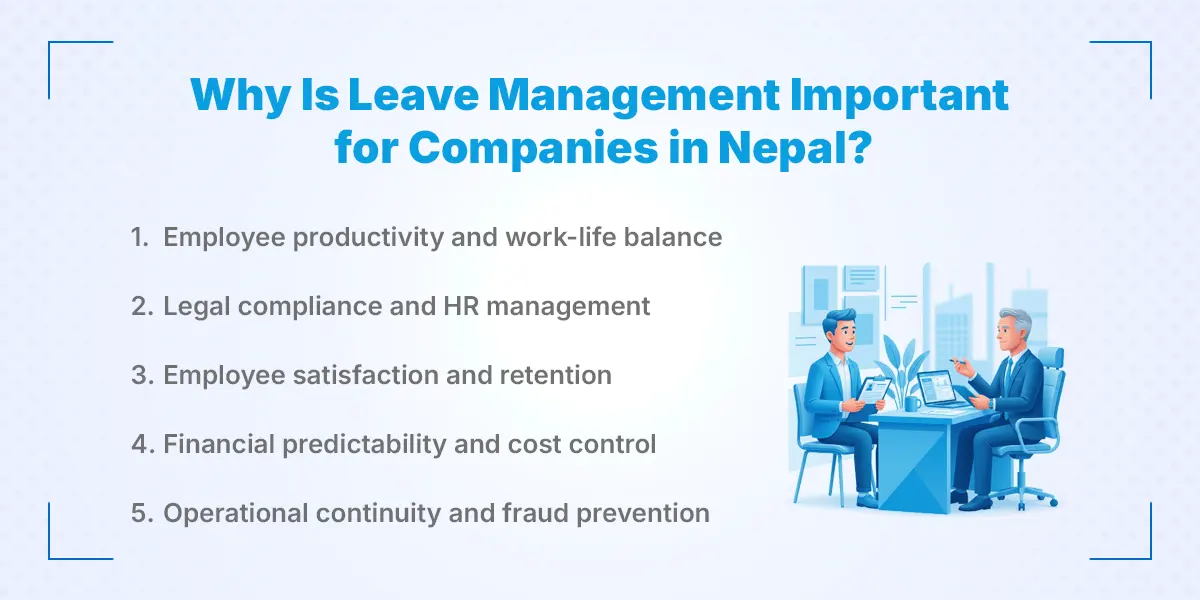
Leave management is important for companies in Nepal because it helps maintain employee productivity, legal compliance, workplace discipline, and smooth business operations. A proper leave management system ensures that employees can take approved time off without affecting organisational performance or creating staffing problems.
Effective leave management improves employee work-life balance and reduces workplace stress. When employees receive fair leave benefits, they are more motivated, productive, and satisfied with their jobs. Companies that support employee well-being often experience better staff retention and lower turnover rates.
Proper leave policies also help organisations follow the Nepal Labour Act 2074 and avoid legal disputes related to employee rights. HR departments can maintain accurate leave records, manage attendance, and ensure fair treatment for all employees. This creates transparency and strengthens trust between employers and workers.
Leave management also supports financial predictability and cost control for businesses. Companies can plan staffing, overtime expenses, and workforce availability more effectively when leave records are properly managed. Organised leave tracking helps reduce unexpected operational costs and improves workforce planning.
In addition, strong leave management systems help maintain operational continuity and prevent leave misuse or fraud. Employers can monitor leave patterns, verify leave requests, and ensure employees follow company policies. This helps organisations maintain productivity while protecting business operations from unnecessary disruptions.
Leave Policy in Nepal for Private Companies
Leave policy in Nepal for private companies refers to the rules and benefits that employers provide to employees for taking time off from work. Most private organisations follow the Nepal Labour Act 2074 while also creating internal HR policies based on company size, industry, and operational needs. These leave policies commonly include annual leave, sick leave, casual leave, public holidays, maternity leave, and unpaid leave options.
1. Common Leave Practices in Private Organisations
Most private companies in Nepal provide employees with basic leave benefits such as annual leave, sick leave, casual leave, and festival holidays. Large organisations usually maintain proper HR policies and digital leave management systems to track employee attendance and leave balances. Employees are generally required to submit leave requests and receive approval from supervisors or HR departments before taking leave.
Some companies also offer additional leave benefits such as emergency leave, remote work flexibility, and special leave for training or personal events. Paid leave policies may vary depending on the organisation’s size, business type, and employment agreement. Clear leave practices help companies reduce workplace confusion and improve employee satisfaction.
2. Differences Between Startups, Corporate Offices, and SMEs
Startups, corporate offices, and small businesses in Nepal often manage leave policies differently based on their operational structure. Startups usually provide flexible working arrangements, informal leave approvals, and hybrid work options to attract young professionals and skilled employees. These companies may focus more on a performance-based work culture rather than strict attendance systems.
Corporate offices generally follow structured HR policies with formal leave procedures, proper documentation, and detailed employee benefits. Small and medium-sized enterprises (SMEs) may provide simpler leave systems with fewer administrative processes. However, SMEs sometimes offer limited leave benefits because of smaller budgets and workforce limitations.
3. Flexible Leave Policies and Remote Work Trends
Flexible leave policies and remote work trends are becoming more popular in Nepal’s private sector. Many companies now allow employees to work from home, use flexible schedules, or apply for leave through digital HR systems. These modern workplace practices help improve productivity, employee engagement, and work-life balance.
Remote work and flexible leave options became more common after businesses adopted digital communication and online management systems. Companies that provide flexible work arrangements often experience better employee retention and higher workplace satisfaction. Modern leave management tools also help employers maintain transparency, monitor attendance, and reduce operational disruptions.
Government Employee Leave Policy in Nepal
Government employee leave policy in Nepal refers to the set of rules that provide paid leave, holidays, and other time-off benefits to civil servants working under government offices. These leave facilities are guided by civil service regulations and related government rules, which ensure job security, structured leave entitlements, and fair working conditions for public sector employees.
1. Leave Facilities for Civil Servants
Civil servants in Nepal receive different types of leave, such as annual leave, sick leave, casual leave, maternity leave, paternity leave, and mourning leave. These leave benefits are generally more structured compared to those of many private organisations and are clearly defined under government rules. Employees can use these leave types for personal needs, health issues, family responsibilities, and official requirements.
Government employees also receive paid public holidays as per the national calendar, including major festivals like Dashain, Tihar, and other national celebrations. In many cases, unused leave can be carried forward depending on government regulations. This system helps ensure long-term job security and work-life balance for public sector workers.
2. Additional Government Employee Benefits
Government employees in Nepal often receive additional benefits beyond basic leave provisions. These may include extended maternity leave, study leave for higher education, and special leave for training or official assignments. Some civil servants also receive travel allowances, medical support, and retirement-related benefits depending on their service category.
These additional benefits are designed to improve employee welfare and encourage professional development within the public sector. The structured benefit system also helps maintain discipline and consistency across government institutions. As a result, government jobs are often seen as stable and secure compared to many private sector roles.
3. Leave Approval Process in Public Offices
The leave approval process in government offices in Nepal is usually formal and follows a hierarchical system. Employees must submit a written leave application or official request through their department, which is then reviewed and approved by supervisors or higher authorities. The approval process ensures proper staffing and smooth functioning of government services.
In most cases, leave approval depends on workload, staff availability, and the urgency of the request. Emergency leave may be approved more quickly, while long-term leave requires higher-level authorisation. This structured process helps maintain transparency, accountability, and organised administration in public sector workplaces.
Leave Policy for Female Employees in Nepal
Leave policy for female employees in Nepal is designed to protect women’s health, ensure job security during pregnancy, and support work-life balance. Under the Nepal Labour Act 2074, female employees are entitled to maternity leave, sick leave, annual leave, and other workplace protections that promote equal employment opportunities and safe working conditions.
1. Maternity Protection and Workplace Rights
Maternity protection in Nepal gives female employees the right to take paid leave during pregnancy and after childbirth without losing their jobs or salary benefits. The law ensures that pregnant workers are not discriminated against in hiring, promotion, or job security because of their condition. Employers are legally required to provide maternity leave facilities as per labour regulations.
Female employees are also protected from unfair dismissal during pregnancy or maternity leave. Many organisations provide additional support, such as flexible working hours or lighter duties during pregnancy. This helps ensure both the mother and the child's health while maintaining employment continuity.
2. Breastfeeding and Childcare Provisions
Breastfeeding and childcare provisions in Nepal support working mothers after childbirth. Many workplaces are encouraged to provide time breaks for breastfeeding or child care needs during working hours. Some organisations also offer childcare facilities or daycare support for female employees.
These provisions help mothers return to work comfortably while continuing to care for their newborns. Employers who support childcare needs often see improved employee retention and satisfaction. Such facilities also promote a healthier and more family-friendly workplace environment.
3. Gender Equality in Employment Benefits
Gender equality in employment benefits ensures that female employees receive equal opportunities and fair treatment in the workplace. The Nepal Labour Act promotes equal pay, equal leave rights, and protection from workplace discrimination based on gender. Female employees are entitled to the same job security and benefits as male employees, along with additional maternity-related protections.
Organisations that follow gender equality principles create a more balanced and productive work environment. Fair leave policies help increase women’s participation in the workforce and support long-term career growth. This contributes to a more inclusive and progressive labour system in Nepal.
Leave Without Pay (LWP) in Nepal
Leave Without Pay (LWP) in Nepal refers to a situation where an employee takes time off from work without receiving a salary for that period. This type of leave is usually used when an employee has exhausted all paid leave options or needs extended time away for personal, medical, or family reasons. LWP is generally allowed based on company policy and employer approval.
1. Situations Where Unpaid Leave Applies
Unpaid leave is commonly used when employees have no remaining paid leave balance but still require time off for important reasons. This may include long-term illness, personal emergencies, family issues, education, or travel needs. Some employees also request LWP when they need extended time off beyond their annual or sick leave limits.
In many companies, unpaid leave is considered a flexible option to support employees during difficult situations. However, approval is not automatic and depends on the organisation’s workload and HR policy. Employers may evaluate each request individually before granting LWP.
2. Employer Approval Process
The employer approval process for Leave Without Pay in Nepal usually requires a formal written request from the employee. The request is reviewed by the immediate supervisor and the HR department before final approval is granted. Some organisations may require justification or supporting documents depending on the reason for leave.
Approval depends on factors such as staffing availability, urgency of work, and company policy. In certain cases, employers may partially approve leave or suggest alternative arrangements like shift adjustments or remote work. Clear communication between the employee and employer is important for smooth approval.
3. Effects on Salary and Benefits
Leave Without Pay directly affects an employee’s salary because no payment is made during the leave period. In most cases, salary is deducted based on the number of unpaid leave days taken. This may also impact bonuses or performance-based incentives, depending on company rules.
LWP may also affect benefits such as continuous service records, provident fund contributions, or leave accumulation in some organisations. However, the exact impact depends on the employer’s HR policy and employment contract. Employees are advised to understand these conditions before applying for unpaid leave.
Leave Encashment Rules in Nepal
Leave encashment in Nepal refers to the process by which employees receive monetary payment for their unused paid leave days. It is commonly applied when an employee resigns, retires, or leaves the organisation, depending on the company policy and Nepal Labour Act provisions. This system ensures that employees do not lose the value of their accumulated leave benefits.
1. What Is Leave Encashment
Leave encashment is a facility that allows employees to convert unused paid leave into a cash payment. It is usually calculated based on the employee’s basic salary and the number of unused leave days at the time of exit or as per company rules. This benefit is provided to ensure fair compensation for earned but unused leave.
Many organisations in Nepal include leave encashment as part of their HR policy to improve employee satisfaction. It is often applied during resignation, termination, or retirement. Some companies also allow partial encashment during service, depending on internal rules.
2. Eligibility Criteria
Eligibility for leave encashment in Nepal depends on the organisation’s HR policy and employment agreement. Generally, permanent employees who have completed a certain service period are eligible for this benefit. Employees must have an unused paid leave balance at the time of separation or as defined by company rules.
In some organisations, only annual leave or earned leave is eligible for encashment, while casual or sick leave may not be included. Employees may also need to complete minimum service requirements before qualifying. Employers clearly mention eligibility conditions in employment contracts or HR manuals.
3. Calculation of Unused Leave Payments
The calculation of leave encashment is usually based on the employee’s basic salary and the number of unused leave days. A common formula is to divide the monthly salary by the total working days and multiply it by the unused leave days. This gives the total encashment amount payable to the employee.
Some companies also include allowances or additional benefits depending on internal policy. Accurate leave records are essential for correct calculation and payment. Employers must ensure transparency while processing leave encashment to avoid disputes and maintain trust.
Employee Rights Related to Leave in Nepal
Employee rights related to leave in Nepal are protected under the Nepal Labour Act 2074, which ensures fair treatment, paid leave benefits, and protection against workplace discrimination. These rights apply to employees working in private companies, industries, and government institutions, depending on applicable labour laws and employment agreements.
1. Legal Protection Against Unfair Treatment
Employees in Nepal are legally protected from unfair treatment when taking approved leave, such as sick leave, annual leave, maternity leave, or casual leave. Employers are not allowed to terminate, discriminate against, or penalise workers for using their legal leave rights. The labor law ensures that employees can take time off without fear of losing their job or benefits.
In many organizations, HR policies clearly define leave approval rules to avoid conflicts between employees and management. If any employer violates these rights, employees can report the issue to labor authorities. This protection helps maintain a fair and respectful workplace environment.
2. Right to Paid Leave and Holidays
Employees in Nepal have the right to receive paid leave for eligible categories such as annual leave, sick leave, maternity leave, and government-declared public holidays. Paid leave ensures that employees continue receiving their salary while taking approved time off from work. This is an important part of employee welfare and work-life balance.
Most organisations in Nepal follow the official holiday calendar, including major festivals like Dashain, Tihar, and other national holidays. Employers must clearly mention paid leave benefits in employment contracts or HR policies. Proper implementation of paid leave improves employee motivation and workplace stability.
3. Complaint Process for Labour Disputes
Employees in Nepal can file complaints if their leave rights are denied or if they face unfair treatment related to leave policies. The complaint process usually starts within the organisation through HR or management. If the issue is not resolved internally, employees can escalate the matter to labour offices or relevant government authorities. Labour authorities investigate complaints and ensure compliance with the Nepal Labour Act. Employees may receive legal protection and compensation if violations are proven. This system helps maintain accountability and ensures that employers follow proper leave regulations.
Conclusion
Leave policy in Nepal is designed to protect employee rights while ensuring smooth workplace operations under the Nepal Labour Act 2074. It includes different types of leave, such as casual, sick, annual, maternity, paternity, and public holidays, along with rules for unpaid leave and leave encashment. These provisions help create a structured system where both employers and employees understand their responsibilities.
Understanding employee leave rights is important for every worker and employer in Nepal. It helps employees take proper rest, manage personal responsibilities, and maintain work-life balance without fear of losing job security or salary benefits. For employers, it ensures better HR management, higher productivity, and fewer workplace disputes.
Overall, legal compliance and fair leave practices are essential for a healthy work environment. Companies that follow labour laws build trust with employees and avoid legal risks, while workers gain confidence that their rights are protected. A transparent leave policy supports long-term workplace stability and fairness in Nepal’s labour system.
Frequently Asked Questions
Submit your comments

Get Our App On


HR Software in Nepal for Payroll, Attendance & Employee Management
VIEW DETAILS
What is the CCNA Salary in Nepal? Scope, Jobs & Career Growth Guide
VIEW DETAILS
Scope of Sociology in Nepal: Career Options, Importance & Future Scope
VIEW DETAILS
How Much Does a Psychiatrist Earn in Nepal?
VIEW DETAILS


Loading Comments...