




CCNA is one of the most popular IT certifications for students and networking beginners in Nepal. The Cisco Certified Network Associate (CCNA) certification helps people learn important networking skills such as routing, switching, IP connectivity, network security, and troubleshooting. As Nepal’s IT sector continues to grow, many companies are looking for skilled networking professionals who can manage and maintain computer networks effectively.
The demand for CCNA-certified professionals is increasing in internet service providers (ISPs), banks, telecom companies, IT firms, and government organizations across Nepal. Many students choose CCNA because it offers good career opportunities, competitive salaries, and chances to work internationally. A CCNA certification can help candidates start careers as network engineers, system administrators, technical support engineers, and cybersecurity professionals.
In this blog
What is CCNA Certification?
CCNA certification is an entry-level networking certification offered by Cisco that helps students and IT professionals learn how computer networks work. CCNA stands for Cisco Certified Network Associate, and it focuses on important networking concepts such as routing, switching, IP addressing, network security, automation, and troubleshooting. The certification is widely recognized in Nepal and around the world because it prepares candidates for real-world networking jobs.
CCNA covers many technical skills needed in modern IT infrastructure and networking environments. Students learn how to configure routers and switches, manage network connectivity, improve network security, and solve technical problems in enterprise networks. Compared to other beginner IT certifications, CCNA is more focused on practical networking knowledge and Cisco technologies. This makes it a strong certification choice for people who want to build a career as a network engineer, system administrator, or cybersecurity professional.
Why Choose CCNA as a Career in Nepal?
CCNA is a good career choice in Nepal because the country’s IT sector is growing rapidly, and companies need skilled networking professionals. Many businesses, banks, internet service providers (ISPs), telecom companies, and government organizations depend on secure and stable computer networks for daily operations. As digital services continue to expand in Nepal, the demand for network engineers and system administrators is also increasing.
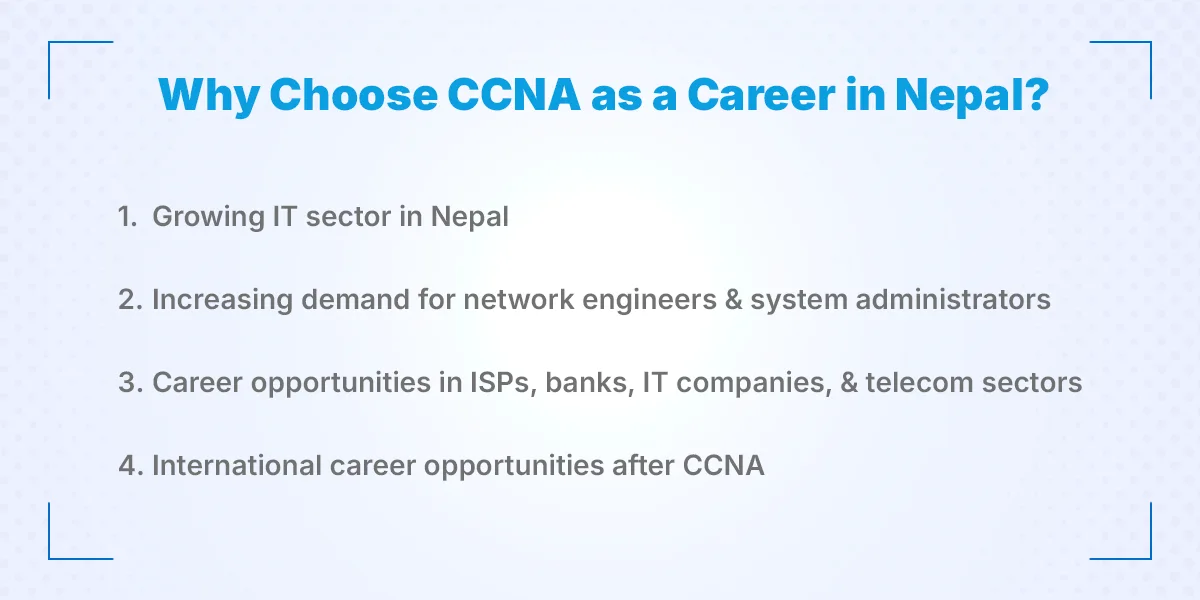
A CCNA certification can help students and IT beginners build a strong career in networking and cybersecurity. CCNA-certified professionals can work in IT companies, data centers, telecom sectors, cloud infrastructure teams, and technical support departments. The certification is also recognized internationally, which creates opportunities for remote jobs and employment abroad. Many Nepali IT professionals choose CCNA because it offers good salary potential, career growth, and practical technical skills.
CCNA Salary in Nepal
CCNA salary in Nepal generally ranges from NPR 20,000 to NPR 1,20,000 per month, depending on experience, technical skills, industry, and job role. Networking professionals with CCNA certification are in demand in telecom companies, banks, internet service providers (ISPs), IT companies, and corporate organizations. As Nepal’s IT sector continues to grow, companies are offering better salaries to skilled network engineers and system administrators.
1. Average CCNA Salary in Nepal
The average CCNA salary in Nepal for freshers starts from around NPR 20,000 to NPR 35,000 per month. Mid-level networking professionals with practical experience can earn between NPR 40,000 and NPR 70,000 monthly. Senior network engineers, Cisco specialists, and experienced networking professionals working in large organizations or international companies may earn NPR 80,000 to NPR 1,20,000 or more per month.
2. CCNA Salary Based on Experience
Freshers who complete CCNA certification in Nepal usually begin their careers in junior networking or technical support roles with salaries around NPR 20,000 to NPR 35,000 monthly. Professionals with 2–5 years of networking experience can earn approximately NPR 45,000 to NPR 75,000 per month, depending on their technical expertise. Experienced Cisco professionals with advanced networking, cybersecurity, or cloud skills may earn over NPR 1 lakh monthly in senior positions or international remote jobs.
3. CCNA Salary Based on Job Role
Network engineers in Nepal generally earn between NPR 35,000 and NPR 80,000 per month based on experience and company size. System administrators usually receive salaries ranging from NPR 30,000 to NPR 70,000 monthly. IT support engineers and technical support specialists may earn around NPR 20,000 to NPR 45,000 during the early stage of their careers. Network security engineers with CCNA and cybersecurity knowledge can earn between NPR 50,000 and NPR 1,00,000 or more per month.
4. CCNA Salary in Different Industries
Telecom companies and internet service providers (ISPs) in Nepal often offer salaries between NPR 35,000 and NPR 90,000 for networking professionals because they manage large-scale network infrastructure. Banks and financial institutions may provide salaries ranging from NPR 40,000 to NPR 1,00,000 depending on technical responsibilities and experience. Government organizations and private IT companies also hire CCNA-certified professionals with salary packages based on skill level, certifications, and practical networking experience.
Career Opportunities After CCNA in Nepal
CCNA certification opens many career opportunities in Nepal’s growing IT and networking industry. Companies across telecom, banking, internet service providers (ISPs), cloud services, and corporate sectors need skilled networking professionals to manage secure and reliable networks. With a CCNA certification, students and IT beginners can apply for both entry-level and mid-level technical jobs.
One of the most common career options after CCNA is becoming a Network Engineer. Network engineers are responsible for configuring routers, switches, and firewalls and maintaining network performance in organizations. Many companies in Nepal also hire Cisco Engineers who specialize in Cisco networking devices and enterprise infrastructure. Technical Support Engineers help businesses solve network-related problems and provide troubleshooting support for hardware and software systems.
CCNA-certified professionals can also work as Security Administrators because network security has become an important part of modern IT systems. Security administrators monitor network security, prevent cyber threats, and manage secure access to company networks. Candidates with additional cybersecurity knowledge often receive better career growth opportunities and higher salaries in Nepal’s IT sector.
Cloud and infrastructure support roles are also becoming popular among CCNA-certified professionals. Many organizations now use cloud computing platforms and hybrid network systems, which increases the demand for networking experts with cloud and infrastructure management skills. CCNA can also create opportunities for remote international networking jobs, where Nepali IT professionals work for foreign companies from Nepal and earn competitive salaries in US dollars or other international currencies.
How to Start a CCNA Career in Nepal?
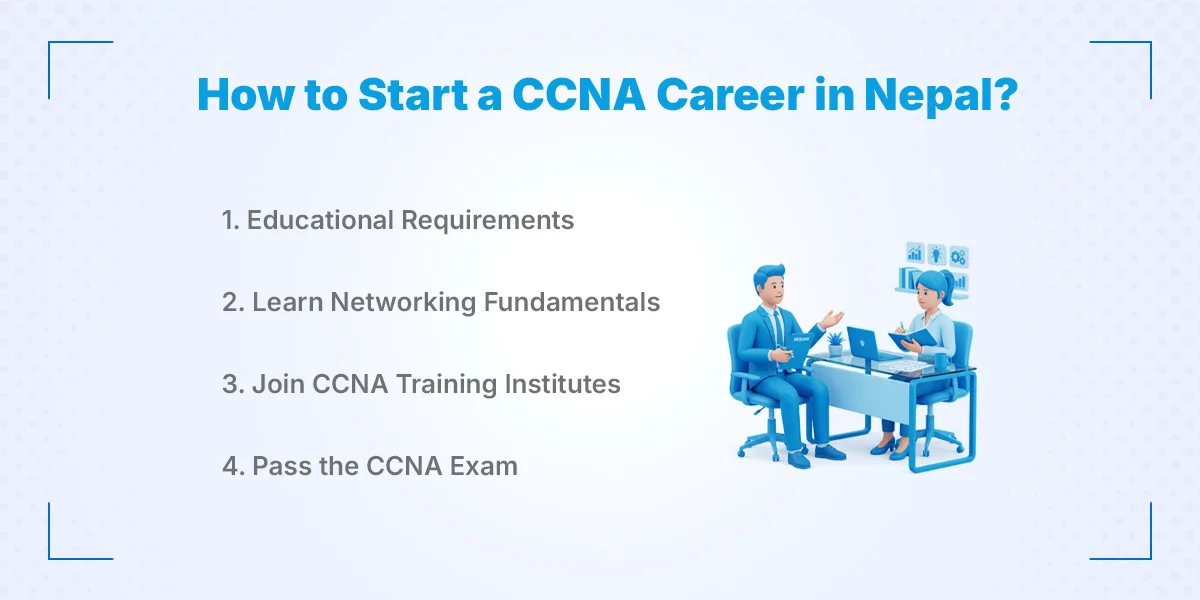
Starting a CCNA career in Nepal requires basic technical knowledge, networking skills, practical training, and certification preparation. CCNA is one of the best entry-level certifications for students who want to build a career in networking, cybersecurity, and IT infrastructure. With proper learning and hands-on practice, candidates can find networking jobs in IT companies, banks, telecom sectors, and internet service providers (ISPs).
1. Educational Requirements
Students who want to study CCNA in Nepal usually need a minimum academic qualification of +2 or equivalent education. Candidates from IT, computer science, or engineering backgrounds may find networking concepts easier to understand, but students from other fields can also learn CCNA successfully. Basic computer knowledge, internet usage, and problem-solving skills are helpful for beginners entering the networking field.
2. Learn Networking Fundamentals
Before preparing for the CCNA exam, students should understand basic networking concepts such as IP addressing, routing, switching, and subnetting. Learning network security fundamentals is also important because modern networks require secure communication and cyber protection. Practical knowledge of troubleshooting and network configuration helps candidates develop real-world networking skills that companies look for in Nepal.
3. Join CCNA Training Institutes
Many students in Nepal join CCNA training institutes to gain structured learning and practical lab experience. Both online and physical training classes are available, and students can choose based on their learning style, budget, and schedule. Practical lab sessions are very important because CCNA focuses heavily on hands-on networking configuration and troubleshooting. Proper certification preparation can improve exam performance and increase job opportunities after completing the course.
4. Pass the CCNA Exam
The CCNA exam tests networking knowledge, IP connectivity, security fundamentals, automation, and troubleshooting skills. Students should practice mock tests, lab simulations, and real networking scenarios before taking the Cisco certification exam. Consistent study, hands-on practice, and understanding core networking concepts can improve the chances of passing the exam successfully. After earning the certification, candidates can apply for networking jobs in Nepal or continue learning advanced Cisco certifications for better career growth.
Best Institutes for CCNA Training in Nepal
Many institutes in Nepal provide CCNA training for students who want to build a career in networking and IT infrastructure. Most networking academies are located in Kathmandu and offer both theoretical classes and practical lab training. Choosing the right CCNA institute is important because practical networking skills and quality instruction directly affect certification success and job opportunities.
Kathmandu has several popular networking academies that provide Cisco networking courses, lab practice, and exam preparation support. Some institutes also offer online CCNA classes for students who prefer flexible learning from home. Online learning platforms can help students access recorded classes, virtual labs, practice exams, and updated Cisco course materials at affordable prices.
Before selecting a CCNA training institute in Nepal, students should compare course quality, trainer experience, lab facilities, and certification success rates. Practical networking labs are very important because CCNA focuses heavily on real-world router and switch configuration. Students should also check whether the institute provides career support, internship opportunities, or job placement assistance after course completion.
CCNA course fees in Nepal usually range from NPR 15,000 to NPR 50,000, depending on the institute, course duration, and training quality. Most CCNA training programs take around 2 to 4 months to complete, based on class schedules and learning pace. Institutes with advanced networking labs and experienced instructors may charge higher fees, but they often provide better practical learning and career preparation.
Skills Needed to Succeed After CCNA
CCNA certification helps students learn networking fundamentals, but additional technical and professional skills are important for long-term career success. Companies in Nepal look for networking professionals who can solve technical problems, manage secure networks, and work effectively in team environments. Building practical skills after completing CCNA can improve job opportunities, salary growth, and career advancement.
Problem-solving skills are very important for network engineers and IT support professionals because network issues can affect entire business operations. Networking professionals must identify technical problems quickly and find effective solutions to reduce downtime. Strong troubleshooting skills also help professionals diagnose router, switch, connectivity, and security issues in real-world networking environments.
Communication and teamwork are essential skills for people working in networking and IT infrastructure roles. Network engineers often work with system administrators, cybersecurity teams, software developers, and company management to maintain stable network systems. Clear communication helps teams solve technical problems faster and improve overall IT operations within organizations.
Cybersecurity fundamentals have become highly important because businesses need secure and protected network systems. CCNA-certified professionals should understand firewalls, network security, access control, and basic cyber threat prevention methods. Candidates with cybersecurity knowledge often receive better job opportunities and higher salaries in Nepal’s growing IT sector.
Learning Linux and cloud networking basics can also improve career growth after CCNA certification. Many companies use Linux servers, cloud platforms, and hybrid network infrastructure in their daily operations. Networking professionals with cloud computing and Linux administration skills can apply for advanced networking, cloud support, and infrastructure management roles both in Nepal and international remote jobs.
Future Scope of CCNA in Nepal
The future scope of CCNA in Nepal is strong because the country’s IT industry, internet infrastructure, and digital services are growing rapidly. Businesses, banks, telecom companies, and government organizations need skilled networking professionals to manage secure and reliable computer networks. As technology adoption increases in Nepal, the demand for CCNA-certified professionals is expected to grow in both private and public sectors.
Cybersecurity and cloud networking are becoming major areas of growth in Nepal’s IT industry. Companies now focus more on protecting their networks from cyber threats and managing cloud-based systems efficiently. CCNA-certified professionals with knowledge of cybersecurity, cloud infrastructure, and network security can find better career opportunities and higher-paying jobs in the future.
The growth of data centers and internet service provider (ISP) infrastructure is also creating new networking jobs in Nepal. ISPs, telecom companies, and large organizations require networking experts to maintain servers, routers, switches, and enterprise-level network systems. As Nepal continues expanding internet access and digital services, networking professionals will remain important for IT operations and infrastructure management.
CCNA certification can also create opportunities in international IT markets and remote networking jobs. Many foreign companies hire skilled networking professionals for remote technical support, cloud networking, and infrastructure management roles. Future networking careers will increasingly combine networking, cloud computing, automation, and cybersecurity skills, making CCNA a valuable starting point for long-term IT career growth.
CCNA vs Other IT Certifications
CCNA is one of the most recognized networking certifications for beginners who want to build a career in networking, cybersecurity, and IT infrastructure. Many students in Nepal compare CCNA with other IT certifications, such as CompTIA Network+, CCNP, and cybersecurity certifications, before choosing a career path. Understanding the differences between these certifications can help students select the best option based on their career goals and technical interests.
1. CCNA vs CompTIA Network+
CCNA and CompTIA Network+ are both beginner-level networking certifications, but they focus on different learning approaches. CompTIA Network+ teaches general networking concepts and vendor-neutral networking knowledge, while CCNA focuses more on Cisco technologies, practical networking configuration, routing, switching, and troubleshooting. Students who want hands-on networking skills and Cisco-based careers often choose CCNA because it provides stronger practical networking experience.
2. CCNA vs CCNP
CCNP is an advanced Cisco certification designed for experienced networking professionals. CCNA is usually the starting point for beginners, while CCNP covers more complex networking topics such as enterprise infrastructure, advanced routing, security, and large-scale network management. Students should first complete CCNA and gain practical experience before moving toward CCNP certification.
3. CCNA vs Cybersecurity Certifications
Cybersecurity certifications focus mainly on protecting systems, networks, and data from cyber threats and attacks. CCNA includes basic network security concepts, but dedicated cybersecurity certifications provide deeper knowledge in ethical hacking, cyber defense, and security operations. Students interested in networking infrastructure often start with CCNA, while those focused mainly on cybersecurity may continue with security-related certifications after learning networking fundamentals.
4. Which Certification is Best for Beginners?
For most beginners in Nepal, CCNA is considered one of the best certifications to start an IT networking career. It provides strong foundational networking skills, practical lab experience, and good job opportunities in networking and technical support fields. CCNA also creates a solid base for advanced certifications in networking, cloud computing, and cybersecurity later in a professional career.
What Jobs Can You Get After CCNA in Nepal?
CCNA certification can help students and IT beginners get networking and technical support jobs in Nepal’s growing IT industry. Many companies, internet service providers (ISPs), banks, telecom organizations, and corporate offices hire CCNA-certified professionals to manage computer networks and solve technical issues. The certification provides practical networking skills that are useful for both entry-level and advanced IT careers.
After completing CCNA, candidates can apply for entry-level jobs such as Network Engineer, IT Support Engineer, Technical Support Officer, System Administrator, and Network Technician. These roles involve configuring routers and switches, monitoring network performance, troubleshooting connectivity problems, and maintaining secure network systems. Freshers usually begin with junior networking positions and gain practical experience through real-world IT projects.
CCNA-certified professionals can also explore freelancing and remote work opportunities. Many international companies hire remote networking professionals for technical support, cloud networking, and infrastructure management tasks. Freelancing platforms and remote IT jobs allow skilled networking professionals in Nepal to work with foreign clients and earn better income through international projects.
CCNA also provides a strong career growth path in networking and cybersecurity fields. Professionals can continue learning advanced certifications such as CCNP, cybersecurity certifications, cloud computing, and Linux administration to improve career opportunities and salary potential. Nepali IT professionals with strong networking skills and experience may also find opportunities abroad in countries with high demand for network engineers and IT infrastructure specialists.
Why is CCNA in Demand in Nepal?
CCNA is in demand in Nepal because businesses, banks, telecom companies, and IT organizations need skilled networking professionals to manage modern computer networks. As digital technology continues to grow across Nepal, companies require reliable network systems, secure internet connectivity, and efficient IT infrastructure. CCNA certification helps candidates develop practical networking skills that are highly valuable in today’s technology-driven market.
The digital transformation of businesses in Nepal has increased the need for network engineers and system administrators. Many companies now use online services, cloud applications, digital payment systems, and remote working technologies that depend on stable and secure computer networks. This growth creates a strong demand for professionals who can configure, maintain, and troubleshoot networking systems.
The expansion of internet service providers (ISPs) and telecom services has also increased networking job opportunities in Nepal. Telecom companies and internet providers require networking experts to manage routers, switches, fiber networks, and enterprise infrastructure. As internet usage continues to rise throughout the country, the need for skilled CCNA-certified professionals is expected to grow further.
Modern organizations also focus heavily on network security and cloud computing technologies. Companies need secure and reliable networks to protect business data and maintain uninterrupted operations. The rise of cloud computing, enterprise networking, and cybersecurity has made CCNA certification an important qualification for students and IT professionals who want long-term career growth in Nepal’s IT sector.
Challenges of Building a CCNA Career in Nepal
Building a CCNA career in Nepal can provide good opportunities, but networking professionals also face several challenges in the competitive IT industry. Many students complete networking courses every year, which increases competition for entry-level jobs and internships. To succeed in the networking field, candidates need strong practical skills, continuous learning, and real-world technical experience.
One major challenge is the competitive IT job market in Nepal. Companies often prefer candidates who already have hands-on networking experience, even for junior positions. Freshers with only theoretical knowledge may find it difficult to secure high-paying networking jobs without practical lab skills and troubleshooting experience.
Continuous skill upgrades are also necessary because networking technology changes rapidly. Modern IT environments now include cloud computing, cybersecurity, automation, virtualization, and advanced network security systems. CCNA-certified professionals must regularly learn new technologies and improve their technical knowledge to stay competitive in the IT industry.
Practical experience is another important challenge for beginners starting a networking career. Many networking roles require candidates to configure routers, switches, firewalls, and enterprise network systems in real environments. Students who practice networking labs, simulations, internships, and live projects often have better career opportunities than candidates with only certification knowledge.
CCNA certification also requires renewal and advanced learning for long-term career growth. Cisco updates its certification programs regularly to match changing technology trends and industry requirements. Networking professionals who continue learning advanced certifications such as CCNP, cybersecurity, and cloud networking can improve their job opportunities, technical expertise, and salary potential in Nepal and international markets.
Tips to Increase Your CCNA Salary in Nepal
CCNA-certified professionals can increase their salary in Nepal by improving technical skills, gaining practical experience, and learning advanced networking technologies. Companies usually offer higher salaries to networking professionals who can manage complex networks, solve technical problems efficiently, and handle modern IT infrastructure. Building strong networking expertise can create better job opportunities in Nepal and international IT markets.
1. Gain Hands-On Networking Experience
Hands-on networking experience is one of the most important factors that affect salary growth after CCNA certification. Candidates who work with routers, switches, firewalls, and enterprise network systems gain practical skills that companies highly value. Practical troubleshooting experience can help networking professionals move from entry-level support roles to higher-paying network engineering positions.
2. Learn Cybersecurity and Cloud Skills
Learning cybersecurity and cloud computing skills can also improve career growth and salary potential. Modern businesses need secure network systems and cloud-based infrastructure to support digital operations. CCNA-certified professionals who understand cloud networking, network security, and cyber threat prevention often receive better job opportunities and higher salaries in Nepal’s IT sector.
3. Earn Advanced Cisco Certifications
Advanced Cisco certifications, such as CCNP, can help professionals qualify for senior networking roles and enterprise infrastructure positions. Higher-level certifications demonstrate advanced technical knowledge and practical networking expertise to employers. Networking professionals with multiple certifications usually have stronger career growth opportunities and access to better salary packages.
4. Build a Strong Technical Portfolio
Building a strong technical portfolio can also help candidates stand out in the competitive IT job market. Students and professionals can showcase networking projects, lab practice, certifications, troubleshooting experience, and technical achievements through online portfolios or professional profiles. Employers often prefer candidates who can demonstrate real networking skills instead of only theoretical knowledge.
5. Apply for International Remote Jobs
Applying for international remote jobs is another effective way to increase income after CCNA certification. Many foreign companies hire remote networking professionals for technical support, cloud infrastructure, and enterprise networking roles. Nepali IT professionals with strong networking and communication skills can work remotely for international clients and earn higher salaries compared to many local entry-level positions.
Conclusion
CCNA is one of the best networking certifications for students and IT beginners who want to build a career in Nepal’s growing technology sector. The demand for network engineers, system administrators, cybersecurity professionals, and cloud networking experts is increasing across telecom companies, banks, IT firms, and internet service providers. With the right technical skills and practical experience, CCNA-certified professionals can achieve good salary growth and long-term career stability.
CCNA also creates opportunities for advanced certifications, international remote jobs, and higher-level networking careers in the future. Students who continue learning networking, cybersecurity, cloud computing, and troubleshooting skills can improve their career opportunities and increase their earning potential. For beginners interested in networking and IT infrastructure, CCNA can be a strong starting point for a successful technology career in Nepal.
If you are ready to kickstart your networking career, explore the latest entry-level IT and network engineering vacancies on Kumari Job to find the right opportunity for you!
Frequently Asked Questions
Submit your comments

Get Our App On



What is the Public Relations Officer Salary in Nepal
VIEW DETAILS
What Is the Salary of a Ticketing Officer in Nepal?
VIEW DETAILS
What Is the Salary of a Travel Consultant in Nepal?
VIEW DETAILS
How to Become an Auditor in Nepal
VIEW DETAILS


Loading Comments...