


Getting fired without notice in Nepal can be a sudden and stressful experience. Many employees feel confused about their rights, final salary, and what steps they should take next after unexpected job loss.
Understanding what to do after being fired without notice is important to protect your rights and financial security. This guide will help you learn the key steps to take, how to handle the situation professionally, and what legal options may be available in Nepal.
In this blog
What Does Getting Fired Without Notice Mean in Nepal?
Getting fired without notice in Nepal means an employer ends an employee's job immediately without providing the required notice period before termination. Whether the dismissal is lawful depends on the reason for termination, the employment contract, and applicable labor laws.
A lawful dismissal follows legal and contractual requirements, while an unlawful dismissal may violate employee rights or established procedures. Under Nepal labor laws, employees may be entitled to certain protections, compensation, unpaid wages, and grievance procedures depending on the circumstances of the termination.
Common Reasons Employees Get Fired Without Notice
Employers may terminate employees without notice for several reasons, although not all cases are legally justified. Understanding the common causes can help workers assess whether the termination was appropriate.
1. Serious Misconduct at Work
Serious misconduct is one of the most common reasons for immediate dismissal. Actions such as theft, workplace violence, fraud, or deliberate damage to company property may result in termination without notice. Employers generally need evidence supporting the misconduct allegations. Employees should request documentation if termination is based on these claims.
2. Violation of Company Policies
Organizations establish workplace policies to maintain professional standards and operational efficiency. Repeated violations of attendance rules, confidentiality agreements, or workplace conduct policies can lead to disciplinary action. Some violations may justify immediate dismissal depending on company policies and labor regulations. Reviewing employee handbooks can help workers understand their obligations.
3. Poor Performance Concerns
Employers sometimes cite poor performance when terminating employees. However, many organizations typically follow performance improvement procedures before dismissal. Employees should check whether performance evaluations, warnings, or corrective action plans were provided. A lack of documented performance management may raise questions about the termination process.
4. Company Restructuring and Workforce Reduction
Business restructuring, mergers, downsizing, and operational changes can lead to workforce reductions. In such situations, employers may eliminate certain positions due to financial or strategic reasons. Labor laws and employment agreements often outline procedures for layoffs and compensation. Employees should verify whether the employer followed required legal processes.
5. Contract-Related Issues
Employment contracts contain terms regarding job responsibilities, conduct expectations, and termination procedures. Violations of contractual obligations may result in dismissal under specific circumstances. Employers and employees are generally expected to comply with agreed contractual terms. Reviewing the contract is essential after any sudden termination.
What to Do Immediately After Being Fired Without Notice
If you are fired without notice, stay calm, request a written explanation for the termination, and review your employment contract to understand your rights and entitlements. You should also collect important documents such as salary records, employment agreements, performance reviews, and any communication related to your dismissal.
Next, check whether you have received all outstanding payments, including salary, leave benefits, and other compensation. If you believe the termination was unfair or violated your employment terms, contact your employer or HR department for clarification and consider seeking legal or professional advice.
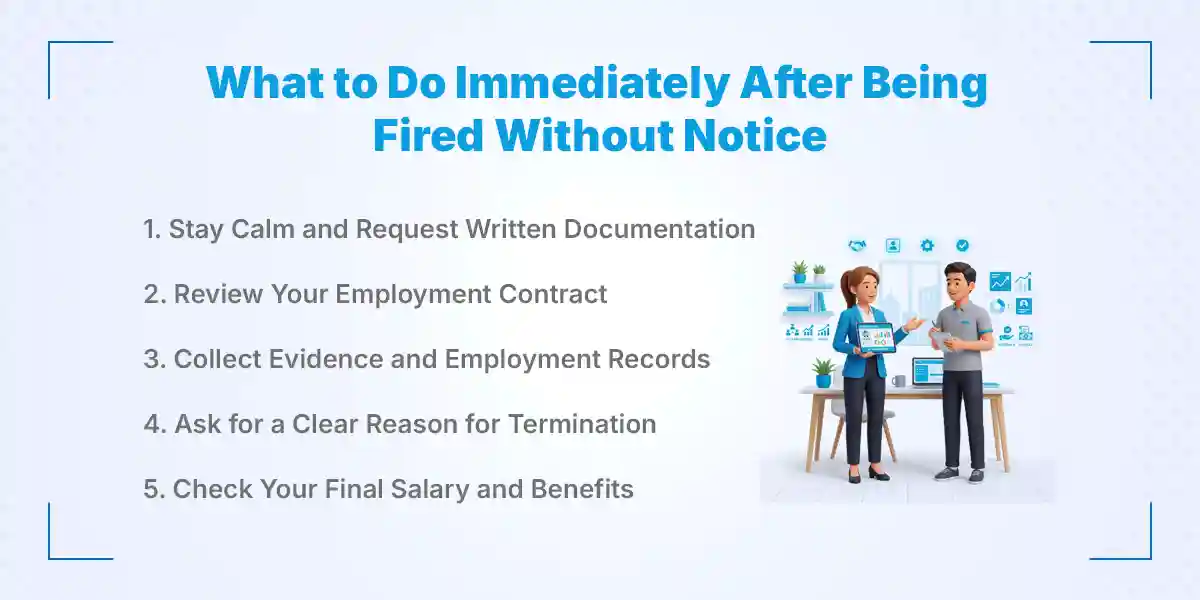
1. Stay Calm and Request Written Documentation
Employees should remain professional and avoid emotional reactions during termination discussions. Requesting written documentation helps clarify the reason for dismissal and creates an official record. This information may become important if disputes arise later. Maintaining professionalism can also protect future career opportunities.
2. Review Your Employment Contract
The employment contract often contains critical information regarding notice periods, termination conditions, compensation, and dispute procedures. Employees should carefully review all relevant clauses. Understanding contractual rights can help determine whether the employer followed proper procedures. Keep copies of all employment-related documents.
3. Collect Evidence and Employment Records
Gathering employment records is important for protecting legal and financial interests. Relevant documents may include employment contracts, salary slips, performance reviews, emails, and termination notices. These records can support future discussions or complaints. Organized documentation strengthens an employee's position during disputes.
4. Ask for a Clear Reason for Termination
Employees have the right to understand why their employment was terminated. A clear explanation helps determine whether the dismissal complies with applicable laws and company policies. Written communication is preferable whenever possible. Detailed information can be useful if legal action becomes necessary.
5. Check Your Final Salary and Benefits
Employees should verify whether they received all outstanding payments and benefits. These may include unpaid salary, overtime compensation, leave encashment, bonuses, or other contractual entitlements. Reviewing final settlement documents helps identify discrepancies. Promptly raise concerns if payments appear incomplete.
What Are Your Legal Rights After Termination in Nepal?
Employees may retain certain rights even after termination. The specific protections available depend on employment agreements, labor regulations, and the circumstances surrounding the dismissal.
- Notice period protections may apply in certain situations.
- Eligible employees may receive severance or compensation.
- Outstanding salary and leave benefits may still be payable.
- Social Security Fund contributions remain important.
- Employees can pursue grievance and dispute resolution procedures.
How Can You Challenge an Unfair Dismissal in Nepal?
Employees who believe they were unfairly terminated may have several options available. Taking appropriate action quickly can improve the likelihood of a favorable outcome.
1. Discuss the Issue With Your Employer
Many workplace disputes can be resolved through direct communication. Employees should calmly request clarification and discuss concerns regarding the termination decision. A professional conversation may uncover misunderstandings or procedural errors. Document all discussions for future reference.
2. Contact the Human Resources Department
Human Resources departments often manage employee grievances and workplace disputes. HR representatives can explain company policies, review termination procedures, and address employee concerns. Employees should submit concerns in writing whenever possible. Written records create a clear timeline of events.
3. File a Complaint With the Relevant Labor Authority
If internal discussions fail, employees may consider contacting the appropriate labor authority. Government agencies may investigate complaints involving labor law violations or unfair dismissal practices. Supporting documentation strengthens any complaint. Understanding filing deadlines is also important.
4. Seek Legal Advice if Necessary
Professional legal advice can help employees understand their rights and options. Lawyers specializing in labor matters can evaluate employment contracts and termination circumstances. Legal guidance may be particularly useful in complex or disputed cases. Employees should retain all relevant records before consultations.
Why Do Employers Terminate Employees Without Notice?
Employers may terminate employees without notice for several reasons. Understanding these factors provides context when evaluating a dismissal.
- Gross misconduct allegations.
- Breach of employment agreements.
- Organizational restructuring initiatives.
- Financial challenges affecting business operations.
- Serious policy violations.
Financial Steps to Take After Losing Your Job
Losing employment unexpectedly can affect financial stability. Taking immediate financial action can reduce stress and improve long-term recovery.
- Create a realistic emergency budget.
- Review savings and available financial resources.
- Prioritize essential expenses and obligations.
- Explore available benefits and assistance programs.
- Develop a structured job search plan.
Mistakes to Avoid After Being Fired Without Notice
Many employees make avoidable mistakes after sudden termination. Avoiding these actions can protect future opportunities and legal rights.
- Reacting emotionally or aggressively.
- Signing documents without reading them carefully.
- Missing important complaint or appeal deadlines.
- Posting negative comments about the employer online.
- Failing to keep employment-related records.
Employee Rights vs Employer Rights in Nepal
A balanced employment relationship involves rights and responsibilities for both parties. Understanding these obligations can help employees evaluate termination situations more effectively.
Situations involving serious misconduct or major contractual violations may allow employers to terminate employment immediately. However, employers are generally expected to follow applicable laws and maintain proper documentation supporting their decisions.
Conclusion
Getting fired without notice in Nepal can be a difficult experience, but understanding your rights and responsibilities can make the situation easier to manage. Taking immediate steps such as reviewing your contract, collecting documentation, and verifying final payments can help protect your interests.
The most important action is to stay informed and respond strategically rather than emotionally. If you are looking for new career opportunities after termination, Kumari Job can help you discover suitable jobs, connect with employers, and take the next step in your professional journey.
Frequently Asked Questions
Submit your comments

Get Our App On



How to Register a Personal PAN Card in Nepal: Online & Offline Methods
VIEW DETAILS
What Is the Average JavaScript Developer Salary in Nepal?
VIEW DETAILS
Salary Tax Slab 2083/84 in Nepal: Latest Tax Rates & Calculation
VIEW DETAILS
What Is the Average Java Developer Salary in Nepal?
VIEW DETAILS


Loading Comments...