
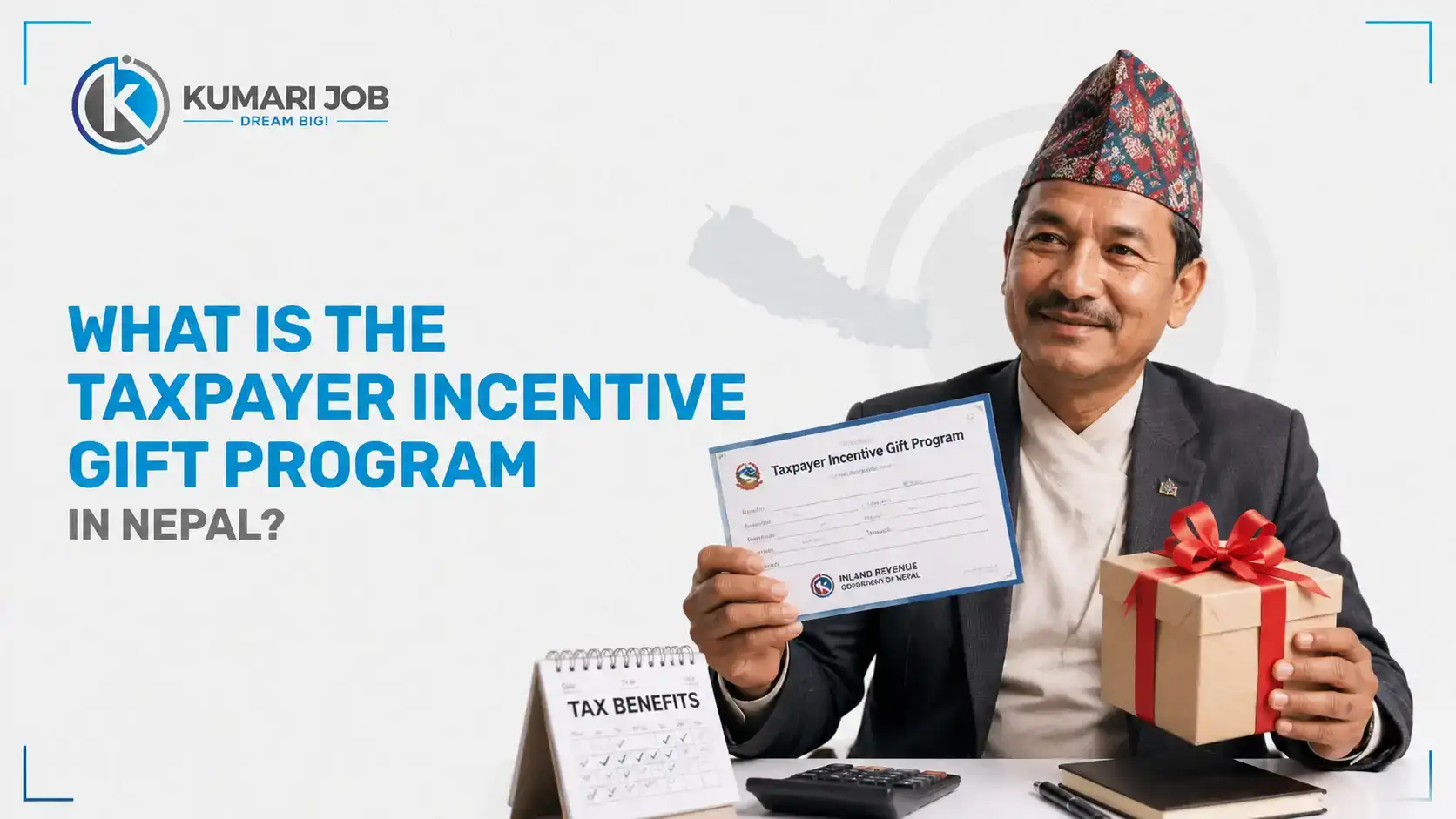

Every time a shopkeeper in Nepal offers a lower price for skipping the bill, the buyer quietly loses more than just a discount. That missing invoice means no proof of purchase, no warranty backup, and no record that the transaction ever happened for tax purposes, a habit that has kept a large share of everyday transactions off the government's books for years.
The Taxpayer Incentive Gift Program, 2083, changes that calculation by turning every valid bill into a lottery ticket worth collecting. This guide explains exactly what the program is, who can join, which purchases qualify, how much you can win, and the exact steps to claim your prize if you're picked.
In this blog
What Is the Taxpayer Incentive Gift Program in Nepal?
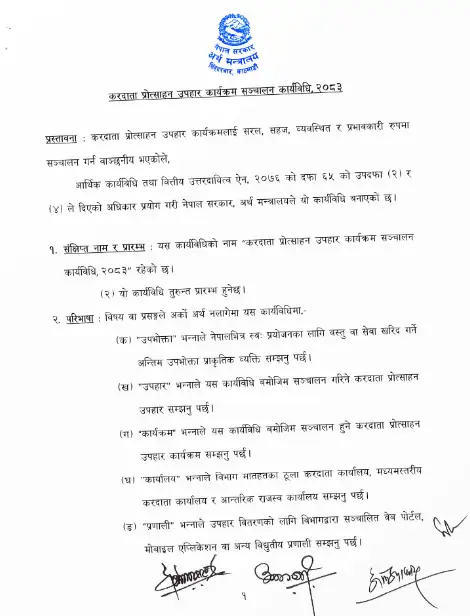
The Taxpayer Incentive Gift Program, 2083, is a government-run consumer lottery that rewards individuals in Nepal for collecting valid purchase invoices. The Ministry of Finance approved its operating procedure under the Economic Procedures and Fiscal Responsibility Act, 2076, and the Inland Revenue Department (IRD) runs the day-to-day operations. It came into effect on Shrawan 21, 2083 BS (around August 7, 2026), with the core goal of pushing more everyday transactions into the formal, tax-recorded economy.
Key facts about the program:
Official name: Taxpayer Incentive Gift Program Operation Procedure, 2083
Governing body: Ministry of Finance (policy) and Inland Revenue Department (operations)
Legal basis: Economic Procedures and Fiscal Responsibility Act, 2076
Effective date: Shrawan 21, 2083 BS (roughly August 7, 2026)
Core purpose: encourage invoice collection and improve tax compliance
Why Did the Government Introduce the Taxpayer Incentive Gift Program?
The government introduced the program to build a habit of asking for and issuing invoices on everyday purchases. Nepal loses meaningful VAT revenue when sellers under-report sales or skip billing altogether, so tying a cash reward to the simple act of taking a bill was designed to close that gap without adding a new tax. The procedure also aims to speed up the shift toward electronic payments, which are easier for the IRD to track and verify than cash.
The program is meant to:
Encourage consumers to demand a valid bill for every purchase
Build a lasting culture of issuing and requesting invoices
Improve overall tax compliance and cut revenue leakage
Create an accurate record of real business transactions
Promote digital and electronic payment methods
Strengthen transparency across retail and service transactions
Who Is Eligible for the Taxpayer Incentive Gift Program?
Any natural person in Nepal who buys goods or services for personal use, spending more than Rs 100 in a single transaction, can take part in the program. Eligibility depends on the purchase being genuinely for personal consumption rather than for a business, and the seller must issue a bill carrying a valid PAN. A personal PAN is also required to register cash purchases or later claim a prize, so setting one up in advance saves time.
Eligibility checklist:
Must be a natural person (not a company) purchasing within Nepal
Purchase must be for personal use, not for business or resale
Minimum transaction value: more than Rs 100 on a single bill
Seller must have a valid PAN printed on the invoice
Participant needs a personal PAN to register or claim a prize
Which Purchases Qualify for a Gift Ticket?
Any personal purchase of goods or services above Rs 100, backed by a valid PAN invoice or an eligible electronic payment, qualifies for one gift ticket. Each valid invoice or payment generates exactly one entry, so splitting a purchase into several small bills does not multiply your chances. Electronic payments made through supported payment service providers are entered automatically, while other eligible bills need manual registration.
Purchases that count:
Personal purchases of goods (retail items, groceries, electronics, and similar)
Personal purchases of services (restaurants, salons, repairs, and similar)
Purchases paid through supported electronic or digital payment channels
Invoices carrying the seller's valid PAN, entered into the IRD system
One qualifying invoice or payment equals one gift ticket, used only once
Which Purchases Are Not Eligible?
Certain categories of bills are excluded from the program even when they cross the Rs 100 threshold. Utility-style payments such as electricity, telephone, and internet bills are left out because they are recurring obligations rather than discretionary purchases. Business, government, and transport-related transactions are also excluded to keep the reward focused on everyday retail consumers.
Purchases that don't count:
Purchases made for business or commercial purposes
Invoices issued in the name of government agencies or public institutions
Telephone, internet, and electricity bills
Vehicle purchases and transportation or freight charges
Airline tickets
Purchases from sellers without a valid PAN
Duplicate submissions of the same invoice or electronic payment
How Does the Taxpayer Incentive Gift Program Work?
The program converts every qualifying purchase into an automatic entry in a government-run prize draw. Once a bill or electronic payment is verified in the IRD's system, it becomes one gift ticket that sits in the pool for the next scheduled draw. From there, participation splits into two paths depending on how the purchase was paid for.
1. Automatic Entry Through Electronic Payments
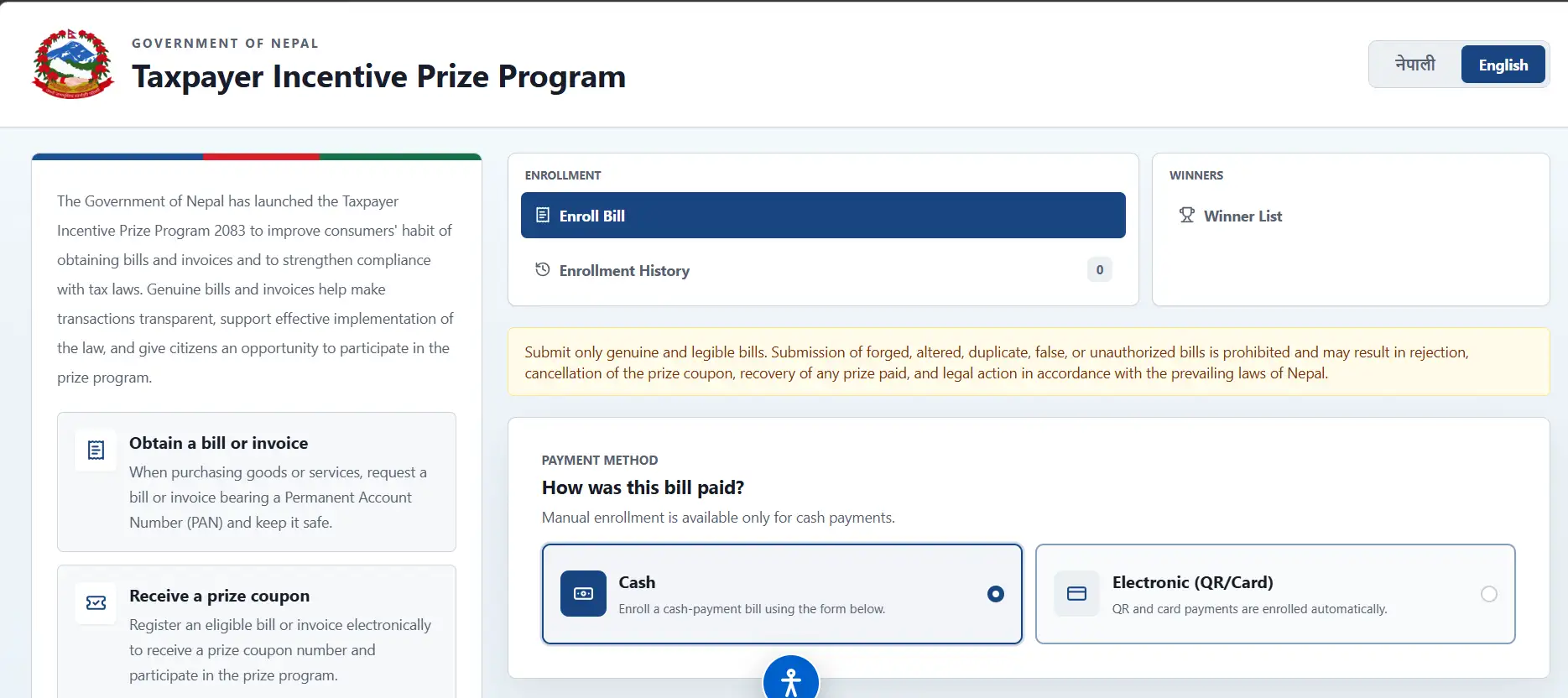
Electronic payments made through supported payment service providers enter the draw without any extra steps from the buyer. The moment a linked digital wallet, card, or bank transfer processes an eligible purchase, the transaction detail flows straight into the IRD's system. This removes the risk of forgetting to register a bill and rewards consumers who are already moving away from cash. It is also the fastest way to build up entries, since every qualifying digital transaction above Rs 100 counts on its own.
2. Manual Registration for Cash and Other Payments
Bills paid in cash or by any method outside the automatic system must be registered manually on the IRD's digital platform. The buyer enters details such as the invoice number, the seller's PAN, the invoice date, the total amount, the payment method, and their own name and mobile number. This step exists because the IRD has no way to verify a paper bill unless the consumer submits it directly. Registering the same bill twice does not create extra entries, since the system accepts each invoice only once.
How Are Winners Selected?
The IRD selects winners twice a month through an automated draw. One draw covers eligible transactions from the 16th of the previous month through month-end, and the second covers the 1st through the 15th. The system is built this way so winners are announced roughly every two weeks rather than once a month.
Draw details:
Draw dates: 1st and 16th of every month
One winner selected for each day within the covered period
One additional bumper winner chosen every 15 days
Selection is fully automated using the pool of registered gift tickets
Winners are notified by mobile number and email
Names are published on the IRD's official website and social media channels
How Much Is the Taxpayer Incentive Gift?
The program pays Rs 133,334 to one daily winner and Rs 1,000,000 to one bumper winner every 15 days, before tax. A 25% windfall-gains tax under Section 88A of the Income Tax Act, 2058 is deducted at source, so the amount that actually lands in a winner's bank account is lower than the announced figure. After that deduction, a daily winner receives roughly Rs 100,000 and a bumper winner receives roughly Rs 750,000.
How Can Winners Claim the Taxpayer Incentive Gift?
Winners must apply in person at their nearest Inland Revenue Office within 15 days of the announcement. The claim requires the original invoice that won, an accepted form of identification, and proof of a personal PAN and bank account. The IRD verifies every document before releasing the approved amount directly to the winner's bank account.
Claim checklist:
Original invoice or proof of the winning transaction
Citizenship certificate, national ID, passport, or driving license
Personal PAN details
Bank account details for the prize deposit
Completed claim application submitted at the nearest Inland Revenue Office
Application filed within 15 days of the winner announcement
What Happens If a Winner Doesn't Claim the Prize?
Any prize left unclaimed after the 15-day window is transferred to the Prime Minister's Disaster Relief Fund. This means a missed deadline permanently forfeits the reward, since the money does not roll over into a future draw. Submitting forged invoices or fake identification to claim a prize can also lead to legal action rather than a payout.
What Should Consumers Know Before Participating?
Getting the most out of the program comes down to good invoice habits rather than any special trick. Because each bill only counts once and cannot be resubmitted, checking the invoice details before leaving the shop prevents a wasted entry. Staying on the official IRD portal also protects consumers from third-party sites that promise guaranteed wins.
Good habits to follow:
Always ask for a valid invoice with the seller's PAN printed on it
Check the invoice number, amount, and date before leaving the counter
Never submit the same bill more than once
Keep the original invoice safe until draw results are announced
Register cash purchases only through the official IRD system
Be skeptical of anyone outside the IRD promising a guaranteed win
What Is the Benefit of the Program for Employees and Job Seekers?
For salaried employees and job seekers, the program is a low-effort introduction to broader financial habits. Requesting bills, tracking a personal PAN, and using digital payments are the same behaviors that support cleaner income records and smoother tax filing later in a career. It also links an everyday habit asking for a receipt to a tangible reward, making tax compliance feel less abstract for first-time taxpayers.
Taxpayer Incentive Gift Program: Key Facts at a Glance
Conclusion
The Taxpayer Incentive Gift Program makes one thing clear: asking for a bill is no longer just good practice; it's a real shot at cash. Get your PAN in order, register your invoices on time, and every purchase over Rs 100 becomes a ticket worth having.
For more on how programs like this affect your salary, taxes, and take-home pay, check out Kumari Job's career and finance guides built for working professionals in Nepal.
Frequently Asked Questions
Submit your comments

Get Our App On



SEO Interview Questions Every Beginner Should Practice in Nepal
VIEW DETAILS
What Is the Difference Between Free and Paid Digital Marketing Courses in 2026?
VIEW DETAILS
How Do Facebook Ads Work in 2026?
VIEW DETAILS
How to Create Your First Google Ads Campaign (Beginner's Step-by-Step Guide)
VIEW DETAILS


Loading Comments...