



Hiring the right employees is becoming more difficult as businesses receive a growing number of applications for every open position. Manual resume screening, scattered communication, and lengthy hiring processes often delay recruitment, increase costs, and make it easier to miss qualified candidates.
An Applicant Tracking System (ATS) helps businesses simplify recruitment by automating repetitive hiring tasks and organizing candidate information in one place. This guide explains the difference between ATS and traditional recruitment, how each approach works, their advantages and limitations, and which option is better for different hiring needs.
In this blog
What Is an Applicant Tracking System (ATS)?
An Applicant Tracking System (ATS) is recruitment software that helps businesses collect, organize, screen, and manage job applications throughout the hiring process. It automates tasks such as job posting, resume screening, candidate tracking, interview scheduling, and communication, making recruitment faster and more efficient. ATS software also helps recruiters collaborate, improve hiring decisions, and provide a better experience for job candidates.
What Is Traditional Recruitment?
Traditional recruitment is a hiring method that relies on manual processes to attract, screen, and hire candidates without using advanced recruitment software. It typically includes reviewing resumes manually, conducting phone calls, posting jobs through newspapers or job portals, managing applications with spreadsheets or emails, and scheduling interviews. Many businesses still use traditional recruitment for small-scale hiring, local recruitment, or positions that require a more personal and relationship-based hiring approach.
ATS vs Traditional Recruitment: Key Differences
| Feature | Applicant Tracking System (ATS) | Traditional Recruitment |
|---|---|---|
| Recruitment Process | Automates the entire hiring workflow from job posting to onboarding. | Relies on manual processes such as emails, spreadsheets, and paper records. |
| Resume Screening | Automatically filters and ranks resumes based on predefined criteria. | Recruiters manually review every resume, which takes more time. |
| Candidate Experience | Provides faster communication, application tracking, and timely updates. | Communication may be delayed, resulting in a less consistent candidate experience. |
| Hiring Speed | Speeds up recruitment through automation and streamlined workflows. | Hiring takes longer due to manual screening and scheduling. |
| Recruitment Cost | Reduces long-term hiring costs by improving recruiter productivity. | Higher administrative costs because of manual work and repetitive tasks. |
| Collaboration Among Hiring Teams | Enables recruiters and hiring managers to collaborate on one centralized platform. | Collaboration depends on emails, phone calls, and shared documents. |
| Data Accuracy | Stores candidate data in a centralized database with fewer manual errors. | Manual data entry increases the risk of duplicate records and inaccuracies. |
| Reporting and Analytics | Generates real-time recruitment reports and hiring insights. | Offers limited reporting because data is managed manually. |
| Scalability | Easily manages large recruitment volumes and multiple job openings. | Becomes difficult to manage as hiring needs increase. |
| Compliance and Record Keeping | Maintains organized records to support recruitment compliance and audits. | Manual record keeping can lead to incomplete documentation and compliance issues. |
How Does an ATS Improve the Recruitment Process?
An Applicant Tracking System (ATS) improves the recruitment process by automating repetitive hiring tasks, organizing candidate information, and helping recruiters hire faster and more efficiently. It reduces manual work, improves collaboration, and creates a structured hiring workflow from job posting to onboarding.
_1783324668.webp)
1. Faster Resume Screening
An ATS automatically scans and filters resumes based on predefined criteria such as skills, qualifications, and experience. This helps recruiters identify qualified candidates in less time and reduces manual resume review.
2. Automated Candidate Tracking
ATS software tracks every candidate throughout the hiring process, from application submission to final selection. Recruiters can easily monitor candidate progress and manage recruitment pipelines from a single dashboard.
3. Better Communication with Applicants
An ATS automates emails, interview invitations, and application status updates. This keeps candidates informed throughout the recruitment process and improves their overall experience.
4. Reduced Manual Work
By automating repetitive administrative tasks, an ATS allows recruiters to spend more time evaluating candidates and making hiring decisions. This improves productivity and reduces the risk of human error.
5. Improved Hiring Decisions
An ATS provides organized candidate data, recruitment reports, and hiring analytics that support informed decision-making. Recruiters can compare applicants more effectively and select the best talent based on consistent evaluation criteria.
Benefits of Using an ATS Over Traditional Recruitment
An Applicant Tracking System (ATS) offers several advantages over traditional recruitment by automating hiring tasks, improving efficiency, and helping businesses hire the right talent faster. It reduces manual work, streamlines recruitment workflows, and enhances the overall hiring experience for both recruiters and candidates.
1. Saves Time
An ATS automates tasks such as resume screening, candidate tracking, and interview scheduling. This reduces the time spent on manual recruitment and speeds up the hiring process.
2. Reduces Recruitment Costs
By automating repetitive tasks, an ATS lowers administrative expenses and improves recruiter productivity. Faster hiring also reduces the overall cost of filling open positions.
3. Improves Hiring Quality
An ATS helps recruiters identify qualified candidates using predefined criteria and organized candidate data. This leads to more informed hiring decisions and better-quality hires.
4. Minimizes Human Errors
Automated data management reduces mistakes caused by manual resume handling and record-keeping. Accurate candidate information helps maintain a reliable recruitment process.
5. Creates a Structured Hiring Workflow
An ATS standardizes every stage of recruitment, from job posting to candidate selection. A structured workflow improves collaboration and keeps the hiring process organized.
6. Enhances Employer Branding
An ATS provides a smooth application process with timely communication and professional candidate interactions. A positive hiring experience strengthens the company's reputation among job seekers.
7. Supports Remote Recruitment
Cloud-based ATS software allows recruiters and hiring managers to manage recruitment from anywhere. This makes it easier to hire remote, hybrid, and geographically distributed talent.
8. Better Talent Database Management
An ATS stores candidate information in a centralized and searchable database for future hiring needs. Recruiters can quickly access previous applicants and build a strong talent pipeline for upcoming vacancies.
Challenges of Traditional Recruitment
Traditional recruitment becomes more difficult to manage as hiring volumes increase because most tasks depend on manual effort. While it may work for occasional hiring, it often creates delays, increases administrative work, and limits recruitment visibility. Businesses with growing recruitment needs may struggle to maintain efficiency using manual processes alone.
Common challenges of traditional recruitment include:
- Time-consuming resume screening.
- Manual candidate tracking through spreadsheets or paper records.
- Higher administrative workload for recruiters.
- Delayed communication with applicants.
- Increased risk of overlooking qualified candidates.
- Duplicate candidate records.
- Limited collaboration between hiring teams.
- Inconsistent recruitment processes across departments.
- Difficulty managing multiple job vacancies simultaneously.
- Limited reporting and recruitment analytics.
- Greater chance of manual errors.
- Longer time-to-hire.
These challenges not only slow recruitment but can also affect the overall candidate experience. Delays and inconsistent communication may cause skilled professionals to accept offers from competitors before the hiring process is complete.
When Is Traditional Recruitment Still a Better Choice?
Traditional recruitment remains suitable when hiring needs are limited, highly personalized, or focused on specific local markets. Not every organization requires advanced recruitment software, especially when hiring occurs infrequently. In certain situations, manual recruitment can still deliver effective hiring results.
Traditional recruitment may be the better option in the following situations:
- Small businesses hire only a few employees each year.
- Local walk-in recruitment for retail stores, restaurants, or service businesses.
- Executive or leadership hiring that depends heavily on networking and relationship building.
- Recruitment through employee referrals and personal recommendations.
- Community-based hiring events and job fairs.
- Temporary or seasonal hiring with a limited number of applicants.
- Organizations with very small HR teams and simple recruitment workflows.
- Businesses operating in regions where digital recruitment adoption remains low.
Even when traditional recruitment is appropriate, many organizations eventually adopt ATS software as hiring demands grow. Combining personal recruitment strategies with modern technology often provides the best balance between efficiency and relationship-building.
Why Are More Companies Switching to ATS?
More companies are switching to an Applicant Tracking System (ATS) because it automates recruitment, improves hiring efficiency, and helps manage growing hiring demands. As recruitment becomes more competitive, businesses need faster, more organized, and data-driven hiring processes. An ATS provides the tools to streamline recruitment while improving collaboration and candidate experience.
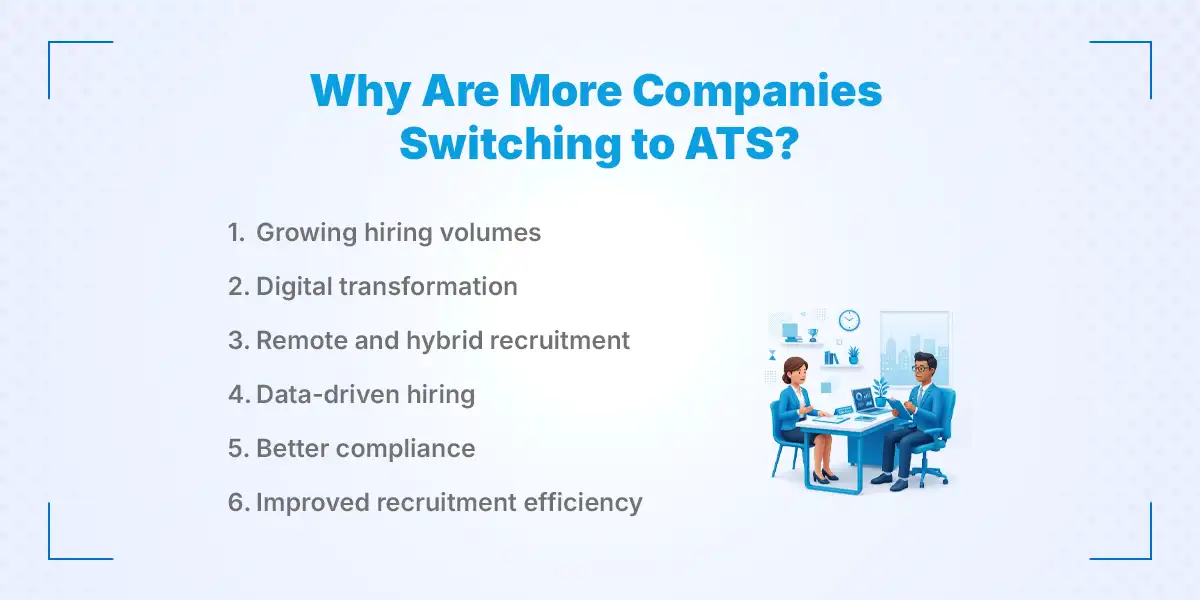
1. Growing Hiring Volumes
As businesses expand, they receive more job applications for every vacancy. An ATS helps manage large numbers of applicants efficiently without increasing manual workload.
2. Digital Transformation
Organizations are adopting digital HR solutions to modernize recruitment and improve operational efficiency. An ATS replaces manual processes with automated workflows that save time and increase productivity.
3. Remote and Hybrid Recruitment
Remote and hybrid work have increased the need for online recruitment tools. An ATS allows recruiters to post jobs, screen candidates, schedule interviews, and collaborate from any location.
4. Data-Driven Hiring
An ATS provides recruitment analytics and hiring reports that help businesses make informed decisions. Recruiters can measure hiring performance and improve recruitment strategies using real-time data.
5. Better Compliance
An ATS securely stores candidate records and maintains organized recruitment documentation. This helps businesses meet hiring policies, data protection requirements, and compliance standards.
6. Improved Recruitment Efficiency
An ATS automates repetitive tasks such as resume screening, candidate tracking, and interview scheduling. This reduces administrative work, shortens the hiring process, and allows recruiters to focus on selecting the best candidates.
Features to Look for in an ATS
The best Applicant Tracking System (ATS) should include features that automate recruitment, improve candidate management, and simplify the hiring process. Choosing an ATS with the right capabilities helps businesses hire faster, reduce manual work, and improve recruitment efficiency.
An ideal ATS should offer resume parsing to automatically extract candidate information, job posting automation to publish vacancies across multiple job boards, and a centralized candidate database to organize applicant profiles. It should also include interview scheduling, recruitment analytics, and email automation to streamline communication and track hiring performance. Additionally, custom hiring workflows help businesses standardize their recruitment process, while integration with HR software ensures a smooth transition from hiring to onboarding and employee management.
Conclusion
Choosing between an Applicant Tracking System and traditional recruitment depends on an organization's hiring volume, recruitment goals, and long-term growth plans. While traditional recruitment can still be effective for small-scale or relationship-based hiring, it often becomes inefficient as applications increase and recruitment processes become more complex. An ATS provides automation, centralized candidate management, faster hiring, and valuable recruitment insights that help organizations build stronger hiring processes. Businesses looking to improve recruitment efficiency, reduce administrative work, and deliver a better candidate experience should consider adopting an ATS that aligns with their workforce needs.
If your organization is ready to modernize its hiring process, Kumarijob offers a powerful Applicant Tracking System designed to simplify recruitment, automate candidate management, and help businesses hire the right talent faster. Explore Kumarijob's ATS solutions to streamline your recruitment process and build a more efficient hiring strategy.
Frequently Asked Questions
Submit your comments

Get Our App On



SEO Training for Freshers in Nepal: Skills, Career & Job Opportunities
VIEW DETAILS
SEO Training vs. Self-Learning: Which Is Right for You?
VIEW DETAILS
How to Choose Between Two Job Offers
VIEW DETAILS
Digital Marketing Training Interview Questions and Answers for Freshers
VIEW DETAILS


Loading Comments...