


Most people in Nepal want to know how much our government ministers actually get paid. But finding a simple answer is hard because official reports are often long and full of difficult words. You might be wondering if the numbers you see online are still correct for 2026 or if they have changed with the new budget.
In this post, we will give you a clear and simple breakdown of the home minister's salary in Nepal. We have looked at the latest government rules and the 2082/83 budget to find the real figures. You will learn about the monthly cash they receive and the extra benefits like housing, cars, and security that come with the job.
In this blog
Role and Importance of the Home Ministry in Nepal
The Ministry of Home Affairs is often called the backbone of the Nepal government. It is the department that works 24/7 to make sure you can sleep safely at night.
Key Responsibilities and Security Mandates
The Home Minister is the person in charge of everything related to the country's internal safety. Their job is not just sitting in an office; it involves managing the most important security forces in Nepal.
- Commanding the Police: The Home Minister oversees both the Nepal Police and the Armed Police Force (APF). If there is a crime, a protest, or a security threat, the instructions come from this ministry.
- Maintaining Law and Order: They are responsible for making sure that laws are followed across all 77 districts. This includes managing the Chief District Officers (CDOs) who represent the government at the local level.
- Disaster and Crisis Management: When there is an earthquake, flood, or any national emergency, the Home Ministry leads the rescue and relief work.
- Citizenship and Identity: This office also handles sensitive tasks like issuing citizenships (Nagarita) and managing the National ID system.
Why the Home Minister Holds a Top Tier in the Government Pay Scale
You might wonder why the home minister's salary is higher than that of a regular Member of Parliament (MP). The reason is simple: High Risk and High Responsibility.
- Decision Making: Unlike an MP who mainly focuses on making laws, a Minister has Executive Power. They have to make split-second decisions during riots or national security threats. One wrong move can affect the safety of the entire country.
- 24/7 Accountability: A Home Minister never truly goes off duty. Whether it is a midnight security breach or a natural disaster at 3 AM, they are the first person held accountable by the public and the Parliament.
- High-Stakes Role: Because they control the police and intelligence services, the role carries a lot of personal risk. The government provides a top-tier salary and facilities to ensure the person in this position is financially stable and fully focused on protecting Nepal without any outside influence.
What is the Official Home Minister's salary in Nepal?
The official basic salary of a Cabinet Minister (including the Home Minister) in Nepal is NPR 72,730 per month. However, when you add the standard monthly allowances, the total cash amount they receive is approximately NPR 79,230 per month.
Basic Monthly Salary Breakdown
When discussing the basic home minister's salary, it is important to look at the fixed government rate that serves as the foundation of their pay. This amount is set by the federal government and is paid directly from the national treasury.
- Basic Monthly Pay: NPR 72,730
- Dearness Allowance: NPR 2,000 (standard monthly inflation adjustment)
- Hospitality Allowance: NPR 4,500 (fixed for cabinet ministers)
- Total Monthly Cash Income: NPR 79,230
It is important to remember that this basic figure does not include the huge non-cash benefits like a free house, vehicles, and security, which would cost lakhs of rupees if paid for privately.
Beyond the Base Pay: Perks, Allowances, and Benefits
The basic salary is only one part of what the Home Minister receives. In Nepal, high-level officials get many extra benefits that are not always paid in cash. These perks are meant to help them do their heavy work without worrying about personal costs. If we added up the value of all these facilities, the total amount would be much higher than the basic pay.
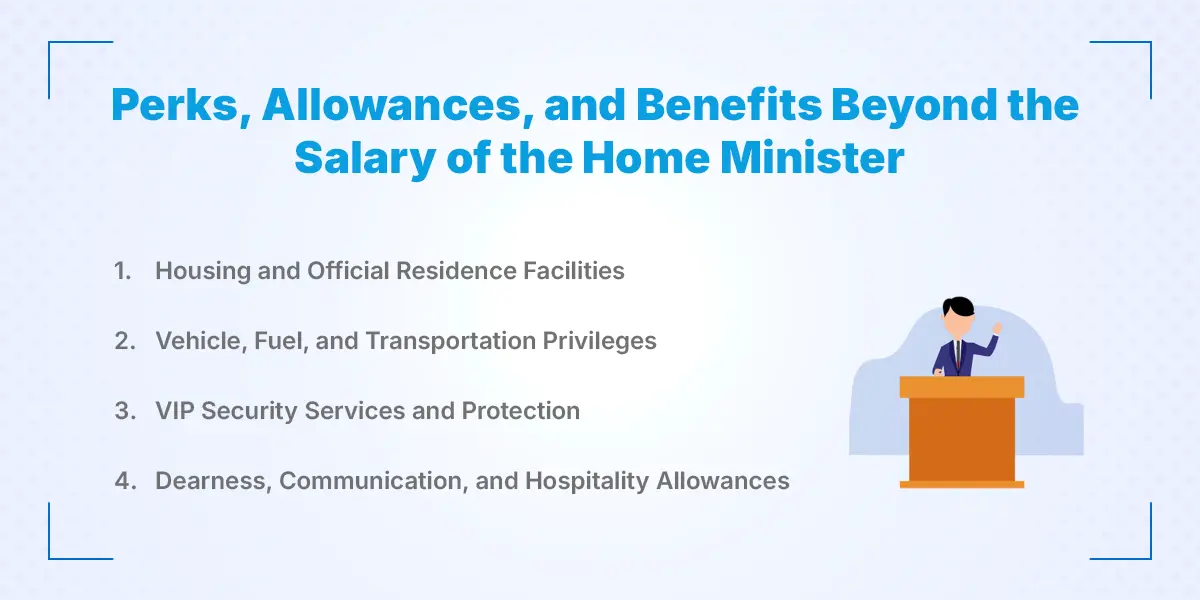
1. Housing and Official Residence Facilities
The Home Minister does not have to worry about finding a place to live in Kathmandu. The government provides a large, fully furnished VIP bungalow, usually located in the Pulchowk (Mantri Niwas) area. This house is completely free, meaning the minister pays no rent. All costs for electricity, water, and cleaning are paid by the state. The residence also comes with a team of domestic staff, like gardeners and house cleaners, to maintain the property. There are even separate rooms for holding official meetings with security chiefs. This facility ensures the minister lives in a secure and comfortable environment while serving the country.
2. Vehicle, Fuel, and Transportation Privileges
Getting around the city or traveling to different districts is made very easy for the minister. The government provides at least one luxury official vehicle, often a high-end SUV, specifically for their use. Along with the car, the state also provides a professional driver whose salary is paid by the government. The minister receives a large monthly fuel quota, usually around 230 liters of petrol, to cover all official travel. If the car needs repairs or new parts, the government covers those costs too. For long-distance trips or visits outside the country, all flight tickets and hotel stays are fully funded by the national budget.
3. VIP Security Services and Protection
Because the Home Minister manages the country's safety, their own security is a top priority. They are provided with 24/7 protection by a dedicated team of bodyguards and security personnel. This team usually includes highly trained officers from the Nepal Police and the Armed Police Force (APF). These guards stay with the minister at their home and travel with them everywhere they go. Often, a lead security vehicle (escort) also follows the minister’s car during travel to clear traffic and ensure safety. This level of protection is a massive benefit that would cost a normal person millions of rupees to maintain privately.
4. Dearness, Communication, and Hospitality Allowances
On top of the basic pay, there are several small cash payments that add up every month. For 2026, the dearness allowance (money to help with rising prices) has been increased to NPR 5,000 per month. The minister also gets a communication allowance of around NPR 5,000 to pay for mobile phones and internet services. There is another fund called the hospitality allowance, which is about NPR 4,500 monthly. This money is used to buy tea, snacks, or light meals when guests visit for official meetings. All these extra payments are sent directly to the minister's bank account along with their salary.
Basic Salary vs. Total Income: The Real Picture
When we look at the monthly cash a minister gets, it only tells half the story. The basic home minister's salary and fixed allowances add up to around NPR 79,230 in their bank account. But this is not their total income. If we calculate the cash value of all the free things they get, the real income is much higher. The government pays for their expensive house, luxury cars, fuel, and round-the-clock security, which costs the country lakhs of rupees every single month.
The true cost of keeping a Home Minister in office is huge for the national budget. While their basic pay is less than that of many high-level business managers, the total package of facilities is unmatched. When you include the cost of domestic staff, electricity bills, and private security teams, the total value can easily cross NPR 5,00,000 per month. This means the actual financial benefit they receive is many times more than the official salary number we see on paper or in simple news reports.
Comparing the Home Minister's Pay with Other Government Officials
To understand where the Home Minister stands, we need to look at the rest of the government hierarchy. Even though the Home Minister is very powerful, they are not at the very top of the pay scale.
As you can see, the Home Minister earns more than a regular Member of Parliament but slightly less than the salary of the Prime Minister. Interestingly, the top-level civil servant, the Chief Secretary, actually has a basic salary that is very close to or sometimes slightly higher than that of a Cabinet Minister. This shows that the Nepal government's salary structure tries to balance the pay between political leaders and the permanent experts who run the administration.
Retirement Benefits and Post-Service Entitlements
Once a Home Minister completes their term, they don't just walk away with nothing. The Nepal government has specific rules to ensure that former high-level officials are taken care of after they leave office. These benefits are meant to respect their service and keep them safe even after they are no longer in power. While some of these perks have faced public debate, they remain a key part of the political system in 2026.
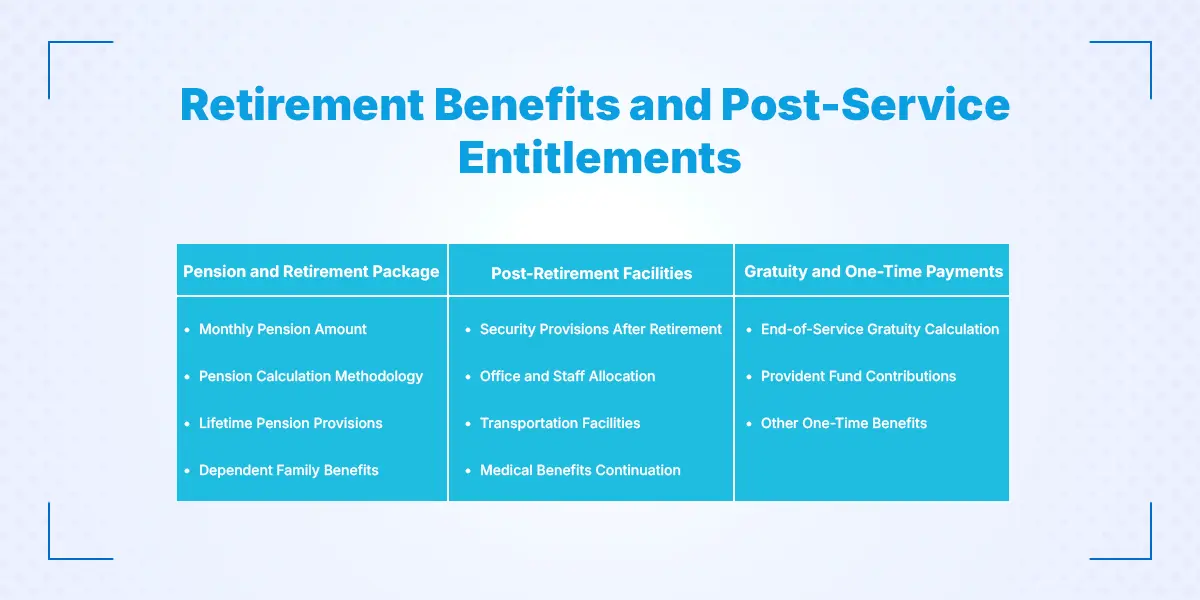
1. Pension and Retirement Package
In the past, ministers didn't have a formal monthly pension like civil servants, but things are changing with new laws. Under the Contribution-Based Pension Act, officials now contribute a small part of their salary each month to a fund. When they retire, they receive a monthly payment based on how much they saved and how long they served. This lifetime pension is designed to provide a steady income for their daily needs. If a former minister passes away, their dependent family members, like a spouse, can often continue to receive a portion of this benefit. This system ensures that the minister's family is not left without financial support in the future.
2. Post-Retirement Facilities
Even after leaving the ministry, a former Home Minister often continues to receive high-level security. Because they handled sensitive national secrets and made tough decisions against criminals, the government provides them with bodyguards for their safety. In some cases, they are also given a small office space and a few staff members to help with their ongoing public work. While they lose the large official bungalow, they may receive a vehicle and a fixed amount of fuel for a few years. Medical benefits also continue, allowing them to get treatment at government hospitals without paying the full cost. These facilities help them transition from a powerful role back into private life securely.
3. Gratuity and One-Time Payments
When a Home Minister's term officially ends, they receive a one-time cash payment known as gratuity. This amount is calculated based on the total number of months or years they spent in the cabinet. Additionally, the money they contributed to the Provident Fund (Sanchaya Kosh) during their service is returned to them with interest. This lump-sum payment acts as a financial cushion to help them settle down after leaving their government job. Some ministers also receive a one-time "wardrobe" or travel allowance as they exit their role. These payments ensure that they have a good amount of savings as soon as their official salary stops.
Conclusion
To conclude, the home minister's salary in Nepal for 2026 is NPR 72,730 as basic pay, which amounts to around NPR 79,230 after adding cash allowances. However, the real answer to how much they earn is much larger than this single number. When you add the value of a free VIP bungalow in Pulchowk, luxury SUVs, hundreds of liters of free fuel, and a 24/7 security team, the total benefit exceeds NPR 5,00,000 per month.
While the cash in their bank account might seem modest compared to private jobs, the massive perks and lifetime security provided by the government make it one of the most well-supported positions in the country.
Frequently Asked Questions
Submit your comments

Get Our App On



SEO Training for Freshers in Nepal: Skills, Career & Job Opportunities
VIEW DETAILS
SEO Training vs. Self-Learning: Which Is Right for You?
VIEW DETAILS
How to Choose Between Two Job Offers
VIEW DETAILS
Digital Marketing Training Interview Questions and Answers for Freshers
VIEW DETAILS


Loading Comments...