


Imagine standing at the front lines of a crisis, where your split-second decisions and physical strength are the only things standing between disaster and safety. As Nepal's urban landscapes expand and disaster preparedness becomes a national priority, firefighter jobs in Nepal have evolved into one of the most respected and service-oriented high-paying careers in Nepal for youth in 2026.
Firefighting is no longer just about putting out flames; it is a specialized role in emergency rescue, disaster response, and public safety management. From metropolitan cities to high-security airports, the demand for trained professionals who can handle high-stress environments is rising steadily.
In this comprehensive guide, you will learn exactly what it takes to join the fire services, the physical and academic qualifications required, the salary structures across different sectors, and the best platforms to find verified job vacancies.
In this blog
What Is a Firefighter Job in Nepal?
A firefighter job in Nepal is a professional emergency response role focused on extinguishing fires, protecting life and property, and conducting technical rescues during natural or man-made disasters. Firefighters serve as the primary responders for public safety, ensuring that communities are protected from hazardous incidents.
In the Nepali context, these roles are primarily managed by metropolitan offices, municipal governments, and specialized authorities like the Civil Aviation Authority of Nepal (CAAN). Beyond simple fire control, modern firefighters are trained in basic medical first aid and hazardous material management.
For instance, metropolitan offices in Kathmandu hire firefighters to provide a holistic safety net for the public. These positions offer a blend of physical challenge and community service, typically providing the following benefits:
Monthly Government Salary: Most municipal roles offer fixed government-scale salaries, typically starting from NPR 20,000 to NPR 30,000 depending on the grade.
Risk and Uniform Allowances: Due to the dangerous nature of the work, firefighters often receive additional stipends and allowances for equipment maintenance and personal safety.
Stability and Benefits: Government-related roles provide long-term career stability, including pension plans and medical coverage for staff and families.
Professional Training: Recruits undergo rigorous physical and technical training in disaster management, which is highly valued for future leadership roles.
Why Firefighter Jobs Are Important in Nepal
Firefighting has become a critical profession in Nepal due to rapid urbanization, where densely populated areas face higher risks of fire incidents and structural collapses. Furthermore, Nepal's vulnerability to seismic activity requires a robust force of trained rescue personnel who can respond instantly to earthquake-related emergencies.
Rising Urbanization: The growth of multi-story buildings and industrial zones increases the potential for fire accidents, making fire control a daily necessity.
Earthquake Preparedness: Firefighters are often the first on the scene during search and rescue operations after seismic events, providing life-saving support.
Social Impact and Respect: Serving as a firefighter allows youth to give back to society, building a reputation as local heroes who protect their neighbors.
Forest Fire Management: Specialized environmental firefighters play a vital role in protecting Nepal's wildlife and natural resources from seasonal forest fires.
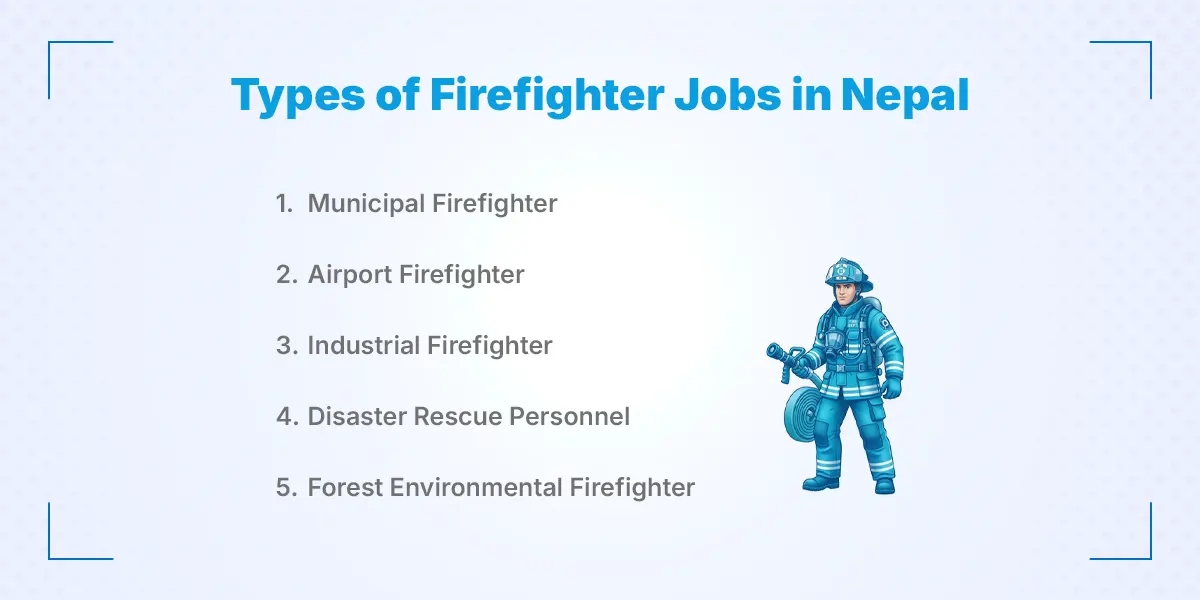
Types of Firefighter Jobs in Nepal
Firefighter roles in Nepal are categorized by the specific environment they protect and the specialized training required for those settings. These positions allow professionals to focus on different aspects of emergency response.
1. Municipal Firefighter
Municipal firefighters work directly under metropolitan and municipality offices. They are responsible for responding to household fires, structural collapses, and emergency situations within city limits. These roles are essential for maintaining daily public safety.
2. Airport Firefighter
Airport firefighters are specialized personnel managed by airport authorities to handle aviation-specific emergencies. They receive expert training in aircraft fire control and specialized rescue operations involving high-tech equipment.
3. Industrial and Forest Firefighter
Industrial firefighters protect large factories from hazardous material leaks, while forest firefighters focus on protecting national parks from seasonal wildfires. Both roles highlight the importance of specialized protection to safeguard Nepal's economy and natural heritage.
Duties and Responsibilities of a Firefighter
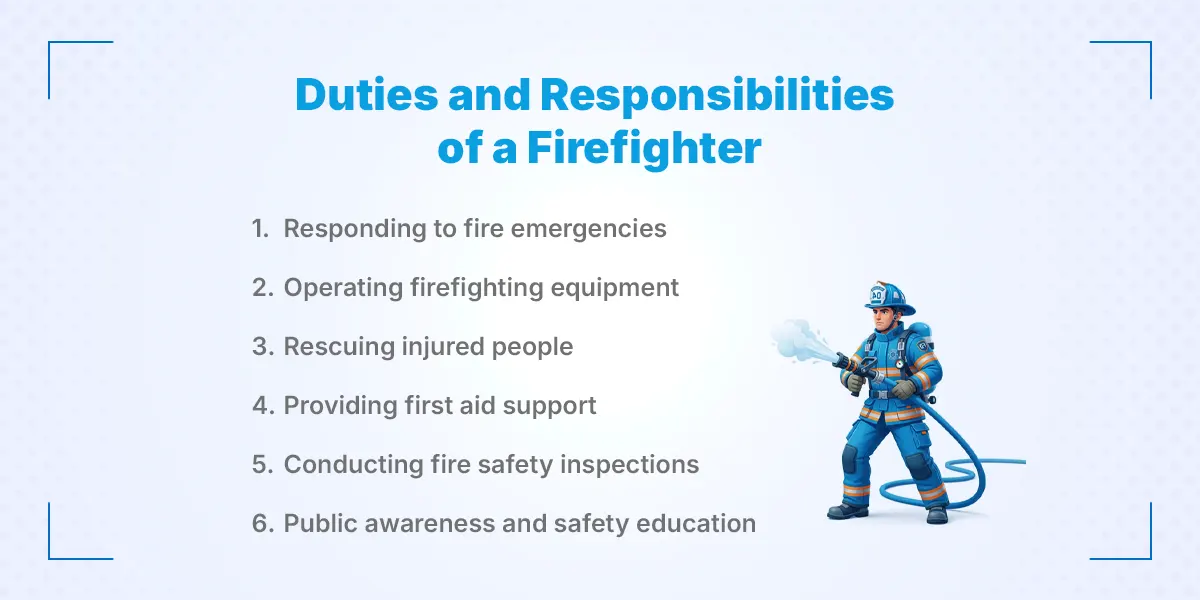
Firefighters play a major role in protecting lives, property, and public safety during emergencies. Their work includes fire control, rescue operations, emergency response, and spreading fire safety awareness in communities.
1. Responding to Fire Emergencies
One of the primary duties of firefighters is responding quickly to fire incidents and emergency calls. They travel to accident or fire locations using emergency vehicles and begin rescue operations immediately. Firefighters assess the situation, control the fire, and help evacuate people safely. Fast response time is critical to reducing damage and saving lives.
2. Operating Firefighting Equipment
Firefighters are trained to use specialized firefighting tools and equipment during emergencies. This includes water hoses, fire extinguishers, ladders, oxygen tanks, and rescue devices. They must know how to operate the equipment safely and efficiently under pressure. Proper handling of equipment helps firefighters manage dangerous situations effectively.
3. Rescuing Injured People
Rescuing trapped or injured individuals is another important responsibility of firefighters. They help people escape from burning buildings, road accidents, floods, and other disaster situations. Firefighters often work in risky conditions to protect victims and provide immediate assistance. Their rescue efforts can save many lives during emergencies.
4. Providing First Aid Support
Firefighters are also trained in basic first aid and emergency medical support. They provide immediate care to injured people before medical teams arrive at the scene. This may include CPR, wound treatment, or helping unconscious victims. Basic medical assistance can be life-saving during critical situations.
5. Conducting Fire Safety Inspections
Many firefighters participate in fire safety inspections in offices, industries, schools, and public buildings. They check fire alarms, emergency exits, and safety equipment to ensure everything meets safety standards. These inspections help prevent fire accidents before they occur. Firefighters also recommend safety improvements when necessary.
6. Public Awareness and Safety Education
Firefighters help educate the public about fire prevention and emergency safety practices. They organize awareness programs, training sessions, and community campaigns on fire safety. Schools, businesses, and local communities often receive guidance from firefighters on handling emergencies. Public education helps reduce fire risks and improve disaster preparedness.
Skills Required for Firefighter Jobs
Becoming a professional firefighter requires a high level of technical competency and physical readiness. Hiring committees evaluate candidates based on their ability to perform under extreme pressure.
1. Physical Fitness and Endurance
Firefighting involves carrying heavy equipment and navigating difficult terrain for hours. Candidates must demonstrate high levels of strength and stamina during rigorous fitness tests to ensure they can handle real-world emergencies.
2. Quick Decision-Making and Teamwork
In a fire emergency, seconds count. Firefighters must analyze dangerous situations and make split-second decisions while working in perfect coordination with team members.
3. Technical Equipment Mastery
Modern firefighters use advanced tools like high-pressure hoses and hydraulic cutters. Understanding how to operate and maintain this gear safely is critical for a successful mission.
Salary and Earnings of Firefighters in Nepal
In 2026, the monthly salary for entry-level firefighters in Nepal typically ranges from NPR 20,000 to NPR 35,000 based on standard government scales. Specialized roles in airport services or industrial zones often offer higher compensation due to technical risks.
Most staff receive insurance benefits, medical coverage, and clothing allowances. Experienced firefighters in leadership roles can earn NPR 45,000 or more per month.
How to Become a Firefighter in Nepal: Step-by-Step Guide
You can become a firefighter by meeting requirements, passing a multi-stage selection process, and completing professional training programs.
1. Meet Educational and Physical Criteria
Most roles require a minimum of secondary education (SEE). Candidates must pass strict medical screenings, including height, weight, and vision tests.
2. Pass the Selection Examinations
Candidates undergo physical endurance trials, written exams, and competency interviews. These evaluate problem-solving abilities and mental readiness for emergency response.
3. Complete Professional Training
New recruits must complete intensive programs covering fire science, rescue techniques, and first aid. Mastering these skills is mandatory before deployment to active duty.
Where to Find Firefighter Vacancies in Nepal
Firefighter vacancies in Nepal are mainly announced by government offices, municipalities, airport authorities, and emergency service organizations. Candidates can also find updates through online job portals and official recruitment notices.
1. Metropolitan and Municipality Offices
Many firefighter jobs in Nepal are offered by metropolitan cities and local municipalities. These offices recruit firefighters for local fire brigades and emergency response departments. Vacancy notices are usually published on official municipal websites or public notice boards. Major cities like Kathmandu, Pokhara, and Lalitpur frequently require trained emergency personnel.
2. Government Vacancy Portals
Government firefighter vacancies are often published through official public service and government recruitment portals. Candidates can regularly check these websites for vacancy announcements, application deadlines, and eligibility criteria. Official government notices also provide details about physical tests and selection procedures. Staying updated with these portals improves the chances of finding new opportunities quickly.
3. Airport Authority Recruitment
Airports in Nepal sometimes recruit specialized firefighters for aviation emergency and rescue services. Airport firefighters handle aircraft fire safety, emergency landings, and rescue operations within airport premises. These positions may require additional technical training and physical fitness standards. Recruitment notices are generally published by airport authorities and civil aviation organizations.
4. Security and Disaster Management Organizations
Some security agencies and disaster management organizations also hire rescue and firefighting personnel. These roles may involve emergency response during floods, earthquakes, landslides, and industrial accidents. Organizations working in disaster preparedness often seek trained rescue professionals. Candidates with disaster management or first aid training may receive added advantages.
5. Online Job Portals
Online job portals are another useful source for finding firefighter vacancies in Nepal. Many organizations publish emergency service and rescue-related jobs on recruitment websites and career platforms like Kumari Job. Candidates can search using keywords like “firefighter jobs in Nepal” or “fire safety vacancies” to find relevant openings. Regularly checking job portals helps applicants stay updated on new recruitment announcements and application deadlines.
Benefits of Working as a Firefighter
A firefighter career offers both personal satisfaction and professional stability because firefighters play an important role in protecting people and communities. Along with job security, this profession also provides opportunities to serve society and build strong teamwork skills.
1. Respectable Government-Related Career
Firefighter jobs are widely respected because they are connected to public safety and emergency services. Many firefighter positions in Nepal are managed by government or municipal organizations, providing stable employment opportunities. The profession is viewed as honorable due to its service-oriented nature. Firefighters earn recognition for their dedication and bravery during emergencies.
2. Opportunity to Save Lives and Serve Society
One of the biggest benefits of becoming a firefighter is the chance to help people during critical situations. Firefighters rescue injured individuals, control dangerous fires, and support communities during disasters. Their work directly contributes to public safety and disaster response efforts. This creates a strong sense of purpose and social responsibility.
3. Stable Career Growth
Firefighter careers offer long-term growth opportunities through promotions, training, and experience. Employees can move into senior rescue, supervisory, or administrative positions over time. Government-related jobs also provide salary increments, allowances, and retirement benefits. Additional certifications and training can further improve career advancement opportunities.
4. Team-Oriented Work Environment
Firefighters work closely with rescue teams, medical staff, police, and emergency responders during operations. This creates a supportive and disciplined team environment where coordination is very important. Teamwork helps firefighters perform rescue tasks more safely and effectively. Strong professional relationships are often built through shared emergency response experiences.
Future Scope of Firefighter Careers in Nepal
The future of firefighting in Nepal is promising as government authorities prioritize urban resilience and disaster risk reduction. This leads to the modernization of departments with better technology and higher budgets.
Conclusion
Firefighter jobs offer a respected and service-oriented career path in Nepal for individuals who are passionate about public safety and emergency response. Physical fitness, courage, discipline, and professional training are essential qualities for success in this challenging yet rewarding profession. With increasing urban development and growing disaster preparedness efforts, firefighter career opportunities in Nepal are gradually expanding across municipalities, airports, and emergency service organizations.
If you are looking for more government, emergency service, or public safety jobs in Nepal, explore the latest vacancies on Kumari Job to find updated job opportunities and career resources.
Frequently Asked Questions
Submit your comments

Get Our App On



SEO Training for Freshers in Nepal: Skills, Career & Job Opportunities
VIEW DETAILS
SEO Training vs. Self-Learning: Which Is Right for You?
VIEW DETAILS
How to Choose Between Two Job Offers
VIEW DETAILS
Digital Marketing Training Interview Questions and Answers for Freshers
VIEW DETAILS


Loading Comments...