

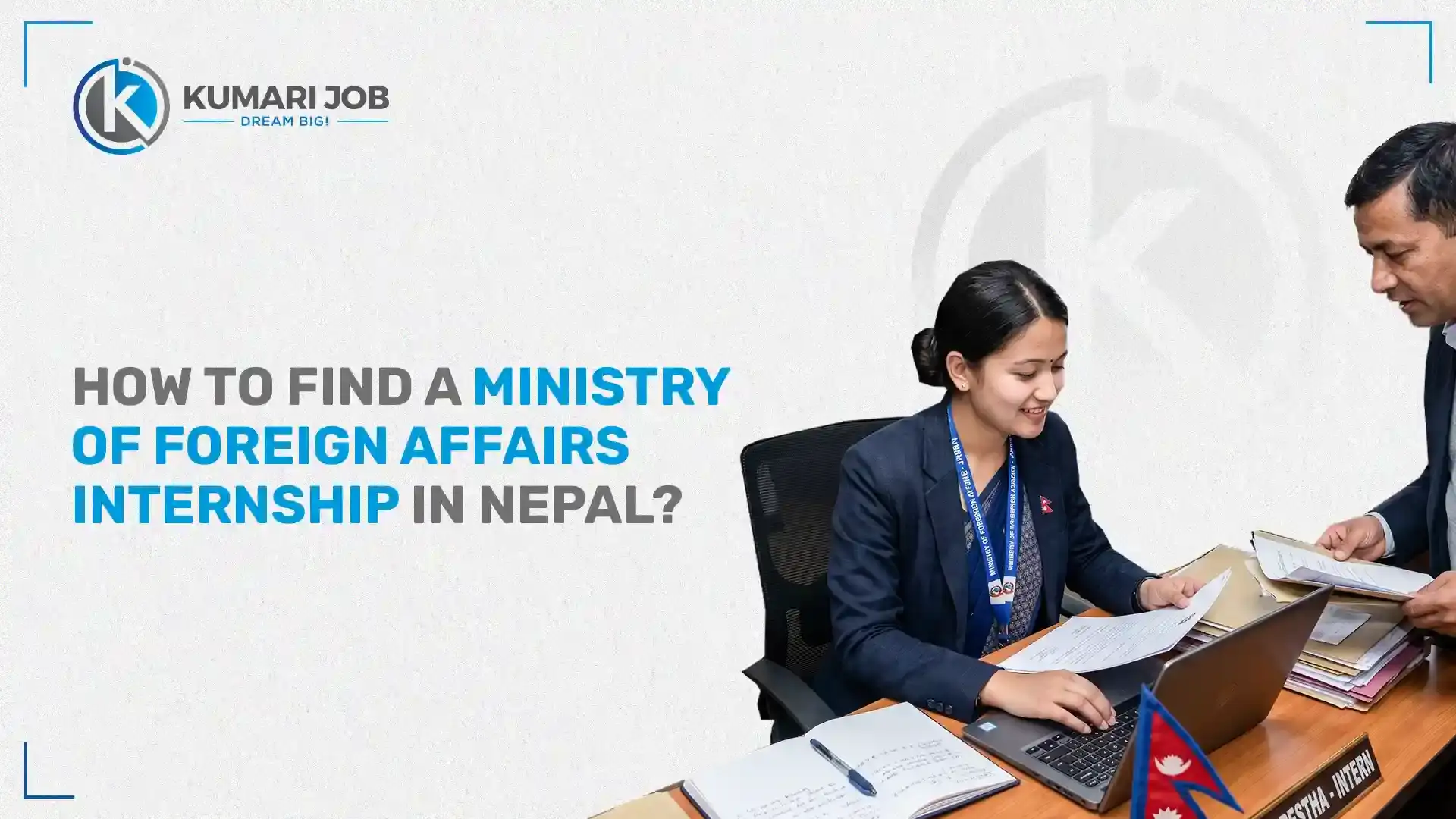

Students interested in diplomacy and international relations in Nepal often struggle to find meaningful government internship opportunities that provide real policy exposure. The newly announced internship program by the Ministry of Foreign Affairs aims to address that gap through the MoFA Nepal Summer Internship 2026, an 8-week voluntary research initiative launched under Foreign Minister Shishir Khanal. The program focuses on connecting students, graduates, and researchers with Nepal’s foreign policy sector through research, analysis, and policy-oriented learning opportunities.
The internship has attracted strong interest among young people because it offers direct exposure to diplomacy, strategic affairs, development policy, migration, sustainability, and international cooperation. Unlike many traditional internships that focus mainly on administrative tasks, the MoFA internship encourages participants to contribute to research and discussions related to Nepal’s global priorities. Students interested in NGOs, INGOs, governance, and international careers see this opportunity as a valuable starting point for building practical experience and professional networks in Nepal’s growing foreign affairs sector.
In this blog
What Is the Ministry of Foreign Affairs Internship?
The MoFA Nepal Summer Internship 2026 is an 8-week voluntary research internship designed to give students, graduates, and researchers practical exposure to Nepal’s foreign policy and international affairs sector. The program is organized by the Ministry of Foreign Affairs in collaboration with the Institute of Foreign Affairs and focuses on policy research, diplomacy, strategic affairs, and global cooperation.
The main objective of the internship is to connect young researchers with Nepal’s policymaking process and encourage youth participation in international affairs discussions. Instead of focusing only on administrative work, the internship allows participants to contribute to research projects related to diplomacy, development, migration, sustainability, and emerging global challenges. This approach helps interns understand how foreign policy decisions, international partnerships, and diplomatic strategies influence Nepal’s role in regional and global affairs.
Key Highlights of the MoFA Internship 2026
The MoFA Nepal Summer Internship 2026 is a research-focused internship program designed to give participants direct exposure to Nepal’s foreign policy and international affairs sector. The program combines policy research, academic learning, and practical experience to help young researchers understand diplomacy and governance at a professional level.
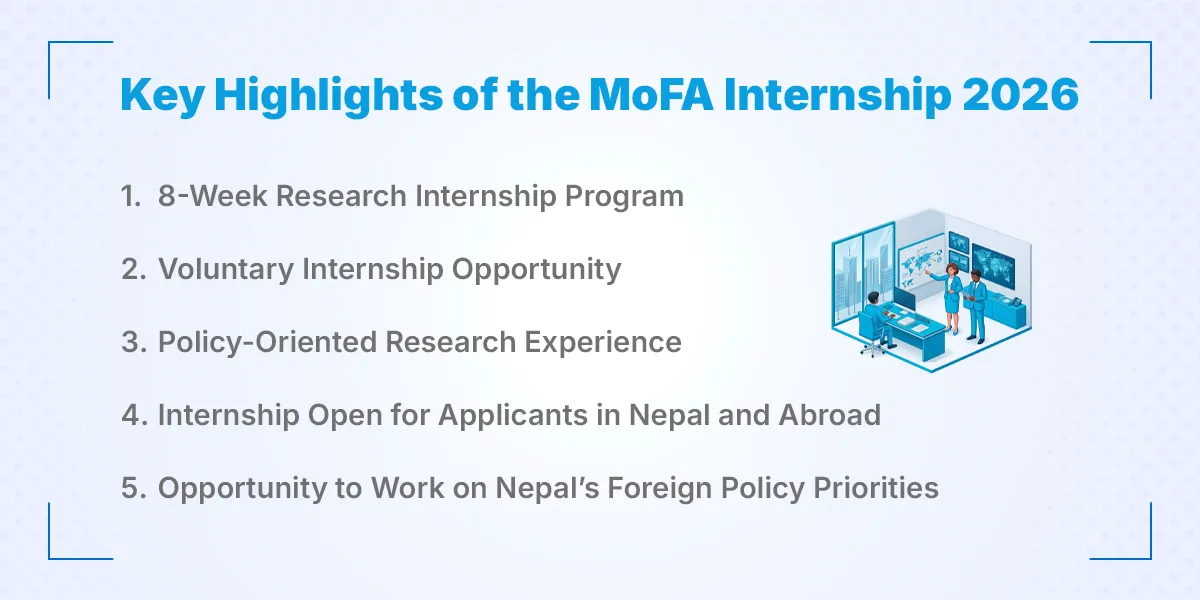
1. 8-Week Research Internship Program
The internship runs for eight weeks and focuses mainly on research and policy analysis related to international affairs. Participants work on different foreign policy topics connected to Nepal’s diplomatic priorities and global engagement. The structured duration allows interns to gain practical experience without interfering heavily with academic schedules. Students and graduates can use this period to improve their analytical, writing, and research abilities through real policy discussions and assignments.
2. Voluntary Internship Opportunity
The MoFA internship is a voluntary program created for students, graduates, and researchers who want professional exposure in diplomacy and policymaking. Even though the internship is unpaid, it offers valuable learning opportunities that can strengthen future academic and career prospects. Many government and international sector recruiters value policy research experience because it demonstrates critical thinking and professional commitment. For students interested in international relations, this internship can become a strong addition to their CV and scholarship applications.
3. Policy-Oriented Research Experience
One of the biggest highlights of the internship is its strong focus on policy-oriented research instead of basic administrative tasks. Interns may research geopolitical developments, international cooperation, migration, sustainability, or economic diplomacy depending on the assigned theme. This approach helps participants understand how governments analyze global issues before making policy decisions. I noticed that research-focused internships usually help students develop stronger professional skills compared to internships limited to office support work.
4. Internship Open for Applicants in Nepal and Abroad
The program is open to applicants living both inside and outside Nepal, which increases opportunities for Nepali students studying internationally. This broader eligibility encourages participation from students with different academic and cultural backgrounds. It also helps create discussions that combine local and global perspectives on foreign affairs and development issues. Nepal-based students and members of the Nepali diaspora can both contribute valuable insights to policy research and international cooperation topics.
5. Opportunity to Work on Nepal’s Foreign Policy Priorities
The internship allows participants to explore topics connected to Nepal’s foreign policy priorities and international partnerships. Research themes may include regional diplomacy, development cooperation, migration, climate policy, technology, and strategic affairs. Interns gain exposure to how Nepal manages relationships with neighboring countries, international organizations, and global institutions. This experience helps participants understand the practical side of diplomacy and prepares them for future careers in NGOs, INGOs, government institutions, and international relations sectors.
Research Themes of the Internship Program
The MoFA Nepal Summer Internship 2026 focuses on multiple research areas connected to diplomacy, development, and global affairs. These research themes help participants understand how international relations, economic cooperation, technology, and migration influence Nepal’s foreign policy priorities.
1. Strategic Affairs and Diplomacy
Strategic affairs and diplomacy focus on Nepal’s international relationships, geopolitical position, and diplomatic decision-making process. Interns may research how Nepal manages its relations with neighboring countries, regional organizations, and global powers. The topic also covers regional security, international cooperation, and changing global political trends that affect Nepal. Students interested in diplomacy and international relations can gain a deeper understanding of how foreign policy strategies shape a country’s global presence.
2. Development and Finance
The development and finance theme explores economic diplomacy, foreign investment, and international development partnerships connected to Nepal. Interns may analyze how international organizations, donor agencies, and foreign governments support Nepal’s economic and infrastructure growth. This research area also focuses on trade relations, development funding, and global economic cooperation. Understanding these topics helps participants learn how diplomacy and finance work together in national development planning.
3. Emerging Technologies
Emerging technologies focus on digital diplomacy, innovation, artificial intelligence, and cybersecurity discussions in international affairs. Governments worldwide are increasingly using technology in policymaking, communication, and diplomatic engagement, making this theme highly relevant for modern foreign policy research. Interns may study how AI, digital governance, and cybersecurity influence global cooperation and national security. I recently noticed that many international organizations now prioritize technology policy research because digital threats and AI regulations are becoming major global concerns.
4. Clean Energy and Sustainability
The clean energy and sustainability theme examines climate diplomacy, renewable energy cooperation, and international environmental partnerships. Participants may research global climate agreements, sustainable development goals, and Nepal’s environmental cooperation with other countries and organizations. The topic also highlights how climate change affects economic development, migration, and regional stability. Students interested in sustainability and global development can gain valuable insights into the growing connection between environmental policy and diplomacy.
5. Nepali Diaspora and Migration
This research theme focuses on migration, remittance, and the role of the Nepali diaspora in foreign policy and international cooperation. Interns may study how Nepali communities living abroad contribute to economic growth, cultural relations, and global networking opportunities for Nepal. The topic also covers labor migration challenges, international migration policies, and diplomatic support for overseas Nepali citizens. Understanding diaspora engagement is important because remittance and migration continue to play a major role in Nepal’s economy and international relations.
Who Can Apply for the Ministry of Foreign Affairs Internship?
The MoFA Nepal Summer Internship 2026 is open to students, graduates, researchers, and professionals interested in diplomacy, foreign policy, and international affairs. The program welcomes applicants from both Nepal and abroad who have strong research interest, analytical abilities, and curiosity about policymaking and global cooperation.
1. Students Interested in International Relations
Students studying international relations, political science, public policy, law, economics, or related subjects can apply for the internship program. The internship helps students gain practical exposure to diplomacy and policy research beyond classroom learning. Participants can improve their understanding of global affairs, international cooperation, and Nepal’s foreign policy priorities through real research activities. This experience can also strengthen future scholarship, higher education, and career opportunities in international sectors.
2. Recent Graduates and Researchers
Recent graduates and independent researchers interested in governance, diplomacy, and policy analysis are also eligible for the internship. The program gives graduates an opportunity to apply their academic knowledge to real-world foreign affairs discussions and research projects. Many graduates use research internships to build professional experience before applying for government, NGO, or INGO positions. I have seen research-based internships help candidates stand out because they demonstrate analytical thinking and policy understanding instead of only academic qualifications.
3. Professionals Interested in Policy Research
Professionals working in development organizations, research institutions, media, education, or governance sectors may also apply if they have interest in policy-oriented research. The internship can help professionals expand their understanding of international affairs, diplomacy, and strategic policy discussions connected to Nepal. Participants from professional backgrounds may contribute practical experience and industry insights during research collaboration and discussions. This creates a more diverse learning environment for all interns involved in the program.
4. Applicants From Nepal and Abroad
The internship is open to applicants living both inside Nepal and in foreign countries, including Nepali students studying abroad. This broader eligibility allows the program to attract participants with different educational, cultural, and international experiences. Applicants from abroad can contribute global perspectives on diplomacy, migration, technology, and development cooperation. The inclusion of both domestic and international applicants also helps strengthen discussions related to Nepal’s role in global affairs and international partnerships.
Eligibility Criteria for MoFA Internship
The MoFA Nepal Summer Internship 2026 looks for applicants with strong academic interest, research ability, and understanding of international affairs. The program mainly selects candidates who can contribute to policy discussions, research activities, and analytical work related to diplomacy and global cooperation.
1. Academic Background Preferences
Applicants from subjects like international relations, political science, economics, public policy, law, development studies, journalism, and social sciences are generally preferred for the internship. However, students and graduates from other relevant academic backgrounds with strong interest in foreign affairs may also qualify. The internship values academic curiosity and research potential more than only degree titles. Candidates with coursework or projects related to governance, diplomacy, or international studies may have an advantage during selection.
2. Interest in Diplomacy, Foreign Policy, and Research
The program strongly prefers applicants who show genuine interest in diplomacy, foreign policy, international cooperation, and policymaking. Candidates should understand current global and regional issues affecting Nepal’s international relations and development priorities. Reading international news, following diplomatic developments, and participating in research or policy discussions can strengthen an application. I noticed that internships in foreign affairs often prioritize motivated applicants who actively follow geopolitical and policy-related developments instead of only academic grades.
3. Strong Writing and Analytical Skills
Good writing and analytical abilities are important because interns may work on research reports, policy analysis, and documentation tasks. Applicants should be able to organize information clearly, analyze complex issues, and explain ideas in a professional manner. Strong analytical skills help participants understand international events, policy challenges, and diplomatic strategies more effectively. Candidates with experience in academic writing, article publishing, or research assignments may stand out during evaluation.
4. Research and Communication Abilities
The internship also values applicants who can conduct research properly and communicate their findings confidently. Participants may need to collect information, review international issues, and present ideas during discussions or collaborative activities. Good communication skills help interns interact professionally with researchers, policymakers, and other participants in the program. Team collaboration, presentation ability, and professional conduct are also important because policy research often involves group-based discussions and analytical work.
Skills Required for Foreign Affairs Internship
The MoFA Nepal Summer Internship 2026 requires a mix of research ability, communication skills, and understanding of international affairs. Since the program is focused on policy research and diplomacy, candidates must be able to analyze global issues, write clearly, and work professionally in a research-oriented environment.
1. Research and Analytical Skills
Strong research and analytical skills are essential because interns are expected to study international issues and policy-related topics. Applicants should be able to collect reliable information, compare different perspectives, and draw logical conclusions from data or reports. These skills help interns understand complex topics like diplomacy, geopolitics, and international cooperation. Without strong analysis, it becomes difficult to contribute meaningfully to policy research tasks.
2. Communication and Report Writing
Good communication and report writing skills are important for presenting research findings in a clear and structured way. Interns may need to prepare reports, summaries, or briefings based on assigned topics. Clear writing ensures that complex policy ideas are easy to understand for policymakers and researchers. Many successful candidates practice writing regularly to improve clarity, structure, and professional tone in their documents.
3. Knowledge of International Relations
A basic understanding of international relations helps interns follow global events and diplomatic developments more effectively. This includes awareness of international organizations, foreign policy concepts, and regional geopolitical issues. Knowledge of how countries interact in trade, security, and cooperation is especially useful for research-based tasks. Candidates who follow international news and policy discussions often adapt more quickly to internship assignments.
4. Critical Thinking and Policy Understanding
Critical thinking is important because interns are expected to evaluate issues from multiple perspectives before forming conclusions. Policy understanding helps participants connect real-world problems with government decisions and international strategies. This skill allows interns to move beyond surface-level information and analyze deeper implications of global events. It also helps in developing structured arguments during research discussions and reports.
5. Teamwork and Professional Conduct
Teamwork is necessary because many internship tasks involve group research, discussions, and collaborative analysis. Interns must be able to share ideas respectfully and work efficiently with others from different academic backgrounds. Professional conduct includes discipline, responsibility, and maintaining ethical standards in research work. Good teamwork and behavior help create a productive learning environment and improve overall internship performance.
Benefits of Joining the MoFA Internship
The MoFA Nepal Summer Internship 2026 provides participants with practical exposure to Nepal’s foreign policy environment along with structured research experience in diplomacy and international affairs. The program helps students and graduates understand how policymaking works in real government settings while developing skills that are valuable for future careers in international relations.
1. Exposure to Nepal’s Foreign Policy Sector
The internship provides direct exposure to how Nepal’s foreign policy decisions are shaped and implemented. Participants can observe how diplomatic priorities, international cooperation, and global issues are analyzed within government institutions. This experience helps interns understand the practical side of international relations beyond academic theory. It also gives insight into how Nepal engages with other countries and global organizations.
2. Research Experience in Diplomacy and International Affairs
Interns gain hands-on experience in policy research related to diplomacy, development, migration, and global affairs. They may work on analyzing international trends, preparing reports, or supporting research discussions on foreign policy topics. This improves their ability to think critically and handle real-world policy challenges. Research experience like this is highly valued in academic and professional career paths.
3. Networking Opportunities With Experts and Policymakers
One of the key advantages of this internship is the opportunity to connect with professionals working in foreign affairs and policymaking. Interns can interact with experts, researchers, and government officials during the program. These connections can help in understanding career pathways and gaining mentorship in the field of international relations. Networking also supports future job opportunities in government and international organizations.
4. Professional Learning and Career Development
The internship helps participants develop professional skills such as research writing, communication, analysis, and teamwork. These skills are important for careers in diplomacy, governance, NGOs, and international development sectors. Interns also learn how to work in structured policy environments and handle research-based tasks. This professional learning experience strengthens both academic and career profiles.
5. Strong Experience for Future NGO, INGO, and Government Careers
Experience from this internship can significantly improve future career opportunities in NGOs, INGOs, government offices, and international organizations. Employers often value candidates who have practical exposure to policy research and international affairs. The internship also supports applications for higher studies and scholarships in international relations and public policy. Overall, it serves as a strong foundation for building a long-term career in the foreign affairs sector.
How to Apply for the Ministry of Foreign Affairs Summer Internship 2026
Applying for the MoFA Nepal Summer Internship 2026 requires careful attention to official announcements, eligibility requirements, and required documents. The application process is usually structured to ensure that candidates with strong academic interest in diplomacy, research, and international affairs are selected. Applicants should follow each step carefully and submit their application before the deadline to avoid disqualification.
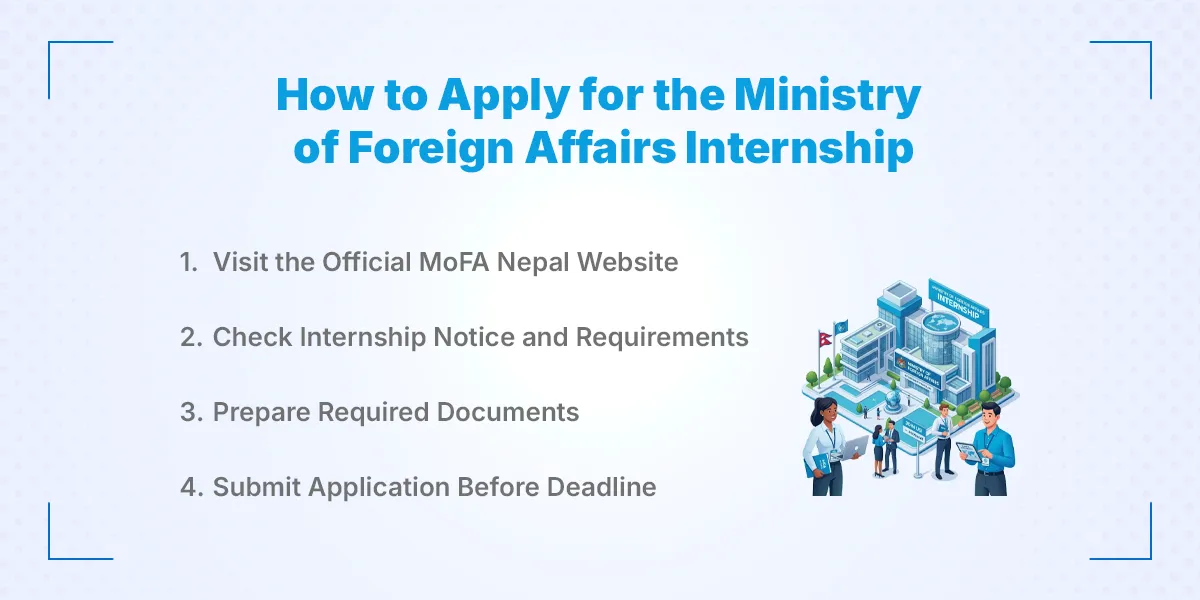
1. Visit the Official MoFA Nepal Website
The first step is to visit the official website of the Ministry of Foreign Affairs where internship announcements are published. All authentic information, including eligibility criteria, deadlines, and guidelines, will be available in the official notice section. Applicants should avoid relying on unofficial sources to prevent misinformation. It is important to regularly check the website because updates or changes in deadlines may be announced.
2. Check Internship Notice and Requirements
After accessing the official website, applicants must carefully read the internship notice and eligibility requirements. This includes understanding academic background preferences, required skills, and selection criteria. Many candidates make mistakes by skipping details, which can lead to incomplete or incorrect applications. Reviewing the requirements helps applicants determine whether they are suitable before applying.
3. Prepare Required Documents
Applicants need to prepare all required documents in advance to ensure a smooth application process. Common documents include a CV or resume, academic transcripts, a motivation letter, and any relevant research materials. These documents should clearly highlight academic achievements, research interest, and motivation for joining the internship. A well-prepared application increases the chances of selection because it reflects professionalism and seriousness.
4. Submit Application Before Deadline
Once all documents are ready, applicants must submit their application through the official method mentioned in the internship notice. Submitting before the deadline is critical because late applications are usually not accepted under any circumstances. Candidates should double-check all uploaded files to ensure accuracy and completeness. After submission, it is also useful to keep a copy of the application for future reference or follow-up communication.
Foreign Affairs Internship Salary (MoFA Nepal Internship 2026)
The MoFA Nepal Summer Internship 2026 is generally considered a voluntary, research-based internship, meaning it is primarily designed for learning and exposure rather than financial compensation. According to recent official announcements and reports, the program focuses on policy research in Nepal’s foreign affairs sector and does not clearly mention a fixed salary or stipend for interns. Instead, the value of the internship is based on professional experience, networking, and exposure to real policymaking processes within the Ministry of Foreign Affairs.
In Nepal, internships in government or policy institutions like MoFA are often unpaid or minimally paid, depending on the program structure and funding. Some private-sector internships in Nepal may offer around NPR 5,000 to NPR 20,000 per month, but policy and research internships are usually focused on training rather than salary. The MoFA internship is mainly valued for its career benefits such as research experience, exposure to diplomacy, and networking with policymakers, rather than monthly financial compensation. For students aiming for careers in international relations, NGOs, INGOs, or government services, this experience is often considered more important than short-term earnings.
Documents Required for Application
The MoFA Nepal Summer Internship 2026 application process requires a set of academic and professional documents that help evaluate a candidate’s background, interest, and research potential. These documents are used to assess whether the applicant is suitable for a policy-focused internship in diplomacy and international affairs.
1. Updated CV or Resume
An updated CV or resume is required to show your academic background, skills, and any relevant experience in research, writing, or international affairs. It should clearly highlight education, projects, internships, and any leadership or extracurricular activities. A strong CV helps selection committees quickly understand your profile and suitability for the internship. Make sure it is well-structured, concise, and tailored toward policy and research interest.
2. Academic Certificates or Transcripts
Academic certificates or transcripts are required to verify your educational qualifications and academic performance. These documents help confirm eligibility based on the program’s academic background preferences. Applicants should ensure that their transcripts are clear, updated, and properly scanned if submitting online. Good academic records can strengthen your application, especially in competitive selection processes.
3. Motivation Letter or Statement of Interest
A motivation letter or statement of interest explains why you want to join the internship and how it aligns with your career goals. It should clearly express your interest in diplomacy, foreign policy, and research. This document is very important because it shows your passion, understanding of international affairs, and long-term career vision. A well-written motivation letter can significantly increase your chances of selection.
4. Research-Related Documents (If Required)
Some applicants may be asked to submit additional research-related documents depending on the internship requirements. These can include writing samples, research papers, policy briefs, or academic projects. These documents demonstrate your analytical and writing ability in real-world topics related to international relations. Providing strong research samples helps show that you can contribute effectively to policy-oriented tasks during the internship.
Why This Internship Is Important for Nepali Youth
The MoFA Nepal Summer Internship 2026 is important for Nepali youth because it provides direct exposure to how policymaking, diplomacy, and governance actually work in real government settings. Instead of only learning theory in classrooms, students can understand how foreign policy decisions are made, how international relations are managed, and how Nepal engages with global partners through structured research and analysis.
This internship also serves as a strong career foundation for students interested in international relations, NGOs, INGOs, and government sectors. It builds practical experience that is highly valued for scholarships, higher education, and future job applications in policy and diplomacy fields. By participating, young people can develop research skills, professional networks, and a clearer direction for long-term careers in global affairs.
Career Opportunities After Ministry of Foreign Affairs Internship
The MoFA Nepal Summer Internship 2026 helps participants build a strong foundation for careers in diplomacy, policy research, and international development. Since the program focuses on real policy analysis and foreign affairs research, it becomes a valuable stepping stone for students who want to enter competitive professional fields in Nepal and abroad.
1. Research and Policy Analyst Roles
Interns can move into research assistant or policy analyst positions in government institutions, think tanks, and research organizations. These roles involve studying international issues, preparing reports, and supporting decision-making processes. The internship experience helps candidates develop analytical thinking and structured writing skills required for policy work. Employers value applicants who already understand how foreign policy research functions in real settings.
2. NGO and INGO Career Opportunities
Many NGOs and INGOs working in Nepal prefer candidates with policy research and international affairs exposure. Internship experience in MoFA can support applications for roles in development, humanitarian work, and international cooperation projects. These organizations often deal with migration, climate change, education, and governance issues. Having experience in foreign policy research makes candidates more competitive for such positions.
3. International Relations and Diplomacy Sector Jobs
This internship provides a pathway toward careers in embassies, diplomatic missions, and international organizations. Candidates may pursue roles such as diplomatic assistants, international relations officers, or program coordinators. The exposure to foreign policy discussions helps interns understand how diplomacy operates at national and global levels. This experience is especially useful for students aiming for careers in foreign service or international organizations.
4. Government and Development Sector Careers
Interns can also explore opportunities in government ministries, planning commissions, and development agencies. These roles often require strong understanding of policy, governance, and international cooperation. Experience from MoFA internship adds value when applying for public sector jobs in Nepal. It shows that the candidate has practical exposure to policymaking and development-related research.
5. Higher Education and Scholarship Advantages
The internship also strengthens applications for higher studies and international scholarships in fields like international relations, public policy, and development studies. Universities and scholarship committees often prefer candidates with real-world research experience. This internship demonstrates academic seriousness, analytical ability, and interest in global affairs. It can significantly improve chances of admission into competitive programs abroad.
Tips to Increase Your Selection Chances
Getting selected for the MoFA Nepal Summer Internship 2026 is competitive because it attracts students interested in diplomacy, policy research, and international relations. A strong application should clearly show your research ability, academic interest, and understanding of global affairs in a structured and professional way.
1. Build Strong Research Skills
Research skills are one of the most important factors in selection because the internship is focused on policy analysis and international affairs. You should practice writing short research papers, policy briefs, or analytical summaries on global and Nepali issues. This helps you develop the ability to collect information, compare viewpoints, and present clear conclusions. Strong research skills show that you can handle real policy-related tasks during the internship.
2. Improve Knowledge of International Affairs
A good understanding of international relations, diplomacy, and global events can significantly improve your chances. You should regularly follow international news, geopolitical developments, and Nepal’s foreign policy activities. This helps you connect academic knowledge with real-world situations. Candidates who show awareness of global issues are often seen as more prepared and suitable for policy research work.
3. Write a Professional Motivation Letter
A motivation letter is one of the most important parts of your application because it shows your interest and career goals. It should clearly explain why you want to join the internship and how it aligns with your future in diplomacy or international relations. The letter should be structured, simple, and focused on your research interest and academic background. A strong motivation letter can make your application stand out even if your experience is limited.
4. Stay Updated With Global and Nepali Politics
Keeping up with current affairs in Nepal and around the world helps you understand the context of foreign policy discussions. You should read reliable news sources, policy reports, and international organization updates. This habit improves your analytical thinking and helps you contribute meaningfully during the internship. Staying informed also strengthens your interview answers and written applications.
5. Highlight Academic and Leadership Experience
Your academic achievements, leadership roles, and extracurricular activities can strengthen your application. Participation in debates, research projects, student organizations, or volunteering work shows initiative and responsibility. These experiences help demonstrate that you have communication skills and the ability to work in teams. Highlighting relevant achievements makes your profile more attractive to selection committees.
Future Scope of Foreign Affairs Careers in Nepal
The future of foreign affairs careers in Nepal is growing as diplomacy and global relations become more important for national development. Nepal’s increasing engagement with neighboring countries, international organizations, and global institutions has created more demand for professionals who understand international relations, policy research, and diplomatic communication. This trend is making careers in foreign affairs more relevant for students interested in governance and global studies.
At the same time, opportunities are expanding in embassies, INGOs, NGOs, and international organizations working in Nepal and abroad. Youth interest in policy, governance, and research is also increasing, which is pushing universities and institutions to focus more on international studies and development fields. As research and international cooperation sectors continue to grow, students with internship experience in foreign affairs will have stronger career prospects in both national and global job markets.
Conclusion
The Ministry of Foreign Affairs Internship 2026 offers a valuable opportunity for Nepali students, graduates, and researchers to gain direct exposure to policy research, diplomacy, and international affairs. It helps participants understand how foreign policy decisions are made and how Nepal engages with global partners through structured research and analysis.
Overall, this internship can play an important role in building professional networks, improving research skills, and creating future career opportunities in international relations and development sectors. If you are looking for more internship opportunities in Nepal, Kumari Job offers a wide range of updated listings for internships, NGO roles, government positions, and international career paths, making it a useful platform to explore your next opportunity.
Frequently Asked Questions
Submit your comments

Get Our App On



SEO Training for Freshers in Nepal: Skills, Career & Job Opportunities
VIEW DETAILS
SEO Training vs. Self-Learning: Which Is Right for You?
VIEW DETAILS
How to Choose Between Two Job Offers
VIEW DETAILS
Digital Marketing Training Interview Questions and Answers for Freshers
VIEW DETAILS


Loading Comments...