



Are you bilingual? Your language skills are more valuable than ever. As Nepal becomes increasingly connected to the global economy, professional translators are no longer just converting words; they are bridging cultures, supporting international businesses, helping NGOs communicate effectively, and powering the country’s growing tourism industry. This rising demand is creating flexible freelance, remote, and full-time translator job opportunities across Nepal.
Forget the traditional office-only career path. Today, translators in Nepal can work with global clients, international organizations, embassies, media companies, and online platforms right from home. From document translation and subtitle localization to business communication and technical content, skilled bilingual professionals now have access to diverse and potentially high-paying career opportunities.
In this guide, you will learn about translator jobs in Nepal, required skills, salary expectations, in-demand languages, freelance opportunities, and how to start your career as a professional translator.
In this blog
What Does a Translator Do in Nepal?
A translator in Nepal is a language expert who bridges communication gaps by converting written text from one language to another. Unlike interpreters who deal with spoken words, translators focus on written content, ensuring that the original meaning, tone, and cultural context remain intact while being accessible to a new audience.
In the Nepali context, this often involves working with official government papers, academic transcripts, or localized marketing content. Translators are the unsung heroes who allow international NGOs to communicate their impact and help local businesses reach a global market. They handle everything from medical reports to video subtitles, making information universally understandable.
The role requires more than just a dictionary; it demands a deep understanding of nuance. For instance, translating a legal contract for a Japanese construction firm in Kathmandu requires precise technical vocabulary that an everyday bilingual speaker might miss. This professional expertise is what makes translators highly valued across various industries.
Entering this field offers several distinct professional advantages and unique working conditions:
Steady Monthly Income:
Many news portals and media houses offer full-time positions with salaries starting around NPR 25,000 for juniors, providing long-term financial stability.Freelance Flexibility
Translation is one of the few fields where you can successfully operate as a "digital nomad" from home, taking on projects from international clients at global rates.Networking Opportunities
Working with embassies or international organizations puts you in contact with diplomats and global leaders, expanding your professional reach significantly.Skill Diversification
You aren't just learning a language; you're gaining knowledge in law, medicine, or tech depending on the documents you translate.Contribution to Society
Translators help disseminate vital information during health crises or social campaigns, making a real difference in grassroots communication.
Why Translation Careers Are Growing in Nepal
The demand for language professionals is surging because Nepal is more connected to the world than ever before. With thousands of Nepalis seeking foreign employment, there is a constant need for document translation for visas and contracts. Additionally, the rise of international business interests and a vibrant NGO sector has created a massive requirement for localized reports and communication materials. As global brands enter the Nepali market, they need experts who can translate their marketing messages into the local tongue authentically.
International Business Expansion
Foreign companies investing in infrastructure and hydropower projects require specialized translation for technical manuals and legal agreements.Tourism and Hospitality
As we welcome more tourists from China, Japan, and Europe, hotels and travel agencies need content translated to cater to diverse language groups.Rise of Digital Content
The boom in YouTube and streaming services has created a high demand for subtitle translators who can localize global content for the Nepali audience.NGO and Diplomatic Activity
International organizations constantly require their project findings and community outreach materials to be translated into Nepali and regional dialects.
Common Types of Translator Jobs in Nepal
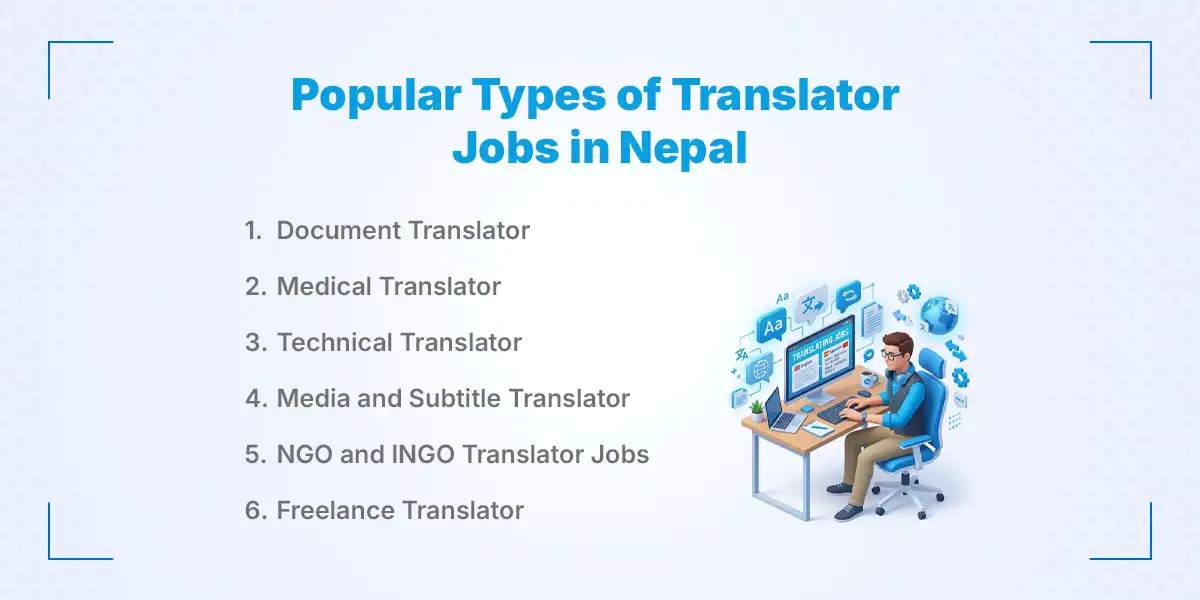
Translation is a broad field with several specialized niches. Depending on your interests and language proficiency, you can find your path in one of these popular categories:
1. Document and Legal Translator
These professionals specialize in translating official documents like citizenship certificates, academic transcripts, and legal contracts. This role is crucial for individuals applying for foreign visas or companies entering into international partnerships. Accuracy is paramount here, as a single error can lead to significant delays.
2. NGO and INGO Translator
NGOs frequently hire translators to convert project reports, case studies, and awareness campaign materials. These NGO career opportunities often involve field visits where you help international teams communicate effectively with local communities. This niche allows you to contribute directly to social development while building a meaningful career using your language skills. It is an excellent career path for individuals passionate about community impact and development work.
3. Media and Subtitle Translator
With the rise of online streaming, there is a high demand for people who can translate movie subtitles and YouTube video scripts. This role requires creative flair to ensure that jokes, slang, and cultural references translate well into the target language. It is a perfect fit for those who enjoy the intersection of language and entertainment.
4. Medical and Technical Translator
Technical translators work with user manuals, software strings, and engineering reports, while medical translators focus on health records and research papers. These roles require specialized knowledge of industry-specific terminology. Due to the high level of expertise required, these positions often command higher project fees.
5. Freelance and Remote Translator
Many translators choose to work independently, taking on tasks from various local and international clients via online platforms. This path offers the most flexibility, allowing you to choose your projects and set your own schedule. Freelancers often specialize in multiple niches to maximize their earning potential.
Best Places to Find Translator Jobs in Nepal
Finding the right role depends on where you look. The creative and corporate sectors have different hiring cycles and requirements. Here are the top avenues to explore:
1. Local Job Portals
Reputable job portals like Kumari Job are excellent for finding structured, full-time translation roles in media houses and corporate offices. You can filter by language or industry to find vacancies that match your profile. Setting up alerts for keywords like "Nepali translator" or "content writer" ensures you never miss a new opening.
2. Embassies and Cultural Centers
Embassies and foreign cultural centers (like the British Council or Alliance Française) frequently hire translators for administrative work and event coordination. These roles are highly prestigious and offer competitive compensation. Most of these organizations post their vacancies directly on their official websites, so regular checks are necessary.
3. Translation Agencies and Consultancies
Many businesses in Nepal outsource their language needs to specialized translation agencies. These agencies maintain a roster of verified translators for various languages. Registering with these consultancies is a great way to receive a steady stream of project-based work without having to market yourself constantly.
4. NGO and INGO Career Pages
The development sector is a massive employer of language talent. Organizations like UNV Nepal or Save the Children often need translators for field research and community programs. Because these roles are project-specific, they are often listed on internal career pages rather than general job boards.
5. Global Freelance Platforms
If you want to work for international clients, platforms like Upwork or Proz are the industry standard. These sites allow you to bid on translation projects from around the world. Building a strong profile here can lead to earning in foreign currency, which is often higher than local market rates.
Essential Skills for Success as a Translator
Being bilingual is just the starting point. Professional translation is a craft that requires a specific set of technical and soft skills to ensure high-quality output. If you want to command premium rates, focus on developing these abilities:
Perfect grammar and vast vocabulary in both languages
Strong writing skills to ensure readability and flow
Meticulous attention to detail for error-free documentation
Cultural sensitivity to adapt idioms and references
Proficiency in translation software and CAT tools
Salary and Earnings for Translators in Nepal
In 2026, the monthly salary for staff translators in Nepal typically ranges from NPR 25,000 to NPR 55,000 for full-time roles in media or agencies. However, the real earning potential often lies in project-based work. Freelancers usually charge per page (NPR 500 to NPR 2,000) or per word ($0.05 to $0.15 for international clients), depending on the complexity of the content. Rare language skills, such as Chinese, Japanese, or Korean, can significantly boost your income, as these specialties are in high demand but have fewer qualified professionals.
How to Start Your Translation Career in 2026?
To start a translation career in Nepal, you need to build credibility by mastering your target languages, getting certified, building a diverse portfolio, joining professional communities, and specializing in a niche.

1. Master Your Target Languages
Fluency isn't enough; you need mastery. This means understanding advanced grammar, technical jargon, and slang in both your source and target languages. Reading widely in both languages from literature to technical journals will help you build the necessary linguistic depth for professional work.
2. Get Certified
While not always mandatory, having a language certification or a degree in linguistics can open many doors, especially in embassies and NGOs. Local institutes and global bodies offer tests that verify your proficiency level, giving hiring managers peace of mind about your technical capabilities.
3. Build a Diverse Portfolio
Recruiters want to see proof of your work. Start by translating small articles, blog posts, or public domain texts. Having a collection of well-translated samples in various styles (creative, technical, legal) demonstrates your versatility. Hosting these samples on a personal blog or LinkedIn profile makes it easy for clients to find you.
4. Join Professional Communities
Social media groups and professional forums are hubs for job leads and advice. Engaging with other translators helps you stay updated on industry standards and typical pricing. Networking often leads to "shadowing" opportunities or referrals for projects that aren't publicly advertised.
5. Specialize in a Niche
Generalist translators are common, but specialists are rare and highly paid. If you have a background in science, law, or IT, use that knowledge to specialize in technical translation. Being the "go-to" person for a specific industry allows you to charge premium rates and build a long-term, stable client base.
The Future of Translation in Nepal
The rise of AI-assisted translation has changed the industry, but it hasn't replaced the human touch. While machines can swap words, they can't understand local context or cultural nuance. The future belongs to "augmented translators" who use technology to work faster while providing the high-level accuracy that organizations require. As Nepal continues to globalize, the need for skilled language bridges will only grow stronger.
Conclusion
Translation jobs in Nepal offer a path to a flexible and professionally rewarding career. Whether you are a student looking for freelance work or a professional seeking a full-time NGO role, your language skills are a powerful asset. By staying consistent and building your technical expertise, you can turn your bilingual ability into a stable and lucrative career.
If you are ready to find your first project, visit Kumari Job today to browse the latest openings and start your journey as a professional translator.
Frequently Asked Questions
Submit your comments

Get Our App On



SEO Training for Freshers in Nepal: Skills, Career & Job Opportunities
VIEW DETAILS
SEO Training vs. Self-Learning: Which Is Right for You?
VIEW DETAILS
How to Choose Between Two Job Offers
VIEW DETAILS
Digital Marketing Training Interview Questions and Answers for Freshers
VIEW DETAILS


Loading Comments...