


The logistics industry in Nepal is growing fast, creating many job opportunities for both freshers and experienced people. From warehouses and delivery services to transportation and supply chain management, many companies now need logistics staff to manage goods and deliveries smoothly. Because of the rise of e-commerce, import-export businesses, and manufacturing industries, logistics jobs in Nepal are becoming more popular and in demand.
If you are looking for a stable and growing career, logistics can be a good option. There are many ways to find logistics jobs in Nepal, such as online job portals, LinkedIn, company websites, and recruitment agencies. In this guide, you will learn how to search for logistics jobs, the skills companies look for, salary expectations, and useful tips to start your career successfully.
In this blog
What Are Logistics Jobs in Nepal?
Logistics jobs in Nepal are careers related to managing the storage, transportation, delivery, and distribution of goods. These jobs help businesses move products from warehouses to shops or customers efficiently. Logistics work is an important part of supply chain management because it helps companies maintain smooth operations and timely deliveries.
The demand for logistics jobs in Nepal is growing quickly due to the rise of e-commerce businesses, import-export trade, courier services, and manufacturing industries. Many companies now require logistics staff to handle warehouse operations, inventory management, transportation coordination, packaging, and product distribution. As businesses continue to expand, logistics careers are becoming one of the fastest-growing job sectors in Nepal.
Several industries in Nepal are actively hiring logistics professionals. Import and export companies need workers to manage shipments and customs processes. E-commerce businesses hire logistics sta ff for packaging and product delivery services. Courier and transportation companies require employees to coordinate routes and deliveries efficiently. Manufacturing industries also need logistics teams to manage raw materials, storage, and distribution operations. In addition, warehouses and distribution centers hire logistics workers to organize inventory and ensure smooth supply chain operations.
Types of Logistics Jobs Available in Nepal
The logistics industry in Nepal offers many different job opportunities depending on skills, experience, and interest. These jobs play an important role in managing the movement, storage, and delivery of goods across the country. As trade, e-commerce, and transportation services continue to grow, more logistics roles are being created in different sectors.
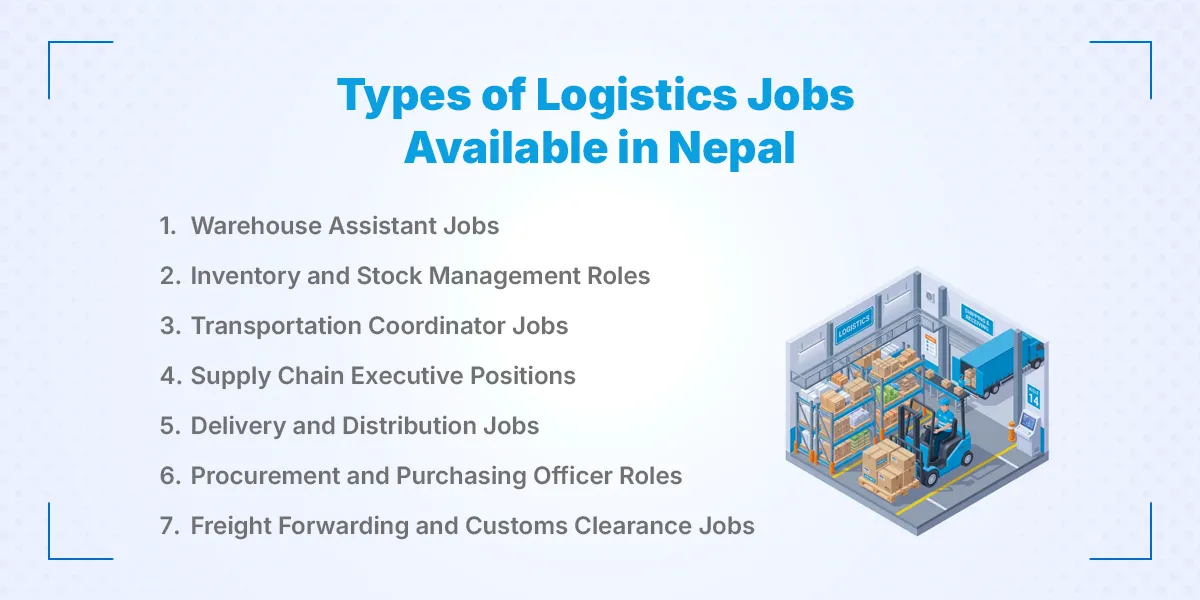
1. Warehouse Assistant Jobs
Warehouse assistants are responsible for handling goods inside storage facilities. Their tasks include packing products, loading and unloading items, organizing inventory, and maintaining proper storage systems. This is one of the most common entry-level logistics jobs in Nepal.
2. Inventory and Stock Management Roles
These roles focus on tracking and managing stock levels in warehouses or stores. Workers ensure that products are recorded correctly, prevent shortages or overstocking, and maintain accurate inventory data for smooth operations.
3. Transportation Coordinator Jobs
Transportation coordinators manage delivery schedules, vehicle routes, and shipment tracking. Their main role is to ensure that goods are transported safely and reach their destination on time without delays.
4. Supply Chain Executive Positions
Supply chain executives handle the overall process of moving goods from suppliers to customers. They coordinate purchasing, storage, transportation, and distribution activities to ensure efficient business operations.
5. Delivery and Distribution Jobs
Delivery and distribution staff are responsible for transporting goods to customers, shops, or warehouses. With the rise of online shopping and courier services in Nepal, this job type is growing very quickly.
6. Procurement and Purchasing Officer Roles
Procurement officers are responsible for buying goods, materials, or services needed by a company. They communicate with suppliers, compare prices, and ensure the organization gets quality products at the best cost.
7. Freight Forwarding and Customs Clearance Jobs
These professionals handle international shipping and import-export processes. Their work includes preparing shipping documents, managing customs procedures, and ensuring goods move smoothly across borders.
Why Choose a Career in Logistics in Nepal?
A career in logistics in Nepal is becoming a strong and reliable option for job seekers. With the rapid growth of e-commerce, import-export businesses, manufacturing industries, and courier services, the need for skilled logistics professionals is increasing every year. This field offers stable job opportunities, career growth, and long-term potential.
1. Increasing Demand for Skilled Logistics Workers
The demand for logistics workers in Nepal is rising because companies need efficient systems to manage transportation, warehousing, and delivery. As businesses expand, they require trained staff to handle supply chain operations smoothly and ensure timely movement of goods.
2. Career Growth Opportunities in Supply Chain Management
Logistics is a field with clear career growth. You can start from entry-level positions like warehouse assistant or delivery staff and move up to supervisory roles, logistics coordinator, or supply chain manager with experience and skill development.
3. Salary Expectations for Logistics Jobs in Nepal
Salaries in logistics jobs vary based on experience, role, and company. Entry-level positions may start with basic pay, but as you gain experience in supply chain operations or management roles, your salary can increase significantly over time.
4. Skills That Make Logistics Careers Stable and Valuable
To succeed in logistics, you need strong communication, time management, and organizational skills. Basic computer knowledge, problem-solving ability, and understanding of supply chain operations also make you more valuable and help you build a stable career in this growing industry.
How to Find Logistics Jobs in Nepal?
You can find logistics jobs in Nepal by searching on Kumari Job, where many companies regularly post vacancies for warehouse, delivery, transportation, and supply chain roles. Applying early on a Kumari Job increases your chances of getting hired quickly.
1. Search Jobs on Online Job Portals
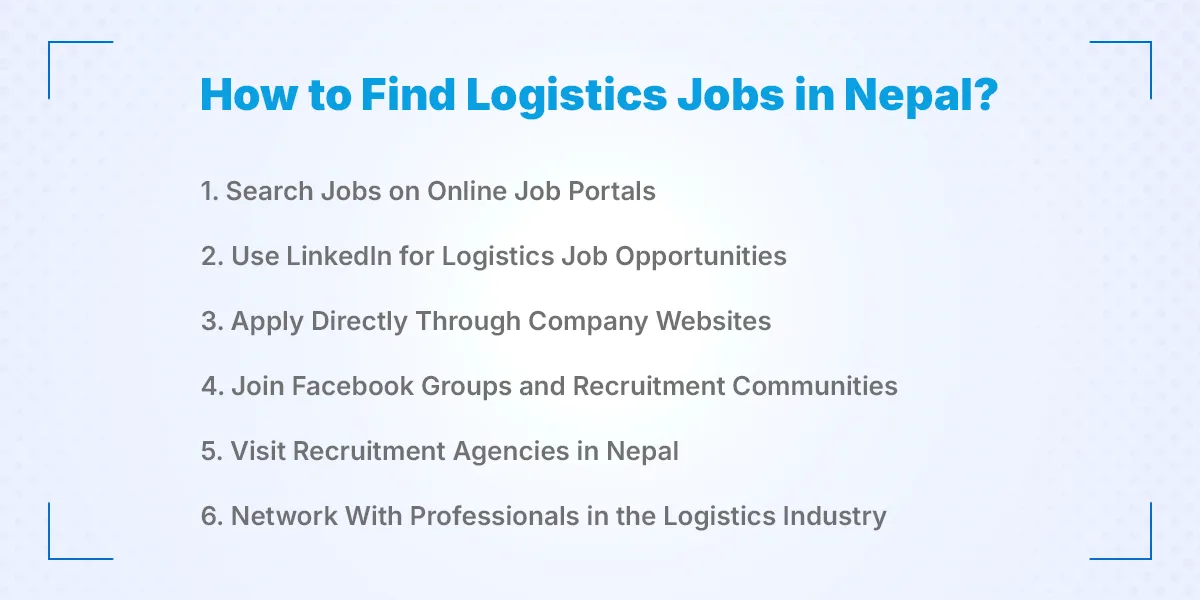
Online job portals like Kumari job and other local websites regularly post logistics job vacancies. You can easily search by location, experience level, and job type to find suitable openings.
2. Use LinkedIn for Logistics Job Opportunities
LinkedIn is a powerful platform for finding professional logistics jobs. Many companies post vacancies there, and you can directly connect with recruiters or apply through your profile.
3. Apply Directly Through Company Websites
Many logistics and courier companies in Nepal post job openings on their official websites. Visiting these career pages regularly helps you apply early before positions are widely advertised.
4. Join Facebook Groups and Recruitment Communities
Facebook groups are very popular in Nepal for sharing job updates. Many recruiters and pages post daily logistics job openings, especially for entry-level roles like warehouse or delivery jobs.
5. Visit Recruitment Agencies in Nepal
Recruitment agencies and manpower companies help connect job seekers with employers. They often have direct access to logistics job vacancies in different companies across Nepal.
6. Network With Professionals in the Logistics Industry
Networking is very important for finding hidden job opportunities. Connecting with people already working in logistics can help you learn about job openings that are not publicly advertised.
Best Websites to Apply for Logistics Jobs in Nepal
To find logistics jobs in Nepal quickly, using the right websites is very important. Many companies now post job openings online, making it easier for job seekers to apply from home. These platforms regularly update vacancies for warehouse, delivery, transportation, and supply chain roles.
1. Online Job Platforms for Nepal
Popular Nepali job portals like Kumari Job and Linkedin are the best places to start. These websites frequently list logistics-related job openings from different companies, making job searching simple and fast.
2. International Job Websites With Nepal Openings
International platforms like Indeed, Glassdoor, and LinkedIn also show logistics job opportunities available in Nepal. These sites are useful for finding professional and higher-level positions in supply chain and logistics companies.
3. Company Career Pages and Hiring Announcements
Many logistics, courier, and manufacturing companies in Nepal post job vacancies directly on their official websites. Checking these career pages regularly helps you apply early and increases your chances of getting selected before positions close.
4. Skills Needed to Get Logistics Jobs in Nepal
To build a successful career in logistics in Nepal, you need a mix of practical skills and basic technical knowledge. These skills help you manage daily operations like transportation, warehousing, inventory control, and supply chain coordination more efficiently.
5. Communication and Coordination Skills
Good communication is very important in logistics jobs. You need to coordinate with team members, suppliers, drivers, and customers to ensure smooth delivery and avoid misunderstandings.
6. Inventory and Warehouse Management Knowledge
Understanding how to manage stock, organize goods, and maintain warehouse records is essential. It helps ensure products are stored properly and easily tracked when needed.
7. Time Management and Problem-Solving Skills
Logistics work is time-sensitive, so managing tasks on schedule is very important. Problem-solving skills help you handle delays, delivery issues, and unexpected challenges quickly and effectively.
8. Basic Computer and Excel Skills
Basic computer knowledge, especially Excel, is very useful in logistics jobs. It helps in maintaining records, tracking inventory, preparing reports, and managing data accurately.
9. Knowledge of Supply Chain Operations
Understanding how the supply chain works—from suppliers to customers—gives you a strong advantage. It helps you see the full process of how goods move, are stored, and delivered in an organized system.
Educational Qualifications for Logistics Careers
In Nepal, you don’t always need a high-level degree to start a logistics career, especially for entry-level jobs like warehouse assistant or delivery staff. However, having the right education or training can help you get better job opportunities, higher salary, and faster career growth in the logistics and supply chain field.
1. Courses Related to Logistics and Supply Chain Management
There are different short-term and professional courses related to logistics and supply chain management. These courses teach you how goods are stored, managed, and transported efficiently. They also help you understand warehouse operations, transportation systems, and inventory control in a practical way.
2. Diploma and Bachelor Programs in Nepal
In Nepal, students can study logistics-related subjects through business and management programs like BBA, BBS, or specialized supply chain and logistics diplomas. These programs provide a strong foundation in business operations, trade, transportation, and management skills needed in the logistics industry.
3. Certifications That Improve Job Opportunities
Certifications in logistics, supply chain management, inventory control, and computer applications can improve your chances of getting hired. These certifications show employers that you have practical knowledge and are serious about building a career in this field.
4. Can Beginners Get Logistics Jobs Without Experience?
Yes, beginners can easily start a logistics career in Nepal without experience. Many companies hire freshers for entry-level positions like warehouse helper, delivery staff, or assistant roles. With on-the-job training, you can learn practical skills and grow into higher positions over time.
How to Create a Strong Logistics Job CV?
To create a strong logistics CV, include your personal details, education, skills, and any experience in warehouse, delivery, or inventory work. Use clear formatting, add relevant keywords like logistics, supply chain, and inventory management, and keep your CV simple and easy to read. Tailor it for each job to increase your chances of getting selected.
1. Important Sections to Include in Your Resume
Your logistics CV should include clear sections like personal details, career objective, education, skills, work experience (if any), and certifications. If you have any experience in warehouse work, delivery, or inventory handling, make sure to highlight it clearly.
2. Keywords to Add in a Logistics Resume
Using the right keywords helps your CV match job descriptions and get noticed by recruiters. Important logistics keywords include supply chain management, inventory control, warehouse operations, transportation coordination, delivery management, procurement, and logistics support.
3. Common Resume Mistakes to Avoid
Avoid spelling errors, unclear formatting, and unnecessary information. Do not use a generic CV for every job. Instead, customize your resume based on the specific logistics role you are applying for. Also, make sure your contact details are correct and updated.
4. Tips to Make Your CV ATS-Friendly
To make your CV ATS-friendly, use simple formatting, standard fonts, and clear headings. Include relevant keywords naturally, avoid images or complex designs, and keep your resume easy to read so applicant tracking systems can scan it properly.
Logistics Job Interview Tips for Beginners
Getting a logistics job in Nepal often depends on how well you perform in the interview. Employers look for candidates who understand basic logistics concepts, can communicate clearly, and are ready to handle responsibilities like inventory, transportation, and delivery operations. With proper preparation, beginners can easily improve their chances of selection.
1. Common Logistics Interview Questions
In logistics interviews, you may be asked simple questions about supply chain management, warehouse operations, inventory handling, and transportation processes. Employers may also ask why you want to work in logistics and how you handle deadlines or pressure situations.
2. How to Prepare for Supply Chain Job Interviews
To prepare well, you should first understand basic logistics terms like warehousing, inventory control, and delivery systems. Research the company you are applying to and practice answering common interview questions. Confidence and basic knowledge of the industry can make a strong impression.
3. Professional Communication Tips
During the interview, speak clearly and politely. Listen carefully before answering and keep your responses simple and relevant. Maintain good body language, make eye contact, and show interest in the logistics field.
4. Mistakes Candidates Should Avoid
Avoid being late, giving unclear answers, or showing lack of preparation. Do not exaggerate your experience or skills. Also, avoid negative comments about previous jobs or employers, as this can reduce your chances of getting selected.
Challenges of Working in the Logistics Industry
Working in the logistics industry in Nepal can be a good career option, but it also comes with several challenges. Since this field involves transportation, warehousing, and supply chain operations, employees must handle fast-moving tasks and ensure everything runs smoothly without delays.
1. Managing Deadlines and Deliveries
One of the biggest challenges in logistics is meeting strict deadlines. Companies expect goods to be delivered on time, and even small delays can affect customer satisfaction and business performance. Traffic, weather, and coordination issues can sometimes make delivery management difficult.
2. Handling Inventory and Transportation Issues
Logistics workers often face problems like inventory mismatches, damaged goods, or transportation delays. Proper tracking and careful handling of products are very important, but mistakes or system errors can lead to operational issues and losses.
3. Working Under Pressure in Supply Chain Operations
The logistics industry is fast-paced and requires employees to work under constant pressure. Managing multiple tasks, solving unexpected problems, and ensuring smooth supply chain operations can be stressful, especially during busy business periods.
Future Scope of Logistics and Supply Chain Jobs in Nepal
The future of logistics and supply chain jobs in Nepal is very promising. As trade, e-commerce, and manufacturing industries continue to grow, the need for efficient transportation, warehousing, and delivery systems is also increasing. This makes logistics one of the most important and fast-growing career fields in the country.
1. Growth of E-commerce and Delivery Services
E-commerce in Nepal is expanding rapidly, and online shopping platforms are creating high demand for delivery and logistics services. Companies need skilled workers to manage fast deliveries, packaging, and last-mile distribution, which is creating many new job opportunities.
2. Digital Transformation in Logistics
Technology is improving the logistics industry through digital tracking systems, automated warehouses, and online inventory management tools. This digital transformation is making operations faster and more efficient while also creating demand for tech-skilled logistics professionals.
3. Increasing Demand for Supply Chain Professionals
As businesses expand, the need for skilled supply chain professionals is also increasing. Companies are looking for experts who can manage transportation, reduce costs, improve efficiency, and ensure smooth movement of goods from suppliers to customers.
Why Are Logistics Jobs Important in Nepal’s Economy?
Logistics jobs are very important in Nepal because they help move goods smoothly from one place to another. They support almost every business, including retail, manufacturing, and e-commerce.
Good logistics systems make transportation and distribution faster and more efficient, helping products reach customers on time. This reduces costs and improves business performance.
Logistics also supports trade and creates many job opportunities in Nepal, especially in warehousing, delivery, and transportation sectors.
Conclusion
Logistics jobs in Nepal are growing quickly and offer strong opportunities for both freshers and experienced professionals. With basic skills, proper job search strategies, and continuous learning, you can easily start and build a successful career in this field. As industries like e-commerce, import-export, and transportation continue to expand, the demand for logistics workers will keep increasing in the coming years.
If you are interested in this career, start applying through job platforms like Kumari Job, improve your skills, and stay updated with industry trends. Take action today and begin your journey in the logistics industry to build a stable and rewarding future.
Submit your comments

Get Our App On



SEO Training for Freshers in Nepal: Skills, Career & Job Opportunities
VIEW DETAILS
SEO Training vs. Self-Learning: Which Is Right for You?
VIEW DETAILS
How to Choose Between Two Job Offers
VIEW DETAILS
Digital Marketing Training Interview Questions and Answers for Freshers
VIEW DETAILS


Loading Comments...