




Finding a new job can be exciting, especially when an offer promises a high salary, quick hiring, or an opportunity with a well-known company. However, not every job advertisement or recruitment message is genuine. Fake job offers in Nepal may be used to collect money, personal information, identity documents, or financial details from job seekers.
The Nepal Police Cyber Bureau has warned about attractive employment scams where victims may be promised easy or highly paid work and then asked to invest money or provide personal documents. Knowing the common warning signs and verifying the employer, recruiter, and job offer before responding can help job seekers avoid scams and protect their personal and financial information.
In this blog
What Is a Fake Job Offer?
A fake job offer is a fraudulent employment opportunity created to deceive job seekers into providing money, personal information, identity documents, or other benefits. Scammers may pretend to represent a legitimate company, recruitment agency, or employer and use fake vacancies to appear genuine. These offers can reach job seekers through social media, messaging apps, email, phone calls, job websites, or unsolicited messages and may copy the name, logo, or branding of a real company.
A legitimate recruitment process usually provides clear information about the employer, position, responsibilities, application process, and employment terms. It may also include steps such as an application, interview, assessment, or reference check. In contrast, a suspicious offer may skip these steps, provide vague job details, pressure candidates to act quickly, or request money and sensitive information without a valid reason.
10 Warning Signs of a Fake Job Offer to Watch For
The warning signs of a fake job offer to watch for include requests for upfront payment, unusually high salaries, no proper interview, suspicious recruiter contact details, vague job descriptions, pressure to respond quickly, and requests for sensitive information. Other signs include difficulty verifying the company or recruiter, suspicious job links or websites, and multiple red flags appearing in the same offer.
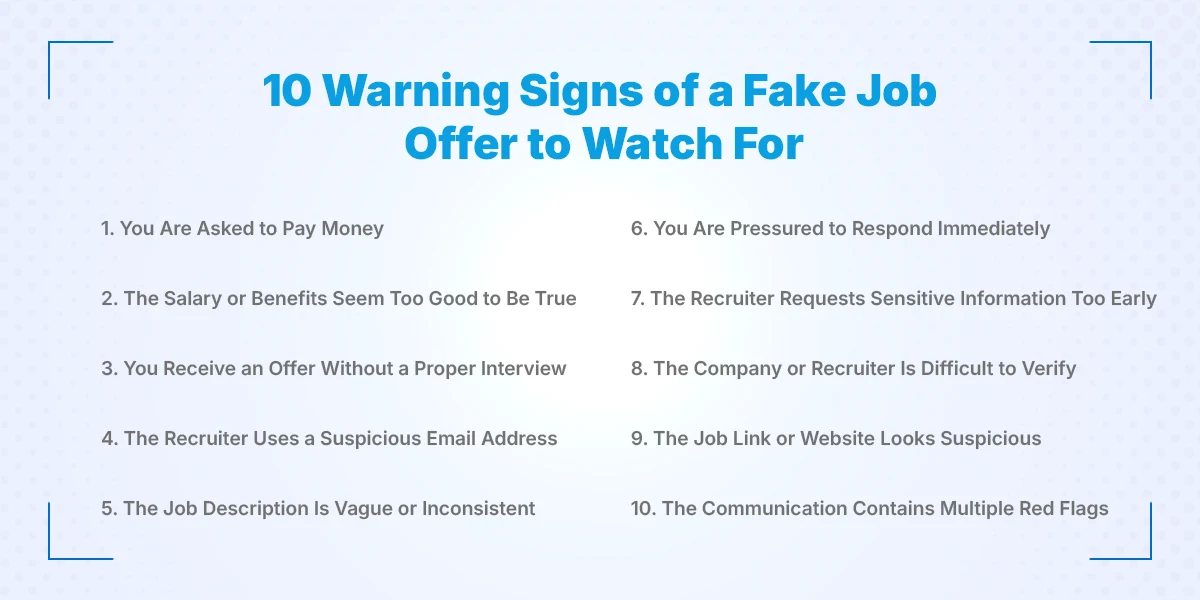
1. You Are Asked to Pay Money
An unexpected request for money before you are properly hired is one of the clearest warning signs of a fake job offer. Scammers may call it a registration fee, training charge, security deposit, document-processing fee, or payment to guarantee employment.
2. The Salary or Benefits Seem Too Good to Be True
An unusually high salary, guaranteed income, large benefits package, or easy online job opportunity can be used to attract job seekers. A high salary alone does not prove an offer is fake, but unusually high pay combined with vague job details should prompt you to verify the employer.
3. You Receive an Offer Without a Proper Interview
Receiving a job offer without applying, interviewing, or completing any meaningful selection process should make you cautious. Be especially careful if the recruiter sends an offer letter and immediately asks for payment or personal information.
4. The Recruiter Uses a Suspicious Email Address
Check whether the recruiter's email address matches the company's official domain or uses a personal or unrelated address. Misspelled company names, unusual domains, and free email accounts can be warning signs, although some legitimate recruiters may use external recruitment systems.
5. The Job Description Is Vague or Inconsistent
A legitimate vacancy normally explains the position, responsibilities, qualifications, location, and working arrangements. Vague descriptions or changes in the salary, job title, location, working hours, or responsibilities can indicate that the offer needs further verification.
6. You Are Pressured to Respond Immediately
Scammers may create urgency by claiming that only one position remains or that an offer will expire within a few hours. This pressure can prevent job seekers from researching the employer or verifying the opportunity properly.
7. The Recruiter Requests Sensitive Information Too Early
Be cautious if an unverified recruiter asks for identity documents, bank details, financial information, passwords, or one-time passwords (OTPs) before the recruitment process is properly established. Never share passwords or OTPs with a recruiter, and verify why any sensitive information is required.
8. The Company or Recruiter Is Difficult to Verify
Search for the company independently and check its official website, contact information, physical presence, and professional profiles. Be cautious if you cannot find the company, its contact details do not work, or the recruiter refuses to identify the employer.
9. The Job Link or Website Looks Suspicious
Scammers can create websites and job pages that imitate legitimate companies, so a professional-looking website does not automatically prove that an offer is genuine. Check the website address for misspellings, unusual domains, or details that do not match the organization's official information.
10. The Communication Contains Multiple Red Flags
A fake job offer may not have one obvious warning sign, but several small inconsistencies can indicate a potential scam. An unofficial account, unusually high salary, lack of an interview, urgent demands, and an upfront payment request together should prompt you to stop and verify the opportunity.
How to Verify a Job Offer Before Accepting It
You can verify a job offer by checking the company, vacancy, recruiter, offer letter, and contact details through independent and official sources. Taking these steps before accepting the position can help you confirm whether the opportunity is genuine and avoid potential scams. If anything feels off during your verification, it is always safer to decline the job offer rather than risk your security.
Research the Company: Check the company's official website, contact details, office location, services, and online presence, and compare them with the information provided in the job offer.
Verify the Job Vacancy: Look for the same position on the employer's official careers page or a reputable job platform and compare the job details and contact information.
Check the Recruiter: Verify the recruiter's name, position, organization, and contact details through the company's official channels.
Review the Offer Letter: Check the employer's name, job title, salary, work location, duties, joining date, employment terms, and authorized signatory for consistency.
Contact the Company Through Official Channels: Use contact information from the company's official website to confirm that the recruiter, vacancy, and offer letter are genuine.
What Should You Do If You Receive a Fake Job Offer?
If you receive a suspicious job offer, stop further communication or payments and avoid sharing additional personal or financial information. Preserve the evidence and report the suspected scam to the appropriate authority.
Do Not Send Money or Additional Information: Stop making payments or sending documents, and contact your bank or relevant service provider promptly if you have already shared financial information or account credentials.
Save the Messages and Documents: Keep screenshots, emails, phone numbers, payment records, offer letters, links, and chat histories as evidence for reporting or investigation.
Stop Communicating With the Recruiter: Avoid further interaction once you have enough reason to suspect a scam, and block or report the account after preserving the relevant evidence.
Report the Suspicious Offer: Report cyber-related fraud to the Nepal Police Cyber Bureau or a nearby police office, while foreign employment-related fraud can also be reported to the Department of Foreign Employment through its official complaint channels.
How to Find Safer Job Opportunities in Nepal
You can find safer job opportunities in Nepal by using established job portals, checking employers before applying, and applying through official recruitment channels. These steps can help you verify vacancies and reduce the risk of responding to fraudulent job offers.
1. Use Established Job Portals
Established job portals such as Kumari Job can help you find vacancies from different employers through a more structured application process. Even when using a job portal, review the employer and vacancy carefully before sharing sensitive information or accepting an offer.
2. Check the Employer Before Applying
Do not assume that a vacancy is genuine simply because it appears online. Visit the employer's official website, check its contact information, review the job description, and compare the vacancy with other reliable sources.
3. Apply Through Official Recruitment Channels
Whenever possible, apply through the employer's official careers page, established job portals, or authorized recruitment services in Nepal. For foreign employment, use Department of Foreign Employment resources to verify available jobs, recruitment agencies, and pre-permission information.
Conclusion
Fake job offers in Nepal can look convincing by using real company names, professional documents, attractive salaries, or familiar recruitment platforms. Warning signs such as payment requests, unrealistic benefits, no proper interview, suspicious contact details, urgent demands, and requests for sensitive information should encourage you to verify the opportunity.
Before accepting a job offer, independently verify the employer, vacancy, recruiter, and offer letter. If you suspect a scam, do not send additional money or information, preserve the evidence, and report the incident to the appropriate authority. For a safer job search experience, register as a jobseeker on Kumari Job today to apply for verified roles from trusted employers.
Frequently Asked Questions
Submit your comments

Get Our App On



Should I Accept a Job With Low Salary for Experience?
VIEW DETAILS
Should I Accept a Job With Low Salary for Experience?
VIEW DETAILS
Degree vs Skills: Which One Is More Valuable for Your Career?
VIEW DETAILS
What Should I Do After Being Rejected for a Job?
VIEW DETAILS


Loading Comments...