



Payroll is one of the most important administrative processes for any business. Employees expect accurate salaries on time, while employers must ensure that salary calculations, tax deductions, statutory contributions, and employee records are handled correctly. However, payroll mistakes in Nepal can occur due to incorrect salary calculations, outdated employee information, inaccurate attendance records, and manual processing.
Even minor payroll errors can lead to incorrect payments, employee dissatisfaction, additional administrative work, and compliance issues. For businesses managing multiple employees, branches, and salary structures, maintaining an accurate and reliable payroll process is essential. Understanding common payroll mistakes can help businesses improve payroll accuracy and avoid unnecessary complications.
In this blog
What Is Payroll Management?
Payroll management is the process of calculating employee salaries, managing deductions, processing payments, and maintaining payroll records. It involves more than simply paying salaries, as businesses must account for basic pay, allowances, overtime, attendance, and leave adjustments to determine each employee's correct earnings.
The process also includes calculating applicable income tax and statutory deductions, disbursing salaries on time, and maintaining payroll records and reports. Effective payroll management helps businesses ensure accurate employee payments, maintain financial records, and meet applicable regulatory requirements.
Why Is Accurate Payroll Important for Businesses in Nepal?
Accurate payroll is important for businesses in Nepal because it ensures employees receive the correct salaries while helping employers manage financial and regulatory responsibilities. A reliable payroll process also improves employee satisfaction and reduces administrative complications, which is highly valued by businesses utilizing professional payroll services for businesses in Nepal. Key benefits of accurate payroll include:
Paying Employees Correctly and on Time: Ensures employees receive their salaries and applicable allowances without unnecessary delays or calculation errors.
Maintaining Employee Trust: Consistent and accurate payments build employee confidence in the organization.
Managing Tax and Statutory Obligations: Helps businesses calculate applicable income tax and statutory contributions correctly.
Reducing Payroll Disputes: Minimizes disagreements caused by incorrect salaries, overtime payments, or deductions.
Maintaining Accurate Financial Records: Provides reliable payroll information for budgeting, accounting, and financial reporting.
Reducing HR and Administrative Workload: Prevents repeated corrections and saves time spent resolving payroll-related issues.
Meeting Legal and Regulatory Requirements: Helps businesses manage applicable income tax deductions, SSF and PF contributions, and other payroll-related obligations in Nepal.
Common Payroll Mistakes Businesses Should Avoid
Businesses can make payroll mistakes when calculating salaries, managing employee records, processing deductions, or making payments. Understanding these common errors can help employers improve payroll accuracy and avoid unnecessary complications.
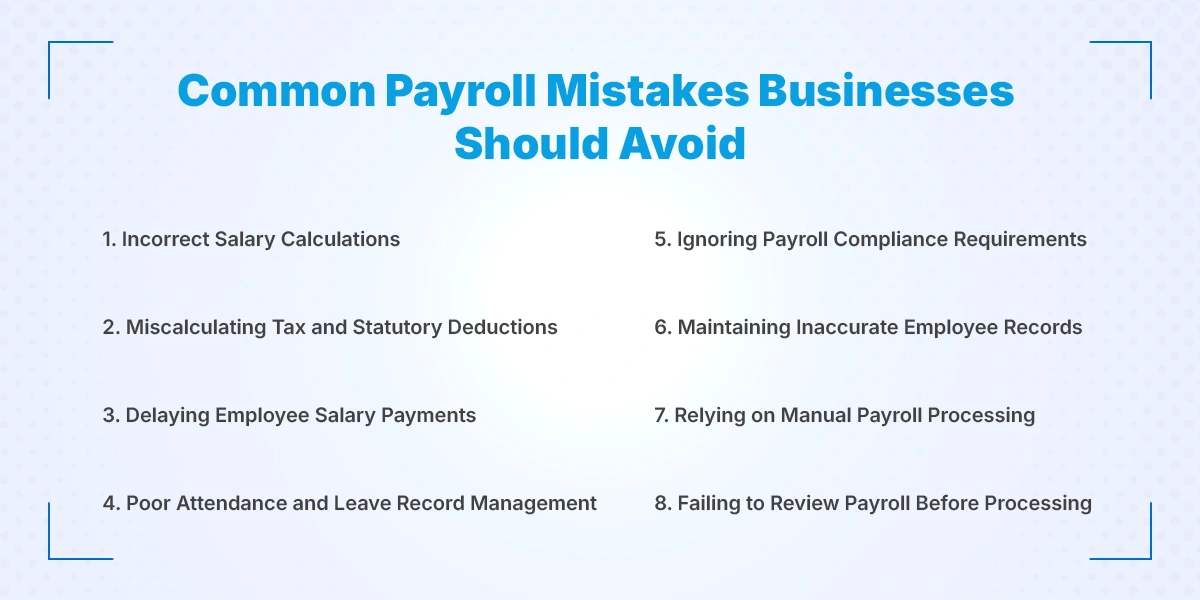
1. Incorrect Salary Calculations
Incorrect salary calculations can result in employees receiving more or less than they are entitled to. Errors often occur when businesses overlook allowances, overtime, bonuses, leave adjustments, or salary revisions. Maintaining updated salary records and verifying calculations before processing payroll can help prevent these mistakes.
2. Miscalculating Tax and Statutory Deductions
Businesses may incorrectly calculate income tax, Social Security Fund (SSF) contributions, or Provident Fund (PF) deductions due to outdated rules or incorrect payroll formulas. Employers should regularly review applicable tax rates and statutory requirements to ensure deductions are calculated accurately, and payroll compliance is maintained. Employers should also verify employee eligibility, applicable contribution rates, and current tax provisions before finalizing payroll deductions.
3. Delaying Employee Salary Payments
Late salary payments can reduce employee satisfaction and affect workplace trust. Poor payroll planning, cash-flow problems, delayed approvals, and incorrect banking information can contribute to payment delays. Establishing a fixed payroll schedule and completing approvals before the payment date can help businesses pay employees on time.
4. Poor Attendance and Leave Record Management
Incorrect attendance and leave records can lead to inaccurate overtime payments, salary deductions, and leave adjustments. Businesses should maintain updated attendance records and connect leave management with payroll wherever possible to reduce calculation errors.
5. Ignoring Payroll Compliance Requirements
Failing to follow Nepal’s applicable labor laws, income tax regulations, and statutory contribution requirements can create financial and legal problems for businesses. Employers must account for applicable income tax, SSF, and PF deductions when processing payroll. Maintaining accurate records and reviewing regulatory requirements regularly can help prevent compliance issues by following the labor law in Nepal.
6. Maintaining Inaccurate Employee Records
Outdated employee details, salary information, or bank account records can cause incorrect payments and deduction errors. Businesses should maintain a centralized employee database and update employee information whenever changes occur.
7. Relying on Manual Payroll Processing
Relying heavily on spreadsheets and manual calculations increases the risk of data-entry mistakes, incorrect formulas, and duplicate records. Payroll management software can automate repetitive tasks, organize employee information, and reduce manual errors as businesses grow.
8. Failing to Review Payroll Before Processing
Processing payroll without a final review can allow salary, attendance, or deduction errors to go unnoticed. Businesses should verify employee details, salary changes, attendance records, and deductions before approving payments to ensure employees receive accurate salaries.
What Are the Consequences of Payroll Mistakes?
The consequences of payroll mistakes include incorrect employee payments, salary disputes, compliance issues, increased administrative workload, and delayed salary processing. These problems can affect employee trust, increase business costs, and disrupt daily operations.
Incorrect Employee Payments: Calculation or deduction errors can cause employees to receive more or less than their actual earnings, requiring additional corrections.
Employee Complaints and Salary Disputes: Repeated mistakes involving overtime, allowances, or deductions can frustrate employees and reduce their trust in the organization.
Increased Administrative Work: HR and finance teams may spend extra time investigating errors, correcting calculations, and responding to employee complaints.
Delayed Salary Processing: Payroll errors discovered during final reviews can delay approvals and prevent employees from receiving their salaries on time.
Compliance and Financial Problems: Incorrect tax deductions, statutory contributions, or incomplete payroll records can create compliance issues, potentially resulting in penalties, additional costs, or disputes.
How Can Businesses Avoid Payroll Mistakes?
Businesses can prevent payroll mistakes by maintaining accurate employee records, following a consistent payroll process, and reviewing calculations before making payments. Using appropriate technology and staying updated on regulatory requirements can also improve payroll accuracy by using a complete payroll audit checklist.
1. Maintain Updated Employee Records
Businesses should keep employee information centralized and update it whenever salary, position, department, bank details, or employment status changes. Assigning responsibility for maintaining these records helps prevent outdated information from affecting payroll.
2. Use Reliable Payroll Management Software
Payroll software can automate salary calculations, manage employee records, track deductions, and reduce manual errors. Businesses in Nepal should choose a system that supports their salary structures and applicable local payroll requirements.
3. Keep Accurate Attendance and Leave Records
Accurate attendance and leave records help businesses calculate working days, overtime, and salary adjustments correctly. Integrating attendance management with payroll can reduce duplicate data entry and improve calculation accuracy.
4. Review Salary Calculations and Deductions
Businesses should review basic salaries, allowances, overtime, leave adjustments, taxes, and other applicable deductions before approving payroll. A second-level review can help identify errors, particularly in organizations with complex salary structures. Businesses should verify that salary calculations and deductions follow applicable tax provisions and statutory contribution requirements in Nepal. Regularly checking payroll records against current regulations can help identify discrepancies before payments are processed.
5. Stay Updated on Payroll Regulations
Businesses should regularly review applicable labor laws, tax rules, and statutory contribution requirements in Nepal. Updating payroll procedures whenever regulations change can help prevent outdated calculations and compliance issues.
6. Consider Outsourcing Payroll Management
Businesses without dedicated payroll expertise can consider outsourcing payroll service providers. Professional payroll support can help businesses manage salary calculations, statutory deductions, employee records, and payroll administration while reducing the workload on internal HR teams. Businesses should still ensure that payroll information is handled securely and that payments and compliance requirements are properly reviewed.
Conclusion
Avoiding common payroll mistakes is essential for maintaining accurate employee payments, building employee trust, and ensuring smooth business operations. Errors in salary calculations, deductions, attendance records, and compliance can create unnecessary financial and administrative problems for businesses.
Businesses in Nepal can reduce these risks by keeping employee records updated, maintaining accurate attendance data, reviewing payroll before processing, and following applicable regulations. As organizations grow, using a standardized payroll process or reliable payroll management system can help improve payroll accuracy, reduce administrative workload, and ensure timely salary payments. Ready to streamline your HR processes? Explore our employer services today and find the right solutions for your business.
Frequently Asked Questions
Submit your comments

Get Our App On



How to Screen Job Applications Efficiently: A Guide for Employers in Nepal
VIEW DETAILS
What Are the Best Corporate Training Programs for Employees in Nepal?
VIEW DETAILS
How Corporate Training Improves Employee Productivity
VIEW DETAILS
10 Benefits of Corporate Training for Employees and Organizations
VIEW DETAILS


Loading Comments...