

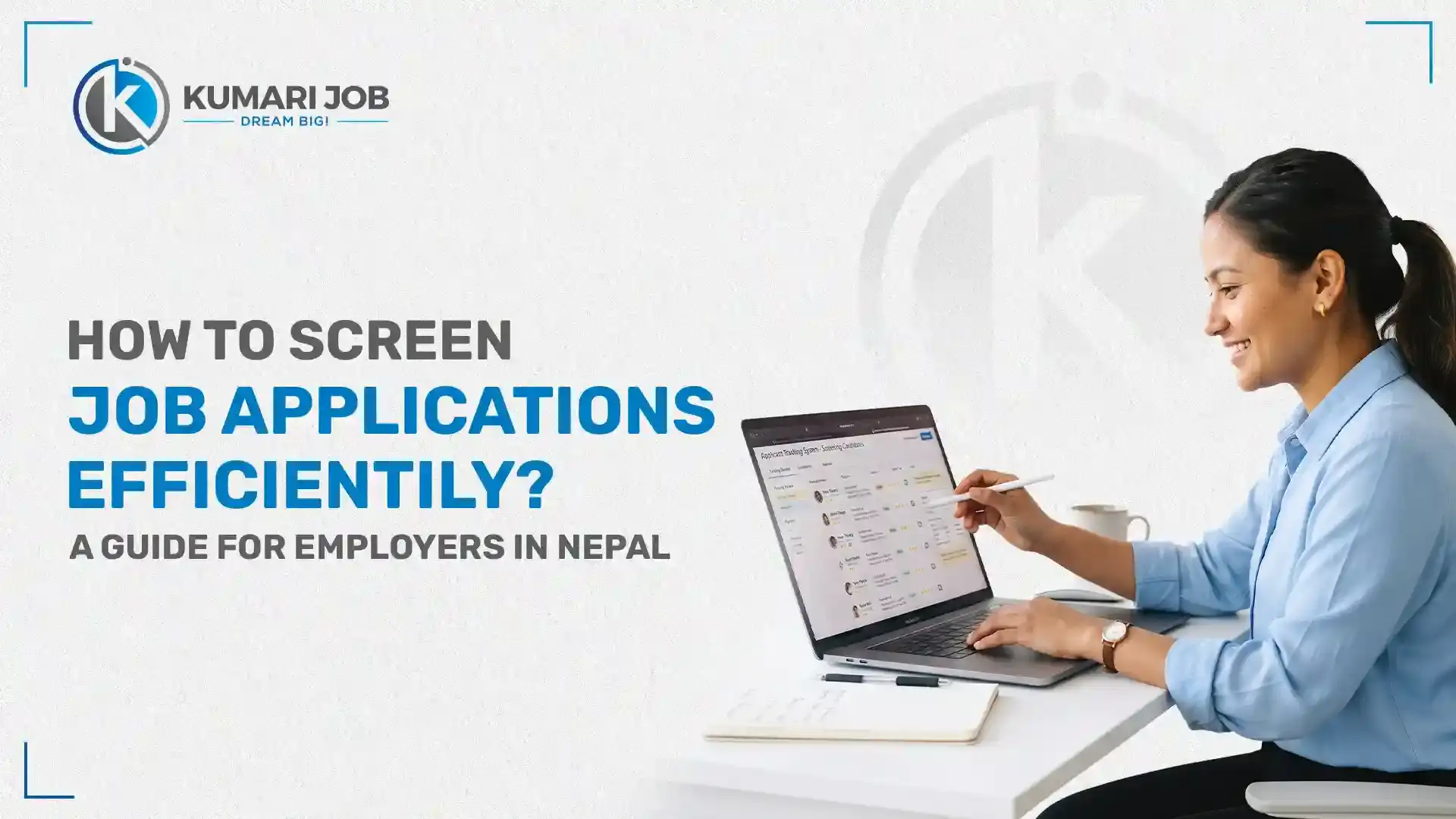

Finding the right candidate starts with an effective job application screening process. When businesses in Nepal advertise vacancies, they may receive dozens or hundreds of applications from candidates with different qualifications, experience levels, and skills. Reviewing every application manually can be time-consuming, especially when employers do not have clear criteria for identifying suitable candidates.
An efficient screening process helps employers evaluate applicants against job requirements, identify qualified candidates, and reduce the time spent on recruitment. By establishing clear selection criteria, reviewing relevant qualifications and experience, and using recruitment tools, HR professionals can shortlist suitable candidates and make more informed hiring decisions.
In this blog
What Is Job Application Screening?
Job application screening is the process of reviewing resumes, cover letters, and other application details to determine whether candidates meet the requirements of a vacant position. It is an early stage of how recruitment services work in Nepal that helps employers narrow down the applicant pool before moving suitable candidates to interviews or assessments.
During screening, HR professionals assess applicants based on their educational qualifications, relevant work experience, technical skills, and other job-related criteria. This helps employers shortlist candidates whose qualifications and abilities align with the position and its responsibilities.
Why Is Effective Candidate Screening Important?
An effective candidate screening process is important because it helps businesses identify suitable applicants, reduce recruitment delays, and make better hiring decisions. By evaluating candidates against consistent job-related criteria, employers can improve the quality and efficiency of their recruitment process. Some key benefits of effective candidate screening include:
Saves Recruitment Time: Helps HR teams focus on qualified applicants instead of spending time reviewing every application in equal detail.
Improves Hiring Decisions: Makes it easier to identify candidates whose qualifications, experience, and skills match the job requirements.
Filters Out Unsuitable Applicants: Removes applications that do not meet essential job criteria before the interview stage.
Speeds Up the Recruitment Process: Helps employers move qualified candidates through each hiring stage more efficiently.
Promotes Fair Candidate Evaluation: Applying consistent, job-related screening criteria helps reduce subjective decisions and potential bias.
How to Screen Job Applications Effectively
Screening job applications requires a structured approach to evaluate candidates against job requirements. Employers can follow these steps to identify suitable applicants and make better hiring decisions.
1. Define Clear Job Requirements
Before reviewing applications, identify the qualifications, skills, experience, and competencies required for the position. Separate essential requirements from preferred qualifications to avoid overlooking suitable candidates who may lack optional skills.
2. Review Resumes and Cover Letters
Review resumes and cover letters to understand candidates' educational backgrounds, work experience, skills, and achievements. Focus on their actual responsibilities and relevant qualifications rather than relying only on previous job titles. Cover letters can also provide insight into their interest in the position.
3. Compare Applications Against Job Criteria
Compare each candidate's qualifications and experience with the requirements listed in the vacancy announcement. For example, a digital marketing executive may need skills in SEO, social media management, Google Ads, and campaign reporting. Using a consistent checklist can make comparisons easier.
4. Assess Relevant Skills and Experience
Look beyond qualifications to understand how candidates have applied their skills in previous roles. Evaluate technical and transferable skills such as communication, problem-solving, and teamwork. For entry-level positions, also consider internships, academic projects, and practical training.
5. Create a Candidate Shortlist
Group applicants according to how closely they match the job requirements. Identify candidates who meet the essential qualifications, those with potential but missing some preferred skills, and those who do not meet the basic requirements. Shortlisted candidates can then proceed to interviews or skill assessments.
6. Maintain Consistent Screening Criteria
Apply the same job-related evaluation standards to all applicants to ensure fair screening. Avoid decisions based on personal assumptions or irrelevant characteristics. Maintaining screening records also helps HR teams understand and justify their selection decisions.
Common Job Application Screening Mistakes to Avoid
Even experienced HR professionals can make mistakes when screening applications. These errors can cause employers to overlook qualified candidates or make poor hiring decisions. Common screening mistakes include:
Focusing Only on Educational Qualifications: Ignoring practical skills, work experience, and relevant achievements.
Rejecting Candidates Because of Employment Gaps: Assuming career breaks indicate a lack of ability or commitment.
Ignoring Transferable Skills: Overlooking candidates who have relevant skills gained from different industries.
Using Inconsistent Evaluation Criteria: Applying different standards to applicants, resulting in unfair screening decisions.
Relying Too Much on Manual Screening: Spending excessive time reviewing applications, which can slow down recruitment.
Overlooking Qualified Candidates: Rejecting applicants based only on specific keywords or job titles rather than their actual skills and experience.
Avoiding these mistakes helps employers evaluate applicants more fairly and identify suitable candidates efficiently.
How Can Technology Make Candidate Screening Easier?
Recruitment technology helps employers organize applications, evaluate candidate information, and reduce repetitive screening tasks. Some useful technologies that support the screening process include:
Applicant Tracking System (ATS): Helps HR teams organize applications, track candidate progress, and manage different recruitment stages. Using an applicant tracking system is the first step to automation.
AI-Powered Resume Screening: Analyzes resumes to identify qualifications, skills, and experience relevant to specific job requirements.
Resume Parsing Software: Extracts information such as contact details, education, work experience, and skills from resumes, making candidate information easier to organize.
AI Resume Search: Helps recruiters find potential candidates from existing resume databases using specific skills, qualifications, and experience.
Online Assessment Tools: Allow employers to evaluate candidates through skill tests, aptitude assessments, and job-related assignments before interviews.
Recruitment Analytics: Helps HR teams track application numbers, screening progress, and recruitment performance to identify areas for improvement.
These technologies can reduce manual work and help employers manage candidate screening more efficiently. However, HR professionals should review technology-generated results and understand the difference between ATS and traditional recruitment to make final decisions based on job-related qualifications and suitability.
How Kumari Job Helps Employers Manage Job Applications
Kumari Job's Vacancy Announcement Services help businesses advertise job openings, reach potential candidates, and manage recruitment activities through an integrated platform. Key features include:
AI-Assisted Job Posting: Helps employers create professional job descriptions based on their hiring requirements.
Vacancy Publication: Allows businesses to advertise vacancies and reach job seekers across Nepal.
AI-Powered Applicant Tracking System: Helps employers organize applications, track candidates, and manage recruitment stages.
AI Resume Search: Helps employers identify potential candidates based on relevant qualifications, skills, and experience.
Talent Pool Management: Allows employers to maintain candidate information for future hiring needs.
These features help businesses simplify recruitment activities, reduce manual work, and manage candidate information more efficiently. If your organization wants to simplify its hiring process, explore Kumari Job's Vacancy Announcement Services to find suitable recruitment solutions for your business.
Conclusion
Effective job application screening helps employers identify qualified candidates, reduce recruitment workload, and make better hiring decisions. By defining clear job requirements, evaluating resumes consistently, identifying relevant skills, and maintaining an organized
As application volumes increase, recruitment technology such as Applicant Tracking Systems and AI-powered resume search can further simplify candidate management. Combining these tools with human judgment allows HR professionals to screen applications more efficiently while ensuring that suitable candidates receive proper consideration. Ready to streamline your hiring? Visit Kumari Job today and manage your candidate screening more efficiently.
Frequently Asked Questions
Submit your comments

Get Our App On


What Are the Best Corporate Training Programs for Employees in Nepal?
VIEW DETAILS
Common Payroll Mistakes in Nepal and How Businesses Can Avoid Them
VIEW DETAILS
How Corporate Training Improves Employee Productivity
VIEW DETAILS
10 Benefits of Corporate Training for Employees and Organizations
VIEW DETAILS


Loading Comments...