



You just got a job offer after weeks of interviews. The company sounds good, but deep down, you know it is not the right fit. Maybe the salary is low, the role feels off, or you already have a better option. Now you feel stuck. You do not want to sound rude or ungrateful, but you also do not want to accept something you are unsure about.
The good news is that declining a job offer is completely normal. Employers expect it, and the way you respond matters more than your decision.
In this guide, you will learn how to decline a job offer in a polite and professional way, with simple steps and clear examples.
In this blog
When Should You Decline a Job Offer?
You should say no to a job offer letter when it does not pay enough, feels wrong for your career, or comes from a company with a bad work environment. Turning down a job is tough, but sometimes it is the smartest choice for long-term success. Knowing exactly when to walk away helps professionals avoid bad work situations and find the right path instead.
1. Low Salary or Compensation
Getting paid fairly for hard work is very important. Sometimes, a company offers much less money than the market average salary for the role. If they refuse to negotiate or increase the pay, walking away is a smart decision. Accepting low pay can cause financial stress and make the job feel unrewarding over time. A good job must respect the value and skills brought to the table. Always make sure the final salary matches living costs and professional experience.
2. Better Offer from Another Company
Job seekers often apply to many places at the same time and might receive multiple offers. It is completely normal to choose the offer that provides better benefits, higher pay, or a shorter commute. A different company might also offer a better job title or faster career growth. When a clearly better option exists, declining the other offer is the right move. Just be sure to let the first company know quickly so they can find someone else. Handling this situation politely keeps professional relationships strong.
3. Role Mismatch or Unclear Job Responsibilities
During the interview process, the actual daily tasks of the job should become very clear. Sometimes the employer changes the job description or seems confused about what the role actually does. If the tasks do not match the original job posting, it is a huge warning sign. Accepting a confusing job leads to quick frustration and failure at work. A clear set of duties is needed to succeed and grow in any career. It is better to decline the offer than to start a job with unclear expectations.
4. Company Culture Concerns
A workplace should feel safe, supportive, and organized. If the interviewers seem rude, stressed, or unhappy, the daily work environment is probably bad. Red flags like high staff turnover or bad online reviews from past workers show deep company problems. Working in a toxic place ruins mental health and causes extreme stress outside of work hours. No job title or salary is worth sacrificing peace of mind. Trust those bad feelings and decline the offer to protect personal well-being.
5. Personal Reasons or Career Goals Shift
Life changes quickly and unexpectedly for everyone. Family emergencies, sudden health issues, or needing to relocate can make starting a new job impossible. Sometimes, a professional simply realizes they want to change career paths entirely after applying. Accepting a job while dealing with major life problems is unfair to both the employer and the worker. It is completely acceptable to step back and focus on personal matters first. Employers understand that human needs sometimes have to come before business.
How to Decline a Job Offer Professionally?
To decline a job offer professionally, you need to reply promptly, choose the correct contact method, show thankfulness, give a polite refusal, and keep a positive connection. Following these steps shows deep respect for the time the hiring team spent on the interview process. This careful approach ensures the company might still consider reaching out for a different role later on.
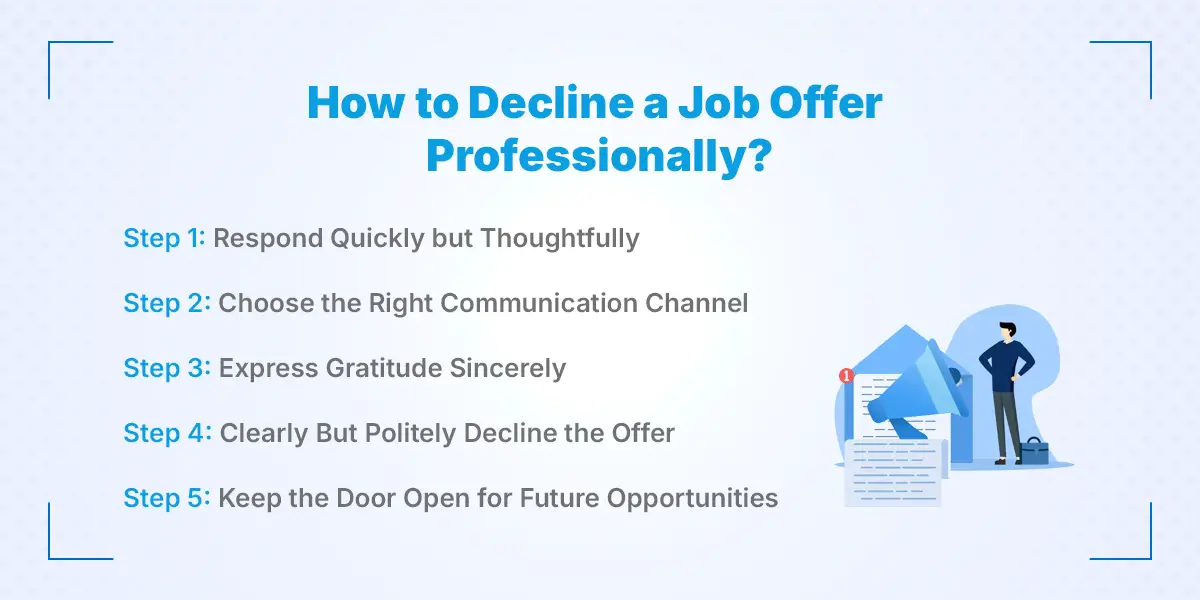
Step 1 – Respond Quickly but Thoughtfully
Companies need to know a final decision as soon as possible to keep their business moving. Waiting too long to reply causes delays for other people looking for a job. A fast answer allows the hiring manager to offer the position to the next person in line. Even though a quick reply is needed, take a moment to plan the exact words carefully. Sending a rushed message with mistakes looks bad and hurts professional reputation.
Step 2 – Choose the Right Communication Channel
The method used to decline the offer depends heavily on how the interview process happened. An email is usually perfect if the communication happens mostly through short online messages. A phone call is much better after finishing several long rounds of final interviews. Calling a senior manager directly shows high respect and strong professional maturity. Picking the correct way to talk prevents misunderstandings and leaves a strong final impression.
Step 3 – Express Gratitude Sincerely
Always start the message by thanking the employer for the job opportunity. Hiring managers spend many hours reading resumes and talking to candidates. Showing true appreciation makes the rejection much easier for the company to accept. Mention a specific good moment from the interview to make the thankfulness feel real. A polite attitude proves that the candidate values the effort put into the entire hiring process.
Step 4 – Clearly But Politely Decline the Offer
The rejection message must be very easy to understand without any hidden meanings. State clearly that the position is not the right fit at this current time. Never leave the employer guessing about the final choice or hoping for a changed mind. Keep the reason short and simple without sharing too many personal details. A firm but kind refusal helps everyone move forward without any confusion.
Step 5 – Keep the Door Open for Future Opportunities
The business world is small, and people often cross paths again later in their careers. Always end the message by wishing the company success in finding the right person. Suggest staying connected on professional networks like LinkedIn for future updates. A company might have a different role open up later that fits perfectly. Leaving on good terms builds a strong network and creates unexpected career chances later.
How to Decline a Job Offer via Email (With Template) Scenarios
Sending an email to refuse a job offer is a smart choice. An email creates a clear written record of the final decision. It also gives plenty of time to plan the exact words without feeling rushed or nervous on a phone call. Using a basic format makes this step much easier and less stressful. Below are simple email formats for different situations that happen often.
Scenario 1: The salary is too low
Subject: Decision on [Job Title] Offer
Dear [Hiring Manager Name],
Thank you for offering me the [Job Title] position and for the opportunity to meet the team. I truly appreciate your time and consideration.
After careful consideration, I have decided to decline the offer, as the proposed salary does not align with my current financial needs and market expectations.
I wish your team continued success in finding the right candidate for this role.
Sincerely,
[Candidate Name]
Scenario 2: Another job offer was accepted
Subject: Update on [Job Title] Offer
Dear [Hiring Manager Name],
Thank you very much for offering me the [Job Title] position. I appreciate the time you spent sharing details about the role and your team.
After careful consideration, I have accepted another opportunity that better aligns with my long-term career goals. This was a difficult decision, as I truly value the experience of learning about your organization.
I wish you and your team all the best in filling the position.
Best regards,
[Candidate Name]
Scenario 3: The role does not match career goals
Subject: Regarding [Job Title] Offer
Dear [Hiring Manager Name],
Thank you for offering me the [Job Title] position. I greatly enjoyed learning more about your company and meeting the team.
After thoughtful consideration, I have decided to decline the offer, as the role does not align with my current career direction. I sincerely appreciate the opportunity to interview and learn about your organization.
Wishing your team continued success in the future.
Regards,
[Candidate Name]
Scenario 4: Personal reasons or family matters
Subject: Decision on [Job Title] Offer
Dear [Hiring Manager Name],
Thank you for the kind offer to join your team as a [Job Title]. I truly appreciate your consideration and the opportunity to learn about your organization.
Due to personal and family matters that require my immediate attention, I am unable to accept the offer at this time. I hope to have the chance to connect in the future under different circumstances.
Thank you for your understanding.
Sincerely,
[Candidate Name]
Should You Call or Email to Decline a Job Offer?
The choice between a phone call and an email depends entirely on the interview depth and the specific job level. Making a phone call is usually the best choice for senior management roles or after finishing several rounds of final interviews. Speaking on the phone shows deep respect for the time and hard work of the hiring manager. This direct talk builds a very strong personal connection and leaves a positive mark on the employer. A phone call also allows a smooth and natural conversation to explain the final decision clearly and politely to the whole team.
Sending an email is completely acceptable for entry-level jobs or early hiring stages. If the interview process was fast and handled mostly through online messages, a written reply works wonderfully. It gives a clear record of the final answer without interrupting the busy schedule of the recruiter. A short email message saves valuable time for everyone involved.
Consider these pros and cons before making a final choice:
- Email allows time to plan exact words perfectly without feeling nervous.
- Email creates an official written proof of the polite job rejection.
- Phone calls build much better trust and help with future networking.
- Phone calls feel slightly stressful, but always show very high confidence.
Always match the communication style to the general company culture. Whether choosing proper phone or email communication, replying quickly matters the most. Proper job offer etiquette means never leaving the employer waiting in total silence. Following these simple rules keeps valuable professional networking doors wide open for many future career chances.
Common Mistakes to Avoid When Declining a Job Offer
Turning down a job is hard, but making mistakes makes it worse. Many people ruin good chances by handling the rejection poorly. Doing it the wrong way leaves a bad memory with the company. Knowing what to avoid keeps the professional relationship safe and friendly.
1. Being Unclear or Dishonest
Telling lies about the real reason looks very bad. Employers easily find out the truth later on. Giving a confused or fake answer breaks all trust with the hiring team. Just state a simple and honest reason instead of making up a fake story.
2. Responding Too Late
Making the company wait a long time is very rude. The team needs to hire someone quickly to get back to normal work. Taking days to answer stops them from offering the job to someone else. Always send the final reply right away to show proper respect.
3. Burning Bridges with Negative Feedback
Sharing bad thoughts about the company during a rejection is a huge mistake. The business world is small, and people talk to each other often. Pointing out bad things in the interview makes people angry and defensive. Keep the message polite and friendly to protect future career chances.
4. Over-Explaining Your Reasons
Giving too many personal details makes the message confusing and long. The employer only needs to know the final choice without a huge background story. Writing long paragraphs about life problems takes up too much time. Keep the reason short and move straight to the polite goodbye.
Conclusion
Saying no to a job offer does not have to ruin your professional reputation or future chances. The exact answer to turning down a position without burning bridges is treating the employer with total respect. Always reply fast to respect their time and choose the correct method to talk. Remember to express real thanks for the chance they gave you. Keep the final message short, polite, and completely honest.
Avoid sharing bad feelings or pointing out company flaws. Business leaders always remember professionals who show good manners during difficult talks. When you handle this process well, you keep valuable doors wide open for the future. Stay polite, stay connected, and confidently walk toward your true career goals.
Frequently Asked Questions
Submit your comments

Get Our App On



SEO Training for Freshers in Nepal: Skills, Career & Job Opportunities
VIEW DETAILS
SEO Training vs. Self-Learning: Which Is Right for You?
VIEW DETAILS
How to Choose Between Two Job Offers
VIEW DETAILS
Digital Marketing Training Interview Questions and Answers for Freshers
VIEW DETAILS


Loading Comments...