


Employees in many Nepalese organizations face challenges such as poor communication, limited technical skills, weak leadership, and low productivity. Without proper training, employees may struggle to complete tasks efficiently, adapt to workplace changes, and meet business expectations.
The best corporate training programs help employees improve their skills, work more efficiently, and handle their responsibilities confidently. This guide covers the best training programs for different departments, effective training methods, and how businesses in Nepal can choose the right corporate training to develop skilled employees and improve workplace performance.
In this blog
What Are the Best Corporate Training Programs for Employees in Nepal?
The best corporate training programs for employees in Nepal include leadership, communication, digital skills, customer service, sales, time management, problem-solving, and technical training. These programs help employees improve their professional abilities and perform their responsibilities more effectively. Companies should select training topics according to employee roles, skill gaps, and business goals.
1. Leadership and Management Training
Leadership and management training helps employees develop the skills needed to guide teams, manage responsibilities, and make better workplace decisions. It is particularly useful for supervisors, managers, department heads, and employees preparing for leadership positions.
- Team leadership and employee management
- Decision-making and strategic planning
- Performance monitoring and evaluation
- Delegation and conflict management
- Employee motivation and team development
2. Communication and Interpersonal Skills Training
Communication training improves how employees share information, express ideas, and interact with colleagues, customers, and managers. It helps organizations reduce misunderstandings and build stronger professional relationships.
- Verbal and written communication
- Active listening and presentation skills
- Professional email and workplace communication
- Team collaboration and interpersonal relationships
- Business communication and meeting management
3. Digital Skills and Technology Training
Digital skills training helps employees use modern tools, software, and technology to complete workplace tasks efficiently. It is important for businesses adopting digital systems and improving their daily operations.
- Microsoft Excel, Word, and PowerPoint
- Digital marketing and social media management
- Data analysis and reporting
- AI tools and workplace automation
- Cybersecurity and digital safety awareness
4. Customer Service Training
Customer service training teaches employees how to communicate with customers, understand their needs, and handle complaints professionally. It helps businesses improve customer satisfaction and maintain long-term relationships.
- Customer communication and listening
- Complaint handling and conflict resolution
- Customer relationship management (CRM)
- Telephone and email communication
- Customer satisfaction and service quality
5. Sales and Negotiation Training
Sales and negotiation training helps employees understand customer requirements, present products effectively, and close business deals. It supports sales teams in improving customer relationships and achieving business targets.
- Sales communication and presentation
- Lead generation and prospecting
- Negotiation and objection handling
- Product and service knowledge
- Sales conversion and customer retention
6. Time Management and Productivity Training
Time management training helps employees organize daily responsibilities, prioritize important tasks, and complete work within deadlines. It also encourages better work habits and reduces unnecessary delays.
- Task planning and prioritization
- Deadline and workload management
- Goal setting and performance tracking
- Managing workplace distractions
- Improving daily work efficiency
7. Problem-Solving and Critical Thinking Training
Problem-solving training helps employees identify workplace challenges, evaluate possible solutions, and make informed decisions. These skills are useful for employees who handle customer issues, operational difficulties, and business challenges.
- Analytical and critical thinking
- Identifying the root cause of problems
- Decision-making and risk assessment
- Creative thinking and innovation
- Practical workplace problem-solving
8. Technical and Job-Specific Training
Technical training develops the knowledge and practical abilities employees need to perform specific job responsibilities. Companies can customize these programs according to their industry, technology, equipment, and operational requirements.
- Industry-specific technical knowledge
- Software and equipment training
- Workplace safety and compliance
- Process improvement and quality control
- Role-based professional development
Which Corporate Training Programs Are Best for Different Departments?
The best corporate training programs depend on the responsibilities and skill requirements of each department. HR employees need recruitment and employee management skills, while sales teams require negotiation and customer relationship skills. Matching training with departmental needs helps organizations improve individual performance and overall productivity.
1. Training Programs for HR Departments
HR departments manage recruitment, employee relations, workplace policies, and performance evaluation. Their training should focus on improving people management and human resource operations.
- Recruitment and Talent Acquisition Training: Helps HR professionals improve candidate sourcing, interviewing, screening, and hiring decisions.
- HR Management and Employee Relations: Develops skills for managing employee records, workplace relationships, and HR responsibilities.
- Performance Management Training: Teaches HR employees how to evaluate employee performance, set goals, and provide constructive feedback.
- Conflict Resolution and Workplace Policies: Helps HR professionals handle workplace disputes and understand organizational rules and employment policies.
2. Training Programs for Sales and Marketing Teams
Sales and marketing employees need strong communication, customer understanding, and promotional skills. Their training should focus on generating leads, improving sales performance, and reaching potential customers.
- Sales Techniques and Negotiation: Develops the ability to present products, handle objections, and negotiate with customers.
- Digital Marketing Skills: Helps employees understand SEO, social media marketing, content marketing, and online advertising.
- Customer Relationship Management: Teaches employees how to maintain customer information and build long-term business relationships.
- Lead Generation and Conversion Strategies: Helps sales teams identify potential customers and turn qualified leads into paying customers.
3. Training Programs for Customer Service Teams
Customer service employees communicate directly with customers and help resolve their concerns. Their training should improve communication, service quality, and customer satisfaction.
- Customer Communication Skills: Develops professional speaking, active listening, and clear communication.
- Complaint Handling and Problem-Solving: Helps employees understand customer complaints and provide suitable solutions.
- Customer Relationship Management: Teaches employees how to maintain customer records and manage interactions.
- Professional Telephone and Email Communication: Improves the way employees respond to customer questions through calls and written messages.
4. Training Programs for Managers and Team Leaders
Managers and team leaders need leadership, planning, and decision-making skills to guide employees. Their training should focus on managing teams and achieving organizational objectives.
- Leadership Development: Helps managers motivate employees and guide teams toward common goals.
- Decision-Making Skills: Improves their ability to evaluate situations and make informed business decisions.
- Team Management: Develops skills in delegation, collaboration, employee motivation, and performance management.
- Strategic Planning and Delegation: Teaches managers how to plan activities, distribute responsibilities, and monitor progress.
5. Training Programs for IT and Technical Employees
IT and technical employees need updated knowledge to work with changing technologies and digital systems. Their training should focus on technical abilities, data protection, and efficient technology use.
- Digital Literacy and Technical Skills: Improves employees' ability to use workplace software, systems, and digital tools.
- Cybersecurity Awareness: Teaches employees how to recognize phishing, protect sensitive information, and follow safe online practices.
- Software and Technology Training: Helps employees understand new applications, technical systems, and workplace technologies.
- Data Management and Analytical Skills: Develops the ability to organize, interpret, and use data for workplace decisions.
How to Choose the Right Training Program for Your Employees?
Companies can choose the right training program by identifying employee skill gaps, understanding departmental requirements, and setting clear learning objectives. They should evaluate training providers, select suitable learning methods, and measure employee performance after each program. This approach ensures that training supports both employee development and business goals.
1. Identify Employee Skill Gaps: Evaluate employees' current abilities and identify areas where they need improvement. Use performance reviews, employee surveys, and manager feedback to understand their training requirements.
2. Understand Department-Specific Requirements: Review the responsibilities of each department before selecting training topics. For example, HR teams may need recruitment training, while sales teams may benefit from negotiation and customer communication training.
3. Set Clear Learning Objectives: Define what employees should learn and achieve after completing the training. Clear objectives help businesses measure whether the program delivers the expected results.
4. Choose Relevant Training Topics: Select subjects that directly relate to employees' daily responsibilities and organizational goals. Avoid providing general training that does not address actual workplace challenges.
5. Evaluate Trainer Experience: Check the trainer's professional background, industry knowledge, and experience in delivering employee training. Experienced trainers can provide practical examples and explain how employees can apply new skills at work.
6. Select Suitable Training Methods: Choose between instructor-led sessions, workshops, online classes, and practical activities. The right method depends on employee availability, learning preferences, and the complexity of the topic.
7. Measure Employee Performance After Training: Evaluate whether employees have improved their skills and workplace performance. Use feedback, assessments, productivity reports, and manager observations to measure training effectiveness.
What Skills Should Employees Develop Through Corporate Training?
Employees should develop communication, leadership, technical, problem-solving, teamwork, time management, and decision-making skills through corporate training. These abilities help them complete tasks, work with colleagues, and respond to workplace challenges. Organizations should focus on a combination of technical and soft skills to build a capable workforce.
The following skills are valuable across different industries and job roles:
- Communication and Interpersonal Skills: Employees should learn how to share information clearly, listen actively, and communicate professionally with colleagues and customers.
- Leadership and Management Skills: These skills help employees guide teams, manage responsibilities, motivate colleagues, and make informed decisions.
- Technical and Digital Skills: Employees need knowledge of relevant software, digital tools, workplace technology, and industry-specific systems.
- Critical Thinking and Problem-Solving: These abilities help employees analyze workplace situations, identify problems, and find practical solutions.
- Teamwork and Collaboration: Employees should understand how to share responsibilities, support colleagues, and work toward common business goals.
- Time Management and Organization: These skills help employees prioritize tasks, manage deadlines, and maintain an organized work routine.
- Adaptability and Decision-Making: Employees should learn to adjust to new technologies, changing responsibilities, and different workplace situations.
What Are the Most Effective Employee Training Methods?
The most effective employee training methods include practical learning, instructor-led sessions, workshops, online training, role-playing, mentoring, and on-the-job training. Each method supports different learning requirements and workplace situations. Companies should select methods that allow employees to understand concepts and apply their knowledge to real tasks.
Some commonly used employee training methods include:
- Practical and Hands-On Training: Employees learn by performing tasks and practicing new skills. This method works well for technical, operational, and job-specific training.
- Instructor-Led Training: A professional trainer explains concepts, answers questions, and guides employees through learning activities. It is suitable for leadership, communication, and professional development programs.
- Group Workshops and Discussions: Employees participate in group activities, share ideas, and learn from different workplace experiences. This method improves teamwork and communication.
- Online and Virtual Training: Employees attend training sessions through digital platforms without always needing to visit a physical training location. It offers flexibility for organizations with different schedules or locations.
- Role-Playing and Workplace Simulations: Employees practice realistic workplace situations such as customer complaints, sales discussions, and conflict resolution. This method helps build confidence before handling similar situations at work.
- Mentoring and Coaching: Experienced professionals guide employees and provide feedback on their performance. This method supports continuous learning and professional development.
- On-the-Job Training: Employees develop skills while performing their actual responsibilities under guidance. It helps them understand workplace processes and apply knowledge directly.
How Can Companies Create an Effective Employee Training Plan?
Companies can create an effective employee training plan by assessing current skills, identifying business priorities, selecting relevant topics, and preparing a structured schedule. They should assign suitable trainers, conduct learning sessions, collect employee feedback, and evaluate results. A clear plan helps businesses manage training activities and track employee development.
Follow these steps to develop a practical employee training plan:
1. Assess Current Employee Skills: Review employee performance and identify existing knowledge gaps. Use assessments, surveys, and manager feedback to understand training needs.
2. Identify Organizational Training Priorities: Determine which skills are most important for achieving business goals. Consider upcoming projects, technology changes, customer requirements, and operational challenges.
3. Divide Employees Based on Job Roles: Group employees according to their departments, responsibilities, and experience levels. This allows businesses to provide relevant training instead of using the same program for everyone.
4. Prepare a Suitable Training Schedule: Decide the training duration, dates, session frequency, and delivery method. Consider employees' workloads to avoid disrupting regular business operations.
5. Select Professional Trainers: Choose trainers who understand the subject and have relevant industry experience. Check their qualifications, practical knowledge, and ability to communicate with different employee groups.
6. Conduct Training Sessions: Organize the sessions according to the planned schedule and learning objectives. Include discussions, practical exercises, and workplace examples to improve employee understanding.
7. Collect Employee Feedback: Ask participants to share their opinions about the training content, trainer, and learning methods. Their feedback can help identify areas that need improvement.
8. Evaluate Training Results: Compare employee performance before and after the training program. Review assessments, productivity, work quality, and manager feedback to understand its effectiveness.
What Should Businesses Consider Before Choosing a Corporate Training Provider in Nepal?
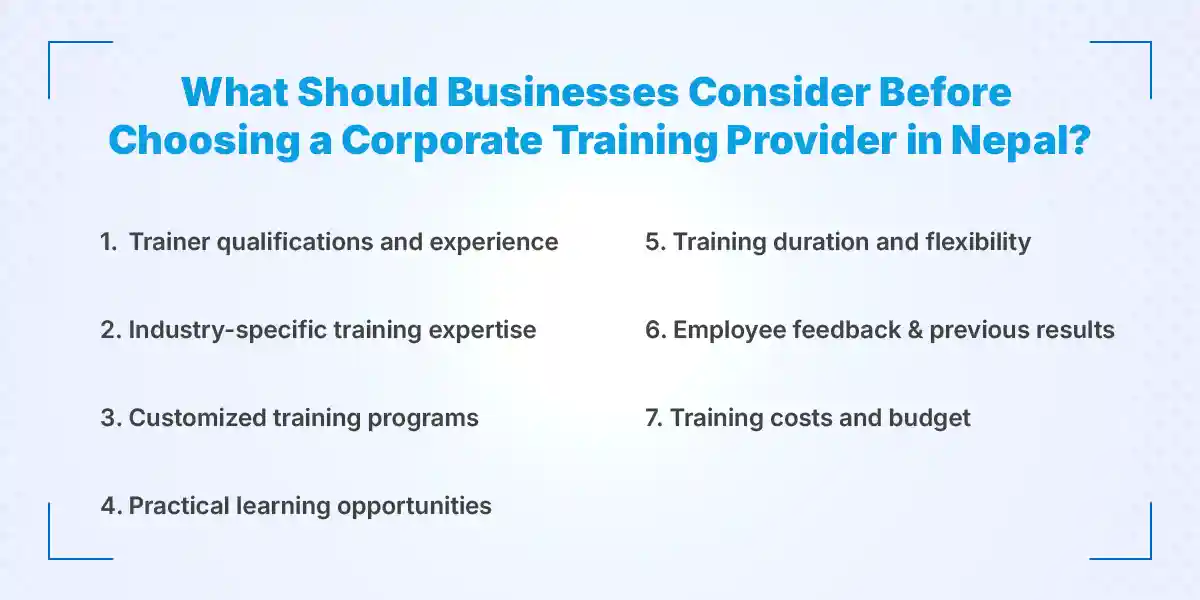
Businesses should consider trainer experience, industry expertise, customized training programs, practical learning, flexible schedules, employee feedback, and training costs before choosing a corporate training provider in Nepal. Selecting the right provider helps organizations improve employee skills, workplace performance, and overall productivity.
1. Trainer Qualifications and Experience
Businesses should check the trainer’s qualifications, professional experience, and ability to teach employees effectively. Experienced trainers can provide practical knowledge and real-world examples that help employees understand and apply new skills.
2. Industry-Specific Training Expertise
Choose a training provider that understands your industry and its specific workplace challenges. Industry-focused training helps employees learn relevant skills that match their job roles and business requirements.
3. Customized Training Programs
A good corporate training provider should offer customized programs based on the company's goals, employee skill gaps, and department requirements. Customized training makes learning more relevant and useful for employees.
4. Practical Learning Opportunities
Businesses should look for training programs that include practical exercises, case studies, group activities, and real workplace examples. Practical learning helps employees apply what they learn directly to their daily responsibilities.
5. Training Duration and Flexibility
Check whether the training provider offers flexible schedules, suitable training durations, and convenient learning formats. Flexible training helps businesses conduct employee training without significantly disrupting regular workplace activities.
6. Employee Feedback and Previous Results
Review previous client feedback, testimonials, and training outcomes before selecting a provider. Positive feedback and proven results can help businesses understand the quality and effectiveness of the training programs.
7. Training Costs and Budget
Compare training costs, program inclusions, trainer fees, and other expenses before making a decision. Businesses should choose a training provider that offers quality learning, practical value, and suitable programs within their budget.
How Does KumariJob Help Businesses Develop Skilled Employees?
KumariJob helps businesses develop employee capabilities through its corporate training services, which support workplace learning and professional skill development. Companies can explore training solutions based on their workforce requirements and organizational goals. Relevant training helps employees strengthen their knowledge and prepare for changing workplace responsibilities.
KumariJob's corporate training services can support organizations in the following ways:
- Customized Employee Training: Businesses can explore training requirements based on employee roles, existing skill gaps, and organizational priorities.
- Workplace-Focused Learning: Relevant training topics help employees connect new knowledge with their daily responsibilities.
- Professional Skill Development: Training can focus on communication, leadership, technical abilities, teamwork, and other important workplace skills.
- Improved Workforce Capabilities: Suitable employee development programs help organizations build stronger teams and improve workplace performance.
- Business-Oriented Training Support: Companies can explore training solutions that align employee development with their operational requirements.
Businesses looking for employee development solutions can explore KumariJob's Corporate Training Services to learn more about its corporate training offerings.
Conclusion
Choosing the right corporate training program is an important step toward building a skilled and productive workforce. Every department has different responsibilities, so businesses should focus on training that addresses actual employee skill gaps rather than providing the same learning program to everyone. Practical training, experienced trainers, and regular performance evaluation can help organizations develop stronger teams.
Employee development should be an ongoing part of business growth, not a one-time activity. If your organization wants to improve employee skills and workplace performance, explore KumariJob's Corporate Training Services to find suitable training solutions for your workforce.
Frequently Asked Questions
Submit your comments

Get Our App On


How to Screen Job Applications Efficiently: A Guide for Employers in Nepal
VIEW DETAILS
Common Payroll Mistakes in Nepal and How Businesses Can Avoid Them
VIEW DETAILS
How Corporate Training Improves Employee Productivity
VIEW DETAILS
10 Benefits of Corporate Training for Employees and Organizations
VIEW DETAILS


Loading Comments...