



Planning to quit your job but confused about how many days you need to work before leaving? Or did your boss just fire you without any warning and refuse to pay your last month's salary? Thousands of Nepali workers face these exact problems every year because they don't understand notice period rules. Some lose money, others burn professional bridges, and many end up in legal disputes that could have been avoided.
In this guide, we will explain everything about the notice period in Nepal under the Labor Act 2074. You'll learn exactly how many days' notice you must give based on your job duration, what happens if you skip your notice period, how to resign professionally, and what compensation you deserve if your employer terminates you suddenly.
In this blog
What is a Notice Period in a Job?
A notice period is the time gap between when you tell your employer you're quitting and your actual last working day. Think of it as a buffer period that gives both you and your company time to prepare for the separation. During this time, you continue working as usual, complete pending tasks, and help train your replacement if needed.
For example, if you resign on Baisakh 1st with a 30-day notice period, your last working day will be Baisakh 31st. You keep getting your full salary during these 30 days while wrapping up your responsibilities.
The notice period works both ways. If you resign, you must serve notice before leaving. If your employer fires you, they must give you advance warning (except in cases of serious misconduct like theft or fraud). This system protects everyone. Employers get time to find new staff, and employees get time to search for their next job without sudden income loss.
Notice Period vs. Probation Period
Many people confuse notice period and probation period, but they're completely different:
Probation Period:
- Initial trial phase when you first join a company (usually 3-6 months)
- Employer tests if you're suitable for the permanent job
- A company can fire you more easily during this time
- You typically get shorter notice requirements (often 7-15 days)
- Ends when the employer confirms you as a permanent employee
Notice Period:
- Applies when either party wants to end the employment
- Required for permanent employees and sometimes probationers
- Length depends on how long you've worked (1 day to 30 days in Nepal)
- Governed strictly by the Labor Act 2074
- About separation, not about testing your skills
The key difference: probation is about evaluating you, while the notice period is about properly ending the working relationship.
Notice Period Requirements Under Nepal Labor Law
The Nepal Labor Act 2074 (2017) provides very clear rules about how and when a job can end. Whether you are an employer or a worker, following these legal steps is important to avoid fines or legal trouble.
1. Mandatory Notice Period Based on How Long You Worked
The law says that before someone leaves or is let go, a written notice must be given. The length of this notice depends on how long the employee has been with the company:
- Up to 4 weeks of work: At least 1 day's notice.
- 4 weeks to 1 year of work: At least 7 days' notice.
- Over 1 year of work: At least 30 days' notice.
For project-based jobs, the work usually ends automatically when the specific task is finished. However, if the project continues longer than planned, these notice rules might still apply.
2. When a Notice Period Does NOT Apply
There are a few special cases where the job can end immediately without a waiting period:
- Bad Behavior: If a worker does something very wrong, like stealing or violence, the company can fire them immediately after a fair check.
- Both Sides Agree: If the boss and the worker both agree in writing to end the job right away, they can skip the notice period.
- Health Problems: If a doctor proves that a worker is too sick to do their job, the contract can be ended.
- End of Fixed Contract: If a contract was only for a set time, it ends naturally on the date written in the paper.
3. Notice Period for Different Types of Jobs
Nepal law covers different types of workers:
- Permanent Workers: Must follow the 1, 7, or 30-day rule mentioned above.
- Part-time Workers: They have the same rights to notice as full-time workers based on how long they have worked.
- Casual Workers: These are people who work 7 days or fewer in a month. They can usually leave or be let go at any time without a long notice.
- Foreign Workers: They must follow the notice rules in their specific contract and work permit, which should match Nepal’s laws.
If a boss does not give proper notice, they must pay the worker the salary for those days. If a worker leaves without notice, the boss can take that amount out of their final pay.
How to Give Notice Period When Resigning from Your Job?
To resign properly, you must check your contract, write a formal letter, and give your boss the required amount of notice time. Following these steps ensures you leave your job on good terms without breaking any labor laws. Here is a simple guide to help you manage your exit professionally and smoothly.
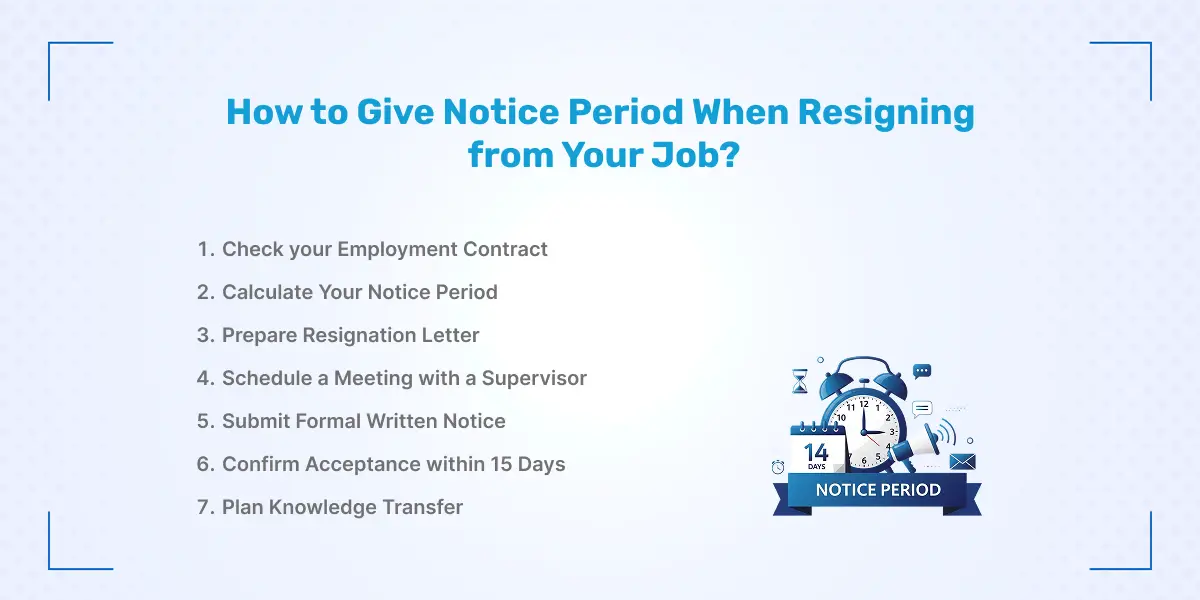
1. Check your Employment Contract
Before you do anything, find the paper you signed when you started the job. This document tells you exactly how many days or months of notice you must give. It also explains if there are any special rules about leaving during a busy time of year. Some contracts might have different rules for probation periods compared to permanent roles. If you cannot find your contract, you can ask the HR department for a copy. Knowing these details first will help you avoid making mistakes later.
2. Calculate Your Notice Period
Once you know the rules, you need to count the days to find your last working date. Start counting from the day you plan to hand in your resignation letter to your boss. Make sure to include weekends and public holidays unless your contract says only to count working days. If you want to leave earlier than the required time, you will need to ask for special permission. Checking the calendar helps you give a clear end date to both your old and new employers. It also ensures you get paid correctly for every day you work until the end.
3. Prepare Resignation Letter
A resignation letter is a formal note that says you are leaving your job. You should keep it short, polite, and very clear so there is no confusion. State your job title and clearly write down what your last day of work will be. You do not need to give a long or negative reason for why you are leaving the company. Simply thanking the employer for the opportunity is a good way to stay professional and keep a good relationship. Make sure to print it out or have it ready as a clean, professional email.
4. Schedule a Meeting with a Supervisor
It is always better to tell your boss about your decision in person before sending a formal email. Ask your manager for a short, private meeting to discuss your career move and your departure. During this talk, be calm and explain that you have decided to move on to a new opportunity. This is the best time to discuss how you will finish your remaining tasks and help with the change. Telling them face-to-face shows respect and helps prevent any bad feelings or surprises. It makes the whole process much more comfortable for everyone involved in the office.
5. Submit Formal Written Notice
After your meeting, you must officially hand over or email your signed resignation letter. This step is very important because it serves as a legal record of when your notice started. Keep a copy of this letter for yourself in case there is a disagreement about your final pay later. Even if you have already talked to your boss, the company needs this paper for its HR files. Make sure the date on the letter matches the actual day you are giving it to them. This officially starts the countdown for your final days at the workplace.
6. Confirm Acceptance within 15 Days
In Nepal, it is a good practice to get a written reply from your boss saying they have accepted your resignation. According to local customs and rules, the employer should ideally acknowledge your notice within 15 days of receiving it. If you do not hear back, it is a good idea to send a polite follow-up email to confirm they have seen it. Having a written acceptance protects you and proves that you followed all the correct procedures to leave. It also helps speed up the process of getting your final clearance and experience certificate. This confirmation gives you peace of mind as you prepare for your next journey.
7. Plan Knowledge Transfer
The last step is to make sure the person taking over your job knows what to do. Create a simple document that lists your daily tasks, important passwords, and the status of current projects. Offer to train a coworker or the new hire so that the work does not stop when you leave. Clean up your computer files and organize your desk so the next person can start easily. Helping the company transition shows that you are a responsible and hardworking professional until the very end. This final effort leaves a great lasting impression on your coworkers and managers.
Employer's Response Timeline
Once you hand in your resignation, the employer has a specific way they must respond under Nepal’s labor customs and rules. Understanding this timeline helps you avoid staying at a job longer than you planned.
1. The 15-Day Acceptance Rule
When you give your notice, your employer should ideally give you a written response within 15 days. This letter or email confirms that they have received your resignation and agree with your last working date. If the employer does not say anything after 15 days, the law generally considers your resignation as automatically accepted. This means you can safely leave on the date you wrote in your letter, even if your boss remains silent.
2. Key Rules for Employers and Employees
- Mutual Consent for Withdrawal: If you change your mind and want to stay, you cannot just take back your resignation. You and your boss must both agree in writing that you will continue working there.
- Finality of the Date: Once the notice period ends, the employment contract is officially over. You are no longer required to perform duties, and the company is no longer required to pay you unless a new agreement is made.
- Experience Certificate: After accepting your notice, the employer is responsible for starting your clearance process so you can get your final pay and your experience letter on time.
3. Working Past Your Resignation Date
Sometimes, a project is not finished, and a boss might ask you to stay a few extra days. You should be very careful here. If you continue to work and get paid after your official last day without a new written notice, it might look like you have started a new term of employment. Always make sure any extra days are agreed upon in writing to avoid confusion regarding your final settlement or your transition to a new company.
Notice Period Compensation and Payment Rules
Leaving your job is not just about giving notice; it is also about the final money you receive. In Nepal, the Labor Act 2074 has strict rules to make sure both the worker and the boss are treated fairly during this time.
What Happens If You Don't Serve Your Notice Period?
If you decide to leave your job suddenly without giving the required notice, your employer has the right to deduct money from your final pay. This deduction is usually equal to the salary you would have earned during those missing notice days. Beyond money, leaving without notice can make it very hard to get a good experience letter or a positive reference for your next job. In some cases, abandoning your job without any information can even lead to a permanent mark on your professional record, making it difficult to find work in the future.
Payment in Lieu of Notice
Sometimes, an employer might want you to leave immediately instead of working through your notice period. If they ask you to go right away (and it is not because of bad behavior), they must pay you Payment in Lieu of Notice. This means they pay you the full salary for the notice days you would have worked. This calculation is based on your basic salary and ensures you don't lose money just because the company wants a quick change.
Final Settlement and Dues
When you leave, the company must clear all your pending payments. This "Final Settlement" usually happens within 15 days of your last day and includes:
- Pending Salary: Payment for the days you worked in your final month.
- Leave Encashment: Money for unused home leave (up to 90 days) and sick leave (up to 45 days).
- Social Security/PF: Instructions on how to withdraw or transfer your Provident Fund and Gratuity.
- Severance Pay: If you were let go because the company is downsizing, you may be entitled to one month's basic salary for every year you worked.
Employer Obligations During Employee Notice Period
When an employee resigns, the employer has specific legal and professional duties to follow. In Nepal, these rules ensure that workers are treated fairly as they leave the company.
1. Employer's Legal Responsibilities
A company must act professionally when a staff member decides to move on. Their main duties include:
- Formal Acceptance: The employer should give a written reply to the resignation letter.
- Experience Letter: They must provide a document proving your work history and skills.
- Final Payments: All salary and bonuses must be processed on time.
- Handover Support: The manager should help decide who will take over the departing worker's tasks.
- Professional Behavior: The boss must not treat the employee poorly or take away their office tools (like email or desk) until the very last day.
2. Can Employers Reject a Resignation?
Legally, an employer cannot force you to stay if you want to leave. However, if you signed a bond or training agreement where the company spent a lot of money on your education, you might have to pay a fee to leave early. If there is a disagreement, both sides can discuss a notice-period buyout, in which the employee pays for the days they cannot work. If the problem is big, the Labor Office can help settle the dispute.
3. Releasing Employees Early
Sometimes, a company might let you leave before your 30 days are over. This can happen through mutual consent if both sides agree it is best. Another option is Garden Leave, where the company pays your full salary but asks you to stay home and not come to the office. This usually happens if the employee has access to very secret information and is moving to a rival company.
Even during the notice period, the company must let the worker use necessary office facilities and treat them with dignity until they walk out the door for the last time.
Notice Period for Employer-Initiated Termination
If a company decides to end your employment, it must follow strict rules under the Nepal Labor Act to make sure the process is fair. They cannot simply fire someone without a valid reason or a proper warning.
1. General Termination Notice Requirements
When an employer starts the termination, the same notice periods (1 day, 7 days, or 30 days) usually apply based on how long you have worked there. However, there is a special step called a Show Cause Notice. If there is an issue, the company must give the worker 7 days to explain their side before making a final decision. This documentation is required to prove that the termination was not a random or unfair choice.
2. Retrenchment and Layoff Rules
If a company needs to close down or reduce its staff due to financial problems, it must follow these steps:
- Labor Office Notice: The employer must inform the Labor Office at least 30 days in advance.
- Union Discussion: They must talk to the trade unions or labor committees to explain why the layoffs are happening.
- Compensation: Workers are usually entitled to a "severance" payment of one month’s basic salary for every year they worked at the company.
3. Termination for Poor Performance
A company can let a worker go if their performance is consistently low. According to the law, this usually requires three consecutive years of poor performance. For companies with 10 or more employees, the boss must give a 7-day notice to the worker to provide clarification. Proper performance reviews and written warnings must be kept as proof to protect the worker against being fired without a real reason.
Best Practices for Serving Notice Period Professionally
A professional notice period is the bridge between your old job and your new one. How you act during these final days determines the reputation you leave behind. Following these best practices ensures a smooth exit for everyone involved.
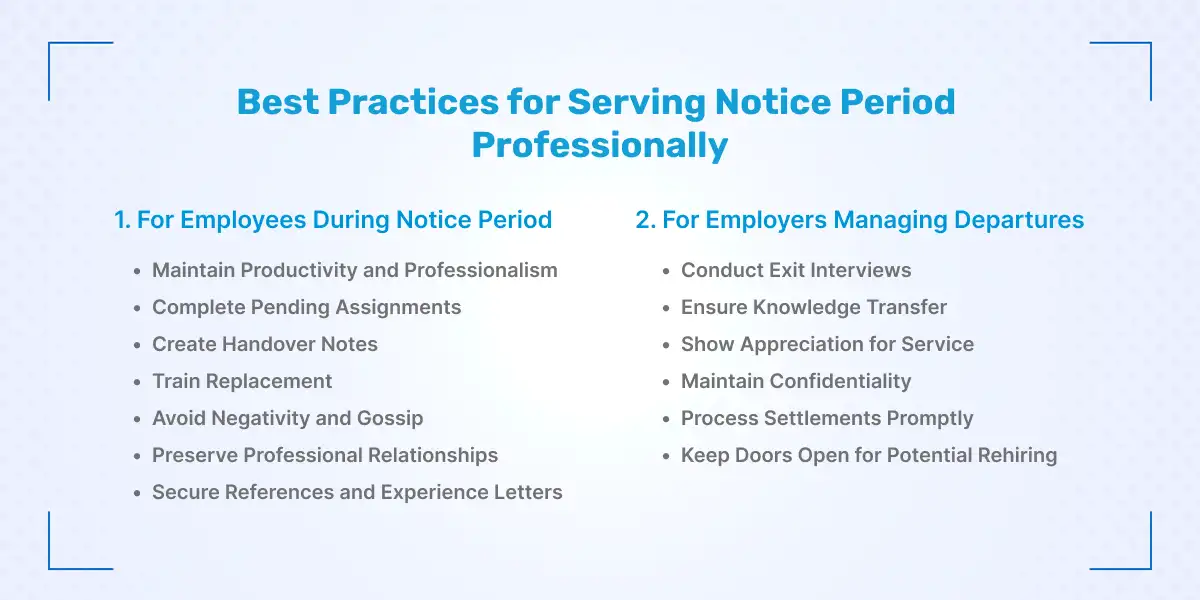
1. Best Practices for Employees
Even after you resign, your work still matters. Staying productive and professional until your last hour shows that you are a reliable worker. You should focus on these key steps:
- Finish Your Work: Complete all pending assignments so your team does not have extra stress after you leave.
- Create Handover Notes: Write a clear guide for the next person. Include file locations, contact details for clients, and a list of daily tasks.
- Train Your Replacement: If the company hires someone new, spend time teaching them the basics of your role.
- Stay Positive: Avoid gossiping or speaking badly about the company. It is much better to preserve your professional relationships, as you might need these people for references or experience letters in the future.
2. Best Practices for Employers
Managing a departure well is just as important for the company's reputation. A good employer should:
- Conduct Exit Interviews: Ask the employee for honest feedback to understand how the company can improve.
- Show Appreciation: A simple thank you or a small farewell goes a long way in making the worker feel valued for their service.
- Process Payments Quickly: Make sure the final settlement and documents are ready on time to avoid any conflict.
- Keep Doors Open: If the employee was a top performer, let them know they are welcome to apply again in the future. This "boomerang" hiring is very common in modern workplaces.
By following these simple steps, both the employee and the employer can turn a resignation into a positive professional transition.
Common Mistakes to Avoid During Notice Period
When you are leaving a job, it is easy to become lazy or act poorly. However, the way you leave is just as important as the day you started. If you make big mistakes now, it could hurt your future career and your reputation. Here is a simple list of things you should never do during your notice period.
1. Burning Bridges with Negative Behavior
Burning bridges means breaking your relationship with your old boss or team. Even if you are unhappy, try to stay calm and helpful until your last day. You might need help or a recommendation from these people later in your life. Leaving with a smile is always better than leaving with an argument.
2. Stealing Company Property or Data
Never take office items like laptops, chairs, or even small notebooks without permission. Also, do not copy private company files or client lists to your personal email. This is not just wrong; it is also a legal crime that can get you into serious trouble. Always leave everything that belongs in the office exactly where it is.
3. Badmouthing the Employer or Colleagues
It might be tempting to complain about your boss or coworkers to others. However, speaking badly about your old company makes you look unprofessional to your new employer. Word travels fast in the job market, and your comments could reach the wrong people. Keep your negative thoughts to yourself and focus on your bright future instead.
4. Neglecting Responsibilities During Notice
Some people stop working hard as soon as they resign. This is a mistake because your team still depends on you to finish your tasks. If you stop doing your job, your coworkers will have to do double the work, which is unfair. Keep working well until the very last hour of your final day.
5. Failing to Return Company Assets
Before you leave, make sure you give back everything the company gave you. This includes your ID card, keys, laptop, and any other tools. If you forget to return these, the company might delay your final salary or your experience letter. Make a list of everything you have and hand it over to HR to stay safe.
Conclusion
The notice period is not just a legal rule; it is your final chance to show that you are a true professional. To answer our main question, a notice period is a transition period that protects both you and your employer from sudden changes. By following the Nepal Labor Law and serving your time with honesty, you protect your salary, your reputation, and your future job references.
Leaving a job the right way is just as important as starting one. If you communicate clearly, finish your tasks, and return all company property, you will walk away with your head held high. Use this time to build a bridge to your next big opportunity with confidence and peace of mind.
Frequently Asked Questions
Submit your comments

Get Our App On



SEO Training for Freshers in Nepal: Skills, Career & Job Opportunities
VIEW DETAILS
SEO Training vs. Self-Learning: Which Is Right for You?
VIEW DETAILS
How to Choose Between Two Job Offers
VIEW DETAILS
Digital Marketing Training Interview Questions and Answers for Freshers
VIEW DETAILS


Loading Comments...