


Starting a new job in Nepal can be very stressful when you don't know if your position is safe. Many workers worry that their boss might let them go without a reason or pay them less than they deserve during the first few months. This lack of clear information makes people feel uncertain about their future and their finances.
To help you feel more confident, we have broken down the official rules in a way that is easy to understand. This post covers your legal rights, salary requirements, and the maximum length of a probation period under the Labor Act. By reading this, you will know exactly what to expect from your employer and how to make sure you are treated fairly from your very first day at work.
In this blog
What Do You Mean by Probation Period?
A probation period is a time at the start of a job when an employer and employee test if the work relationship is a good fit. It is not the full job yet, but a trial phase. During this time, both sides learn about each other. The employer checks performance, behavior, skills, and how well the new worker fits into the team. The employee learns the job, company culture, and what is expected.
This period is common in many companies in Nepal and around the world. It helps reduce risk for both sides. If things do not work out, it is usually easier to end the job during probation than after confirmation.
What happens during this time?
To understand this better, here is what usually happens during a probation period at work:
- Learning: You get training and learn the daily rules of the company.
- Checking Skills: Your manager looks at your performance to see if you can handle the responsibilities mentioned in your interview.
- Behavior Check: The company sees if you arrive on time and follow the office culture.
- Your Decision: You get to see if the salary and the work pressure are what you expected.
Many people think this is just for the boss to judge them, but that is not true. It is also your time to ask questions. If you feel the job is not right for you, it is much simpler to resign during this phase than it is later on. Understanding what you mean by probation period helps you stay calm and focus on showing your best skills while knowing your status is still being finalized.
Legal Framework: Probation Period Under Nepal's Labor Act 2074
In Nepal, the rules for your job are not just decided by your boss. They are written in a special law called the Labor Act 2074 (2017). This law was made to protect workers from being treated unfairly.
What Section 13 of the Labor Act 2074 Says
Section 13 is the most important part of the law for new workers. It clearly explains how a probation period should work. According to this section:
- Every new employee can be put on a trial for a specific amount of time.
- The law sets a strict limit on how long this trial can last.
- If your work is not satisfactory during this time, the employer has the right to end your contract.
- If the employer does not end your contract by the end of this period, you automatically become a regular, permanent employee.
Is a Probation Period Mandatory for All Employers in Nepal?
No, it is not mandatory. A company can choose to make you a permanent employee from your very first day if it wants to. However, most companies in Nepal use this rule to protect themselves. If an employer wants a trial period, they must write it in your appointment letter. If your contract does not mention a trial, the law assumes you are a permanent worker immediately.
Types of Employment Contracts That Include a Probation Clause
Not every job has the same rules. Here are the types of contracts where you will usually see a probation period at work:
- Regular Employment: This is for long-term full-time jobs where the company intends to keep you for many years.
- Work-Based Employment: If you are hired for a specific project that lasts a long time, the boss might still want a trial period first.
- Time-Bound Employment: Even if your contract is for only two or three years, the first few months are often used as a trial.
Duration of the Probation Period in Nepal
The length of your trial time at work is not a secret that your boss can change whenever they want. The law in Nepal has very strict rules about how long a company can keep you testing.
Maximum Probation Period Allowed: The Six-Month Rule
Under the Labor Act 2074, the maximum probation period allowed is 6 months. This is a hard limit for all private-sector jobs. In the past, companies used to keep people on trial for a whole year, but the new law changed this to protect workers. Now, after 6 months, the company must decide if it wants to keep you or let you go.
Can the Probation Period Be Extended Beyond Six Months?
The simple answer is no. An employer cannot legally tell you that your trial is extended for another three or four months because they are still not sure. Even if you sign a paper saying you agree to an extension, that paper usually carries no value because it goes against the national law. Once you hit the 6-month mark, the trial is officially over.
What Happens When the Probation Period Expires Automatically
This is the best part for workers. If your 6th month ends and your boss does not give you a letter saying you are fired, you become a permanent employee automatically.
You do not necessarily need a new "Confirmation Letter" to be permanent in the eyes of the law. If you show up to work on the first day of your 7th month and start your tasks, you are now a regular staff member with full job security. From this moment, it becomes much harder for the company to remove you without a very serious legal reason.
Probation Period Salary: What Are You Entitled to Earn?
It is a common misunderstanding that you can be paid less because you are still on a trial. In Nepal, the law is very clear about your money from day one. Whether you are on a probation period or a permanent staff member, your basic rights to a salary remain the same.
Minimum Wage Protections During the Probation Period
The Government of Nepal sets a minimum salary that every employer must pay. As of mid-2025 (Shrawan 2082 BS), the new minimum monthly wage is NPR 19,550.
Even if you are in your first month of the probation period at work, your employer cannot pay you less than this amount. This rule applies to all formal sectors across the country. If a company offers you a very low "training salary," they are breaking the law.
Are Probationary Employees Entitled to the Same Pay as Permanent Staff?
Yes. You should receive the full salary that was agreed upon in your appointment letter. There is no legal rule that allows a company to cut your pay just because you are new.
- Your "Basic Salary" and your "Dearness Allowance" must be paid in full.
- You are also entitled to pay for weekly holidays (Saturdays) and public holidays during your trial.
Allowances, Dearness Allowance, and Other Wage Components During Probation
Your total salary is usually made up of different parts. For the minimum wage of NPR 19,550, the breakdown looks like this:
- Basic Salary: NPR 12,170
- Dearness Allowance (DA): NPR 7,380
The Dearness Allowance is extra money given to help with the rising cost of food and rent (inflation). Employers must include both these parts in the monthly salary. Additionally, if you work overtime during your probation period, you are entitled to overtime pay, which is usually 1.5 times your regular hourly rate.
Employee Benefits and Rights During the Probation Period at Work
Starting a new job can feel like you have no power, but that is not true. Even while you are on a probation period, the law protects you just like a permanent worker. You have many rights from your very first day at the office. Knowing these rules helps you make sure your boss is treating you fairly and following the law.
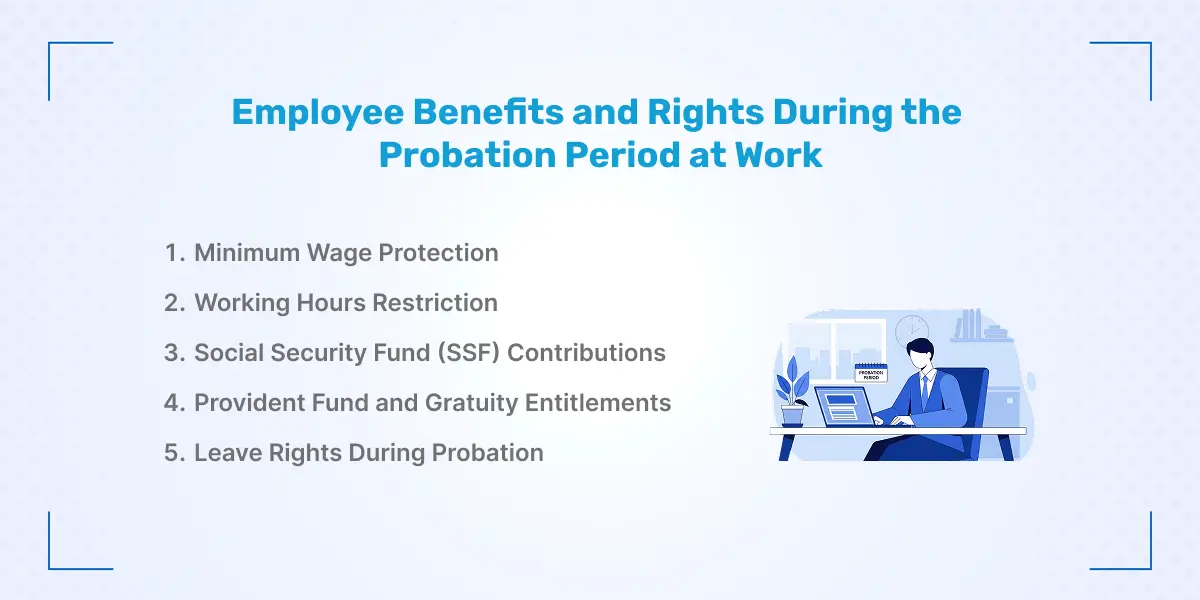
1. Minimum Wage Protection
You must be paid at least the minimum salary set by the Nepal government. Currently, this amount is 19,550 Rupees per month for all formal workers. A company cannot pay you less just because you are in your trial months. If they try to offer a training salary that is lower than this, they are breaking the rules. Your probation period salary should always follow this basic legal limit.
2. Working Hours Restriction
The law says you should not work more than 48 hours a week. If your boss asks you to stay late, they must pay you extra money for overtime. You are also allowed to have at least one full day off each week, usually Saturday in Nepal.
3. Social Security Fund (SSF) Contributions
Many people think the Social Security Fund is only for old or permanent workers. However, the law says your employer must start your SSF account from your very first day of work. They take a small part of your salary and add more money from the company's side to this fund. This money is your saving for the future, and it covers things like medical insurance and accidents while you are on your probation period at work.
4. Provident Fund and Gratuity Entitlements
Just like the SSF, your Provident Fund and Gratuity benefits start right away. The company must set aside 8.33% of your basic salary every month for your Gratuity. They also deduct 10% from your pay and add another 10% themselves for your Provident Fund. You do not have to wait six months to start earning these benefits. This money belongs to you, even if you leave the job after the trial ends.
5. Leave Rights During Probation
You are allowed to take paid leave even during your trial time. You get public holidays and weekly holidays with full pay. You also earn "Home Leave" based on how many days you work (usually 1 day of leave for every 20 days worked). If you get sick, you can use your sick leave too. Many bosses might tell you that you can't take leave during a probation period, but the Labor Act says you can.
Termination During the Probation Period: What the Law Allows
In Nepal, the end of a job can happen more easily during the first few months than it does for permanent workers. The Labor Act 2074 allows employers to assess whether a new worker is truly the right fit for the role.
According to Section 13 of the law, an employer can end your contract if they are not happy with your work during the first 6 months. This is often called termination upon the end of probation.
Unlike permanent staff, the company does not need to show years of bad performance reviews to let a person go during this time.
- Performance-Based: The main reason for letting someone go must be that their work is not satisfactory or they do not have the right skills for the job.
- Notice Period: While some old rules said no notice was needed, modern legal experts suggest giving at least a 7-day notice if you have worked for more than four weeks.
- Written Reason: The employer should still give a clear reason in writing why the worker is being let go.
- Protection Against Bias: Even on probation, a boss cannot fire you for unfair reasons like your gender, religion, or for joining a union.
Resignation: The Employee’s Right to Leave
Termination is not just about the boss firing you. As an employee, you also have the right to resign during your probation period if you don't like the company.
Usually, you should provide a 7-day written notice if you have been there for more than a month. If you leave without notice, the company might have the right to deduct a few days of pay from your final settlement. This trial period is a two-way street that allows both sides to walk away if things aren't working out.
How Does the Probation Period Work for Employers? Best Practices
For employers, the probation period is a legal trial that lasts a maximum of 6 months, and you must treat the worker fairly with full pay and benefits from the first day.
Managing new staff requires following the Labor Act 2074 carefully. If you make a mistake, the law can be very tough on your business. Here is how you should handle it as a boss or HR manager:
1. Setting Clear Performance Evaluation Criteria
Before the new person starts, you should have a clear list of what they need to do. Do not just wait until the 5th month to judge them.
- Tell them exactly what their goals are in the first week.
- Check their work every month and tell them what they are doing well and what needs to change.
- If you don't set these "rules" early, it is hard to legally fire them for "poor performance" later.
2. Maintaining Proper Documentation and Records
The most important rule in Nepal is: If it is not on paper, it did not happen.
- Appointment Letter: You must give a written letter that clearly mentions the 6-month trial. Without this, the worker is considered permanent immediately.
- Monthly Reviews: Keep a simple written record of your meetings with the employee.
- Attendance and Pay: Keep clear records showing you paid at least the minimum wage and contributed to the Social Security Fund (SSF).
3. Common Compliance Mistakes Employers Make
Many small businesses in Nepal get into trouble because of these simple errors:
- Thinking SSF is only for permanent staff: You must register them for SSF from day one.
- Extending the trial: You cannot say "let's try for 3 more months" after the first 6 months are over.
- Low Pay: Paying a stipend that is less than the government’s minimum wage is illegal.
- Oral Firing: Telling someone "don't come tomorrow" without a written notice can lead to a lawsuit in the Labor Court.
4. Consequences of Non-Compliance: Penalties Under the Labor Act
The government can punish companies that break these rules. If you do not follow the law, you might face:
- Fines: You can be fined between 10,000 and 500,000 Rupees for hiring someone without a proper appointment letter.
- Automatic Permanency: If you miss the 6-month deadline, the worker becomes permanent, and you cannot fire them easily.
- Back Pay: The Labor Court can force you to pay all the missing salary and benefits if you were underpaying the worker.
- Legal Battles: Workers can file a case at the Labor Office, which takes a lot of time and money for a business to resolve.
What Happens After the Probation Period Ends?
Once your 6-month trial ends, you legally become a permanent employee with full job security and better benefits. This change happens automatically under the law, even if your boss does not give you a new letter. It is a very important moment because your rights as a worker in Nepal become much stronger from this day forward.
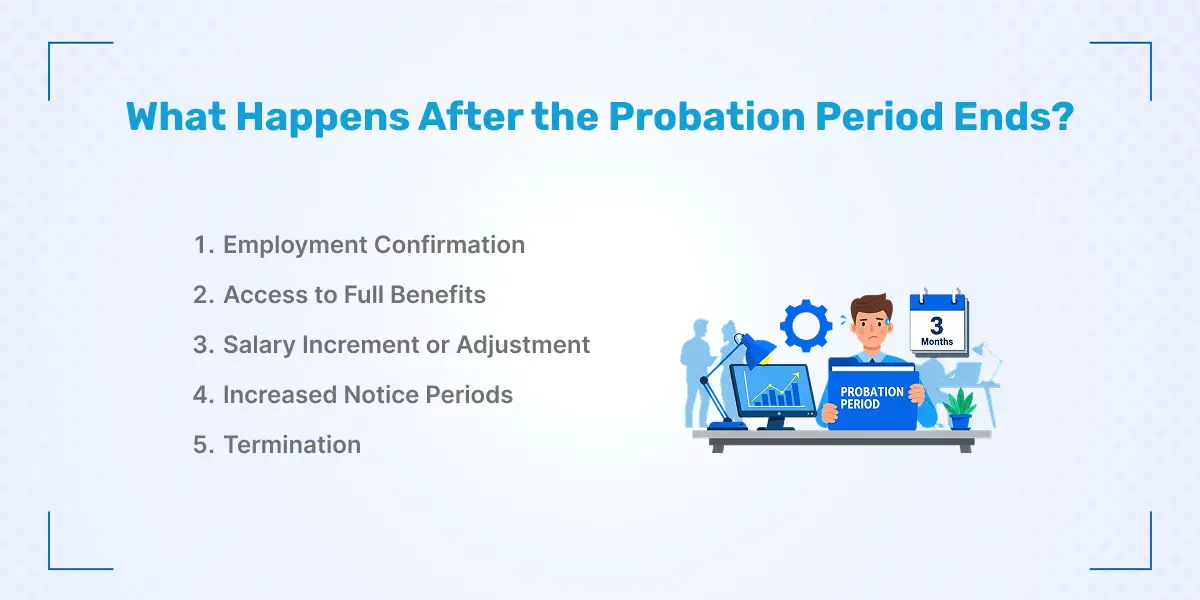
1. Employment Confirmation
After the 6th month, you are no longer on trial and are considered a regular staff member. In many offices, you will receive a formal "Confirmation Letter" to celebrate this, but the law says you are permanent even without it. This means the company has officially accepted your skills and behavior as a good fit for the team. You now have the right to stay in the job long-term as long as you follow the company rules. It is much harder for a company to remove a confirmed worker than someone on a trial. This status gives you peace of mind to focus on your career and growth.
2. Access to Full Benefits
While you get basic pay and SSF from day one, some extra perks only start after you are confirmed. You can now start saving your "Home Leave" (1 day for every 20 days you work) to use for long holidays. You also become eligible for "Sick Leave" and other special leaves that the company might offer to permanent staff. Many companies in Nepal also provide medical insurance or extra accidental insurance once the trial is over. If you have a family, these benefits often extend to help your spouse or children as well. It is the time when you start feeling like a true part of the company family.
3. Salary Increment or Adjustment
Being confirmed often comes with a talk about your pay and how well you have performed. According to the Labor Act, permanent workers are entitled to a yearly "Grade" or salary increment. This is usually an extra half-day of salary added to your monthly pay for every year you complete. Some employers also choose to give a small "bonus" or a salary hike as a reward for passing the probation period successfully. Even if your pay stays the same, your total "take-home" pay might grow because of these legal additions. It is always a good idea to check your new pay slip to see if these increments have been added.
4. Increased Notice Periods
During your trial, either side could end the job with very short notice, like 7 days. Once you are permanent, the law requires a much longer 30-day notice period if someone wants to end the contract. This protects you because it gives you a full month to find a new job if the company has to let you go. Likewise, if you want to leave for a better opportunity, you must also give the company 30 days to find your replacement. This rule brings stability to both the worker and the employer in the Nepali job market. It ensures that no one is left without a plan or a worker, suddenly.
5. Termination
Firing a permanent employee is a very serious and difficult process under Nepal's labor laws. A boss cannot just say "you are fired" because they had a bad day; they must prove a very strong reason, like stealing or bad behavior. There is a legal process involving written warnings and a chance for you to explain your side of the story. If the company closes down a department, they must pay you "Severance Pay," which is one month's salary for every year you worked. This makes your job much safer than it was during the probation period at work. You are now protected by the Labor Court if you are treated unfairly.
Conclusion
The probation period in Nepal is much more than just a trial; it is a legally protected status that guarantees your rights from day one. Under the Labor Act 2074, you are entitled to the full minimum wage (currently NPR 19,550), Social Security Fund contributions, and standard working hours, even during your first six months.
The most important thing to remember is the six-month rule: your employer cannot extend your trial beyond this limit. If you continue working after six months without being let go, the law considers you a permanent employee automatically. By understanding these simple rules, you can work with confidence, knowing that your salary, benefits, and job security are protected by the national law of Nepal.
Frequently Asked Questions
Submit your comments

Get Our App On



SEO Training for Freshers in Nepal: Skills, Career & Job Opportunities
VIEW DETAILS
SEO Training vs. Self-Learning: Which Is Right for You?
VIEW DETAILS
How to Choose Between Two Job Offers
VIEW DETAILS
Digital Marketing Training Interview Questions and Answers for Freshers
VIEW DETAILS


Loading Comments...