


Are your employees struggling with teamwork, communication, or workplace performance? Hiring qualified employees is important, but helping them develop their skills is equally essential for business growth.
Corporate training in Nepal is a planned learning process that helps employees improve their knowledge, practical skills, and job performance. It focuses on developing workplace skills, improving communication, building leadership abilities, and strengthening teamwork.
Through corporate training, businesses can prepare employees to handle workplace challenges, adapt to changing job requirements, and work more efficiently. In this guide, you will learn what corporate training is, why it is important, the different types of corporate training programs, and how they help businesses build skilled and productive teams.
In this blog
What Is Corporate Training?
Corporate training is a structured learning and development process through which organizations improve employees' professional knowledge, workplace skills, and job performance. It helps employees understand their responsibilities, develop practical abilities, and perform their duties more effectively. Businesses use corporate training to strengthen individual capabilities and achieve organizational goals.
Unlike regular employee orientation, which mainly introduces new employees to company policies, workplace rules, and responsibilities, corporate training focuses on continuous skill development. It can support employees at different experience levels, from new team members to experienced managers. Practical and industry-focused training helps employees apply what they learn to their everyday workplace responsibilities.
Why Is Corporate Training Important for Businesses in Nepal?
Corporate training is important for businesses in Nepal because it improves employee skills, strengthens teamwork, develops leadership abilities, and supports better organizational performance. It helps organizations prepare employees for workplace responsibilities and changing business requirements. Regular training also creates opportunities for professional development and long-term business growth.
Businesses need employees who can communicate effectively, solve problems, manage responsibilities, and work together toward shared objectives. Corporate training addresses these requirements by focusing on the skills employees need in their actual roles.
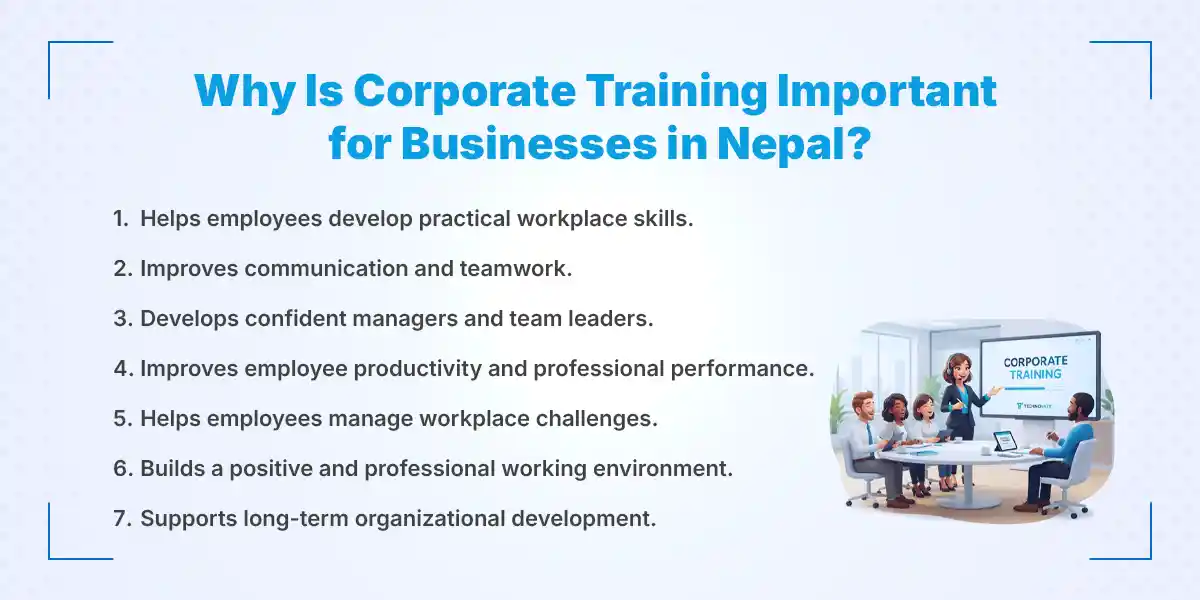
Key benefits include:
- Develops Practical Workplace Skills: Employees learn useful skills that help them complete daily responsibilities more effectively and confidently.
- Improves Communication and Teamwork: Training encourages employees to share information, coordinate tasks, and work together professionally.
- Develops Confident Managers: Leadership and management training helps supervisors guide teams, motivate employees, and make better decisions.
- Increases Employee Productivity: Employees who understand their responsibilities and have the right skills can complete tasks more efficiently.
- Helps Manage Workplace Challenges: Training improves problem-solving, conflict resolution, and decision-making abilities.
- Builds a Positive Working Environment: Professional behaviour, mutual respect, and effective communication contribute to healthier workplace relationships.
- Supports Long-Term Organizational Development: Continuous employee learning helps businesses build capable teams and prepare for future requirements.
For Nepali businesses, investing in employee development can also help reduce skill gaps between what employees currently know and what their positions require.
What Types of Corporate Training Services Does KumariJob Offer?
KumariJob offers corporate training services in areas such as HR and recruitment, leadership and people management, office professional skills, and customized corporate training programs. These training areas help organizations improve employee capabilities and develop practical workplace knowledge. Businesses can explore relevant training based on their organizational goals and employee development requirements.
The main training categories available through KumariJob include the following:
1. HR and Recruitment Training
HR and recruitment training helps HR professionals and hiring teams improve their knowledge of modern recruitment practices and employee selection. It focuses on candidate screening, evaluation, interviewing, and effective hiring processes. Participants can develop practical knowledge to support recruitment activities and make better hiring decisions. This training is relevant for organizations that want to strengthen their internal HR and talent acquisition capabilities.
2. Leadership and People Management Training
Leadership and people management training helps managers and team leaders develop the abilities needed to guide and motivate employees. It covers workplace communication, team management, conflict resolution, and managerial decision-making. Participants learn how to handle team challenges and build stronger professional relationships. These skills can help organizations create a supportive working environment and improve coordination between employees.
3. Office Professional Skills Training
Office professional skills training focuses on improving the everyday abilities employees need to work effectively in an organization. It includes workplace communication, business etiquette, teamwork, collaboration, and professional behaviour. Employees can develop greater confidence when communicating with colleagues, managers, and clients. These skills support a more organized, respectful, and professional workplace.
4. Customized Corporate Training Programs
Customized corporate training programs are designed around an organization's specific objectives, industry requirements, and employee skill gaps. Businesses can select relevant training topics according to their team size and professional development needs. This approach allows organizations to focus on the abilities their employees need to improve rather than following an unrelated general training program. KumariJob provides customized training arrangements with experienced HR professionals and workplace experts.
What Skills Can Employees Develop Through Corporate Training?
Employees can develop leadership, communication, teamwork, recruitment, people management, customer service, and workplace professionalism skills through corporate training. These abilities help employees manage their responsibilities, communicate effectively, and contribute to organizational objectives. The specific skills depend on the training topics and the organization's requirements.
Some important skills employees can develop include:
- Leadership Skills: Employees learn how to guide teams, motivate colleagues, manage responsibilities, and make effective decisions.
- Communication Skills: Training improves professional speaking, active listening, written communication, and workplace discussions.
- Teamwork Skills: Employees develop collaboration, coordination, cooperation, and conflict-resolution abilities.
- Recruitment Skills: HR professionals learn candidate screening, interviewing, assessment, and hiring techniques.
- People Management Skills: Managers improve employee motivation, team coordination, workplace relationships, and performance management.
- Customer Service Skills: Employees develop professional customer communication and learn how to handle customer questions and concerns.
- Workplace Professionalism: Training strengthens business etiquette, workplace ethics, professional behaviour, and employee confidence.
Developing these skills can help employees become more effective in their current positions while preparing them for greater workplace responsibilities.
How Does Corporate Training Improve Employee and Organizational Performance?
Corporate training improves employee and organizational performance by strengthening practical knowledge, developing managerial abilities, and improving communication across teams. It helps employees understand their responsibilities, work more confidently, and handle professional challenges. When employees apply these skills consistently, organizations can benefit from better teamwork, improved productivity, and stronger overall performance.
Training supports performance improvement in several ways:
- Improves Practical Knowledge: Employees gain a better understanding of the skills and responsibilities required for their positions.
- Strengthens Management: Managers learn to guide employees, distribute responsibilities, and make informed decisions.
- Improves Departmental Communication: Employees develop better communication habits, reducing misunderstandings between departments.
- Reduces Workplace Inefficiencies: Practical training helps employees understand work processes and manage tasks more effectively.
- Builds Employee Confidence: Employees who understand their responsibilities can approach workplace challenges with greater confidence.
- Encourages Problem-Solving: Training helps employees think through challenges and identify appropriate solutions.
- Supports Organizational Productivity: Better individual performance and team coordination can contribute to achieving business objectives.
However, training alone does not guarantee improved performance. Organizations should connect training topics with actual job responsibilities and give employees opportunities to apply their learning in the workplace.
How Are Corporate Training Programs Conducted?
Corporate training programs can be conducted through a structured process that considers company requirements, employee skill gaps, relevant training topics, and learning outcomes. A suitable program should reflect the organization's objectives and the practical responsibilities of participating employees. The following steps explain a recommended training process for businesses planning corporate training.
Understand Company Requirements: Start by identifying the organization's objectives, current workplace challenges, and training expectations. Discuss the skills employees need to perform their responsibilities more effectively. This helps establish a clear direction for the training program.
Identify Employee Training Needs: Evaluate the existing skills and knowledge of employees to understand where improvement is needed. Consider employee responsibilities, experience levels, and department-specific requirements. This assessment helps identify relevant training areas.
Customize the Training Program: Select training topics based on the organization's industry, team size, and development objectives. Choose subjects that address the identified skill gaps instead of using unrelated general topics. A customized approach makes the learning experience more relevant to participants.
Arrange Experienced Trainers: Select suitable trainers according to the topics and professional requirements of the organization. Experienced HR professionals, recruiters, trainers, and workplace experts can provide relevant industry knowledge. Their practical understanding helps connect training concepts with workplace responsibilities.
Conduct Practical Training Sessions: Deliver training sessions that focus on useful professional knowledge and workplace applications. Include relevant examples, discussions, and practical learning activities where appropriate. This helps participants understand how to use their newly developed skills.
Gather Employee Feedback: Collect feedback from participants after the training sessions. Understand which topics were useful and where employees may need additional support. This feedback can help improve future learning activities.
Review Training Outcomes: Evaluate whether the training addressed the organization's identified learning requirements. Consider employee feedback, workplace observations, and improvements in relevant job responsibilities. Use these findings to identify further employee development opportunities.
Who Needs Corporate Training in an Organization?
Corporate training is useful for employees, HR professionals, managers, team leaders, customer service teams, recruitment staff, and business owners. Different roles require different professional skills, so organizations should select training topics according to their employees' responsibilities. Training can support both new employees and experienced professionals who want to improve their workplace capabilities.
The following groups can benefit from corporate training:
- HR Professionals: They can improve recruitment, interviewing, employee management, and HR-related knowledge.
- Managers and Team Leaders: They can develop leadership, decision-making, employee motivation, and people management skills.
- New Employees: They can strengthen workplace communication, professional behaviour, and teamwork abilities.
- Customer Service Teams: They can improve customer communication, complaint handling, and professional relationship management.
- Business Owners: They can develop stronger management practices and understand how employee development supports business performance.
- Recruitment Teams: They can improve candidate evaluation, screening, interviewing, and hiring practices.
Organizations should not assume that training is necessary only for employees who are struggling with their performance. Even experienced employees need opportunities to update their knowledge and improve their professional abilities.
How to Choose the Right Corporate Training Provider in Nepal?
Businesses can choose the right corporate training provider in Nepal by evaluating its industry experience, available training topics, customization options, trainer expertise, and expected learning outcomes. The provider should understand the organization's requirements and offer relevant training for its employees. Comparing these factors helps businesses select a suitable training partner.
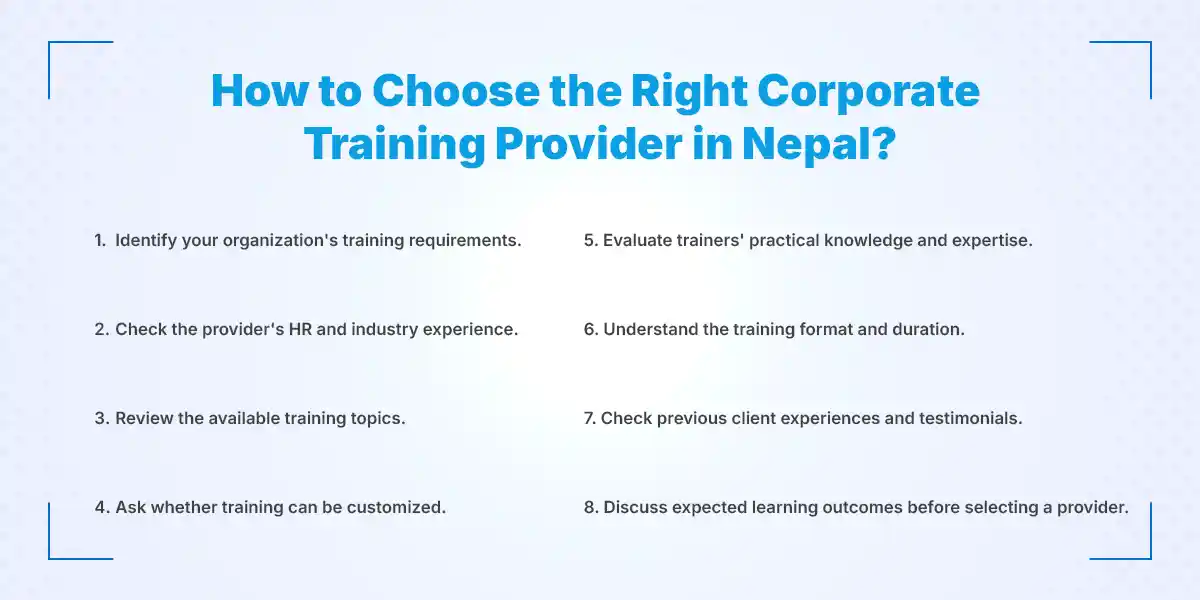
Before selecting a corporate training company, consider the following points:
- Identify Organizational Requirements: Understand which employee skills need improvement and what the organization wants to achieve through training.
- Check Industry Experience: Review the provider's experience in HR, recruitment, leadership, and professional development.
- Review Training Topics: Check whether the available programs match your employees' responsibilities and skill requirements.
- Ask About Customization: Confirm whether the provider can adjust training topics according to your company's objectives and employee needs.
- Evaluate Trainer Expertise: Understand the trainers' professional backgrounds and practical industry knowledge.
- Understand Training Format and Duration: Discuss the expected schedule, session length, delivery format, and suitable training location.
- Review Client Experiences: Check available testimonials and feedback to understand the provider's previous training experience.
- Discuss Expected Outcomes: Establish what employees should learn and how the organization can evaluate the results.
A suitable training provider should offer more than general presentations. It should understand workplace challenges and help businesses select learning topics that employees can apply in their actual roles.
Why Choose KumariJob for Corporate Training in Nepal?
KumariJob is a corporate training partner for Nepali organizations seeking professional development programs in HR, recruitment, leadership, people management, and office professional skills. Its training services focus on customized programs and practical workplace learning. Businesses can explore training arrangements based on their industry, team size, and employee development requirements.
Here are some reasons organizations can consider KumariJob:
- Experienced Industry Professionals: KumariJob provides training conducted by experienced HR professionals, recruiters, trainers, and workplace experts.
- Customized Training Programs: Organizations can explore programs designed around their company objectives, industry, team size, and learning requirements.
- Practical Learning Approach: Training focuses on workplace knowledge and professional skills that employees can apply in their daily responsibilities.
- Multiple Training Areas: Businesses can explore HR, recruitment, leadership, people management, communication, and office professional skills training.
- Flexible Training Arrangements: Training sessions can be arranged at the company's office or another suitable venue.
- Training for Different Experience Levels: Programs can support managers, team leaders, HR professionals, recruitment teams, and other employees.
Organizations can also explore KumariJob's Recruitment Services in Nepal for hiring support and HR Outsourcing and Payroll Services for other workforce management requirements.
How Much Does Corporate Training Cost in Nepal?
The cost of corporate training in Nepal depends on the number of participants, training topics, program duration, trainer experience, customization requirements, and training location. Each organization has different learning requirements, so training costs can vary between programs. Businesses should request a customized quotation based on their specific training needs rather than relying on a fixed general price.
Several factors influence corporate training costs:
- Number of Employees: Training a larger group may require different arrangements, resources, and session planning compared with training a smaller team.
- Type of Training: HR and recruitment training, leadership development, and office professional skills training may require different levels of preparation.
- Training Duration: The number of sessions and total training hours can influence the overall cost.
- Trainer Experience: The professional background and expertise of the trainers may affect the training fee.
- Customization Requirements: Programs designed around specific organizational challenges may require additional planning and preparation.
- Training Location: Conducting sessions at a company office or another venue may affect logistical requirements.
- Delivery Format: The selected training arrangement and required resources can also influence the overall budget.
When planning a corporate training budget, businesses should consider the expected learning outcomes rather than focusing only on the lowest available price. A relevant training program can help employees develop skills that support their daily work and organizational objectives.
For accurate pricing, businesses should share their employee count, preferred training topics, expected duration, and location with KumariJob to discuss a suitable training arrangement and quotation.
Conclusion
Corporate training should be considered an important part of employee development rather than a one-time workplace activity. Businesses in Nepal need employees who can communicate professionally, manage responsibilities, lead teams, solve problems, and adapt to changing workplace requirements. Investing in relevant training helps organizations address skill gaps and build stronger teams over time.
If your organization wants to improve employee skills, strengthen leadership, and develop a more productive workforce, explore KumariJob's Corporate Training Services to find a customized training program for your business.
Frequently Asked Questions
Submit your comments

Get Our App On


10 Benefits of Corporate Training for Employees and Organizations
VIEW DETAILS
How to Become a Media Buyer in Nepal: Skills, Qualifications & Career Path
VIEW DETAILS
How to Create a Digital Marketing Content Calendar for Beginners
VIEW DETAILS
Digital Marketing Mistakes Beginners Should Avoid in Nepal
VIEW DETAILS


Loading Comments...