


Every job opening seems to ask for years of practice. You stare at the screen and feel completely stuck. Companies want to hire people with past work, but how can you gain that practice if no one will hire you in the first place? This frustrating loop leaves many beginners feeling hopeless.
However, sitting in an office is not the only way to build a strong resume. There are practical and proven methods to develop skills and prove your worth to hiring managers right now.
In this guide, we will show you exactly how to get experience without a job. From volunteering and personal projects to building a solid portfolio, you will find actionable steps to start from zero and land real opportunities.
In this blog
Why Getting Experience Without a Job Feels So Hard?
Starting a career is very difficult for many young people. You look at job websites and see that even basic roles require two or three years of prior experience. This creates a very confusing loop. You need a job to get experience, but you need experience to get a job. For fresh graduates and beginners in Nepal, this is the biggest problem when trying to build a stable career.
This frustration is real, and it happens for a few clear reasons. When a person has never worked in an office before, the professional world seems very hard to enter. Companies usually want people who can do the work well from the very first day. They often do not want to spend time and money training someone who is totally new. Because of this, many talented beginners feel left out.
Here are the main reasons why gaining that first professional practice feels so tough:
- High Expectations: Companies want skilled workers rather than fresh beginners who need time to learn the basic tasks.
- No Replies: Sending out many CVs and getting zero calls makes a person quickly lose hope and doubt their own skills.
- Focus on Theory: Colleges and universities teach lessons from books, but they rarely teach how to do real office tasks.
- Missing Other Options: Most beginners only look for full-time paid jobs right away. They miss other clear ways to learn real skills.
Feeling stuck right now is completely normal, but staying stuck is a choice. A person does not need an office job to start learning. Anyone can start building a strong career path today.
How Do I Get Experience Without a Job: Best Practical Methods?
The best way to get experience without a job is to practice skills through volunteer work, personal projects, and small freelance jobs. These methods allow a person to do real work and show solid proof to companies. By taking these steps, anyone can build a strong resume from zero.
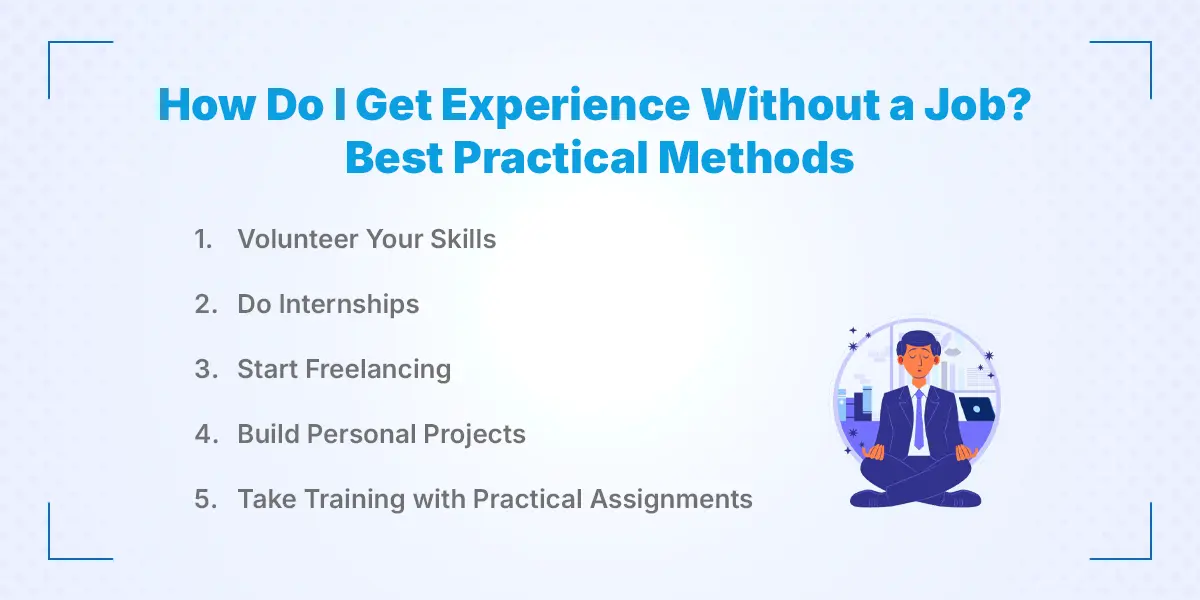
1. Volunteer Your Skills
Offering free help to local groups or charities is a great way to start. Many small organizations in Nepal need support with writing, design, or computer tasks but lack a big budget. By helping them, a beginner gets real tasks to complete and add to a resume. This shows hiring managers that the candidate is hardworking and ready to help. It also helps to meet new professional people. In the end, the unpaid time turns into highly valuable career practice.
2. Do Internships
Internships in Nepal provide a direct look inside a real company and how an office works daily. Many businesses offer programs for fresh graduates to learn basic office rules and tasks. Even if the internship is unpaid, the learning value is huge for a beginner. A person gets to work under senior staff and learn the exact tools the industry uses. Good work during this time can also lead to a permanent full-time offer later. It is a safe space to make mistakes and grow fast.
3. Start Freelancing
Freelancing means doing small online tasks for different clients instead of having one boss. Websites allow beginners to offer simple services like writing short posts or doing basic data entry. Starting with very low rates helps to get the first few clients quickly. Each finished project acts as real work proof to show future employers. It teaches a person how to talk to clients, meet clear deadlines, and manage time well. This independent work builds strong confidence and a real portfolio.
4. Build Personal Projects
A person does not need a client or a boss to start creating real work. Building personal projects means making things just to show what skills are known. For example, a writer can start a free blog or a designer can create sample social media posts. Putting these samples online proves the ability to do the job. Companies love to see candidates who take action on their own without waiting for permission. This method gives complete control over what is created and learned.
5. Take Training with Practical Assignments
Many online and offline courses now offer much more than just video lectures. Good training programs include real-world tasks and assignments at the end of the lessons. You can take popular training courses like accounting training or digital marketing training in Nepal. Completing these tasks gives practical knowledge that books alone cannot provide. A student can then add these finished class projects directly to a CV. This shows companies that the candidate has modern skills and knows how to use them. It bridges the gap between college theory and actual office needs.
What Counts as Experience Without a Job?
Any practical task that uses real skills to solve problems or make things counts as valid work experience. Companies do not only look for official office roles when reading a CV. They highly value any completed project that proves a candidate can do the required job well.
1. Academic Projects
College assignments and final year reports count as highly useful work practice. A student often works in a team to research topics and find clear answers. This process teaches important skills like planning and meeting tight school deadlines. When talking to a hiring manager, a candidate can share the exact results of these group tasks. It shows that the person knows how to apply book knowledge to real situations.
2. Volunteer Work
Helping local groups for free is a proven way to gain respect and learn fast. Charities often give big responsibilities to helpers because they lack staff members. A person can practice running social media pages or organizing local community events. This unpaid effort shows companies that the candidate cares about helping others and works hard. It acts as solid proof of good character and builds a great network of professional friends.
3. Freelance Gigs
Doing small paid online tasks makes a person an independent worker right away. A beginner can find clients on the internet who need quick help with data or writing. Completing these short jobs teaches how to talk with clients and deliver good results. Every finished project becomes a clear record of real work done for a real business. Employers see freelance workers as highly driven people who can manage their own time well.
4. Personal Projects
Creating things at home is a very smart way to build a solid resume. A designer can draw logos for fake brands just to show their drawing style. A coder can build a simple website to prove they understand the computer language. Showing these self-made items to a company proves that the candidate takes action alone. It is the best way to display passion and talent without waiting for an official boss.
5. Internships
Joining an office as a learner gives the closest feel to a real full-time job. An intern gets to see exactly how senior staff solve daily office problems. They get to use professional tools and software that colleges usually do not have. Managers often write good recommendation letters for interns who work with high energy. A short internship easily fills the gap on a CV and makes finding a permanent role much easier.
6. Traineeships
A traineeship is a special program that mixes learning in a class with real office work. Companies use these programs to slowly teach new people the exact skills they need. A trainee gets step-by-step guidance from expert workers in that specific field. This hands-on learning provides deep knowledge that helps a beginner grow very fast. Completing a training program often leads straight to a permanent job in that same company.
How to Build a Strong Portfolio With No Job Experience?
A strong portfolio is built by collecting personal projects, school assignments, and clear sample work into one simple link. Showing proof of skills is always much better than just telling a company what is known. A well-organized collection of samples proves to hiring managers that a beginner is ready to handle real office duties right now.
1. Gather Your Best Sample Projects
A portfolio does not need official office work to look highly professional. A beginner can easily add final year college reports or long research papers to show hard work. Creating fake blog posts or designing logos for local shops also works perfectly as valid work samples. The main goal is to pick the top three or four items that clearly display the required skills. It is much better to show a few very good items rather than many average ones. This small collection acts as solid proof of what a candidate can actually complete.
2. Organize Work With Clear Details
Just throwing pictures or document links on a page is never enough to impress an employer. Every single sample needs a short text explaining the main goal of that specific project. A candidate must write down the steps taken to solve the problem and finish the given task. Mentioning the exact software or online tools used helps managers understand the technical skills involved. Clear titles and clean spacing make the whole document very easy to read for busy recruiters. A neat presentation shows companies that the candidate is careful and highly organized.
3. Choose Simple Online Platforms
Creating a place to show work is very easy and completely free today. A person does not need to know computer coding to build a nice-looking professional page. Websites like Behance or GitHub are perfect for designers and programmers to upload their files quickly. Writers and marketers can use free tools like Canva or public Google Drive folders to share their text documents. Putting all the project links into one single page makes it simple for hiring managers to click and read. Using these modern internet tools makes a fresh beginner look very serious and ready for work.
Common Mistakes to Avoid When Trying to Get Experience
Many fresh graduates make simple mistakes that stop them from growing. Knowing these basic errors helps a person find good work chances much faster. Staying safe from these traps keeps the career moving on the right track. Being active and ready to learn is the best way to start today.
1. Chasing Only Big Dream Jobs
A lot of beginners sit at home hoping a huge company will call them. They say no to small roles because they want top pay from day one. This choice wastes valuable time because the person learns nothing new while waiting. Taking a basic starting role is always a smarter move than doing zero work. These early steps build the exact office habits that big companies look for later.
2. Looking Down on Free Help
Helping out for free or doing very cheap tasks might sound like a bad deal. But these small duties create a very strong base for a completely fresh beginner. They give a real chance to test fresh skills without the stress of a strict boss. Turning down volunteer work means losing a great way to meet helpful office workers. A short time of unpaid work pays back quickly with solid proof for a resume.
3. Failing to Save Proof of Work
Working hard means nothing if a person cannot show the final result to future managers. Many students finish amazing college reports, but delete the files after passing the class. Every single good document or plan needs to stay safe in a computer folder. Without this physical proof, hiring teams will not believe the listed skills are true. Keeping a clean record of past tasks makes applying for real roles so much easier.
Best Skills to Learn to Gain Experience Without a Job
Learning the right things makes finding that first opportunity much easier for anyone. Focusing on the best in-demand skills shows hiring teams that a candidate is ready to help their business grow. Anyone can practice these basic beginner skills from home using just a computer and the internet. Building a strong set of abilities turns a totally empty resume into a highly attractive profile.
1. Digital Skills for the Modern Office
Every modern office today needs help with its computers and internet presence. A person can learn simple content writing or basic design to help businesses post on social media. Learning simple coding helps a beginner fix small errors on company websites without any extra help. Showing these digital skills proves to a manager that the candidate can bring instant value to the team.
2. Communication and Soft Skills
Knowing how to talk and write clearly to other team members is extremely important for any job. Companies want to hire friendly people who can explain their ideas well in simple daily emails. Being on time and working nicely with others are daily habits that every single manager loves to see. A person who listens well and solves problems calmly will easily stand out from the large crowd. Adding these skills to your resume can help you stand out.
3. Specific Skills for Your Chosen Field
Every job sector has special tools and daily rules that a new worker must know. A future accountant can practice using basic finance software on their own computer at home. Someone wanting to work in human resources can read about basic office rules and new hiring steps. Learning these exact field tools shows a company that the candidate is very serious about that specific career path.
Conclusion
Getting experience without a traditional job comes down to taking action yourself. You do not need to wait for a company to give you a chance to start working. By stepping up to do volunteer tasks, personal projects, or short freelance gigs, you build a true record of your skills right from home.
Every small task you complete adds up to solid proof that you can handle daily office duties. Focus on learning basic digital tools and save all your best work to show future managers. Building a professional career from zero takes time and hard work, but staying active is the main key. Create your own chances today, keep practicing, and you will soon turn those small steps into a stable full-time role.
Ready to take the next big step? If you are looking for a job, explore Kumari Job today. Find the best entry-level roles and connect with top companies in Nepal that are ready to hire fresh talent. Start building a successful career right now.
Frequently Asked Questions
Submit your comments

Get Our App On


SEO Training for Freshers in Nepal: Skills, Career & Job Opportunities
VIEW DETAILS
SEO Training vs. Self-Learning: Which Is Right for You?
VIEW DETAILS
How to Choose Between Two Job Offers
VIEW DETAILS
Digital Marketing Training Interview Questions and Answers for Freshers
VIEW DETAILS


Loading Comments...