

You send out dozens of resumes, but your phone never rings. It is incredibly frustrating to know you can do the job, yet nobody calls you for an interview.
Often, the problem is not your past work. The issue is your skills section. If you just guess what to write, the hiring software will reject you before a human even sees it. You must show the exact abilities the company needs.
In this guide, we will show you exactly how to choose the best skills for your resume. We will cover the different types of skills, provide clear examples for various jobs, and explain how to write them. Read on to learn how to get noticed and finally get hired.
In this blog
What are Skills for a Resume and Why Do They Matter?
Your resume skills are simply the abilities you have that make you qualified for a job. They show an employer exactly what you can do and how you do it. But why do they matter so much?
When a company posts a job, it is looking for someone to solve a problem. Your skills prove that you are the right person for that exact problem. If you leave them out or list the wrong ones, you will lose out to someone else.
Here is why getting your skills right is so important:
- Passing the ATS Test: Most companies today use an Applicant Tracking System (ATS). This is a computer program that reads your resume before a human ever does. It scans your document for specific skill keywords. If you lack those exact words, the ATS rejects your application instantly.
- Grabbing the Recruiter's Attention: Even if a human reads your resume, they only spend about six seconds looking at it. A clear list of strong skills tells them right away that you are worth calling for an interview.
- Beating the Competition: There is a big difference between generic skills and job-specific skills. Generic skills like "hard worker" or "fast learner" will not make you stand out. Anyone can say that. You need job-specific skills. For example, instead of writing "good with computers," you should write "advanced in Microsoft Excel" or "SEO writing."
In short, the skills section is the bridge between what the company needs and what you offer. Choosing the right skills is the secret to getting past the robots and impressing the hiring manager.
Types of Skills for a Resume You Must Include
When you build your resume, you cannot just list everything you know in one big mess. You need to group your abilities so the hiring manager can read them easily. There are four main buckets you should fill to show you are the complete package. Let's look at the exact types of skills you must include to win the job.
1. Hard Skills for Resume (Technical Skills)
Hard skills are the specific tools and training you need to do the actual job. You usually learn these in school, through online courses, or from past work. For example, knowing how to use accounting software or speaking a second language are hard skills. These are easy to test and prove to an employer. You must list the exact ones the job post asks for.
2. Soft Skills for Resume (Interpersonal Skills)
Soft skills show how you work with other people and handle your daily tasks. These are just as important as your technical training. Things like being a good listener, working well in a team, and solving problems are soft skills. They tell the boss if you will fit in well with the rest of the staff. Even if you are great at the hard tasks, bad soft skills can cost you the job.
3. Personal Skills for Resume
Personal skills are all about who you are as a person. These are natural habits that you use both at home and at work. Being honest, showing up on time, and staying positive when things go wrong are great examples. Employers love to hire people they can trust and rely on every day. Adding these shows you have good character and a strong work ethic.
4. Professional Skills for Resume
Professional skills are the rules you follow to act properly in the workplace. They show that you know how to handle business situations and treat the company with respect. Knowing how to write a polite email, managing a project, or talking to clients are good examples. These skills prove you can handle stress and act like a real leader. Every boss wants a worker who makes their company look good to the public.
Key Skills for Resume (Top In-Demand Skills in 2026)
The job market is changing fast in 2026, and bosses want specific skills more than ever. If you want to get hired quickly, your resume needs to show you are ready for today's work. We looked at what companies are asking for right now. Here are the top skills you must put on your resume this year to stand out from the crowd.
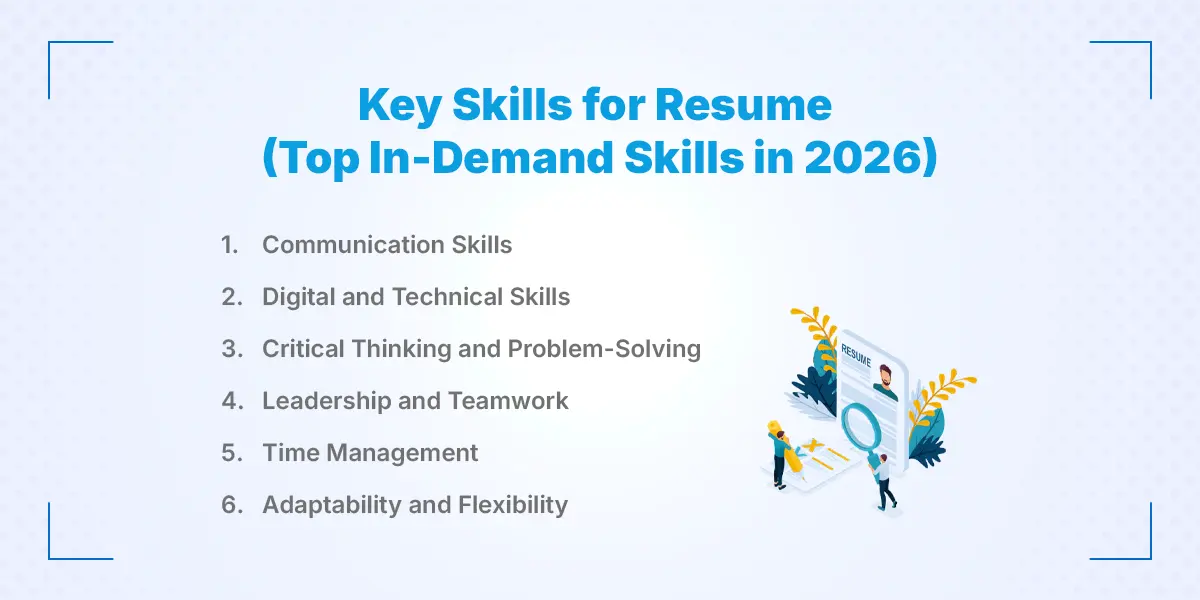
1. Communication Skills
Being able to talk and write clearly is a big deal for any job. Bosses need workers who can explain things without confusing everyone else. Good communication means listening well to directions, too. You should show that you can write a nice email and speak up in meetings. If people understand you easily, you will do great at work.
2. Digital and Technical Skills
Almost every job in 2026 uses computers and new software. You do not need to be a tech genius, but you must know the basics. This means knowing how to use tools like word processors, spreadsheets, or even simple AI programs. Make sure you list the exact computer programs you know how to use. Companies love it when they do not have to teach you how to use basic software.
3. Critical Thinking and Problem-Solving
Things go wrong at work all the time. Bosses want people who can fix a mess without waiting for someone else to tell them what to do. Critical thinking means you look at a problem and figure out the best way to solve it. When you put this on your resume, it shows that you use your brain to help the company. It proves you are a smart worker who handles trouble well.
4. Leadership and Teamwork
Working well with others is a must in almost any company. Teamwork means you share the load and help your coworkers finish a job. Leadership is not just for the big bosses. It simply means you can take charge of a small project or help train a new person. Showing you can lead and be a team player makes you very valuable.
5. Time Management
Every boss hates it when work is late. Time management means you know how to finish your tasks before the deadline hits. It shows you can handle a busy day without getting stressed out. You focus on the most important jobs first and do not waste hours on little things. Put this on your resume to show you respect the company's time and money.
6. Adaptability and Flexibility
Things change really fast at work, especially lately. Bosses want workers who do not panic when the rules or plans change suddenly. Being adaptable means you just roll with the punches and learn the new way of doing things. You stay calm and keep working even when things get a little crazy. This skill tells a hiring manager that you are easy to work with, no matter what happens.
Skills for Fresher Resume: What to Include Without Experience
Writing a resume when you have never had a real job feels really hard. You might think you have zero skills to show a hiring manager. But the truth is, you already have plenty of great abilities from your daily life and school. Let us look at the best things to put on your resume to get hired fast, even as a complete beginner.
1. Academic Skills and Project-Based Skills
Think about the big assignments you finished in college or high school. Writing long papers shows you know how to research and type well. Group projects prove you can work with a team to get a good grade. If you gave presentations in front of the class, that means you have public speaking skills. Put these school wins on your resume to show you are a smart and hard worker.
2. Internship and Volunteer Experience Skills
Any time you worked for free to help out, it counts as real experience. If you helped plan a local event, you learned how to organize things and talk to people. Helping out at a charity shows you care about your community and shows up on time. Even short internships teach you how a real office runs and how to act around a boss. Companies love seeing this because it proves you are ready for a real job.
3. Transferable Skills From Daily Life
You use amazing skills every single day without even knowing it. Do you manage the budget for your home or plan trips for your friends? That means you are great at handling money and organizing schedules. If you often help your family fix their computer issues, you have basic tech support skills. You can easily transfer these everyday habits straight into the workplace to show you are helpful.
4. Certifications and Online Learning Skills
Taking free or paid classes online is a huge bonus for your resume. It tells the company that you love learning new things on your own time. If you took a quick course on writing or graphic design, list that certificate right away. It shows you already know the basics of the job before your first day. Bosses would much rather hire a beginner who tries hard to learn new tools.
How to Choose the Right Skills for a Resume: Step-by-Step Guide
To choose the best skills, you must read the job ad carefully and pick the exact words the employer used to describe their dream worker. This simple trick helps you pass the computer filters and shows the boss you are a perfect fit. If you follow these four steps, you will stop guessing and start getting more interview calls.
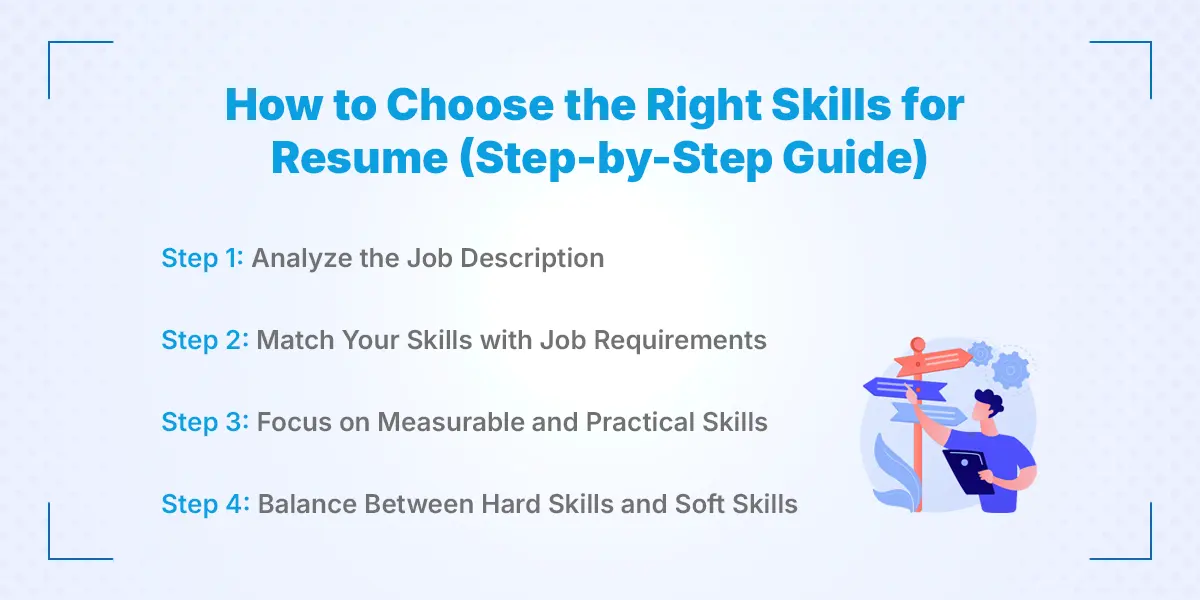
1. Analyze the Job Description
Before you write a single word, you need to read the job posting like a detective. Look for the "Requirements" or "Responsibilities" section to see what they really want. Usually, the most important skills are listed at the very top of the list. Pay close attention to specific software names or personality traits they mention. If the ad says "must be good with Excel," then that is a key skill. You should highlight those exact words on your resume. This helps the hiring manager see that you actually read their post.
2. Match Your Skills with Job Requirements
Once you know what they want, look at your own life and see where you fit. You should not just copy and paste every skill from the internet. Only pick the things you can actually do that match their list. If they want a leader and you led a school project, add that. It is better to have five perfect matches than twenty skills that don't matter. This makes your resume look very professional and honest. It proves to the company that you have the right tools for their specific job.
3. Focus on Measurable and Practical Skills
Try to use numbers or facts to show how good you are at something. Instead of just saying "good at sales," you could say "met all monthly sales goals." This makes your skills feel more real and powerful to a boss. If you know a language, mention if you are a beginner or a pro. Practical skills are things you use to get work done every day. Showing that you can handle real tasks is much better than using vague words. It gives the employer confidence that you can start working right away.
4. Balance Between Hard Skills and Soft Skills
A great resume has a mix of technical training and people skills. You need hard skills like "typing" or "coding" to do the actual tasks. But you also need soft skills like "patience" or "teamwork" to get along with others. If you only list technical tools, you might seem like a robot. If you only list people skills, the boss might think you don't have the training. Using a healthy mix of both shows that you are a well-rounded person. It proves you can do the job and be a great coworker at the same time.
How to Write Skills for a Resume That Get Noticed?
To get your skills noticed, you must put them in a clear list where the hiring manager can see them in less than three seconds. This simple trick makes your resume much easier to read for both humans and computer scanners. If you organize your skills properly, you will look like a professional who knows exactly what the job needs.
1. Where to Place Skills
You should usually put your main skills in a sidebar or a special section near the top of the page. This is the first place a recruiter looks when they open your file. If you are a student, you can put them right under your education. If you have worked before, put them just below your personal summary. Some people even put their most important skills in the header so they never get missed. Keeping them high up on the page helps you pass the quick "six-second" resume test. It ensures the boss sees your best qualities before they even read your past jobs.
2. Bullet Points vs Skill Sections
A dedicated skill section with short bullet points is almost always the best choice for any resume. Using bullet points makes the text easy to scan, so the reader doesn't get a headache. You can group them into categories like "Technical Skills" and "Personal Skills" to stay organized. Avoid writing long sentences or big blocks of text because nobody will read them. A clean list with white space around it looks much more professional and modern. This format also helps the ATS computer find your keywords much faster. It keeps your resume looking neat and saves a lot of space for your experience.
3. Using Action Words and Impact Statements
Instead of just listing a skill, try to use strong words that show you actually did something. For example, instead of writing "Sales," you could write "Exceeded monthly sales targets by 20%." This shows the boss that your skills actually get results for the company. Use words like "Managed," "Created," "Fixed," or "Improved" to start your bullet points. It makes you sound like a doer who takes action and solves problems. Showing the impact of your work is much more powerful than just a boring list. It gives the employer a reason to believe you are better than other candidates.
4. Avoiding Overused Buzzwords
Many people use the same tired words like "hard worker," "team player," or "go-getter" on every resume. These words have become so common that hiring managers usually just ignore them. Instead of saying you are a "leader," list a time you actually led a team project. Instead of "creative," mention a specific design or idea you came up with recently. Using real examples makes your skills feel much more honest and unique to you. It proves you are not just copying a template you found online. Staying away from boring buzzwords helps you stand out as a real person with real talent.
Best Examples of Skills for a Resume (By Job Role)
Different jobs require different sets of abilities to get the work done. A developer does not need the same skills as a salesperson or a store manager. To help you choose, we have listed the top skills for four common career paths. Adding these specific examples will show the boss you understand exactly what the role involves.
1. Skills for IT and Tech Jobs
In the tech world, employers want to see that you know how to work with specific systems and languages. You need to show that you are good at fixing technical problems and building new things. These IT skills are very valuable in 2026.
- Programming: Writing code in languages like JavaScript, Python, Java, PHP, or C++.
- Data Analysis: Looking at numbers to find patterns and help a company grow.
- Cloud Computing: Working with online tools like Google Cloud or AWS.
- Cybersecurity: Keeping company data safe from hackers and viruses.
- Software Troubleshooting: Finding out why a computer program is broken and fixing it fast.
2. Skills for Digital Marketing and Sales Jobs
Marketing and sales are all about reaching people and convincing them to take action. You need a mix of technical digital skills and the ability to talk to anyone. These roles are great for people who are creative and persuasive.
- SEO (Search Engine Optimization): Helping websites show up at the top of Google searches.
- Social Media Management: Running business pages on Facebook, Instagram, or TikTok.
- Negotiation: Talking with customers to agree on a fair price and close a deal.
- Content Writing: Creating blogs or ads that make people want to buy a product.
- Public Speaking: Giving clear and exciting presentations to big groups of people.
3. Skills for HR and Management Roles
If you want to work in an office or lead a team, you need strong "people" skills. These jobs focus on keeping the staff happy and making sure the business runs smoothly. You have to be very organized and good at handling different personalities.
- Leadership: Guiding a team of workers to finish a big project on time.
- Conflict Resolution: Helping coworkers settle arguments in a calm and fair way.
- Recruiting: Finding and interviewing the best people to hire for the company.
- Project Management: Planning out all the steps of a job from start to finish.
- Employee Relations: Making sure every worker feels safe and respected at their desk.
4. Skills for Customer Service Jobs
Customer service jobs are for people who enjoy helping others and solving daily issues. You are usually the first person a customer talks to, so you represent the whole company. Being kind and patient is the secret to success in this role.
- Patience: Staying calm even when a customer is angry or confused.
- Active Listening: Paying close attention to what the customer says so you can help them.
- Problem-Solving: Finding a quick way to fix a shipping error or a broken product.
- Product Knowledge: Learning everything about what the company sells so you can answer questions.
- Empathy: Showing the customer that you truly care about their situation and want to help.
Conclusion
To choose the best skills for your resume in 2026, you must stop using a one-size-fits-all list. The secret to getting hired is matching your specific hard and soft skills to the exact job description you see online. Employers today are looking for workers who can handle new digital tools while still being great at talking to people and solving problems.
By picking the right technical abilities and personal traits, you prove to both the computer scanners and the hiring manager that you are the perfect fit. Don't just list every skill you have ever learned. Instead, focus on the ones that show you can do the work right now. Start updating your skills today, and you will see much better results in your job search.
Frequently Asked Questions
Submit your comments

Get Our App On


How to Register a Personal PAN Card in Nepal: Online & Offline Methods
VIEW DETAILS
What Is the Average JavaScript Developer Salary in Nepal?
VIEW DETAILS
Salary Tax Slab 2083/84 in Nepal: Latest Tax Rates & Calculation
VIEW DETAILS
What Is the Average Java Developer Salary in Nepal?
VIEW DETAILS


Loading Comments...