



Starting a career in HR feels exciting, but also confusing. Many students and working professionals want to enter the HR field, yet they are unsure about the right skills to learn, the cost of training, and which course actually helps them get hired. It can feel overwhelming when you do not know where to begin.
But the good news is that HR training is simple to understand once everything is broken down clearly. And you do not need any advanced background to start.
In this guide, you will learn the real cost of HR training, what affects the price, and which options fit your career goals. By the end, you will know exactly how to start your HR journey with confidence.
In this blog
What is an HR Training Course?
An HR training course is a program designed to teach you the basic and practical skills needed to work in the Human Resources field. It helps you understand how companies hire people, manage teams, solve workplace issues, and create a healthy work environment. The main purpose of HR training is to prepare you for real HR responsibilities so you can confidently handle tasks from day one.
HR training also helps students and professionals learn how HR departments actually work. You get to understand people management, office rules, and how to support employees in a company. The scope of HR is increasing, and learning HR skills makes the transition into an HR job much easier, even if you are entirely new to the field.
Types of skills and knowledge covered in HR training:
- Hiring and recruitment basics
- Interview handling and candidate screening
- Employee onboarding
- Payroll and attendance management
- HR documentation and record-keeping
- Workplace policies and compliance
- Communication and people-handling skills
- Performance evaluation basics
These skills are taught in a very practical way, so you understand what HR professionals do every single day. You also learn how to deal with common problems at work, like conflicts, confusion, or employee issues. Each lesson builds your confidence and helps you understand the real-world side of HR work.
By the end of the course, you will know how to support a company’s staff, manage HR tasks smoothly, and present yourself as a strong candidate for HR roles. It is simple, clear, and designed for beginners who want to grow their career in the HR field.
How Much Does HR Training Cost in Nepal?
HR training in Nepal usually costs between NPR 10,000 and NPR 35,000, depending on the institute, course level, and duration. HR training prices in Nepal can vary a lot, and that is why many students feel confused when comparing courses. Some programs are short and affordable, while others are longer and include extra features. To help you understand it clearly, here’s a simple breakdown of what affects the price and what you actually get for the amount you pay.
1. Short-Term HR Training Programs
Short-term HR courses are the most budget-friendly. These programs usually cost NPR 10,000 to NPR 18,000, depending on the institute. They focus on the basics like recruitment, documentation, and simple HR tasks. Most programs last two to four weeks. Students choose this option when they want a quick start in HR or need a basic skill upgrade. It’s simple, clear, and perfect for beginners.
2. Advanced or Diploma-Level HR Courses
Advanced HR courses go deeper and naturally cost more. The fee usually falls between NPR 20,000 and NPR 35,000. These programs cover payroll systems, labor law basics, performance management, HR software, and more. The duration is longer too, usually one to three months. These courses are ideal if you want to grow into higher HR roles and build strong professional skills.
3. Online HR Courses
Online HR courses are often cheaper than physical classes. Most of them cost around NPR 8,000 to NPR 20,000. Since you study from home, the overall cost stays low. Some courses also let you learn at your own pace, which is great if you have work or college. Just make sure the provider is trusted because quality can vary online.
4. HR Courses with Extra Certifications
Some institutes add extra certifications, such as HR software training or interview handling workshops. Because of these added features, the price goes higher and usually stays between NPR 15,000 and NPR 30,000. These additional certificates are helpful when you apply for HR jobs because they show you have practical skills, not just theory.
5. HR Training with Job Support
Courses that include job placement support are priced slightly higher. These programs normally cost NPR 20,000 to NPR 35,000. The fee includes resume guidance, mock interviews, and job referrals. Many students find this useful because it helps them get hired faster. If your main aim is employment, this type of course gives you strong support.
Types of HR Training Courses in Nepal
HR training courses in Nepal come in different formats, so students can choose based on their goals and budget. Some courses are short and beginner-friendly, while others go deeper and prepare you for higher HR roles. You can also pick between online and offline learning, depending on your schedule. Here is a simple breakdown so you can understand each option clearly.
1. Certificate Courses
Certificate HR courses are short programs made for beginners who want to understand the basics of HR work. They usually cover recruitment, documentation, onboarding, and simple HR operations. These courses are easier to follow and do not require any HR background. Most students choose certificate courses when they want a quick start or want to test if HR is right for them. The duration is short, which makes it easier to manage with work or college. You get clear, practical lessons that help you understand real HR tasks. Because they focus on basics, they are also more affordable.
2. Diploma Courses
Diploma courses go deeper than certificate programs and cover advanced HR topics. You learn about payroll, labor law basics, performance management, HR software, and employee relations. These courses suit students and professionals who want stronger skills and better career opportunities. The duration is longer, so you get more time to practice and understand each topic. Diploma courses also help you apply for higher HR positions. Many people choose this path when they want long-term growth in the HR field. The training feels more structured and prepares you for real workplace challenges.
3. Online vs Offline Courses
Online HR courses give you flexibility, so you can study from home or while working. They are usually more affordable and easy to manage if you have a busy routine. But they require self-discipline since you handle most of the learning on your own. Offline courses, on the other hand, offer face-to-face classes, live interaction, and a more classroom-like environment. Many students prefer offline classes because they get direct guidance from trainers. Offline learning also gives you stronger networking chances. Both options are good; it just depends on what fits your lifestyle and learning style better.
Factors That Affect HR Training Fees
HR training fees in Nepal are not the same everywhere, and many students get confused about why prices change so much. Different institutes offer different features, and each one affects the final cost. Some courses are short and simple, while others include advanced lessons or extra support. To help you understand it clearly, here are the main factors that influence HR training fees.
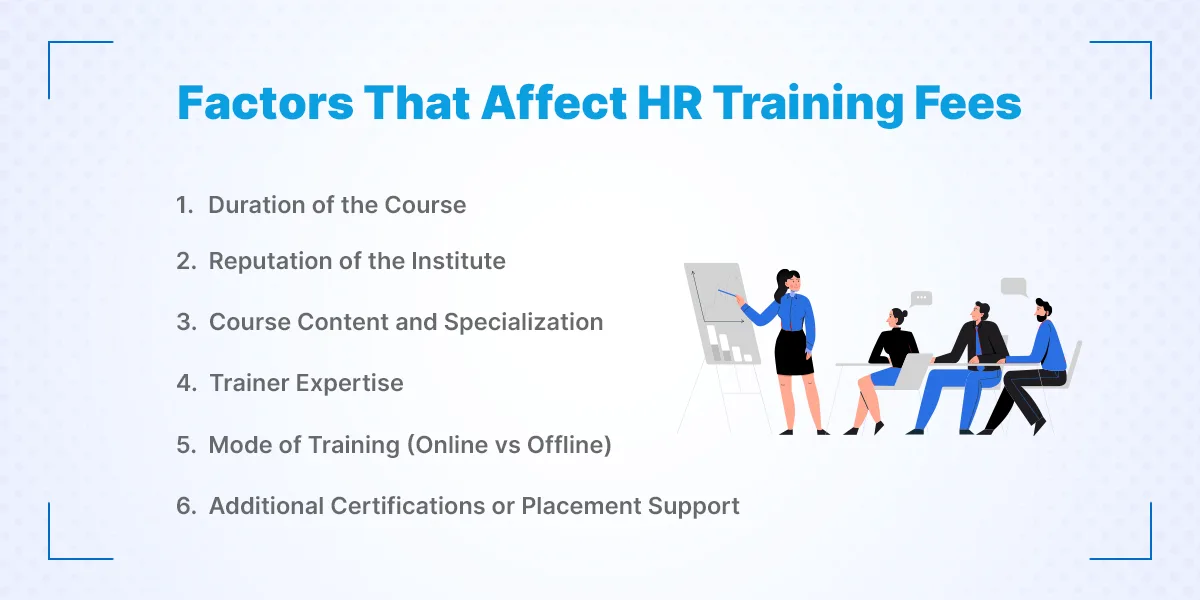
1. Duration of the Course
Longer courses usually cost more because they include more lessons and practice time. Short courses are cheaper since they focus only on the basics. If you want greater skills, expect a higher fee. The duration often depends on the course level. Beginners usually choose shorter programs, while professionals pick longer ones.
2. Reputation of the Institute
Institutes with a strong name often charge higher fees. This happens because they offer better trainers, structured courses, and stronger support. Many students trust well-known institutes for quality. A trusted brand also gives you more confidence. Some learners feel the higher fee is worth it for better training.
3. Course Content and Specialization
Courses with more topics usually cost more than basic programs. If the training covers payroll, labor laws, or HR software, the price increases. Specialized lessons need more time and better trainers. This naturally raises the fee. Students who want advanced HR skills usually go for these programs.
4. Trainer Expertise
Experienced trainers add more value to the course. Institutes pay them more, so the fee increases. Good trainers also teach with real examples, which helps you understand better. Students often find expert trainers more helpful. Their experience makes the learning smoother and more practical.
5. Mode of Training (Online vs Offline)
Online courses are usually cheaper because there are no classroom costs. You can study from home, which also saves travel time. Offline classes cost more but offer direct interaction with trainers. Some students prefer face-to-face learning. Both methods are good, but the cost varies.
6. Additional Certifications or Placement Support
Courses with extra certificates usually charge a higher fee. These certificates make your CV stronger. Some institutes also offer job support, mock interviews, and resume help. These added services increase the price. Many students choose this option for better career opportunities.
Best Institutes Offering HR Training in Nepal
There are many institutes in Nepal that offer HR training, and each one has its own style, course structure, and price range. Students often get confused because everyone claims to be the best. But the goal is simple. You need a place that teaches practical HR skills, explains everything clearly, and prepares you for real HR jobs.
Among the available options, Kumari Job HR Training stands out as one of the best choices in Nepal. The reason is very simple. They focus heavily on practical learning instead of only theory. You learn exactly what HR departments do every day, like hiring, documentation, payroll basics, onboarding, and dealing with employees. The classes feel easy to follow, even if you have never studied HR before.
Another strong point of Kumari Job is the trainers. They have real HR experience, so they teach with examples that make things clear and simple. You do not just learn the topic; you understand how to use it at work. The environment is friendly, and students feel comfortable asking questions.
Kumari Job also provides career support. This is something many students look for because getting your first HR job can feel tough. They help with mock interviews, resume improvement, and job recommendations. This makes a huge difference when you are just starting your HR career.
If you want HR training that is practical, beginner-friendly, and focused on real results, Kumari Job is one of the strongest options in Nepal.
Career Opportunities After HR Training
Completing an HR training course opens many doors for students and professionals. You do not need to have prior experience to start working in HR. The training gives you practical skills that employers look for. After the course, you can apply for different roles in HR depending on your interests and career goals.
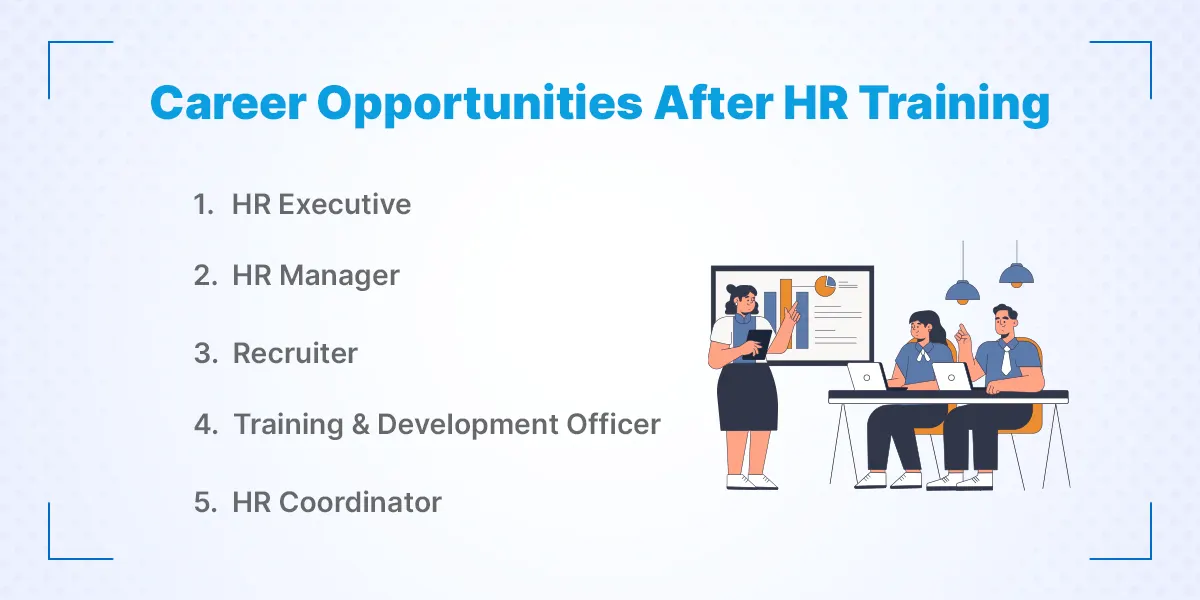
1. HR Executive
An HR Executive is usually an entry-level role in the HR department. You handle basic HR tasks like recruitment support, maintaining employee records, and helping with daily HR operations. This role gives you hands-on experience in how HR works. Most companies hire freshers in this position. It is a good starting point for anyone who wants to grow in HR. You also get to understand workplace culture and employee management. This job helps build confidence and practical skills.
2. HR Manager
An HR Manager is responsible for planning and managing the HR activities in a company. You handle recruitment, performance management, employee relations, and HR policies. This is a senior role, so experience and advanced HR knowledge are important. HR Managers make important decisions that affect the staff and the overall company. Many HR Managers start as executives and grow after gaining experience. This role requires leadership, problem-solving, and communication skills.
3. Recruiter
Recruiters focus on hiring the right candidates for the company. You review resumes, conduct interviews, and coordinate with managers. This role is important because good hiring affects the company’s success. Recruiters need to understand the skills required for each job. You also build strong networking skills in this role. Recruiters can work in HR departments or recruitment agencies.
4. Training and Development Officer
This role focuses on employee learning and skill development. You plan training programs, workshops, and sessions for employees. Your goal is to improve employee performance and growth. Training officers also monitor the effectiveness of these programs. This job requires creativity and good communication skills. Many companies value this role highly because it improves overall productivity.
5. HR Coordinator
An HR Coordinator helps the HR department run smoothly. You assist with payroll, attendance, recruitment, and documentation. This role requires attention to detail and organizational skills. HR Coordinators also communicate with employees and managers regularly. It is a good position for beginners who want experience in multiple HR tasks. You learn a lot about how HR operates in real companies.
Conclusion
HR training is the first step to building a successful career in the HR field. Whether you are a student or a working professional, the right course helps you learn practical skills and gain confidence. It shows you how HR works in real companies and prepares you for different roles like HR Executive, Manager, or Recruiter. Choosing the right institute, like Kumari Job, makes learning easier and more effective.
With proper training, you can handle HR tasks smoothly and improve your chances of getting a good job. Investing in HR training is not just about learning; it is about starting a career with the right skills and support.
Frequently Asked Questions
Submit your comments

Get Our App On



Auditor vs Accountant in Nepal: Duties, Differences, and Career Opportunities
VIEW DETAILS
Best Part-Time Jobs During Dashain in Nepal
VIEW DETAILS
Education Counselor Interview Questions and Answers in Nepal
VIEW DETAILS
Finance Jobs vs. Accounting Jobs in Nepal: Duties, Differences, and Career Opportunities
VIEW DETAILS


Loading Comments...