



HR jobs are one of the most demanded roles in Nepal as companies seek organized hiring processes, clear communication, and seamless daily operations. Offices across various industries, including hospitality, retail, finance, IT, trading, and education, now rely on HR teams to maintain a steady and productive workplace. This growing dependence on structured people management creates strong opportunities for beginners who want practical office experience, stable roles, and clear career paths.
This blog explains the skills needed to become HR in Nepal, guiding readers through hiring skills, record management, payroll support, understanding labor laws, conflict resolution, and utilizing digital HR tools. Readers also see learning options, entry points, salary stages, and future paths. Each section focuses on clarity, helping beginners understand how HR roles work and how these abilities lead to long-term growth inside Nepali workplaces.
In this blog
What is HR and What do HR professionals do?
HR is a department in organizations that handles people-related tasks and daily coordination. HR professionals manage hiring steps, track attendance, support payroll, maintain employee files, guide basic communication, and update simple workplace policies. Their work keeps operations organized and helps staff receive clear instructions without confusion.
HR job roles focus on managing people and keeping daily activities organized by handling hiring steps, preparing job postings, screening applicants, scheduling interviews, and guiding new staff during onboarding. They maintain employee files, update attendance records, track leave, and support payroll teams with accurate data. HR also manages workplace communication by sharing notices, explaining policies, helping staff understand procedures, and resolving small conflicts through fair guidance. They ensure companies follow basic labor rules, keep documents updated, and maintain a steady environment where staff work without confusion.
What Skills Do You Need to Become an HR in Nepal?
To become HR, you need skills like hiring, record handling, communication, payroll coordination, and workplace guidance. Beginners also need clear understanding of people management, simple documentation processes, and basic digital tools. These abilities help HR teams maintain accurate data, support employees, and assist managers. The following sections explain each core skill that helps new learners grow in Nepali workplaces.
1. Recruitment and Interviewing Skills
HR professionals prepare job posts, screen applicants, and schedule interviews to match candidates with job requirements. They ask focused questions that help identify strengths and workplace fit. Strong interviewing skills help companies hire people who can support long-term growth.
2. Documentation and HR Record Management
HR maintains employee files, attendance sheets, leave records, and contract details with accuracy. Clear organization reduces mistakes during payroll or audits. Proper record management ensures staff information stays updated and easy to verify when needed.
3. Communication and People Skills
HR communicates rules, clarifies procedures, and provides guidance during daily tasks. Simple, respectful language helps employees feel supported. Strong communication also reduces misunderstandings between teams and management.
4. Employee Relations and Conflict Handling
HR listens to concerns, identifies the cause of disagreements, and guides staff toward fair solutions. Calm responses help prevent tension from spreading through teams. Effective conflict handling protects workplace harmony and productivity.
5. Payroll, Attendance, and Basic Accounting Understanding
HR verifies attendance data, updates leave balances, and prepares information for payroll teams. A simple understanding of salary parts prevents calculation mistakes. Many companies also use payroll outsourcing to maintain accuracy and reduce workload. Accurate updates ensure staff receive correct payments without delay.
6. Knowledge of Nepal Labor Law and HR Policies
HR understands working hours, leave rules, contract terms, and employee rights. Awareness of basic labor laws helps companies avoid penalties and disputes. Clear policy knowledge supports fair and consistent decision-making.
7. HRMS and Digital HR Tools
HR uses digital systems for attendance tracking, employee records, and leave requests. Learning these tools saves time and improves accuracy. Basic software skills also prepare beginners for modern HR roles across Nepal.
8. Training and Performance Management Basics
HR arranges skill-building sessions to help staff improve their work quality. Understanding simple performance indicators supports fair reviews and feedback. These steps help teams grow and maintain steady productivity.
9. Confidentiality and Ethics
HR handles private details such as salary information, medical files, and personal records. Protecting this data builds trust between employees and management. Ethical actions ensure all information stays safe and secure.
10. Problem Solving and Decision Making
HR faces daily issues such as attendance confusion, delayed tasks, or misunderstandings. Quick thinking helps resolve problems before they affect workflow. Strong judgment supports both employees and managers during routine operations.
How to Build These HR Skills in Nepal?
You can build HR skills in Nepal through online courses and professional HR training in institutes like Kumari Job. Beginners also gain confidence by learning simple HR tasks, practicing communication, and understanding daily office routines. Small steps such as using HR software, updating records, and observing senior staff help new learners understand real workflows. Internships and entry-level roles add practical knowledge that supports long-term growth across Nepali workplaces.
1. Learn Basic HR Processes
Start by understanding simple tasks such as attendance updates, leave tracking, file management, and onboarding steps. Learning how these processes work helps beginners understand core HR duties. Consistent practice builds confidence before taking on advanced responsibilities.
2. Join HR Training or Certification
Hiring steps, payroll basics, documentation, labor rules, and digital tools are taught clearly in structured courses. Institutes like Kumari Job provide HR training that reflects real office tasks and helps beginners understand how HR responsibilities work in practice. These programs give new learners the skills that companies expect in entry-level HR roles.
3. Do Internships or Entry-Level HR Roles
Internships expose beginners to daily HR activities such as scheduling interviews, handling queries, and updating records. Working closely with HR teams helps learners understand real challenges. Entry-level roles strengthen skills through hands-on experience.
4. Practice Using HRMS Software
Digital HR systems manage attendance, employee data, leave requests, and performance updates. Practicing simple features improves accuracy and reduces manual work. Familiarity with HRMS tools makes beginners ready for modern HR environments.
5. Improve Communication and Writing Skills
HR professionals must explain rules, write notices, and respond to employee questions. Clear communication builds trust and reduces misunderstandings. Regular practice helps new learners handle staff interactions with confidence and clarity.
Where Can You Learn HR Skills in Nepal?
You can learn HR skills in Nepal through structured training centers like kumari Jobs, online learning platforms, and management-focused college programs. Each path supports beginners with different levels of guidance, from practical workshops to theory-based classes. Learners can choose short courses for quick entry or academic programs for long-term growth. These options help students, career switchers, and office workers build skills at their own pace.
1. HR Training Centers
HR training centers provide practical classes on hiring, documentation, payroll basics, and HRMS tools. Institutes like Kumari Job offer guided sessions that mirror real office activities. These programs help beginners gain confidence before applying for junior HR roles.
2. Online Courses
Online platforms offer flexible learning options covering HR basics, communication, payroll support, and labor rules. Learners can study anytime and repeat lessons to understand concepts clearly. These courses work well for students or working professionals who need a self-paced approach.
3. College Programs Related to Management
Management degrees introduce students to organizational behavior, business communication, and basic HR functions. These programs create a strong foundation for long-term HR careers. Graduates gain a theoretical understanding that supports advanced roles and further specialization.
Who Should Consider an HR Career in Nepal?
HR careers suit beginners after +2 or bachelor’s studies, career switchers seeking stable office roles, and professionals aiming for management positions. HR offers clear entry points, steady growth, and practical responsibilities that match many backgrounds. Anyone interested in communication, coordination, and structured tasks can develop a strong future in this field.
1. Students after +2 or Bachelor’s
Students can begin with junior positions such as HR assistant, recruitment coordinator, or documentation support. These roles introduce simple tasks like file updates, interview scheduling, and attendance checks. With basic communication skills and consistent practice, students build confidence and progress toward HR officer or HR executive roles. Training programs further strengthen knowledge of hiring steps and daily office routines.
2. Career Switchers
Individuals shifting from teaching, sales, customer service, or administration often adapt well to HR because many previous responsibilities relate to communication and coordination. HR training adds missing knowledge, such as labor rules, payroll basics, and digital HR tools. This combination of past experience and new skills helps career switchers enter roles quickly and perform effectively in real office settings.
3. Working Professionals Wanting Management Roles
Employees in operations, admin, or support teams can transition into HR to enhance leadership potential. Learning HR processes builds strengths in staff guidance, conflict handling, policy clarity, and performance support. These abilities make professionals suitable for roles such as HR officer, HR executive, or future HR manager. Continuous learning helps them take on broader responsibilities and move into senior positions.
Career Paths in HR in Nepal
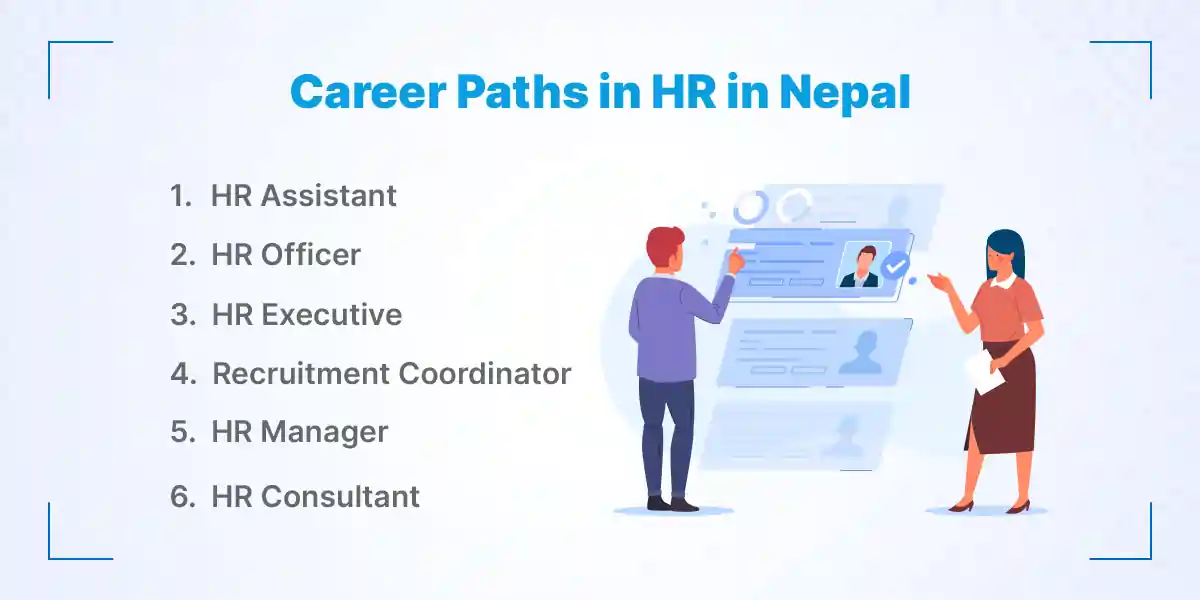
HR careers progress through clear stages, starting from basic support roles and moving toward leadership positions. These paths help beginners understand how responsibilities grow with experience and training. Many follow structured steps similar to those explained in guides about how to become HR in Nepal, which outline early tasks, skill requirements, and long-term growth.
1. HR Assistant
HR assistants handle file updates, attendance checks, interview scheduling, and simple documentation. This starting role introduces beginners to daily HR routines. It is suitable for students and fresh graduates building their first office experience.
2. HR Officer
HR officers manage hiring steps, conduct interviews, update employee records, and support payroll with accurate data. They also respond to staff queries and help maintain workplace order. This role fits those with basic HR knowledge or initial training.
3. HR Executive
HR executives coordinate training plans, support performance reviews, and assist in policy updates. They work closely with managers and supervise documentation quality. Strong communication and HRMS skills make this position effective.
4. Recruitment Coordinator
Recruitment coordinators focus on job posting, candidate screening, interview planning, and communication with applicants. They help companies find suitable talent and maintain a steady hiring flow. This role suits those who enjoy people interaction.
5. HR Manager
HR managers guide HR teams, oversee hiring strategies, review payroll reports, and ensure compliance with labor rules. They handle conflicts, improve staff relations, and support organizational planning. This position requires experience and various factors to become HR manager.
6. HR Consultant
HR consultants advise companies on hiring systems, documentation processes, compliance, and training solutions. They work across different industries and handle project-based assignments. This path suits senior professionals looking for flexible or specialized roles.
Salary of HR Professionals in Nepal
HR salaries in Nepal range from NPR 15,000 to NPR 200,000 depending on role, experience, and company size. Growth becomes steady as professionals build stronger skills and move into positions with more responsibility. Nepal has a strong demand for organized HR systems, which creates bright potential for long-term HR careers, as seen in discussions around the scope of HR in Nepal that highlight rising opportunities and steady salary progress.
1. Entry-level salary
Entry level job positions such as HR assistant or recruitment support usually earn NPR 15,000–30,000 per month. These roles focus on documentation, attendance updates, and interview coordination. Beginners gain practical experience that helps them move toward mid-level roles with better pay.
2. Mid-level salary
Mid-level roles such as HR officer or HR generalist earn around NPR 25,000–60,000 per month. Professionals at this stage handle hiring steps, employee records, payroll support, and communication tasks. Consistent performance and HRMS knowledge help them advance faster.
3. Senior-level salary
Senior roles such as HR manager or HR director offer salaries between NPR 60,000–200,000, depending on company size and responsibility. These positions involve decision-making, conflict handling, policy updates, and team supervision. Experience and strong leadership skills influence earnings at this level.
4. Factors that affect salary
- Company size and industry
- HR experience and skill level
- Knowledge of HRMS and digital tools
- Ability to handle payroll and compliance
- Communication and decision-making strengths
- Training, certifications, and educational background
Conclusion
HR roles depend on clear communication, accurate records, fair guidance, and steady coordination, making strong HR skills important for smooth workplace operations. These abilities support hiring, staff management, payroll accuracy, and daily problem-solving across Nepali companies. HR has become a stable and growing career in Nepal because businesses want organized systems and reliable people who can handle team needs with clarity and consistency. Beginners can enter this field through training, internships, and simple office tasks, building confidence step by step. With patience and continuous learning, anyone can grow from basic roles to senior positions and shape a meaningful career in HR.
To begin your career as an HR professional, explore Kumari Job, where hundreds of verified openings and internship opportunities are posted daily. Start with a suitable role or training program and build your HR journey with steady progress.
Frequently Asked Questions
Submit your comments

Get Our App On



Auditor vs Accountant in Nepal: Duties, Differences, and Career Opportunities
VIEW DETAILS
Best Part-Time Jobs During Dashain in Nepal
VIEW DETAILS
Education Counselor Interview Questions and Answers in Nepal
VIEW DETAILS
Finance Jobs vs. Accounting Jobs in Nepal: Duties, Differences, and Career Opportunities
VIEW DETAILS


Loading Comments...