



Choosing BAMS raises a big question for students and parents: Will it actually pay well in Nepal? People have different views. Some think Ayurveda has no future, while others believe private practice can make a lot of money. This confusion makes it hard when you are about to spend years studying and money on your medical career.
That uncertainty is exactly where clarity matters. Understanding the real BAMS salary in Nepal, not rumors or outdated figures, helps you make a confident career decision.
In this guide, you will get a clear, data-driven breakdown of BAMS earnings in Nepal, from fresher salaries to long-term income potential, along with factors that truly impact growth. By the end, you will know whether BAMS aligns with your financial and professional goals.
In this blog
What is BAMS and Its Scope in Nepal?
Bachelor of Ayurvedic Medicine and Surgery (BAMS) is a professional medical degree focused on Ayurveda, one of the world’s oldest holistic healing systems. The course combines classical Ayurvedic principles with modern medical sciences such as anatomy, physiology, pathology, and pharmacology. In Nepal, BAMS is typically a 5.5-year program, including a mandatory one-year internship, allowing graduates to gain hands-on clinical experience.
BAMS graduates are trained to diagnose diseases, prescribe Ayurvedic medicines, perform Panchakarma therapies, and offer preventive healthcare through lifestyle and dietary guidance. With the growing global shift toward natural and holistic treatment, the relevance of Ayurveda has increased significantly in recent years.
Scope of BAMS in Nepal
The scope of BAMS in Nepal is steadily expanding due to rising awareness of alternative medicine, government support, and increasing patient trust in natural treatments.
Key career opportunities after BAMS in Nepal include:
- Working as an Ayurvedic doctor in government Ayurveda hospitals and health posts
- Employment in private hospitals, clinics, and wellness centers
- Starting a private Ayurveda clinic or Panchakarma center
- Teaching and research roles in Ayurvedic colleges
- Jobs in Ayurvedic pharmaceutical companies and medical sales
- Opportunities with NGOs and community health programs
Nepal’s strong cultural roots in traditional medicine also support long-term career growth. Many patients prefer Ayurveda for chronic conditions, lifestyle diseases, and preventive care, which directly improves demand for BAMS professionals.
With experience, specialization, and private practice, BAMS graduates can build a stable career with respectable earnings. Understanding this scope is essential before evaluating BAMS salary in Nepal, as income potential is closely linked to where and how a graduate chooses to practice.
What is the Average BAMS Salary in Nepal?
The average BAMS salary in Nepal falls between NPR 30,000 and NPR 60,000+ per month, depending on experience, role, and practice setting. Fresh graduates usually start with modest pay, while experienced professionals earn substantially higher. As clinical skills, patient trust, and career position improve, income grows steadily over time.
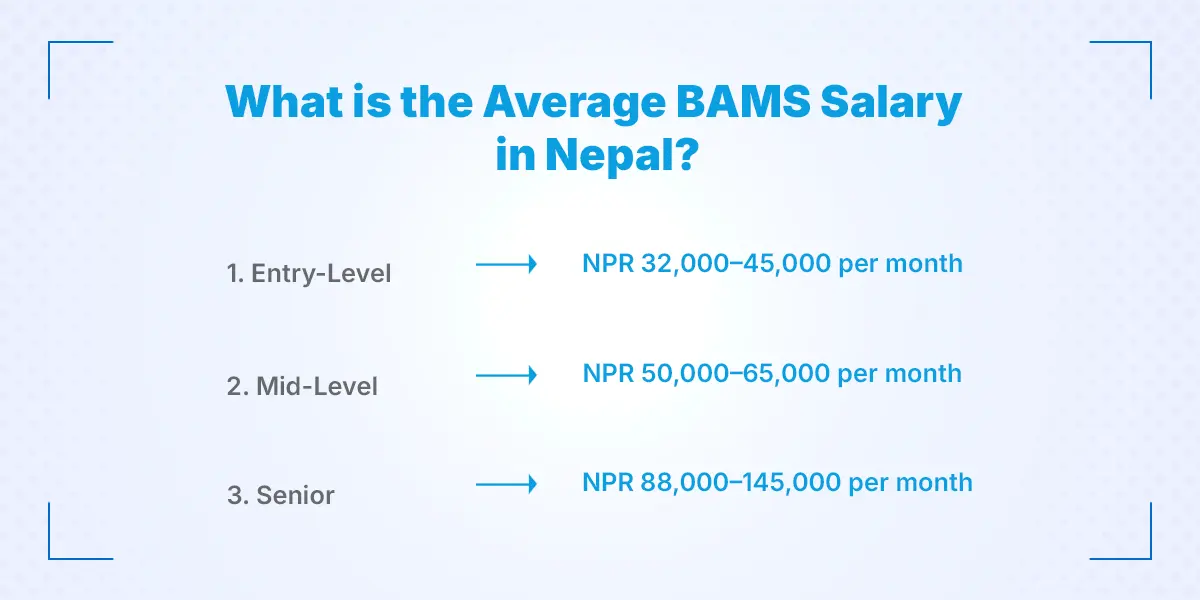
1. Entry Level BAMS Salary in Nepal
At the entry level, BAMS graduates generally earn between NPR 20,000 and NPR 30,000 per month while working in government Ayurveda centers, private clinics, or wellness facilities. This stage focuses heavily on learning and gaining hands-on clinical exposure. Most fresh doctors assist senior practitioners and manage basic patient care. Salary may be slightly higher in urban areas due to patient demand. Some clinics also offer performance-based incentives. Though income is limited initially, this phase is essential for long term growth.
2. Mid-Level BAMS Salary in Nepal
With a few years of experience, BAMS doctors typically earn around NPR 30,000 to NPR 50,000 per month. At this stage, they begin treating patients independently and may supervise junior staff. Mid-level professionals often work in established private hospitals or Ayurveda clinics. Better communication skills and patient outcomes directly impact earnings. Location continues to play a role in salary variation. Many doctors start preparing for private practice during this phase. Income stability improves significantly.
3. Senior Level BAMS Salary in Nepal
Senior BAMS practitioners earn NPR 50,000 to NPR 80,000 or more per month, depending on expertise and reputation. Many operate their own clinics or work as consultants across multiple centers. Income can exceed this range for doctors with a strong patient base. Teaching, research, and pharmaceutical roles further enhance earning potential. Senior professionals handle complex and chronic cases. Their income is driven more by experience than by fixed salary structures.
What are the Highest Paying Career Options After BAMS in Nepal?
The highest-paying career options after BAMS in Nepal include private practice, hospital consultancy roles, academic positions, and corporate jobs in Ayurvedic pharmaceutical companies. These paths offer higher income because they combine medical expertise with experience, reputation, or business exposure. Choosing the right career track plays a major role in increasing overall BAMS salary in Nepal over time.
1. Private Ayurveda Practice
Private Ayurveda practice is one of the most profitable options for BAMS graduates in Nepal. Doctors who run their own clinics have the freedom to set consultation fees and treatment charges. Income depends heavily on patient flow, reputation, and location. Chronic disease management and Panchakarma therapies generate steady earnings. Urban areas usually offer higher income due to better awareness. Marketing, patient trust, and service quality directly impact success. With experience, monthly earnings can exceed fixed salary jobs. This path offers long-term financial growth.
2. Hospital Consultant and Medical Officer Roles
Working as a consultant or medical officer in hospitals provides a stable and respectable income. These roles are common in private hospitals, Ayurveda centers, and multispecialty clinics. Doctors handle patient diagnosis, treatment planning, and supervision of junior staff. Salaries increase with experience and specialization. Consultants may work in multiple hospitals to boost earnings. Job security and professional credibility are strong advantages. This option suits doctors who prefer structured work environments.
3. Teaching, Research, and Academic Careers
Academic careers offer a steady income along with professional recognition. BAMS graduates can work as lecturers, instructors, or research associates in Ayurveda colleges. Teaching roles often come with fixed salaries and additional benefits. Research projects and publications improve career growth. Some professionals combine teaching with clinical practice. Government and private institutions both offer academic opportunities. While income grows gradually, stability is a key advantage.
4. Ayurvedic Pharma Companies and Medical Sales
Ayurvedic pharmaceutical companies offer corporate career options with competitive pay. BAMS graduates work in product management, medical sales, training, or quality control roles. Salaries often include incentives and performance bonuses. These roles require strong communication and product knowledge. Travel and networking are common parts of the job. Corporate exposure improves long-term career flexibility. This option suits those interested in business and healthcare combined.
Factors Affecting BAMS Salary in Nepal
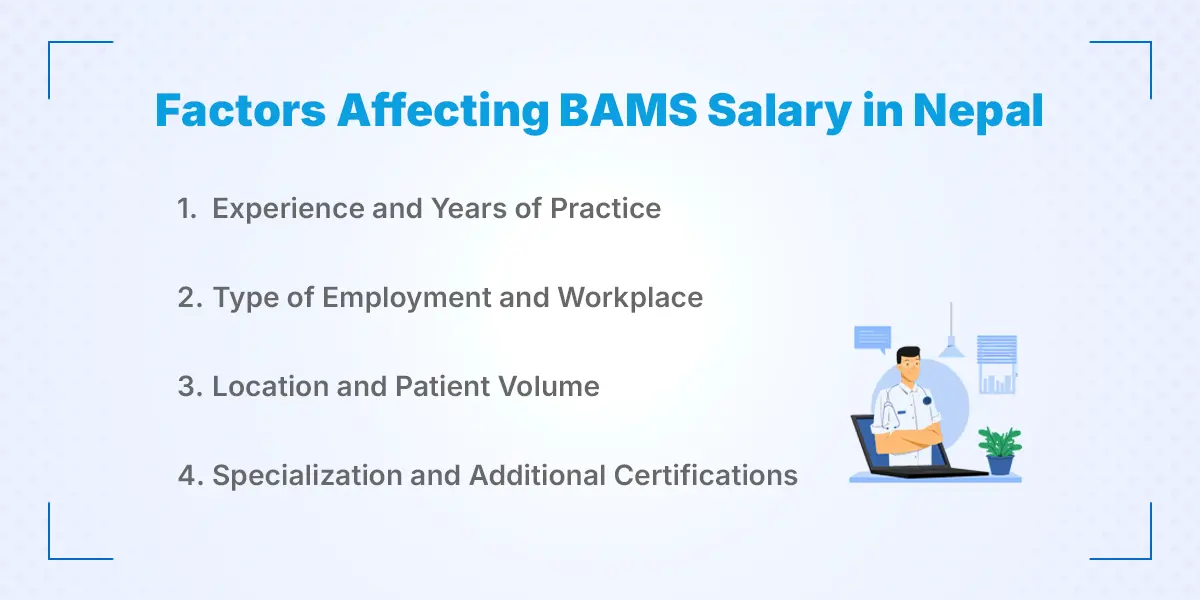
The BAMS salary in Nepal is not the same for everyone. Some doctors earn less at the start, while others earn more as time goes on. Salary changes based on work type, place, and personal skills. Knowing these factors helps you understand how to grow your income step by step.
1. Experience and Years of Practice
Experience plays a very big role in salary growth. Fresh BAMS graduates usually earn less in the beginning. As doctors treat more patients, their confidence and skills improve. Patients also start trusting experienced doctors more. With time, doctors handle cases on their own. This leads to better pay and more job options. Senior doctors can charge higher fees. Long-term practice brings stable income.
2. Type of Employment and Workplace
Where you work directly affects how much you earn. Government jobs usually offer fixed salaries. Private hospitals and clinics may pay more based on performance. Wellness centers and Panchakarma units often give extra income from therapies. Doctors running their own clinics earn based on patient visits. Corporate jobs offer a salary plus incentives. Each workplace has a different pay structure. Choosing the right setup matters.
3. Location and Patient Volume
Location has a strong impact on income. Cities like Kathmandu and Pokhara have more patients. More patients mean more earnings. Rural areas may pay less but offer job security. Some rural areas give extra benefits to doctors. Clinics in busy areas grow faster. Patient flow decides daily income. A good location helps build practice quickly.
4. Specialization and Additional Certifications
Special skills help doctors earn more. Training in Panchakarma increases income chances. Yoga therapy and nutrition courses add value. Certified doctors gain more patient trust. Specialization helps treat complex cases. Hospitals prefer skilled doctors. Additional courses open better job roles. Learning never goes to waste.
Future Scope and Salary Growth of BAMS in Nepal
The future of BAMS in Nepal looks positive as more people are turning toward natural and long-term treatment options. Ayurveda is gaining trust for managing lifestyle problems, chronic illness, and preventive care. This rising demand directly improves job opportunities and BAMS salaries in Nepal over time. Government support and public awareness are also helping this field grow steadily.
One major reason for growth is the increasing interest in safe and natural medicine. Many patients now prefer Ayurveda to avoid the side effects of modern drugs. This creates strong demand for trained BAMS doctors across the country. With experience, doctors can move into higher-paying roles or start their own practice.
Key areas driving future growth include:
- Expansion of government Ayurveda hospitals and health posts
- Rising number of private wellness centers and Panchakarma clinics
- Growing demand for chronic disease management through Ayurveda
- Increased use of Ayurveda in preventive and lifestyle care
- Career opportunities in teaching, research, and Ayurveda colleges
- Corporate roles in Ayurvedic medicine companies
Salary growth in BAMS is slow at the beginning but improves with time. Fresh graduates earn modest income, but experienced doctors can earn well, especially in private practice. Doctors who build strong patient trust often earn more than fixed-salary jobs. Special training and certifications also help increase income. Location, reputation, and service quality play an important role in earnings.
Overall, BAMS offers long-term stability rather than quick money. For students who are patient and committed, it provides steady career growth and rising income in Nepal.
Is BAMS a Good Career Choice in Nepal?
BAMS can be a good career choice in Nepal for students who have an interest in Ayurveda and natural healing. It is not a fast money career, but it offers long-term stability. Many students worry about low income at the start, but growth comes with time and experience. With rising awareness of natural treatment, demand for Ayurveda doctors is slowly increasing.
One strong advantage of BAMS is career flexibility. Graduates are not limited to one job role. They can work in hospitals, clinics, wellness centers, or even start their own practice. Both the government and private sector both offer opportunities. For those who enjoy patient care and lifestyle-based treatment, this field is rewarding.
Why BAMS can be a good option in Nepal:
- Growing trust in Ayurveda and natural medicine
- Stable long-term career with gradual salary growth
- Option to open a private clinic or a Panchakarma center
- Job roles in teaching, research, and pharma companies
- Better work-life balance compared to many medical fields
However, BAMS also has challenges. The initial salary is usually low compared to an MBBS. Building a patient base takes time and effort. Success depends a lot on communication skills and trust. Location and quality of service matter a lot. Those looking for a quick financial return may feel disappointed.
Overall, BAMS is a good choice for students who are patient, dedicated, and truly interested in Ayurveda. With the right planning, skills, and experience, it can lead to a respected and stable career in Nepal.
Where to Find Jobs After Completing BAMS in Nepal?
After completing BAMS, graduates in Nepal can find jobs in government hospitals, private clinics, wellness centers, pharma companies, NGOs, and online job portals. These options cover both clinical and non-clinical roles. Choosing the right place depends on your skills, interests, and long-term career plan.
1. Government Ayurveda Hospitals
Government Ayurveda hospitals are a common starting point for BAMS graduates. These jobs offer fixed salaries and job security. Doctors work in outpatient and inpatient departments. Work pressure is usually moderate. Rural postings are more common at the beginning. Some positions come with extra benefits. Experience gained here is valuable. Many doctors later move to private practice.
2. Private Hospitals and Clinics
Private hospitals and clinics offer more flexible job roles. BAMS doctors treat patients and assist senior doctors. Salary depends on experience and patient flow. Urban clinics usually pay better. Performance-based pay is common. Doctors learn fast in busy setups. Career growth is quicker here. Job change options are wider.
3. Wellness and Panchakarma Centers
Wellness and Panchakarma centers are growing fast in Nepal. These centers focus on therapy and lifestyle care. Doctors manage treatment plans and therapies. Income depends on the number of sessions handled. Tips and incentives may be added. The work environment is usually calm. Demand is higher in cities. Experience here improves practical skills.
4. Ayurvedic Pharma Companies
Pharma companies hire BAMS graduates for medical roles. Jobs include sales, training, and quality control. Salaries often include bonuses. Communication skills are very important. Travel may be required. Corporate exposure is a big advantage. Career growth can be fast. This suits non-clinical interests.
5. NGOs and Health Programs
There are jobs in NGOs in community health projects. Doctors work on awareness and treatment programs. Salary is usually fixed. Field work is common. These roles focus on public health. Job satisfaction is high. Experience helps with future opportunities. Work impact is meaningful.
6. Online Job Portals
Online job websites make finding a job easy. Popular websites like Kumari Job list job openings online. You can send applications fast. Filters help you find the right jobs. New graduates can find jobs easily. It's important to check regularly.Networking helps your chances. These websites save time and effort.
Conclusion
BAMS can be a practical and rewarding career choice in Nepal for those who think long-term. While the BAMS salary in Nepal may start on the lower side, it grows steadily with experience, skills, and patient trust. Ayurveda is gaining acceptance for chronic care and lifestyle treatment, which keeps demand strong. Doctors who choose the right workplace, build clinical confidence, and invest in learning earn well over time. Private practice, specialization, and urban exposure further improve income potential.
In short, BAMS is not about quick returns but about stable growth. For students who are committed to Ayurveda and patient with their career journey, BAMS offers respect, stability, and a reliable future in Nepal.
Frequently Asked Questions
Submit your comments

Get Our App On



SEO Training for Freshers in Nepal: Skills, Career & Job Opportunities
VIEW DETAILS
SEO Training vs. Self-Learning: Which Is Right for You?
VIEW DETAILS
How to Choose Between Two Job Offers
VIEW DETAILS
Digital Marketing Training Interview Questions and Answers for Freshers
VIEW DETAILS


Loading Comments...