



Many job seekers in Nepal actively seek job vacancies at AIN Nepal, hoping to find a career that feels meaningful, stable, and impactful. After all, working with international NGOs is often seen as a chance to contribute to real change, whether in public health, education, climate action, or community development.
But since the information about these jobs is often scattered, job hunting and application can be tricky. Some openings appear on NGO websites, others on job portals, and many candidates aren’t quite sure how the hiring process works.
So where should you actually start?
This guide breaks it down in simple terms. From understanding the Association of International NGOs in Nepal (AIN) to finding and applying for the right opportunities, you’ll learn exactly how to approach an AIN job vacancy in Nepal with more confidence.
In this blog
What is AIN Nepal?
The Association of International NGOs in Nepal (AIN) is a network that connects international and national NGOs across the country. Its main aim is to support development work that improves lives in areas like health, education, environment, and social welfare. By bringing organizations together, AIN helps share knowledge, coordinate projects, and use resources effectively.
AIN works closely with member NGOs, the government, and international donors to plan and run programs that make a real impact. This cooperation ensures projects follow national priorities while meeting global standards. From community initiatives to large-scale programs, AIN plays a key role in shaping Nepal’s development sector.
Based in Kathmandu, AIN acts as a hub for training, communication, and guidance for its members. It also focuses on policy advocacy, capacity building, and monitoring project results, strengthening the overall development landscape. For job seekers, this gives a clear idea of the work, impact, and opportunities available through AIN.
Why Work with AIN Nepal?
Many job seekers look for AIN Nepal vacancy because these positions offer a chance to work with respected international NGOs. These jobs are valued for their meaningful work, professional growth, and structured work environment. Knowing why these roles are attractive helps you understand the competition and opportunities ahead.
- Strong reputation of INGOs in Nepal
- Work that drives real community impact
- Competitive salary and employee benefits
- Clear paths for career growth
Understanding what AIN represents helps explain why AIN job vacancies are highly competitive in Nepal.
What are the Types of AIN Job Vacancies in Nepal?
While AIN itself rarely hires directly, its member INGOs regularly announce openings across a variety of roles, such as program management, technical expertise, operations, and many junior positions. The jobs at AIN do offer something for both experienced professionals and fresh graduates. Understanding these categories helps you see where your skills fit and how to plan your application strategy.
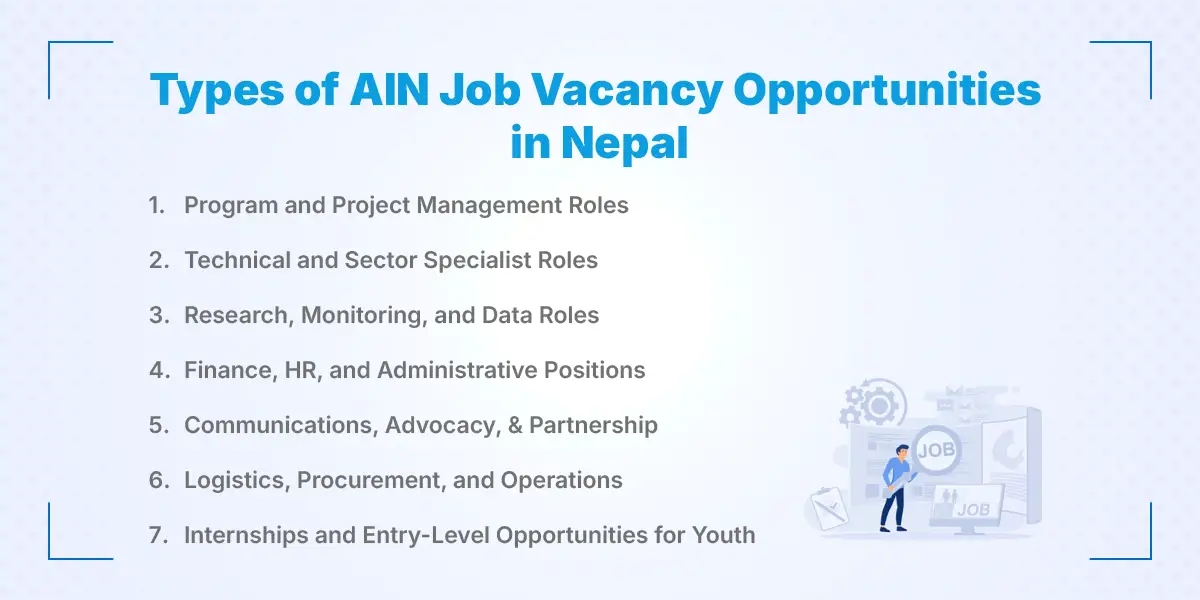
1. Program and Project Management Roles
These roles at Association of International NGOs focus on organizing, planning, and running projects that make a real difference in communities. Typical positions include Program Officer, Project Manager, Field Coordinator, and Monitoring & Evaluation Officer. People in management roles make sure projects stay on track, budgets are followed, and goals are achieved. If you like leading teams, coordinating work, and seeing tangible results, these roles are ideal.
2. Technical and Sector Specialist Roles
Specialist roles need expertise in a particular area, like public health, education, climate, or gender and social inclusion. Examples include Public Health Specialist, Education Specialist, Climate and Environment Advisor, and GESI Expert. These jobs focus on applying knowledge to plan and improve programs within their field. They often work closely with project teams and communities to ensure technical standards are met.
3. Research, Monitoring, and Data Roles
Research positions deal with measuring project outcomes, analyzing results, and improving programs. Roles like Research Analyst, M&E Officer, and Data Officer help organizations track progress and report to donors. Attention to detail and analytical skills are important, as these jobs guide decisions at multiple levels. They suit people who enjoy turning data into useful insights.
4. Finance, HR, and Administrative Positions
Every project needs strong support behind the scenes. Finance Officers, HR Officers, Procurement Officers, and Administrative Officers keep the organization running smoothly. They handle budgets, staffing, compliance, and day-to-day office tasks. If you prefer structured work with clear duties and supporting teams, finance or admin jobs are a great fit.
5. Communications, Advocacy, & Partnership Roles
These jobs focus on sharing the organization’s work, building relationships, and influencing policies. Roles include Communications Officer, Advocacy Officer, and Partnership Manager. They help organizations connect with stakeholders, raise awareness, and strengthen collaborations. If you enjoy storytelling or networking, these roles let you make an impact.
6. Logistics, Procurement, and Operations
Successful projects rely on strong operations teams. Logistics Officers, Procurement Officers, and Operations Managers ensure resources, equipment, and materials reach the right place on time. They also manage transportation, field coordination, and supply chains. These operational roles are essential to keep projects running efficiently.
7. Internships and Entry-Level Opportunities for Youth
AIN member organizations also offer internships and assistant roles for fresh graduates and early-career professionals. Examples include Program Assistant, Research Assistant, and Project Internships. These positions are a great way to gain experience, learn how NGOs work, and start a career in development. For young job seekers, these roles provide learning opportunities and exposure to real projects.
Where to Find the Latest AIN Vacancy in Nepal?
You can find the latest AIN vacancy in Nepal on the AIN official website, NGO career pages, trusted job portals, and professional networking platforms like LinkedIn. While some candidates search randomly online, the best approach is to know exactly where AIN member organizations post their jobs. By focusing on the right sources, you not only save time but also increase your chances of spotting roles that match your skills and career goals.
1. AIN Official Website
The AIN official website is often the first and most reliable place to check for updates. The site features job postings, eligibility criteria, deadlines, and application links for various positions across Nepal. While AIN itself rarely hires directly, this page acts as a central hub connecting job seekers to multiple development, humanitarian, and administrative opportunities. Regularly visiting this page ensures you never miss new openings.
2. Job Portals and Recruitment Platforms
Many AIN member organizations also share their vacancies on trusted job portals and recruitment platforms. These portals often aggregate NGO and INGO openings in one place, making it easier to filter by sector, location, or experience level. Some popular portals in Nepal host detailed job descriptions, application deadlines, and guidance for submitting applications. Checking these portals frequently helps you stay ahead of other applicants, especially for positions that may close quickly due to high competition.
3. LinkedIn and NGO Career Pages
Professional networking platforms like LinkedIn are another valuable source for AIN job vacancies. Many INGOs maintain career pages where they post openings directly, sometimes even before other portals. Following organizations you’re interested in allows you to get updates instantly.
Beyond just job postings, LinkedIn also gives insight into company culture, employee profiles, and professional networks. These are the information that can help you tailor your application. Similarly, visiting individual NGO websites ensures you see every opportunity available from AIN members.
How to Apply for AIN Job Vacancy in Nepal?
To apply for an AIN job vacancy in Nepal, start by finding openings, understanding the requirements, submitting your application and preparing for interviews. AIN member organizations follow structured hiring procedures, so knowing each stage helps you stay prepared and increases your chances of getting noticed. Here’s a detailed guide to help you apply successfully and confidently:
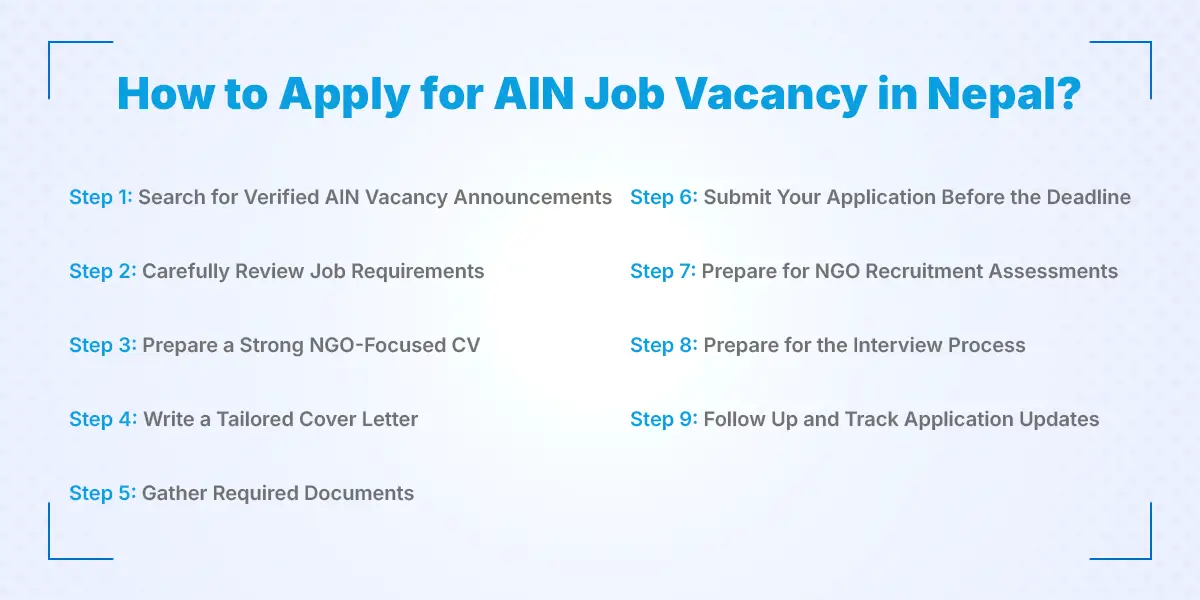
Step 1: Search for Verified AIN Vacancy Announcements
Start by checking reliable sources like the AIN official website, NGO career pages, LinkedIn, and trusted job portals to find the latest job vacancies in Nepal. Make sure the postings are legitimate and current, as fake or outdated listings can waste your time.
Step 2: Carefully Review Job Requirements
Before applying, read the job description thoroughly. Note the required qualifications, skills, and experience. This helps you decide whether the role is a good fit and ensures your application addresses what the employer is looking for.
Step 3: Prepare a Strong NGO-Focused CV
Create a CV that highlights your relevant experience in development projects, community work, or technical expertise. Include measurable achievements, responsibilities in previous roles, and any certifications that strengthen your profile. A clear, concise CV tailored to the NGO sector makes a big difference.
Step 4: Write a Tailored Cover Letter
Your cover letter should explain why you want to work in the development sector and how your skills match the role. Keep it personal yet professional, and connect your experience to the organization’s mission.
Step 5: Gather Required Documents
Some applications require additional documents like academic certificates, recommendation letters, experience letters, or work samples. Collect everything in advance so your submission is complete and organized.
Step 6: Submit Your Application Before the Deadline
Follow the instructions carefully, whether applying via email, online portal, or organization website. Submitting before the deadline demonstrates professionalism and ensures your application is considered.
Step 7: Prepare for NGO Recruitment Assessments
Some roles include written tests, case studies, or technical exercises. Reviewing sector-specific knowledge and practicing problem-solving can give you an edge over other candidates.
Step 8: Prepare for the Interview Process
Interviews often focus on development impact, stakeholder management, and project implementation. Be ready to discuss your experience in projects, how you handle challenges, and your approach to working in teams.
Step 9: Follow Up and Track Application Updates
After submitting, monitor your email and job portals for updates. Sending a polite follow-up shows professionalism and helps you stay informed about the next steps.
Following these steps carefully not only improves your chances of landing an AIN job vacancy in Nepal but also demonstrates that you understand how the development sector works.
What Qualifications are Required for AIN Job Vacancy?
To succeed in an AIN job vacancy in Nepal, meeting the right qualifications and having the relevant skills is essential. Different roles require different levels of expertise, but a combination of education, technical abilities, and experience is key. Understanding these requirements helps you identify which positions match your profile and how to strengthen your application.
1. Educational Qualifications
Most AIN-related roles require a bachelor’s or master’s degree. Common fields include development studies, public health, social work, and management. For technical or specialist roles, additional certifications or sector-specific training can also be an advantage. Even entry-level positions often prefer candidates with formal education that aligns with the development or NGO sector.
2. Skills NGOs Look for in Candidates
AIN member organizations value practical, hands-on skills that support project success. Essential skills include project management, data analysis, clear communication, and reporting, as well as the ability to coordinate with stakeholders. Candidates who demonstrate teamwork, problem-solving, and adaptability are highly sought after.
3. Experience Requirements
Experience expectations vary depending on the role:
- Entry-level: 0–2 years, often internships or assistant positions
- Mid-level: 3–5 years, typically for officers or coordinators
- Senior roles: 7+ years, usually for managers or specialists leading programs
Even if you’re starting out, relevant volunteer work, internships, or short-term project experience can make your application stronger.
What are the Salary and Benefits in AIN Nepal Jobs?
Working in an AIN job in Nepal rewards you with meaningful work, impressive paycheck, and a stable and rewarding career. Salaries at AIN are generally more competitive than many private-sector jobs, especially considering the additional perks and opportunities for growth. While exact numbers vary by organization, level, and project type, having a clear idea helps you plan your career and expectations.
1. Average Salary in NGO/INGO Jobs
Salaries in AIN-related positions depend largely on experience, role, and responsibility. At the entry level, such as internships or program assistant roles, you can expect around NPR 25,000–40,000 per month, which is decent for fresh graduates starting in development work.
Mid-level positions, like officers or coordinators, usually pay NPR 50,000–90,000 per month, reflecting the additional responsibilities and specialized skills. For senior roles, such as program managers or technical specialists, salaries can exceed NPR 100,000 per month, often including allowances for field work or project leadership.
These numbers are approximate but give a realistic picture of what to expect. Beyond the base pay, most INGOs provide a structure that values performance, impact, and dedication, which is rewarding for those passionate about development work.
2. Additional Benefits
Beyond salary, working with AIN member organizations comes with benefits that support your personal and professional growth:
- Health insurance coverage: Many organizations provide medical support for employees, giving peace of mind.
- Travel opportunities: Some roles involve field visits, workshops, or regional project work, offering exposure beyond the office.
- Professional development training: INGOs often invest in training, certifications, and workshops, helping you grow your career in the sector.
- Flexible work environment: Depending on the role, options for remote work, hybrid schedules, or field-based assignments are common.
Together, these benefits at Association of International NGOs offer a career with impact, learning, and growth opportunities. For many young professionals, the combination of meaningful work, decent pay, and added perks is a key reason why AIN vacancies in Nepal are so competitive and desirable.
How to Improve Your Chances of Securing a Job at AIN Nepal?
The AIN job landing in Nepal can be as competitive as it can be, although, with adequate preparation and plan, you can increase your odds with a high degree. The only person who can succeed in this sector is not only someone with the right qualifications but also one who demonstrates passion, relevant experience and is up to date. These are some of the realistic suggestions that can enable you to shine and get the job of your choice.
1. Gain Experience via Internships and Volunteering
The most effective methods of attracting attention of AIN member organizations are by acquiring direct experience. Practical skills, exposure to real-life issues, a better idea of the way NGOs are run can be provided by internships, brief projects, or volunteer work on any development, humanitarian, or research project. Although minor experiences, such as volunteering in community activities or taking part in research projects can reinforce your resume and demonstrate a desire to make a difference to prospective employers.
2. Develop Technical NGO-Relevant Skills.
In addition to experience, technical skills are also highly prioritized in the AIN jobs. This might be in the form of project management, data analysis, report writing, monitoring and evaluation, and coordination of the stakeholders, depending on the position. Eg, data collection learning software or the ability to produce the best reports and presentations can help set you apart. Updating your skills on a regular basis indicates to the organizations that you are keen on playing a role and are capable of doing the same job on your first day.
2. Keep Pace with Development Sector Opportunities
Information is an important part of the fast-paced industry. Check AIN announcements, NGO career pages, LinkedIn and reputable recruitment sites regularly to identify new vacancies at the earliest. Another way to gain insider information on any future projects and recruitment campaigns is by following organizations and connecting with professionals. Being proactive will not only aid you in applying in time but it will also make you an informed and enthusiastic candidate.
Having the applicable experience and the modified technical skills coupled with the awareness in the sector, you place yourself in a good position. The search of the verified AIN and NGO vacancy with the help of credible recruitment platforms will make the process much easier and will allow you not to miss a chance, which will provide you with a professional advantage in a competitive market.
Conclusion
AIN-related organizations offer some of the most meaningful career opportunities for young professionals in Nepal. Working with these NGOs allows you to make a real impact in communities while growing your skills and experience.
Staying informed about AIN job vacancy announcements and preparing strong, targeted applications can greatly improve your chances of landing a role. Regularly checking verified sources, tailoring your CV and cover letter, and gaining relevant experience are all steps that set you apart from other candidates.
For those looking to track opportunities efficiently, platforms like Kumari Job provide verified listings, career resources, and guidance to help you stay updated and prepared. Using available tools, follow a structured approach, and then you will definitely pursue a career in Nepal’s development and NGO sector.
Frequently Asked Questions
Submit your comments

Get Our App On



SEO Training for Freshers in Nepal: Skills, Career & Job Opportunities
VIEW DETAILS
SEO Training vs. Self-Learning: Which Is Right for You?
VIEW DETAILS
How to Choose Between Two Job Offers
VIEW DETAILS
Digital Marketing Training Interview Questions and Answers for Freshers
VIEW DETAILS


Loading Comments...