


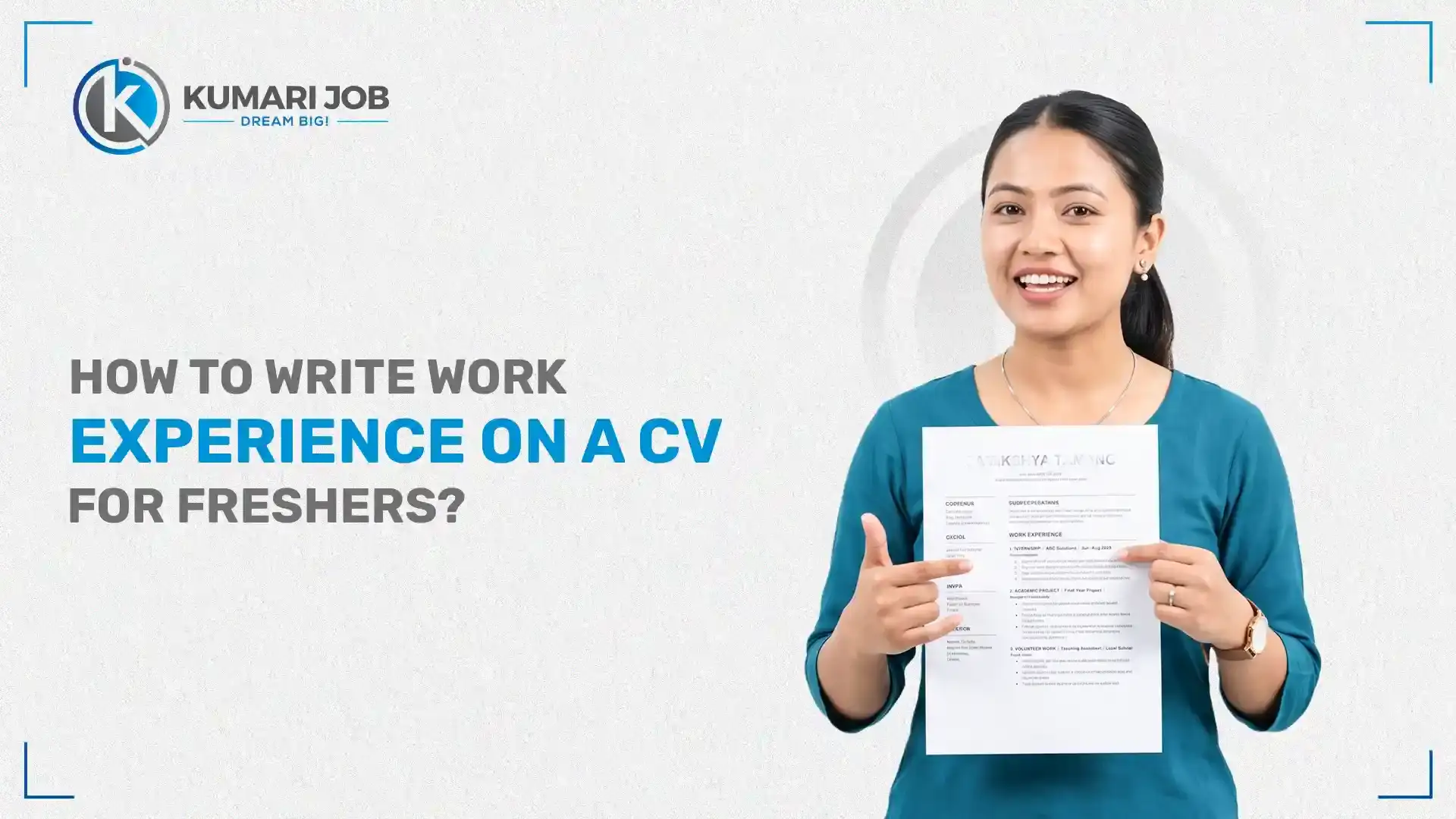

A fresher opens a blank CV template and stares at the Work Experience heading with a familiar sinking feeling. They've never held a full-time job, so the section feels impossible to fill and skipping it altogether seems like the only option. That single blank section often becomes the reason a promising candidate assumes they aren't ready to apply at all.
The truth is that almost every fresher already has experience worth listing; it just doesn't come from a full-time job title. Internships, academic projects, freelance work, volunteering, and part-time roles all count, and this guide explains exactly how to turn them into a CV section that shows employers what a candidate can actually contribute.
In this blog
What Counts as Work Experience for Freshers?
Work experience for freshers is not limited to full-time employment; it includes any practical activity that demonstrates real skills and responsibility. Internships, part-time jobs, freelance projects, academic assignments, volunteer roles, and campus leadership positions can all be presented as legitimate experience. The key difference between formal employment and relevant practical experience is not the paycheck; it's whether the activity required real responsibility and produced a measurable outcome.
- Internships and traineeships
- Part-time jobs
- Freelance projects
- Academic and college projects
- Volunteer work
- Apprenticeships
- Campus responsibilities (clubs, committees, event organizing)
- Relevant personal projects
- Temporary or contract work
When choosing which experiences to include, relevance matters more than variety. A fresher applying for a marketing role should prioritize a college marketing project or social media internship over an unrelated retail job, even if the retail job was more recent.
How to Write Work Experience on a CV for Freshers?
The best way to write work experience on a fresher CV is to lead with the most relevant experience, paid or unpaid, and describe it using a consistent, scannable format. Recruiters spend only a few seconds scanning each CV, so clarity and structure matter as much as the content itself. Using the same format for every entry makes the section easy to read and signals professionalism even without a long job history.
Standard format for each entry:
- Job title or role
- Company or organization name
- Location
- Start and end dates
- 3–5 relevant responsibilities or achievements, written with action verbs
Strong opening verbs make each bullet point more direct and easier to scan: assisted, managed, created, coordinated, analyzed, organized, supported, developed. Each bullet should describe what was actually done and, where possible, what result it produced, not just a duty that was technically assigned. The experience section should also mirror the language used in the job description, since many recruiters and applicant tracking systems scan for those exact keywords.
How to Include Projects When You Have No Work Experience?
Academic, personal, and freelance projects can demonstrate practical ability even when a candidate has never held a formal job. A well-documented project shows initiative, technical skill, and the ability to complete something from start to finish qualities that matter as much to employers as job titles do. Projects should always be prioritized based on how closely they match the vacancy being applied for, not simply listed because they exist.
For each project, include:
- Project name
- Objective: what the project was meant to achieve
- Your specific role
- Tools or technologies used
- Key tasks completed
- Result or outcome
A project listed without explaining individual contribution is far less convincing than one that clearly states what the candidate personally did. "Built a group website for a class assignment" says very little; "Designed and coded the homepage layout using HTML and CSS for a five-person team project" says a great deal more.
How to Describe Volunteer, Freelance, and Part-Time Experience?
Volunteer work, freelance projects, and part-time jobs should be included whenever they demonstrate transferable skills relevant to the target role. These experiences often carry real responsibility: managing schedules, communicating with clients, solving problems on the spot, even if they don't look like traditional employment on paper. The goal is to describe them with the same professional language used for any other role, rather than downplaying them as informal or temporary.
- Communication — coordinating with clients, teams, or volunteers
- Customer service — handling inquiries, complaints, or requests
- Teamwork — collaborating on shared goals or events
- Time management — balancing multiple responsibilities or deadlines
- Leadership — organizing people, tasks, or events
- Problem-solving — resolving issues without direct supervision
Each of these experiences should include responsibilities and results wherever possible, following the same format used elsewhere in the CV. If space is limited, unrelated experience should be trimmed first, keeping the section focused on entries that best support the specific role being applied for.
What Should Freshers Write If They Have No Experience?
A fresher with a genuinely empty employment history should build the CV around education, projects, and skills rather than inventing experience that doesn't exist. Fabricating job history is easy to spot and can disqualify a candidate immediately if discovered. Evidence of ability, even without a job title attached, is consistently more convincing to employers than an empty section padded with irrelevant filler.
Instead, the CV can be built around:
- Education and academic achievements
- Internships, even short-term ones
- Academic or personal projects
- Certifications and completed courses
- Technical and soft skills
- Relevant coursework tied to the target role
- Volunteer activities
- Extracurricular leadership roles
- Portfolio work (writing samples, designs, code repositories)
A skills-focused CV structure works well here, placing a strong skills summary near the top before diving into education and any practical experience. This structure lets a fresher lead with what they can do, rather than opening with an apology for what they haven't done yet.
How to Make Fresher Work Experience Sound Professional?
Vague, generic phrasing is one of the fastest ways to make real experience sound unimpressive. Replacing weak descriptions with specific, outcome-focused language immediately raises the perceived value of any role, internship, part-time job, or project alike.
| Weak Phrasing | Stronger Alternative |
|---|---|
| Helped with office work | Assisted the HR team with employee documentation and recruitment coordination |
| Worked on different tasks | Coordinated scheduling and client follow-ups across three ongoing projects |
| Learned many things | Developed working knowledge of SEO auditing and keyword research tools |
Quantifying results number of projects completed, clients supported, content pieces produced, or campaigns assisted adds credibility that generic descriptions can't match. The focus should always stay on outcomes rather than listing responsibilities alone, since outcomes are what actually demonstrate impact to a hiring manager.
Best Practices for a Strong Fresher CV Experience Section
A strong fresher CV experience section should be clear, relevant, and easy to read. Follow these simple practices to present your experience professionally.
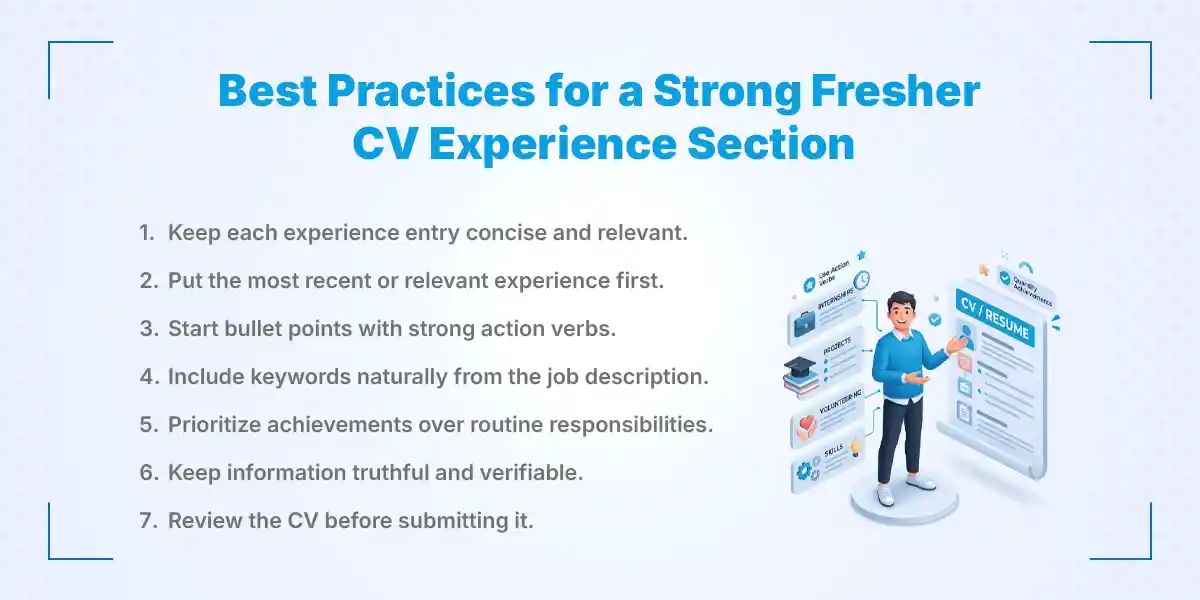
1. Keep Each Experience Entry Concise and Relevant
Include only experience that is related to the job you are applying for. Use short and clear points to explain your responsibilities and achievements.
2. Put the Most Recent or Relevant Experience First
Start with your latest or most relevant internship, project, part-time job, or volunteer experience. This helps employers quickly understand your background.
3. Start Bullet Points With Strong Action Verbs
Use professional action words such as managed, created, assisted, organized, developed, analyzed, and supported to describe your work clearly.
4. Include Keywords Naturally From the Job Description
Read the job description carefully and include relevant skills and keywords in your CV experience section. Use them naturally without keyword stuffing.
5. Prioritize Achievements Over Routine Responsibilities
Focus on what you achieved or contributed rather than only listing your daily duties. Mention results, improvements, or completed tasks whenever possible.
6. Keep Information Truthful and Verifiable
Only include genuine experience, skills, and achievements. Freshers can include internships, academic projects, freelance work, volunteering, and part-time work if they are relevant.
7. Review the CV Before Submitting It
Check your CV for spelling mistakes, grammar, dates, formatting, and incorrect information. Make sure your experience section is professional and relevant to the job.
Conclusion
The biggest mistake freshers make isn't a lack of experience; it's underselling the experience they already have by describing it too vaguely or leaving it out entirely. Internships, projects, and part-time roles carry real weight on a CV when they're framed around specific responsibilities and measurable outcomes, not when they're apologized for or hidden behind education alone.
A well-structured CV is only half the equation; it also needs to reach the right employers. Build and refine a professional CV on KumariJob and explore current fresher and entry-level vacancies matched to your skills and experience.
Frequently Asked Questions
Submit your comments

Get Our App On


What Should I Do After Being Rejected for a Job?
VIEW DETAILS
How Do I Ask My Boss for a Promotion?
VIEW DETAILS
How to Explain a Career Gap in an Interview in Nepal
VIEW DETAILS
How to Handle Your First Mistake at Work: A Step-by-Step Recovery Guide
VIEW DETAILS


Loading Comments...