



Many professionals reach a stage where they feel unhappy with their current job, salary, or career growth. If you are thinking about changing your profession, you are not alone. Career switching has become increasingly common in Nepal as people look for better opportunities, higher income, improved work-life balance, and more fulfilling careers.
Knowing how to switch careers in Nepal successfully requires proper planning, skill development, and understanding of the job market. Whether you want to move into IT, digital marketing, banking, human resources, or another growing field, this guide will help you understand the steps, challenges, and opportunities involved in making a successful career transition.
In this blog
Why Do People Switch Careers?
People switch careers to improve their professional growth, financial prospects, and overall job satisfaction. Career transitions often occur when professionals identify better opportunities that align with their goals and strengths. While every situation is different, several common factors influence the decision.
- Better salary packages and employee benefits
- Improved work-life balance and flexibility
- Greater job satisfaction and personal fulfillment
- Increased opportunities for career advancement
- Strong demand within emerging industries
- Enhanced job security and stability
- Alignment with long-term professional goals
- Pursuit of personal interests and passions
A successful career change is usually driven by a combination of practical and personal factors rather than a single reason.
How to Switch Careers in Nepal Successfully?
To switch careers in Nepal successfully, assess your skills and interests, choose a suitable career path, learn the required skills, gain relevant experience, and apply for opportunities in your target industry. A well-planned career transition helps reduce risks, improves employability, and increases your chances of long-term career success.
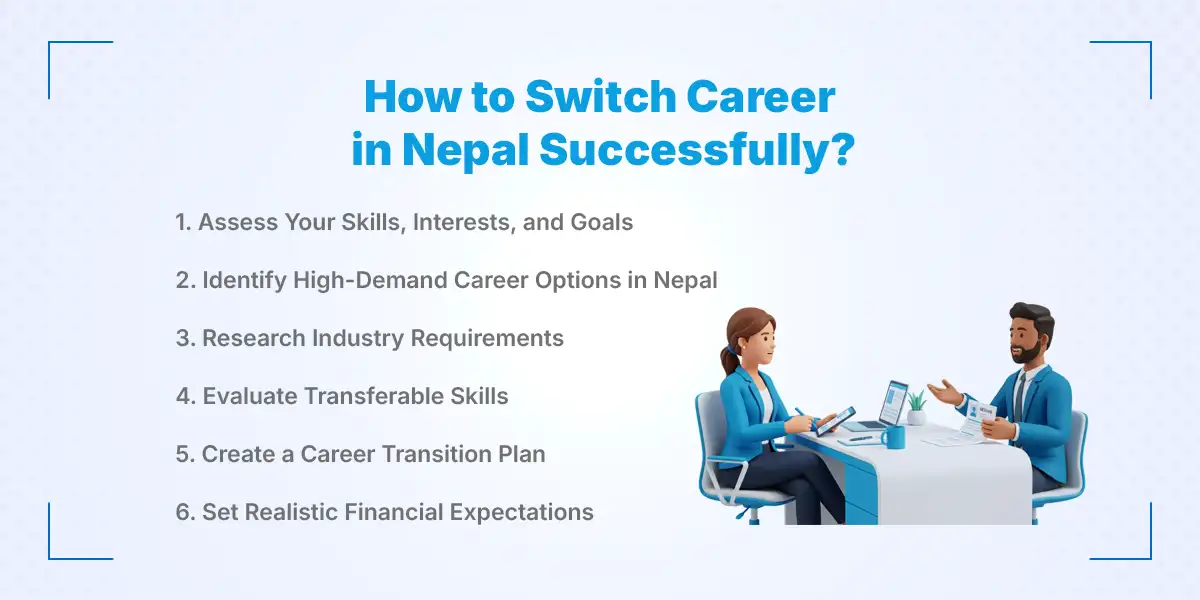
1. Assess Your Skills, Interests, and Goals
Start by evaluating your strengths, interests, experience, and long-term objectives. Understanding what motivates you helps identify careers that align with your abilities and aspirations. Reviewing past achievements can reveal valuable skills that remain useful across industries. Clear career goals make it easier to choose a realistic transition path.
2. Identify High-Demand Career Options in Nepal
Research industries that are actively hiring and experiencing growth. Technology, finance, marketing, human resources, and project management continue to offer promising opportunities. Evaluating market demand helps reduce the risks associated with career transitions. Choosing a growing field can improve long-term employment prospects.
3. Research Industry Requirements
Every profession has specific qualifications, certifications, and skill requirements. Study job descriptions and employer expectations before making a transition. Understanding industry standards allows you to identify potential skill gaps. This preparation helps create a focused learning plan.
4. Evaluate Transferable Skills
Many skills remain valuable regardless of industry or job title. Communication, leadership, customer service, project coordination, and problem-solving often transfer successfully between careers. Identifying these strengths can increase confidence during the transition process. Employers frequently value transferable skills alongside technical expertise.
5. Create a Career Transition Plan
Develop a step-by-step roadmap that outlines learning objectives, networking goals, and job search activities. A structured plan provides direction and helps track progress. Setting realistic milestones can make the transition feel more manageable. Consistent effort over time produces stronger results than rushed decisions.
6. Set Realistic Financial Expectations
Some career changes may involve temporary income adjustments or training costs. Planning for financial stability reduces stress during the transition period. Building savings before making major changes can provide greater flexibility. Understanding potential salary progression helps set practical expectations.
Best Career Options for Career Changers in Nepal
Professionals considering a career change can explore several growing industries that offer strong employment opportunities.
- Information Technology (IT): Software development, cybersecurity, networking, and technical support roles continue to expand.
- Digital Marketing: SEO, social media management, content marketing, and performance marketing are increasingly in demand.
- Banking and Finance: Financial analysis, relationship management, compliance, and operations remain attractive career paths.
- Human Resources: Talent acquisition, employee engagement, and workforce planning offer growth opportunities.
- Project Management: Organizations seek professionals capable of managing projects efficiently and delivering results.
- Data Analysis: Businesses rely on data-driven decision-making across industries.
- Graphic Design: Creative professionals are needed in advertising, branding, and digital media.
- Sales and Business Development: Companies consistently require skilled professionals who can drive revenue growth.
- Education and Training: Teaching, corporate training, and professional development roles continue to grow.
- Entrepreneurship: Many professionals choose to build businesses based on their expertise and interests.
What Skills Should You Learn Before Switching Careers?
Before switching careers, you should learn the technical skills required for your target industry along with essential soft skills such as communication, teamwork, problem-solving, and digital literacy. Developing these skills can help you adapt more quickly to a new role, meet employer expectations, and improve your chances of securing a job in your chosen field.
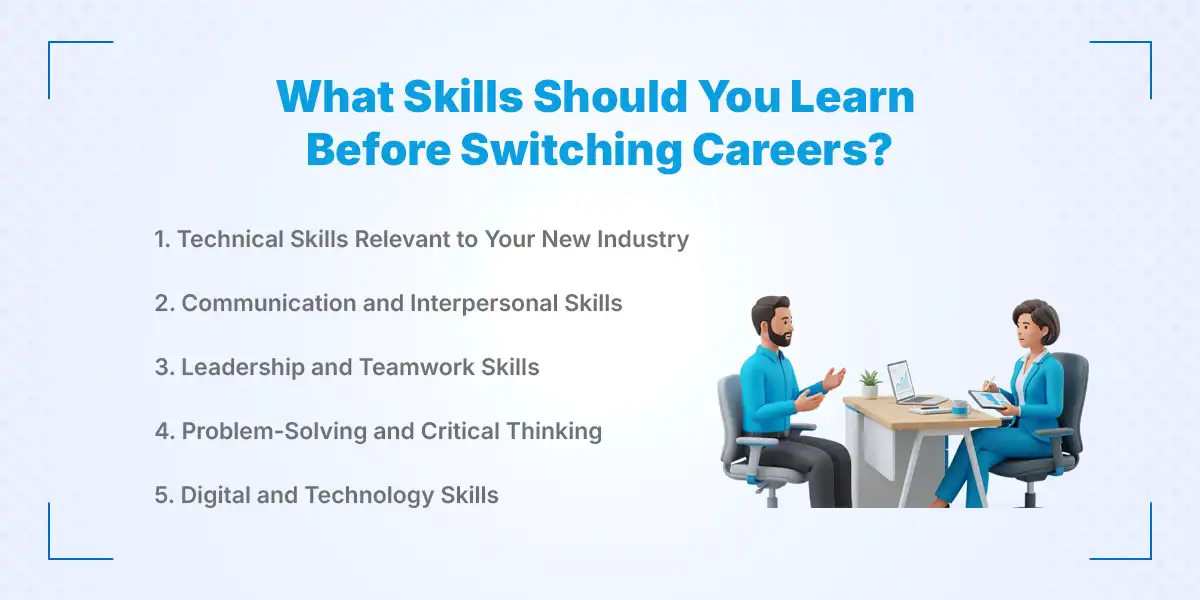
1. Technical Skills Relevant to Your New Industry
Industry-specific knowledge helps candidates meet employer expectations more effectively. Certifications and practical training can strengthen technical competence. Learning current tools and technologies increases competitiveness. Continuous improvement remains important throughout a professional career.
2. Communication and Interpersonal Skills
Strong communication supports collaboration, leadership, and relationship building. Employers value professionals who can communicate clearly with colleagues and clients. Effective interpersonal skills improve workplace performance and adaptability. These abilities remain useful across nearly every profession.
3. Leadership and Teamwork Skills
Leadership involves taking initiative, solving problems, and guiding teams toward goals. Teamwork enables professionals to collaborate productively within diverse work environments. Employers frequently seek individuals who can contribute both independently and collaboratively. Developing these skills can accelerate career growth.
4. Problem-Solving and Critical Thinking
Organizations need employees who can identify challenges and develop effective solutions. Critical thinking improves decision-making and analytical abilities. These competencies are especially valuable during periods of organizational change. Strong problem-solvers often stand out during recruitment processes.
5. Digital and Technology Skills
Digital literacy has become essential across most industries. Familiarity with productivity software, collaboration platforms, analytics tools, and digital communication systems can improve career prospects. Technology skills also support remote and hybrid work environments. Continuous learning helps professionals remain competitive.
How to Gain Experience in a New Career Field
Gaining practical experience is one of the most effective ways to strengthen a career transition.
- Complete online certifications and training programs
- Take on freelance projects related to your target industry
- Apply for internships and entry-level positions
- Participate in volunteer opportunities
- Build a professional portfolio showcasing relevant work
- Attend networking events and industry seminars
- Join professional communities and discussion groups
- Seek mentorship from experienced professionals
Practical experience often helps candidates overcome concerns about limited industry-specific backgrounds.
Building a Strong Resume for a Career Change
A strong resume for a career change should highlight your transferable skills, relevant achievements, certifications, and experiences that align with your target role. By focusing on the value you can bring to a new industry and customizing your resume for each job application, you can demonstrate your potential and increase your chances of getting shortlisted by employers.
1. Highlight Transferable Skills
Focus on skills that remain relevant across different industries and roles. Employers want to understand how previous experience adds value to the position. Demonstrating transferable abilities strengthens your application. Clear examples improve credibility and impact.
2. Showcase Relevant Certifications
Professional certifications signal commitment to learning and career development. They also help validate industry knowledge during a transition. Include certifications that align directly with your target role. Recent qualifications can strengthen your profile significantly.
3. Emphasize Achievements Over Job Titles
Employers often care more about measurable results than previous titles. Highlight accomplishments that demonstrate leadership, performance, and problem-solving capabilities. Quantifiable achievements can differentiate candidates from competitors. Strong results help establish professional credibility.
4. Customize Your Resume for Each Application
Tailoring a resume improves relevance and increases the likelihood of attracting employer attention. Review each job description carefully before applying. Align your skills and achievements with the organization's requirements. Customized applications often perform better than generic submissions.
Common Challenges When Switching Careers
Switching careers often comes with several challenges that require time and preparation to overcome. Many professionals may need to start from a lower position, deal with a skills gap, face financial uncertainty, and compete with experienced candidates in the new field.
Another common challenge is managing the learning curve while balancing work, study, and personal responsibilities. However, with proper planning, continuous skill development, and patience, these challenges can be managed successfully and turned into long-term career growth opportunities.
Why Career Planning Is Important Before Making a Switch
Career planning is important before switching careers because it reduces risks, improves decision-making, and helps you set clear and achievable goals for your new path. It ensures you understand industry requirements and prepare in advance for a smoother transition.
With proper planning, you can identify the right opportunities, avoid costly mistakes, and increase your chances of long-term career success in your chosen field.
Key Lessons from Successful Career Switch Stories
Successful career transitions share several common characteristics. Individuals who change careers effectively typically invest in continuous learning and remain adaptable throughout the process. They also build strong professional networks and seek guidance from industry experts.
Key lessons from successful career changers include:
- Commit to ongoing skill development
- Focus on long-term career goals
- Build meaningful professional relationships
- Stay flexible and open to learning opportunities
- Accept temporary challenges as part of the process
- Maintain consistency throughout the transition
Common mistakes to avoid include switching careers without research, neglecting skill development, underestimating financial requirements, and applying for roles without tailoring resumes.
Conclusion
A successful career change in Nepal requires preparation, skill development, market research, and a willingness to learn. Professionals who assess their strengths, identify growth industries, build relevant skills, and create structured transition plans are more likely to achieve long-term success.
If you are ready to explore new opportunities, build your professional profile, and connect with employers across Nepal, Kumari Job can help you discover suitable career paths, job openings, and resources that support a successful career transition.
Frequently Asked Questions
Submit your comments

Get Our App On



SEO Training for Freshers in Nepal: Skills, Career & Job Opportunities
VIEW DETAILS
SEO Training vs. Self-Learning: Which Is Right for You?
VIEW DETAILS
How to Choose Between Two Job Offers
VIEW DETAILS
Digital Marketing Training Interview Questions and Answers for Freshers
VIEW DETAILS


Loading Comments...