


Many job seekers struggle to perform well in interviews even when they have the right qualifications, skills, and experience. A lack of preparation, poor communication, and uncertainty about employer expectations often prevent candidates from securing job offers.
The good news is that strong interview performance is a skill that anyone can develop with practice and preparation. This guide explains the most effective job interview tips, preparation strategies, communication techniques, and follow-up methods that help candidates stand out and improve their chances of getting hired.
In this blog
What Are the Best Job Interview Tips for Success?
The best job interview tips for success involve thorough preparation, effective communication, and the ability to demonstrate value to the employer. Employers want candidates who understand the role, communicate confidently, and show genuine interest in contributing to the organization. Consistent preparation helps candidates answer questions clearly while building confidence throughout the interview process.
1. Research the Company Before the Interview
Researching the company allows candidates to tailor their answers to the organization's goals and culture. Understanding the company's products, services, mission, and recent developments demonstrates genuine interest in the position. Candidates who reference company information during interviews often appear more engaged and prepared. Reviewing the company website, social media profiles, and recent news can provide valuable insights before the interview.
2. Understand the Job Description Thoroughly
The job description outlines the skills, responsibilities, and qualifications employers expect from successful candidates. Reviewing each requirement helps candidates prepare examples that match the employer's needs. Strong alignment between interview answers and job requirements increases credibility during discussions. Candidates should identify keywords in the description and incorporate relevant experiences into their responses.
3. Prepare Answers for Common Interview Questions
Most interviews include predictable questions that assess skills, experience, and career goals. Preparing responses in advance reduces anxiety and improves answer quality during the interview. Structured answers help candidates communicate their qualifications in a clear and organized manner. Practicing responses aloud also improves confidence and delivery.
4. Practice Your Communication Skills
Communication skills significantly influence interview outcomes because employers evaluate both content and delivery. Clear speech, active listening, and concise responses help candidates present themselves professionally. Practicing mock interviews can identify areas that require improvement before the actual interview. Effective communication also demonstrates teamwork and workplace readiness.
5. Showcase Relevant Skills and Experience
Employers prioritize candidates who can clearly demonstrate their ability to perform the job successfully. Providing specific examples of achievements, projects, and accomplishments strengthens interview responses. Relevant experiences help employers visualize how a candidate will contribute to organizational goals. Quantifiable results often create a stronger impact than general statements.
Essential Job Interview Preparation Tips
- Review your resume carefully and ensure you can discuss every detail confidently.
- Prepare achievement-based examples using the STAR method.
- Gather all required documents, certifications, and identification materials.
- Select professional attire appropriate for the company culture.
- Test devices, software, cameras, and internet connections before virtual interviews.
- Research the interview location and plan your travel route in advance.
- Prepare thoughtful questions to ask the interviewer.
- Practice maintaining a calm and professional demeanor.
How Can You Make a Great First Impression in a Job Interview?
A great first impression is created through professionalism, confidence, and positive interactions from the moment the interview begins. Employers often form initial opinions within the first few minutes of meeting a candidate. Small details such as punctuality, appearance, and body language can strongly influence interview outcomes.
1. Arrive on Time
Punctuality demonstrates professionalism, reliability, and respect for the interviewer's schedule. Arriving early provides time to settle nerves and prepare mentally before the meeting begins. Candidates who arrive late may create concerns about future workplace reliability. Planning transportation and accounting for potential delays helps ensure timely arrival.
2. Maintain Professional Body Language
Body language communicates confidence and professionalism even before words are spoken. Maintaining eye contact, sitting upright, and offering a firm handshake create positive impressions. Open and attentive posture signals engagement throughout the interview process. Avoiding distracting habits helps maintain a professional presence.
3. Demonstrate Confidence and Positivity
Confidence reassures employers that candidates can handle responsibilities effectively. Positive attitudes often make interviews more engaging and memorable for hiring managers. Speaking clearly and maintaining composure helps communicate confidence naturally. Candidates should focus on strengths and opportunities rather than limitations.
4. Build Rapport With the Interviewer
Building rapport creates a more comfortable and productive interview environment. Active listening and genuine engagement help establish positive professional connections. Finding common interests or responding thoughtfully can improve conversation flow. Strong rapport often leaves a lasting impression after the interview concludes.
Common Job Interview Questions and How to Approach Them
- Tell me about yourself: Focus on professional background, achievements, and career goals.
- Why do you want to work here? Connect your interests with the company's mission and opportunities.
- What are your strengths and weaknesses? Highlight relevant strengths and discuss weaknesses with improvement plans.
- Where do you see yourself in five years?: Show ambition while aligning goals with the role.
- Why should we hire you?: Explain how your skills and experience solve the employer's needs.
Job Interview Tips for Freshers
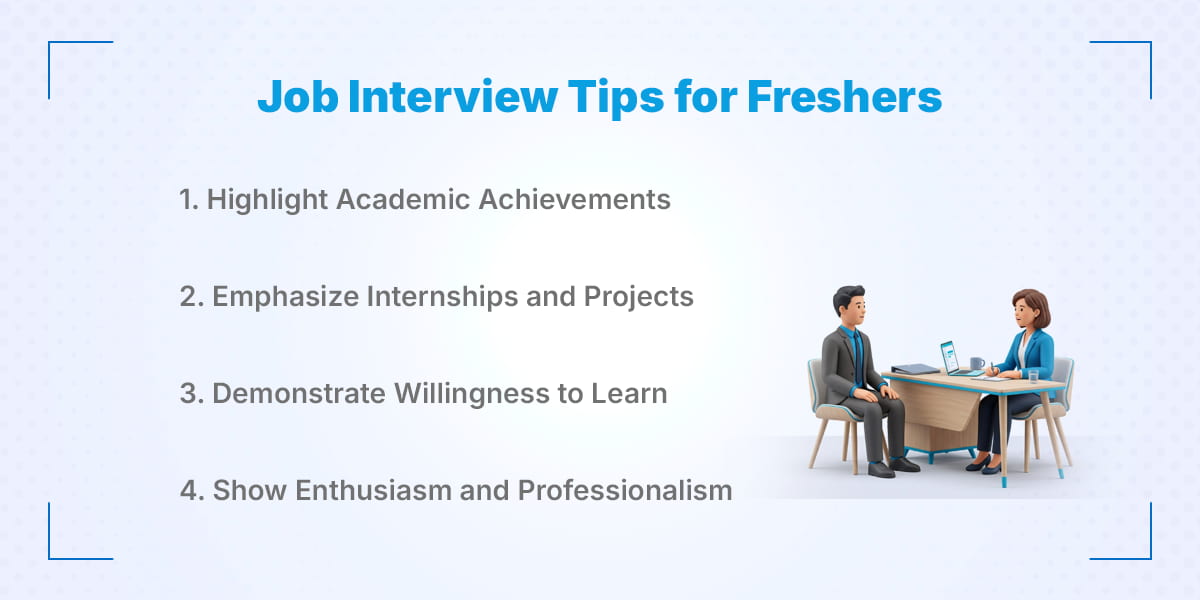
The most effective job interview tips for freshers are preparing thoroughly, highlighting academic achievements, showcasing practical experience, and demonstrating a willingness to learn. Employers understand that fresh graduates may have limited work experience, but they look for candidates with strong potential, enthusiasm, and relevant skills. By preparing confidently and presenting their strengths effectively, freshers can make a positive impression and improve their chances of securing their first job.
1. Highlight Academic Achievements
Academic achievements provide evidence of dedication, discipline, and subject knowledge. Fresh graduates can discuss coursework, projects, and academic awards that relate to the position. Relevant educational experiences demonstrate preparedness for workplace responsibilities. Employers often value strong learning potential when evaluating entry-level candidates.
2. Emphasize Internships and Projects
Internships and projects provide practical experience that supports academic learning. Candidates should explain their responsibilities, contributions, and measurable outcomes from these experiences. Real-world examples help demonstrate problem-solving and teamwork abilities. Even small projects can showcase initiative and professional development.
3. Demonstrate Willingness to Learn
Employers appreciate candidates who show adaptability and enthusiasm for growth. A willingness to learn indicates long-term potential within the organization. Candidates should share examples of acquiring new skills or overcoming challenges. Continuous learning often differentiates strong entry-level applicants.
4. Show Enthusiasm and Professionalism
Enthusiasm signals genuine interest in both the role and the company. Professional behavior demonstrates workplace readiness and maturity. Positive energy can make interviews more memorable and engaging. Balancing enthusiasm with professionalism creates a strong overall impression
Job Interview Tips for Experienced Professionals
- Highlight measurable achievements and business impact.
- Explain leadership experiences and decision-making capabilities.
- Demonstrate advanced problem-solving and strategic thinking skills.
- Discuss career progression and professional growth logically.
- Showcase expertise through industry-specific examples.
- Align previous accomplishments with the employer's objectives.
- Present evidence of adaptability to changing business environments.
Virtual Job Interview Tips
The most important virtual job interview tips are testing your technology in advance, creating a professional environment, maintaining eye contact, and minimizing distractions throughout the interview. Virtual interviews require the same level of preparation and professionalism as in-person meetings. A reliable technical setup and strong communication skills can help candidates present themselves confidently and leave a positive impression on employers.
1. Set Up a Professional Background
A professional background minimizes distractions and maintains focus on the conversation. Clean and organized surroundings create a positive visual impression. Proper lighting improves visibility and enhances communication quality. Candidates should test their setup before the interview begins.
2. Ensure Stable Internet Connectivity
Reliable internet connectivity prevents interruptions that can affect interview flow. Technical difficulties may distract both candidates and interviewers during discussions. Testing internet speed and backup options reduces potential risks. Preparation demonstrates professionalism and attention to detail.
3. Maintain Eye Contact With the Camera
Looking at the camera creates the impression of direct eye contact during virtual conversations. Consistent visual engagement helps build trust and connection with interviewers. Candidates should position their camera at eye level for natural interactions. This small adjustment can significantly improve communication effectiveness.
4. Minimize Distractions During the Interview
Distractions can reduce concentration and negatively impact interview performance. Candidates should silence notifications and inform household members about the interview schedule. A quiet environment supports clear communication throughout the meeting. Eliminating interruptions helps maintain professionalism.
Questions Candidates Should Ask Interviewers
- What are the primary responsibilities of this position?
- How is success measured in this role?
- What does the team structure look like?
- What opportunities exist for professional development?
- How would you describe the company culture?
- What challenges is the team currently facing?
- What are the next steps in the hiring process?
- What qualities make someone successful in this position?
How Can You Increase Your Hiring Chances After a Job Interview?
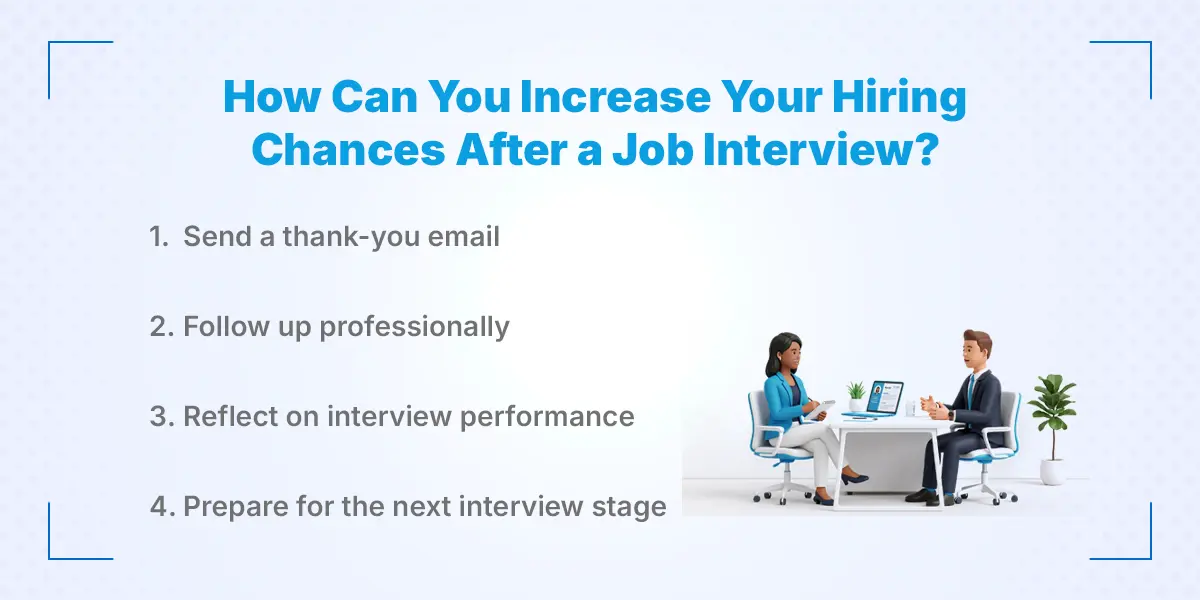
You can increase your hiring chances after a job interview by sending a thank-you email, following up professionally, evaluating your performance, and preparing for the next stage of the hiring process. Post-interview actions help reinforce your interest in the position and leave a positive impression on the employer. Taking a proactive and professional approach after the interview can help you stand out from other candidates and improve your chances of receiving a job offer.
1. Send a Thank-You Email
Sending a thank-you email within 24 hours shows professionalism and appreciation for the interviewer's time. It also gives you another opportunity to express your interest in the position and reinforce your qualifications.
2. Follow Up Professionally
If you do not receive a response within the expected timeline, send a polite follow-up message to inquire about the hiring process. Professional follow-up demonstrates enthusiasm while respecting the employer's decision-making process.
3. Reflect on Interview Performance
Reviewing your interview performance helps identify strengths and areas for improvement. This self-assessment can improve your preparation and confidence for future interviews.
4. Prepare for the Next Interview Stage
Many employers conduct multiple interview rounds before making a final hiring decision. Staying prepared for additional interviews, assessments, or reference checks can help you move smoothly through the recruitment process.
Benefits of Strong Interview Skills for Career Growth
- Access to more employment opportunities.
- Improved confidence during professional interactions.
- Better salary negotiation outcomes.
- Enhanced communication and presentation skills.
- Increased chances of securing leadership positions.
- Stronger professional reputation and credibility.
- Greater long-term career advancement opportunities.
Conclusion
Successful interviews rarely happen by accident. Candidates who invest time in preparation, communication practice, company research, and strategic follow-up consistently perform better and increase their chances of receiving job offers.
The most important takeaway is that interview success depends on preparation, confidence, and the ability to demonstrate value clearly. If you are looking for career opportunities, interview guidance, and professional job-search support, explore the resources and vacancies available through Kumari Job to take the next step in your career journey.
Frequently Asked Questions
Submit your comments

Get Our App On


SEO Training for Freshers in Nepal: Skills, Career & Job Opportunities
VIEW DETAILS
SEO Training vs. Self-Learning: Which Is Right for You?
VIEW DETAILS
How to Choose Between Two Job Offers
VIEW DETAILS
Digital Marketing Training Interview Questions and Answers for Freshers
VIEW DETAILS


Loading Comments...