


Are you looking for a meaningful career that allows you to create real impact in society while building a stable profession? Social work jobs in Nepal are becoming more important as the country focuses on community development, social justice, and inclusive growth. With increasing involvement of NGOs, INGOs, government projects, and international organizations, the demand for skilled social workers is rising steadily.
This guide explains how to get social work jobs in Nepal step by step. You will learn about job types, required qualifications, where to find social work vacancies, and how to prepare for a successful career in the social sector. The information is practical, updated, and designed to help both fresh graduates and experienced professionals find the best social work jobs in Nepal.
In this blog
What Are Social Work Jobs in Nepal?
Social work jobs in Nepal are professional roles focused on improving the well-being of individuals, families, and communities. These jobs involve working with vulnerable groups such as children, women, marginalized communities, and people affected by poverty or disaster. Social workers support development programs, provide counseling, and help implement social policies. Most roles are offered by NGOs, INGOs, government agencies, and development organizations.
In Nepal, social work jobs also include project planning, field coordination, research, and advocacy work. Social workers often work closely with communities to identify problems and create sustainable solutions, which is a key component of most ngo ingo jobs in Nepal. The work may involve field visits, reporting, and collaboration with local authorities to ensure project success. Ultimately, these roles require empathy, communication skills, and a strong sense of responsibility to drive meaningful social change.
Types of Social Work Jobs and Career Paths
Social work jobs in Nepal offer multiple career paths depending on your interests, skills, and field experience. These roles focus on community development, protection, health, policy, and project management. Each career path addresses different social challenges and serves different populations. Choosing the right path helps build long-term growth in the social sector. Below are the main types of social work jobs in Nepal.
1. Community Development Social Worker
Community development social workers focus on improving living standards at the local level. They work on education, sanitation, livelihood, and women's empowerment programs. These roles involve regular fieldwork and community interaction. NGOs and INGOs commonly hire for these positions. Strong communication and community engagement skills are essential. The work directly impacts local communities.
2. Child Protection and Welfare Officer
Child protection officers work to protect children’s rights and safety. They handle issues such as child abuse, education access, and child labor prevention. These roles are common in NGOs, INGOs, and donor-funded projects. Case management and reporting are key responsibilities. Empathy and legal awareness are important for this role. Field visits are often required.
3. Health and Mental Health Social Worker
Health and mental health social workers support individuals and families facing health challenges. They work in hospitals, clinics, and community health programs. Mental health roles focus on counseling and awareness. These jobs are growing due to increased health awareness in Nepal. Coordination with medical teams is often required. Emotional resilience is important.
4. NGO and INGO Program Officer
Program officers manage and monitor social development projects. Their work includes planning, reporting, budgeting, and field coordination. These roles offer career growth and leadership opportunities. Prior field experience is usually required. Strong project management skills are important. Meeting donor guidelines is part of the role.
5. Advocacy and Policy Social Worker
Advocacy and policy social workers focus on social justice and policy change. They work with government bodies, civil society, and international organizations. Their tasks include research, advocacy campaigns, and stakeholder engagement. These roles influence long-term social change. Analytical and communication skills are essential. Policy understanding strengthens impact.
How to Get Social Work Jobs in Nepal? Step-by-Step
To get social work jobs in Nepal, you must plan your career path, gain practical experience, and apply strategically. Social work employers value field exposure, strong motivation, and relevant skills. Following a clear step-by-step approach increases your chances of success. Proper preparation helps you stand out in competitive social work vacancies. Below are the key steps to build a career in social work.
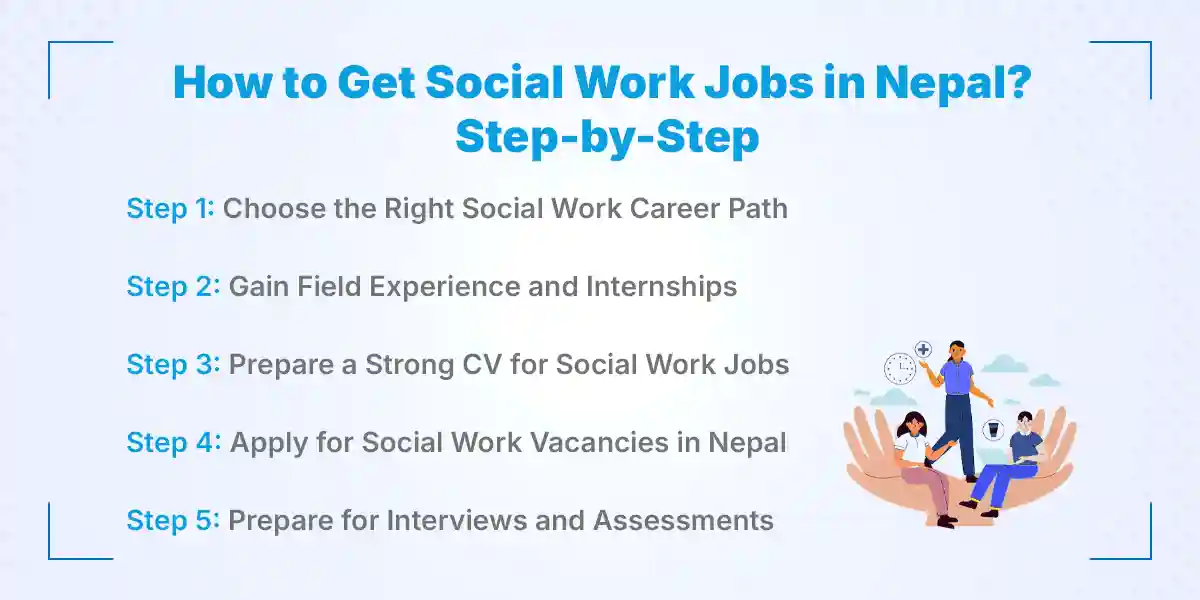
Step 1: Choose the Right Social Work Career Path
Start by identifying which area of social work matches your interests and skills. You may choose community development, child protection, health, or advocacy roles. Understanding job responsibilities helps set clear goals. Research current social work jobs in Nepal. Choosing the right path saves time and effort. It also improves long-term career satisfaction.
Step 2: Gain Field Experience and Internships
Field experience is highly valued in social work jobs. Internships and volunteer work help you understand real-world challenges. Many NGOs and INGOs prefer candidates with hands-on experience. Fieldwork builds practical skills and confidence. It also improves your employability. Networking opportunities often come from fieldwork.
Step 3: Prepare a Strong CV for Social Work Jobs
A strong CV highlights your education, field experience, and skills. Focus on project work, volunteering, and achievements. Keep the CV clear and well-structured. Tailor it for each social work vacancy. A good CV increases shortlisting chances. Avoid unnecessary details.
Step 4: Apply for Social Work Vacancies in Nepal
Apply through official websites, job portals, and NGO networks. Follow application instructions carefully. Submit all required documents on time. Applying early improves success rates. Track applications regularly. Keep records of deadlines.
Step 5: Prepare for Interviews and Assessments
Interview preparation is crucial for selection. Understand the organization’s mission and projects. Be ready to discuss your field experience and motivation. Clear communication creates a strong impression. Confidence improves performance. Practice common interview questions.
Scope of Social Work Jobs in Nepal
The scope of social work jobs in Nepal is expanding due to increasing social, economic, and development needs. Government programs, NGOs, and INGOs are actively hiring trained social workers. These roles address issues such as poverty, health, education, and social inclusion. Social work offers both field-based and office-based career options. The demand is expected to grow further in the coming years.
1. Growing Demand for Social Workers in Nepal
The demand for social workers is increasing across Nepal. Development projects require skilled professionals to work with communities. NGOs and INGOs regularly announce social work vacancies. Social workers are needed for project implementation and monitoring. Disaster response and social protection programs also create demand.
2. Key Sectors Offering Social Work Vacancies
Social work vacancies are available in health, education, child protection, and community development sectors. NGOs, INGOs, and government agencies are major employers. International development projects also hire social workers. These sectors focus on long-term social impact. Opportunities exist for both fresh graduates and experienced professionals. Sector diversity improves job availability.
3. Urban vs Rural Social Work Opportunities
Urban areas offer office-based roles and program management jobs. Rural areas focus more on fieldwork and community engagement. Both settings provide valuable experience. Rural work offers a direct social impact. Urban roles offer career growth and networking opportunities. Location choice depends on career goals.
Qualifications Required for Social Work Jobs in Nepal
To work in social work jobs in Nepal, candidates must meet certain educational and skill-based requirements. Employers look for individuals with relevant academic backgrounds and practical abilities. Formal education combined with field experience improves job prospects. Certifications and training also add value to your profile. Meeting these qualifications helps you compete for social work vacancies.
1. Academic Degrees and Educational Background
A bachelor’s degree in social work, sociology, psychology, or related fields is commonly required. Some roles prefer a master’s degree for senior positions. Educational background should align with the job role. Universities in Nepal and abroad offer relevant programs. A strong academic foundation supports professional growth. Higher education improves promotion chances.
2. Skills Required for Social Work Professionals
Social workers need strong communication and interpersonal skills. Problem-solving and empathy are essential for working with communities. Report writing and coordination skills are also important. Fieldwork requires adaptability and patience. These skills help handle real-life social challenges effectively. Teamwork is also highly valued.
3. Certifications and Training Programs
Certifications in social work, counseling, or project management strengthen your profile. Short-term training programs improve practical skills. NGOs and training institutes offer relevant courses. These programs increase employability. Continuous learning supports career advancement. Updated skills improve job performance.
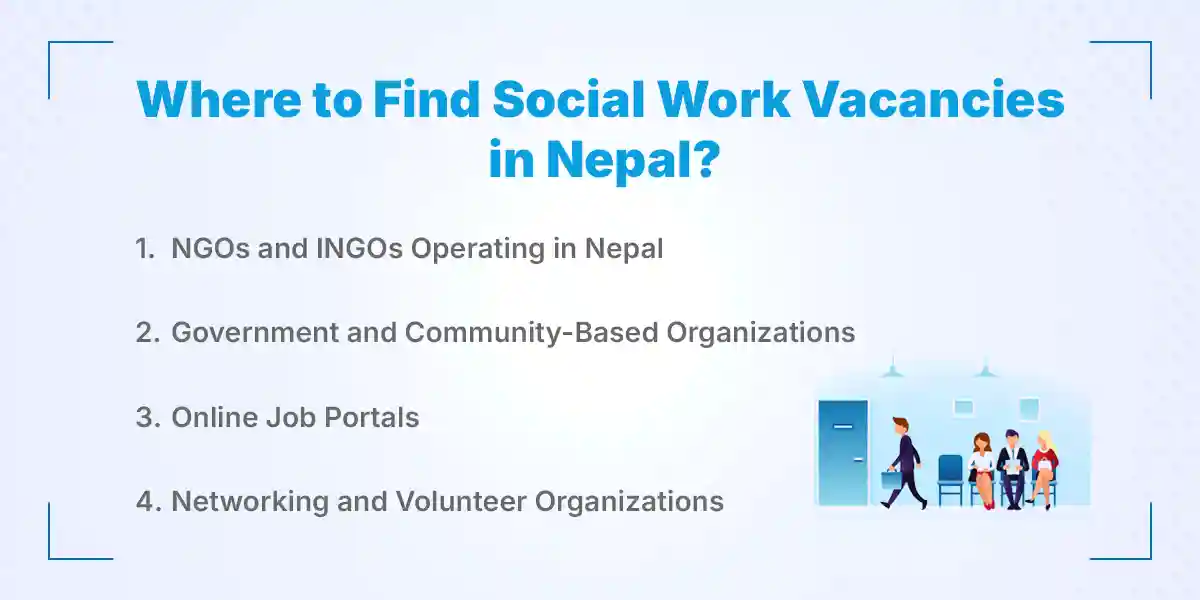
Where to Find Social Work Vacancies in Nepal?
You can find social work vacancies in Nepal on NGO and INGO career pages and online job portals like Kumari Job. These platforms regularly publish verified social work job openings. Checking multiple sources increases your chances of finding suitable roles. Staying updated helps you apply on time. Reliable sources ensure accurate job information.
1. NGOs and INGOs Operating in Nepal
NGOs and INGOs are the largest employers of social work jobs in Nepal. They post vacancies on their official websites and social media pages. These roles cover community development, health, and child protection. Regularly checking career pages is important. Many positions require field experience. Long-term projects offer stable jobs. International funding supports growth.
2. Government and Community-Based Organizations
Government agencies also hire social workers for social programs. Community-based organizations offer local-level opportunities. These roles focus on policy implementation and community support. Government jobs provide stability. Application processes may differ. Official notices should be followed carefully. Competition may be higher.
3. Online Job Portals
Online job portals like Kumari Job list social work vacancies regularly. These platforms allow easy searching and filtering. Job alerts help track new openings. Portals save time and effort. Always verify details with official sources. Trusted portals reduce risks. Profiles improve visibility.
4. Networking and Volunteer Organizations
Networking helps discover hidden job opportunities. Volunteering builds connections in the social sector. Many jobs are filled through referrals. Professional relationships increase visibility. Attending events supports networking. Active involvement boosts career growth. Strong networks create opportunities.
Salary and Career Growth in Social Work Jobs
Salary and career growth in social work jobs depend on experience, organization type, and job role. NGOs, INGOs, and development agencies offer different pay scales, which often range higher than the general average salary in Nepal for entry-level positions. While starting salaries in local NGOs may be modest, growth is steady as you gain field experience and technical qualifications. Social work also offers leadership and international career opportunities over time, especially for those moving into specialized roles within INGOs.
1. Entry-Level Salary
Entry-level jobs in Nepal within the social sector include roles like Program Assistant, Field Officer, or Junior Counselor. Local NGOs usually offer salaries between NPR 25,000 to NPR 35,000 per month, while INGOs and development agencies pay higher, ranging from NPR 40,000 to NPR 60,000+ per month. In Kathmandu, the average base pay for general staff is around NPR 24,000–26,000. Fresh graduates often start with contracts, internships, or voluntary roles, as gaining early experience is vital for long-term career growth.
2. Mid-Level and Senior Salary
Mid-level and senior professionals earn significantly higher salaries. With 3-7+ years of experience and often a master’s degree, pay increases steadily. Program Officers and Case Managers earn between NPR 70,000 to NPR 180,000 per month. Senior roles in INGOs may offer even higher packages. Experience and leadership skills strongly influence salary. Project responsibility also affects pay.
3. Career Growth and Leadership Opportunities
Social work offers clear career progression paths. Professionals can move into roles such as Program Manager, Project Coordinator, or Policy Advisor. Leadership roles involve decision-making and project oversight. International exposure is possible through INGOs and UN agencies. Continuous learning supports long-term growth. Strong performance leads to advancement.
Why Choose Social Work as a Career in Nepal?
You can choose social work as a career in Nepal because it allows you to create real social impact while building a meaningful profession. Social work addresses critical issues such as poverty, education, health, and social justice. The field offers personal fulfillment along with professional growth. Demand for skilled social workers is increasing. It is a career with purpose and long-term relevance.
1. Social Impact
Social work directly improves the lives of individuals and communities. Social workers help vulnerable groups access support and services. Their work creates positive change at the grassroots level. Each project contributes to social development. This impact is long-lasting. The work benefits society as a whole.
2. Community Development
Community development is a core part of social work in Nepal. Social workers help communities become self-reliant. They support education, health, and livelihood programs. Working closely with communities builds trust. Development efforts improve living standards. Community growth drives national progress.
3. Job Satisfaction
Social work offers high job satisfaction. Helping others brings personal fulfillment. The work feels meaningful and rewarding. Success is measured by impact, not profit. Many professionals find long-term happiness in this field. Emotional rewards are significant.
4. Purpose-Driven Career
Social work is a purpose-driven career focused on service. It aligns personal values with professional goals. The work motivates long-term commitment. Purpose strengthens dedication and resilience. This career goes beyond financial rewards. Meaningful work sustains motivation.
5. International Exposure and Career Mobility
Social work offers international exposure through INGOs and global projects. Professionals may work with international teams. Career mobility allows movement across sectors and countries. Skills are transferable globally. Experience opens international opportunities. Global exposure enhances growth.
Challenges in Social Work Jobs
Social work jobs come with challenges that professionals must be prepared to handle. These challenges often relate to income, work conditions, and long-term career growth. Understanding these issues helps manage expectations. With the right approach, challenges can be overcome. Awareness supports better career planning.
1. Low Initial Salary and Funding Limitations
Many social work jobs offer low starting salaries. NGOs often depend on project funding and donor support. Limited budgets affect salary growth. Entry-level professionals may face financial pressure. Over time, experience improves income. Patience is required early on. Budget planning helps manage finances.
2. Fieldwork Challenges and Work-Life Balance
Fieldwork can be physically and emotionally demanding. Social workers often travel to remote areas. Long working hours affect work-life balance. Emotional stress is common in sensitive cases. Strong self-care is important. Support systems help manage stress. Time management improves balance.
3. Career Sustainability and Skill Development
Sustaining a long-term career requires continuous skill development. Social work trends and needs change over time. Professionals must update skills regularly. Training improves career stability. Adaptability ensures long-term success. Learning supports growth. Skill upgrades increase opportunities.
Conclusion
Social work jobs in Nepal offer a meaningful career for individuals who want to create positive social change. With growing demand across NGOs, INGOs, government programs, and development projects, opportunities are expanding in areas like community development, health, and child protection. By choosing the right career path, gaining field experience, and building relevant skills, you can successfully enter the social work sector.
Although challenges such as low initial salaries and demanding fieldwork exist, long-term growth and job satisfaction make social work a rewarding profession. With dedication, continuous learning, and strategic job searching, you can build a stable and impactful career in social work in Nepal.
Frequently Asked Questions
Submit your comments

Get Our App On



SEO Training for Freshers in Nepal: Skills, Career & Job Opportunities
VIEW DETAILS
SEO Training vs. Self-Learning: Which Is Right for You?
VIEW DETAILS
How to Choose Between Two Job Offers
VIEW DETAILS
Digital Marketing Training Interview Questions and Answers for Freshers
VIEW DETAILS


Loading Comments...