


Many people in Nepal are worried about their future jobs. You may be working hard in a job today, but still feel unsure if it will exist tomorrow. With AI tools growing fast, simple and repetitive jobs are starting to disappear. This fear is real, especially for students, job seekers, and office workers who depend on stable income.
But not all jobs are at risk, and not everyone will be replaced. Some careers are changing, while others are becoming more valuable than ever. The key is to understand what is happening right now.
In this guide, you will learn what jobs will AI replace in Nepal, which careers are safer, and what steps you can take today to protect your future.
In this blog
Impact of AI on Jobs in Nepal
Artificial intelligence is no longer just a foreign concept. It is changing how businesses operate across Nepal. From banks in Kathmandu to tech startups in Lalitpur, employers want to work faster and reduce errors. Traditional roles are shifting right now. Old jobs will disappear, but new ones will take their place. The impact is a mix of risks and huge opportunities for the local workforce.
Many companies in Nepal use smart software to handle basic, repetitive tasks. This cuts business costs and saves valuable time. However, this same software creates new roles requiring deep human thinking. AI cannot understand our local culture or build genuine trust. The true impact is not about machines stealing all the work. It is about machines forcing workers to upgrade their professional skills.
Here is how this technology is actively changing the career market in Nepal:
- Task Automation: Smart programs are taking over daily data entry, basic file management, and simple customer service chats.
- Rapid Skill Shift: Employers highly value workers who know how to use digital tools to speed up their work.
- Global Remote Work: Local talent can find international freelance work much more easily by using advanced online platforms.
- Demand for Human Touch: Jobs needing empathy, strong team leadership, and complex problem-solving are becoming highly valuable.
The workforce in Nepal must adapt quickly to survive this technological transition. Ambitious professionals who learn to work alongside these modern digital tools will build secure careers and thrive. On the other hand, those who ignore this major change might seriously struggle to find stable, well-paying jobs soon.
Top Jobs AI Will Replace in Nepal
It is true that some jobs in Nepal will go away because of new computer programs. Companies want to save money and get work done faster. This means machines will take over tasks that do not need much deep human thinking. Let us look at the main jobs that are at risk right now.
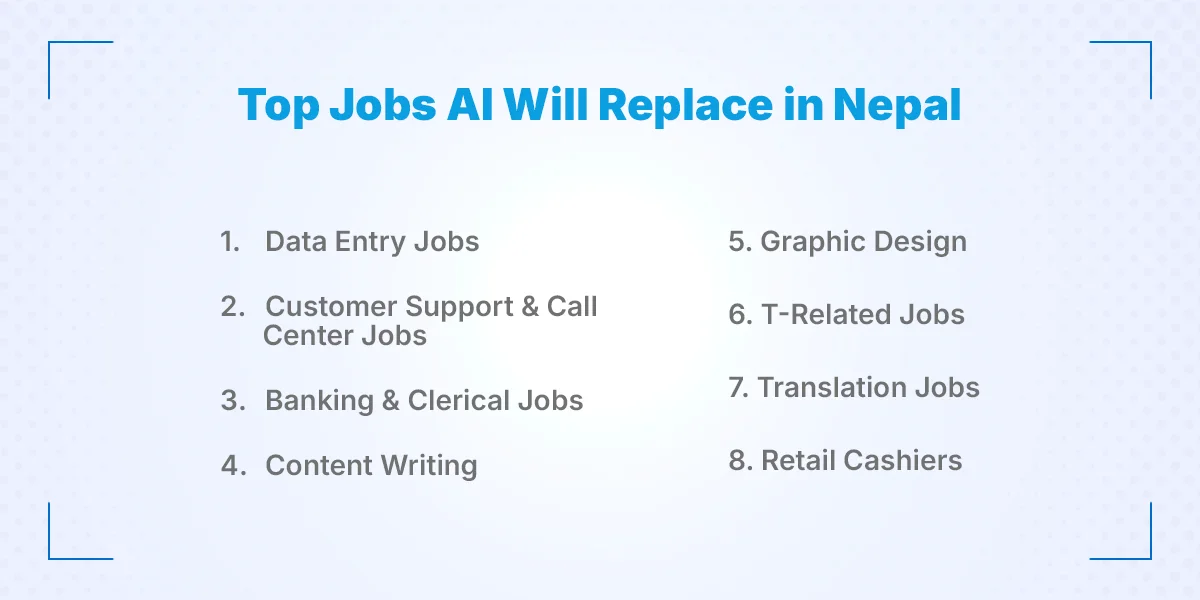
1. Data Entry Jobs
Typing numbers and words into a computer is very easy for a machine to do. Smart software can read papers and put the details into a system in seconds. A human worker needs hours to do the exact same thing. Businesses in Nepal will soon stop hiring people for data-entry jobs. They will use fast computer tools instead.
2. Customer Support & Call Center Jobs
Many companies get the same questions from buyers every single day. Now they use computer chat programs to answer these common questions fast. These programs do not need to sleep or take breaks. They can talk to hundreds of people at the same time. Because of this, companies will hire fewer humans for basic phone calls.
3. Banking & Clerical Jobs
Banks in Nepal are changing how they handle everyday money tasks. Machines can now check forms and process loans without any human help. Counting money and updating account books is becoming fully automatic. This means branch offices need fewer staff members sitting behind desks. Bank workers must learn new skills to keep their banking jobs safe.
4. Content Writing
Writing basic articles and social media posts is getting easier for smart tools. A computer can write a full page of text in just one minute. Many website owners now use these tools to save money on human writers. However, machines cannot share real-life stories or local feelings. Writers who only do basic typing will lose their work soon.
5. Graphic Design
Making simple pictures for the internet does not require a big team anymore. New software lets anyone create a nice logo or poster with one click. Small business owners in Nepal use these free tools instead of paying a designer. To stay hired, designers must create very unique and complex art. Basic photo editing and simple drawing tasks will go to machines.
6. IT-Related Jobs
It might sound strange, but computer machines can now write computer code. They can find errors in software and fix them without human help. Basic tech support roles and simple coding jobs are dropping fast. Tech workers must learn to manage the smart tools instead of doing basic typing. Just knowing how to write simple code is no longer enough for IT jobs.
7. Translation Jobs
Changing English words into Nepali is very fast with modern software. People do not need to hire a human to read a basic letter anymore. Mobile phone apps can listen to someone talk and change the language instantly. Only highly important legal or medical papers still need a human reader. Everyday language changing tasks belong to computers now.
8. Retail Cashiers
Big shops and supermarkets want to move lines faster for their shoppers. They are starting to use machines where you scan your own items. A customer pays the machine directly and walks out the door. The store owner saves money because they do not pay a monthly worker. Soon, many local shops will have fewer humans standing at the money box.
What Jobs Are Safe from AI in Nepal?
Jobs that require physical touch, real human feelings, and quick thinking in messy situations are completely safe from smart software in Nepal. A computer program cannot fix a leaking pipe or hold the hand of a sick patient. Careers built on true human connection and physical skills will stay strong and keep growing.
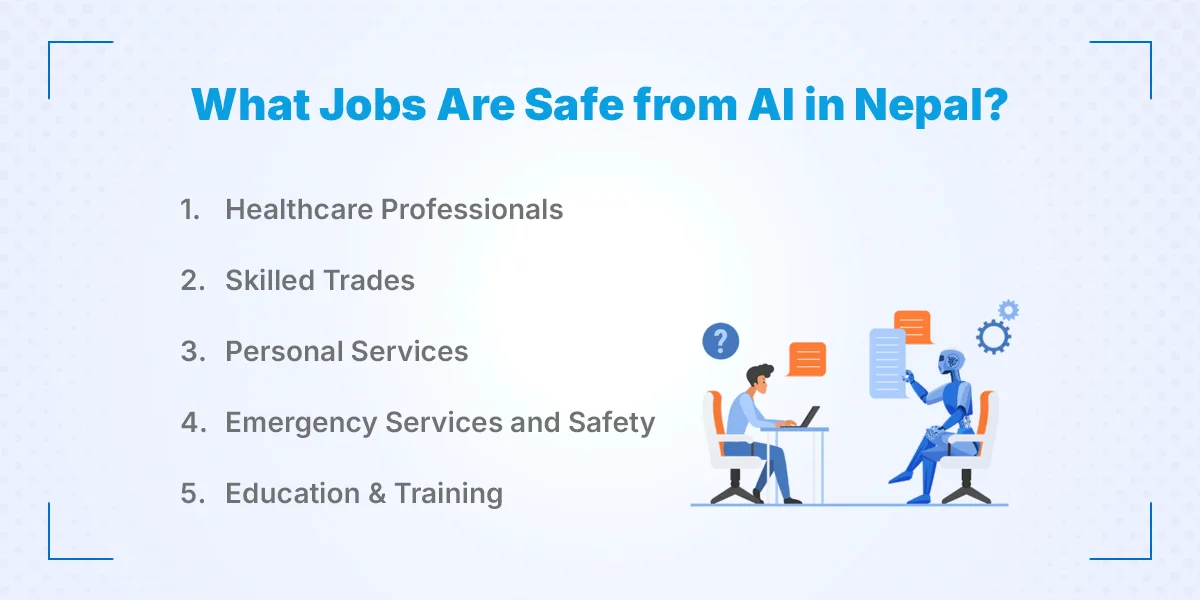
1. Healthcare Professionals
Doctors and nurses do much more than just read medical charts. They check patients' bodies with their own hands and provide emotional comfort. A machine cannot hold a crying child or perform complex surgery in a small village clinic. Healthcare jobs require real human empathy and fast choices during sudden emergencies. These medical jobs will always need real people in Nepal.
2. Skilled Trades
Plumbers and carpenters work in unpredictable spaces every single day. Every broken pipe or custom furniture request is completely different. Smart programs cannot travel to a house in Patan to fix a broken roof. These physical jobs need human hands, strong muscles, and problem-solving skills on the spot. Trade workers have zero risk of losing their daily income to software.
3. Personal Services
Hairdressers and makeup artists build deep trust with their local clients. A software program cannot cut hair or give a relaxing body massage. People go to salons to talk, share stories, and feel good about themselves. These personal care jobs depend entirely on physical touch and friendly daily conversations. As long as people want to look nice, these workers will stay very busy.
4. Emergency Services and Safety
Police officers and firefighters make life-saving choices in dangerous moments. A computer cannot run into a burning building in Kathmandu to save a trapped family. These heroes must understand human panic and act bravely when things go completely wrong. Security guards and rescue teams deal with messy real-world problems that machines do not understand. Their physical presence brings safety and calm to the public.
5. Education & Training
Teachers shape the minds of young students through patience and daily guidance. While computers can show basic facts, they cannot motivate a sad student who wants to quit school. Good teachers notice when a child is struggling and change their lesson style instantly. Sports coaches and life guides also build mental strength using real human connection. Education is about building good character, and only real humans can do that well.
How to Protect Your Career from AI in Nepal?
The best way to protect your job from smart software in Nepal is to learn how to use these new tools while focusing on skills that machines do not have. You cannot hide from this new technology because it is already changing how local companies hire and work today. Instead of feeling scared, you must change your daily habits and upgrade your professional value to stay ahead of the crowd.
1. Become an AI Power User
You should not fight against new computer programs at your workplace. Instead, you must learn how to use them to finish your daily tasks much faster. A smart worker who knows how to control these tools will always beat a machine alone. Start by testing free digital programs that help with writing or basic math. Employers in Kathmandu will gladly pay high salaries to experts who can guide this technology.
2. Develop Human Skills
Computers are very bad at understanding human feelings and teamwork. You must practice how to talk clearly and solve arguments with your office friends. Good leaders who can inspire a tired team will never lose their jobs to a machine. Focus on building deep trust with your clients and regular customers. These personal connections are the main things that keep your career completely safe.
3. Shift from Tasks to Problems
Machines are built to follow simple steps and do the exact same thing every day. You need to stop acting like a robot that only waits for basic instructions. Start looking for big, messy problems in your company and find clever ways to fix them. Bosses want thinkers who can create new business plans and bring fresh ideas to the table. When you solve complex problems, you become a very important part of the company.
4. Continuous Upskilling
The things you learned in college might not help you get a job tomorrow. You have to spend a little time every week learning a brand new skill. Take short online classes to understand digital marketing or basic data reading. Read books and watch helpful videos about how your specific industry is changing. Workers who refuse to learn new things will quickly fall behind younger staff members.
5. Build Your Personal Brand
People need to know your name and trust your specific work style in Nepal. Share your professional thoughts and daily wins on social websites like LinkedIn. Help other junior workers and give good advice to show you are a local expert. A computer program cannot build a strong personal reputation in the business market. When bosses trust your face and your name, they will always choose you over software.
6. Adaptability
The business world is changing fast, and you must be ready to change with it. Do not get angry when your boss asks you to use a new computer system. Smile and show that you are excited to try different ways of working. Workers who accept change quickly will get the best promotions and bigger salaries. Being flexible is your strongest shield against losing your job to modern technology.
Future Job Trends in Nepal (AI Era)
The future of jobs in Nepal looks very different today. While smart computers will take some old jobs away, they are also bringing exciting new ways to make good money. Young people and experienced workers both have a big chance to build strong careers if they look in the right direction. The new era is not just about losing daily work. It is about working smarter, learning fresh skills, and reaching beyond our local borders.
Here are the biggest career trends we will see in the job market of Nepal very soon:
- Rise of Freelancing and Remote Work: You do not need to leave the country to earn foreign money anymore. With modern internet tools, a worker sitting in Pokhara can easily work for a big company in America or Japan. Global companies want to hire skilled online workers from places like Nepal to save their business costs.
- Growth of Tech-Based Jobs: Every local business needs a fast website and daily social media posts today. There will be a massive need for people who know digital marketing, basic software fixing, and how to control smart computer programs. These specific tech roles will soon pay the highest salaries in the country.
- New Local Business Startups: Young thinkers are using smart software to build their own small companies fast. It costs very little money to start a new business today because free computer tools do the hardest work for you. We will see many new local shops and digital services pop up everywhere.
To succeed tomorrow, workers must focus on learning these new digital skills right now. The best jobs are out there waiting for those who are ready to learn and change.
Conclusion
AI will definitely take over basic and boring jobs in Nepal. Jobs that only need simple typing, phone calls, or counting money face the highest risk right now. However, jobs that need real human feelings, physical touch, and complex problem-solving will stay completely safe. Plumbers, nurses, and good leaders have absolutely nothing to worry about. The final answer is simple.
AI will not replace every human worker. It will only replace workers who refuse to learn new skills. To keep your career safe, you must learn to use these new AI tools instead of fighting them. Start upgrading your professional skills today. The future job market in Nepal belongs to fast learners who adapt quickly to change.
Frequently Asked Questions
Submit your comments

Get Our App On



SEO Training for Freshers in Nepal: Skills, Career & Job Opportunities
VIEW DETAILS
SEO Training vs. Self-Learning: Which Is Right for You?
VIEW DETAILS
How to Choose Between Two Job Offers
VIEW DETAILS
Digital Marketing Training Interview Questions and Answers for Freshers
VIEW DETAILS


Loading Comments...