



Cracking banking exams in Nepal isn’t just about studying harder, it’s about studying smarter, because thousands compete but only a few actually make it through. Every year, aspirants aim for positions in Nepal Rastra Bank, Rastriya Banijya Bank, and Nepal Bank Limited, but the gap between preparation and selection is where most candidates struggle. The competition has become intense, and honestly, small mistakes can cost big opportunities.
In this blog, we’ll explore how to prepare for banking exams in Nepal and break down everything you need to succeed. From understanding the syllabus and exam pattern to building a smart study plan, banking jobs in Nepal, practicing past questions, and avoiding common mistakes, this guide covers the complete preparation process step by step, so you don’t just prepare, you prepare the right way.
In this blog
Types of banking exams in Nepal
Nepal offers banking career opportunities through both government and private sector recruitment. Loksewa Aayog (Public Service Commission), while private banks run their own recruitment tests. Knowing which exam you're targeting is the first step in any preparation journey.
1. Nepal Rastra Bank Exam
The Nepal Rastra Bank (NRB) is the central bank of Nepal and conducts its own recruitment for positions like Assistant and Officer. As the apex financial institution, NRB exams focus heavily on monetary policy, economic indicators, and banking regulations. The competition to get a job in NRB tends to be intense because of the prestige associated with central bank positions.
2. Rastriya Banijya Bank Exam
Rastriya Banijya Bank (RBB) is a major government-owned commercial bank. Recruitment happens through the Loksewa Aayog, where candidates fill the Loksewa form online and follow a standardised exam pattern set by the Public Service Commission. Candidates often prepare for RBB and NBL exams simultaneously since both follow similar structures.
3. Nepal Bank Limited Exam
Nepal Bank Limited (NBL) is the oldest commercial bank in Nepal, established in 1937. Similar to RBB, NBL vacancy recruitment for permanent positions is managed by the Loksewa Aayog. Questions sometimes touch on the bank's historical significance and contributions to Nepal's financial sector.
4. Agricultural Development Bank Exam
The Agricultural Development Bank Limited (ADBL) focuses on financing the agricultural and rural sectors. The syllabus often includes topics related to agriculture, rural economy, and cooperative management alongside standard banking subjects. Candidates with backgrounds in agricultural studies may find certain sections more familiar.
5. Private Bank Recruitment Tests
Leading private banks like Nabil Bank, NIC Asia Bank, and Global IME Bank conduct their own recruitment tests. While not under Loksewa, private bank exams often follow a similar pattern, testing candidates on aptitude, English, and general banking knowledge. The recruitment process tends to move faster compared to government banks.
Why Choose a Banking Career in Nepal?
You can choose banking career in Nepal because it offers long-term job stability, structured career growth, and strong social recognition. It provides secure employment with attractive benefits, making it a preferred choice among graduates. Plus, the opportunity to work in reputed institutions adds both professional and personal credibility.
- Job security: Government bank positions offer permanent employment with pension and post-retirement benefits.
- Career growth: Banks have clear promotion pathways from assistant level to senior management roles.
- Work-life balance: Fixed working hours contribute to a better quality of life compared to many private sector jobs.
- Nationwide opportunities: With branches across almost every district, banks offer location flexibility for candidates who prefer working outside Kathmandu.
Banking exam syllabus and exam pattern
Most banking exams in Nepal, especially those conducted by Loksewa Aayog, follow a similar syllabus and pattern. However, downloading and verifying the official syllabus from the conducting body's website for your specific vacancy is always a good idea. Exams typically consist of a written test followed by an interview for successful candidates.
1. General Knowledge and Current Affairs
This section covers Nepal's history, geography, culture, and constitution. A significant portion focuses on recent national and international events, with special emphasis on economic policies and banking sector news. Questions about Nepal Rastra Bank announcements and government budget highlights appear frequently. Staying updated daily through newspapers or news apps can give you a clear advantage here.
2. Quantitative Aptitude and Reasoning
Key topics include percentage, ratio and proportion, profit and loss, simple and compound interest, and data interpretation. The reasoning part covers number series, coding-decoding, and logical puzzles. Speed matters here, so practising calculation shortcuts can save valuable time during the actual exam. Regular mock tests help improve both accuracy and time management.
3. English Language Proficiency
This section assesses grammar, vocabulary, reading comprehension, and sentence correction. Strong English skills are essential for handling banking documentation and customer communication. Questions often test synonyms, antonyms, and error spotting in sentences. Reading newspapers and practising comprehension passages can significantly improve performance.
4. Banking and Financial Knowledge
Candidates are tested on banking terminology, types of accounts, functions of NRB, and basics of monetary policy. Understanding terms like Cash Reserve Ratio (CRR), Statutory Liquidity Ratio (SLR), and base rate is essential. Questions about recent NRB directives and banking acts also appear regularly. Following banking news and NRB updates regularly helps strengthen this section.
5. Computer and IT Fundamentals
This section tests basic computer operations, Microsoft Office skills, internet banking concepts, and cyber security awareness. With the rise of digital banking in Nepal, IT knowledge is becoming increasingly important for banking roles. Understanding basic troubleshooting and digital security practices can also be helpful in real exam scenarios.
How to Prepare For Banking Exams? Step-by-Step
You can prepare for banking exams by understanding the syllabus, using the right study materials, following a structured schedule, practising consistently, and revising regularly. A step-by-step approach helps you stay focused and avoid confusion during preparation. Instead of studying randomly, following a clear roadmap increases your chances of success. Consistency, practice, and smart planning are what actually make the difference here.
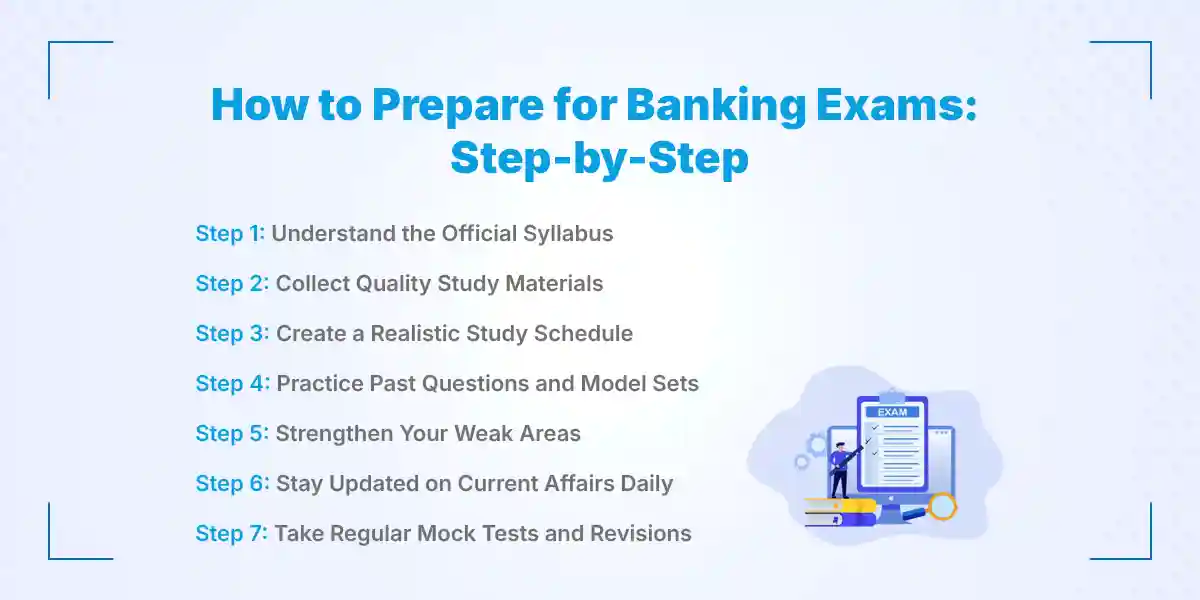
Step 1: Understand the Official Syllabus
Download the official syllabus from the conducting body's website (Loksewa Aayog, NRB, etc.). Print it and highlight topic areas based on their weightage and your familiarity with them. Relying on outdated syllabi from previous years can lead to wasted effort on topics that are no longer included. A clear understanding of the syllabus helps you focus only on what truly matters.
Step 2: Collect Quality Study Materials
Gather reliable textbooks, past question compilations, and online resources. Materials specifically designed for Nepali banking exams work better than generic books from other countries because they cover Nepal-specific acts, regulations, and general knowledge. Publishers like Makalu and Buddha Publications offer Loksewa-focused content. Choosing the right materials can save time and improve preparation efficiency.
Step 3: Create a Realistic Study Schedule
Design a daily or weekly timetable that allocates sufficient time to each subject. Dedicating more hours to weaker subjects while maintaining regular revision of strong areas creates balanced preparation. Consistency matters more than intensity, two hours daily beats eight hours once a week. A well-planned schedule keeps you disciplined and avoids last-minute panic.
Step 4: Practice Past Questions and Model Sets
Solving previous years' question papers from NRB, RBB, NBL, and ADBL exams is non-negotiable. Many concepts and question formats repeat across years, making past papers one of the most valuable preparation resources. Analysing which topics appear most frequently helps prioritise study time. Regular practice also improves speed and confidence during the exam.
Step 5: Strengthen Your Weak Areas
Through practice and self-assessment, weak subjects or topics become apparent. Instead of avoiding them, dedicating extra time to improvement pays off. Online tutorials, coaching institutes, or study groups can provide additional support for challenging areas. Improving weak areas can significantly boost your overall score.
Step 6: Stay Updated on Current Affairs Daily
Reading Nepali newspapers like Gorkhapatra or Republica daily builds current affairs knowledge. Maintaining a separate notebook for important current events, economic data, and policy updates creates a quick revision resource. This habit helps in both written exams and interviews. Daily consistency here makes a big difference over time.
Step 7: Take Regular Mock Tests and Revisions
In the final months, taking full-length mock tests regularly simulates the real exam environment. Mock tests improve time management and accuracy under pressure. The last two weeks before the exam work best for revision rather than learning new topics. Proper revision helps retain information and reduces exam stress.
Best Books and Resources for Banking Exam Preparation
Choosing the right books and resources plays a huge role in effective banking exam preparation. Relying on a single source often leaves gaps, while combining multiple quality materials gives better coverage of all subjects. Using Nepal-specific books, past papers, and current affairs sources helps you stay aligned with the actual exam pattern. A smart mix of resources not only improves understanding but also builds confidence over time.
1. Recommended Books for Nepali Banking Exams
- Loksewa preparation guides: Books from publishers like Makalu, Ashok, and Buddha Publications cover GK, English, and aptitude sections comprehensively.
- Banking-specific books: Publications covering NRB directives, banking acts, and financial sector knowledge from Pairavi Prakashan are popular among candidates.
- Quantitative aptitude: R.S. Aggarwal's book is widely used, though Nepal-specific math guides aligned with the Loksewa pattern offer more relevant practice.
2. Online Platforms and Mobile Apps for Practice
Several mobile apps offer excellent practice resources tailored for Nepali exams. Hamro Patro Loksewa, Loksewa Tayari App, MCQ Hall, and EducateNepal provide free MCQs, mock tests, and current affairs updates. The convenience of practicing on a phone makes it easier to study during commutes or breaks. These platforms also help track your progress and identify weak areas over time.
3. Free Past Question Papers and Model Sets
Past question papers for NRB, RBB, NBL, and ADBL exams are widely available on Loksewa preparation websites. Portals like GyanMark and EducateNepal host downloadable banking Loksewa exam questions organized by year and bank. Practicing these regularly helps you understand question patterns and improve exam confidence.
Top Tips To Crack Banking Loksewa Exams
Cracking banking Loksewa exams requires more than just completing the syllabus, it demands smart strategies and disciplined execution. While preparation builds your foundation, the right exam approach gives you a competitive edge. Small improvements in time management, accuracy, and consistency can significantly impact your final score. In many cases, it’s not about knowing more, but using what you know more effectively.
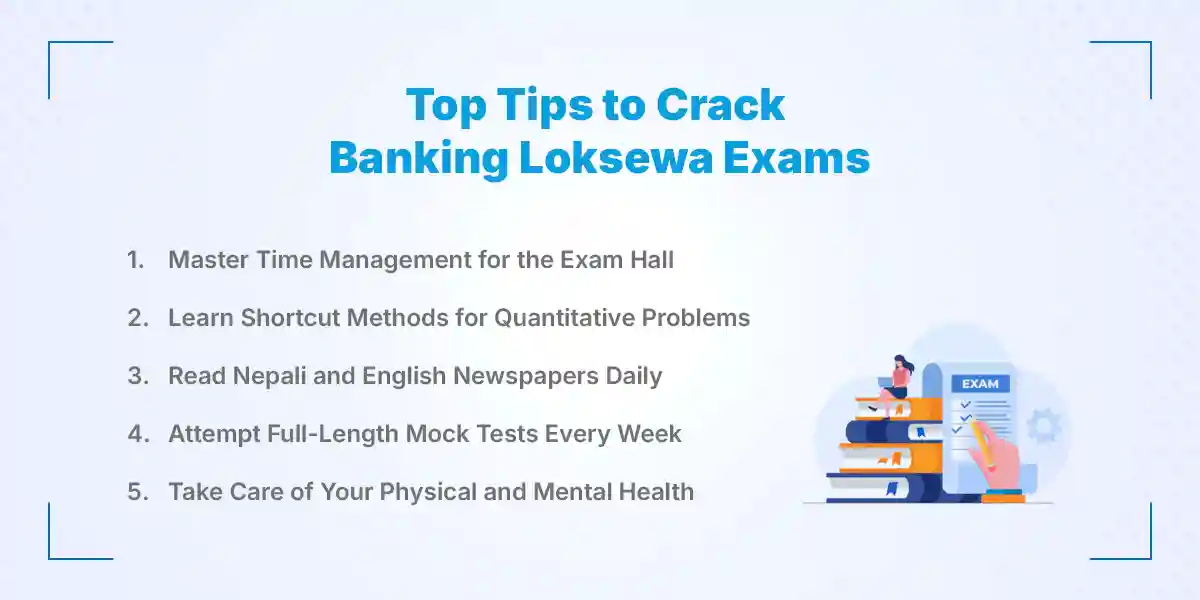
1. Master Time Management For The Exam Hall
Practising question papers under strict, timed conditions builds speed and confidence. During the actual exam, allocating a fixed amount of time per question helps avoid getting stuck. Skipping difficult questions and returning later ensures better time utilization. This approach reduces panic and improves overall attempt accuracy. Proper time management can often be the difference between clearing the cutoff and missing it.
2. Learn Shortcut Methods For Quantitative Problems
Using calculation shortcuts and Vedic math tricks can save valuable time during the exam. Memorizing multiplication tables up to 20, squares up to 30, and common percentage conversions makes problem-solving faster. These techniques reduce dependency on long calculations. With regular practice, accuracy also improves along with speed. Over time, these small tricks can give a big advantage.
3. Read Nepali And English Newspapers Daily
Reading newspapers daily helps build strong current affairs knowledge and improves language skills. It also enhances reading comprehension, vocabulary, and understanding of economic topics. Editorial and business sections often contain useful information for exams. This habit keeps you updated with real-world developments. Consistency here pays off in both written exams and interviews.
4. Attempt Full-Length Mock Tests Every Week
Taking weekly mock tests helps simulate the real exam environment and builds stamina. It allows you to track progress and identify weak areas early. Reviewing mistakes after each test is equally important for improvement. Mock tests also improve time management and confidence. The more you practice, the more comfortable the exam feels.
5. Take Care Of Your Physical And Mental Health
Preparing for months can be exhausting, so maintaining health is essential. Proper sleep, regular breaks, and light exercise help improve focus and productivity. Stress management techniques like meditation can keep your mind calm. A healthy routine supports consistent study habits. Ignoring health can reduce performance, no matter how well you prepare.
Common Mistakes To Avoid When Preparing For Bank Exams
Many candidates put in months of hard work but still fail due to simple, avoidable mistakes. These mistakes often go unnoticed until it’s too late, affecting overall performance and confidence. Understanding these pitfalls early helps you prepare more strategically and avoid wasting time. Sometimes, success is not just about what you do, but what you avoid doing.
1. Ignoring The Official Exam Syllabus
Many candidates start studying without properly analyzing the official syllabus. This leads to spending time on irrelevant topics that may never appear in the exam. The syllabus clearly defines what to study and what to ignore. Following it strictly ensures focused preparation. It acts like a roadmap, and skipping it usually leads to confusion and wasted effort.
2. Skipping Regular Revision Sessions
Learning new topics without revising older ones leads to forgetting important concepts. Over time, this creates gaps in knowledge that affect performance. Regular revision helps strengthen memory and improve retention. Weekly and monthly revision cycles are especially effective. Without revision, even well-studied topics can slip away before the exam.
3. Not Practicing Under Timed Conditions
Practicing without time limits creates a false sense of confidence. In the real exam, time pressure plays a major role in performance. Timed practice helps improve speed, accuracy, and decision-making. It also prepares you mentally for exam conditions. Without this, many candidates struggle to complete the paper on time.
4. Focusing Only On Strong Subjects
Many candidates prefer studying subjects they are already good at, ignoring weaker areas. This creates imbalance in preparation and can cost valuable marks. Banking exams require overall performance, not just strength in one section. Giving attention to weak subjects improves total score. Balanced preparation is key to clearing the cutoff.
5. Underestimating The Current Affairs Section
Leaving current affairs for last-minute preparation is a common mistake. This section requires consistent daily effort, not short-term memorization. It often contains easy scoring questions if prepared properly. Ignoring it means losing marks that could have been easily secured. Staying updated regularly makes this section much more manageable.
Career Growth And Salary After Clearing Banking Exams
Clearing a banking exam in Nepal opens the door to a stable and rewarding career with clear growth opportunities. Both government and private banks offer structured roles, promotions, and good salary in Nepal over time. With experience, responsibilities increase along with salary and job security. It’s one of those career paths where consistency really pays off in the long run.
1. Entry-Level Positions And Starting Salary
Typical entry level jobs in Nepal include Assistant, Junior Assistant, or Trainee Officer roles. Government banks follow fixed pay scales with added allowances and benefits. Nepal Rastra Bank roles often offer higher prestige and structured compensation. Private banks may offer flexible and sometimes higher starting salaries based on performance.
2. Career Progression Path In Nepali Banks
The career path in Nepali banks usually starts from entry-level roles and moves to officer, manager, and executive positions. Promotions in government banks are often based on seniority and internal exams. In private banks, performance and targets play a bigger role. Over time, consistent growth can lead to high-level managerial or executive roles.
3. Find Banking Job Vacancies On Kumari Job
After preparation, finding the right opportunity becomes important for starting your career. Platforms like Kumari Job list vacancies from both government and private banks across Nepal. Candidates can search jobs by location, set alerts, and apply easily. This makes the job search process faster and more organized.
Conclusion
Preparing for banking exams in Nepal is a challenging yet rewarding journey that requires dedication, strategic planning, and consistent effort. By following a structured study schedule, practicing with past questions, and staying updated on current affairs, candidates can significantly improve their chances of success.
Every successful banker started exactly where you are now, with determination and a clear preparation plan. Whether you're aiming for Nepal Rastra Bank, Rastriya Banijya Bank, or any private bank, the key is to start early, stay focused, and maintain consistency throughout the preparation period.
Frequently Asked Questions
Submit your comments

Get Our App On



SEO Training for Freshers in Nepal: Skills, Career & Job Opportunities
VIEW DETAILS
SEO Training vs. Self-Learning: Which Is Right for You?
VIEW DETAILS
How to Choose Between Two Job Offers
VIEW DETAILS
Digital Marketing Training Interview Questions and Answers for Freshers
VIEW DETAILS


Loading Comments...