



Ever wondered how much money you really need to live well in Nepal? Not just to survive, but to feel comfortable, stress-free, and enjoy life a little. In 2026, living costs are rising. Groceries, rent, and travel are not as cheap as before. So, the idea of a good salary is changing too. Many people are now asking: How much do I really need to live well in Nepal?
In this guide, we’ll break it down in simple words. You’ll learn the numbers, the lifestyle they bring, and how they compare to the cost of living. By the end, you’ll know exactly what amount can be called a good salary in Nepal today.
In this blog
What is Considered a Good Salary in Nepal?
In Nepal, many people say a good salary is somewhere between NPR 50,000 and NPR 80,000 per month. A good salary in Nepal is different for everyone. For some, it means earning enough to cover rent, food, and travel without stress. For others, it’s having extra to save, invest, or spend on leisure. In 2026, prices for basic needs have gone up, so the idea of a good salary has changed, too. Let’s see what it really means in today’s context.
In simple terms, a good salary in Nepal is the amount of money that lets you live comfortably. It should cover your daily needs like food, rent, utilities, and transport without worry. It should also leave you with some money to save or spend on personal goals. In Nepal, this amount is different for each person depending on lifestyle. Someone living in Kathmandu will likely need more than someone in a rural area. Family size also plays a big role. So, there’s no one fixed number for everyone, but there is a range most people agree on.
In most cities of Nepal, people say earning between NPR 50,000 and NPR 80,000 per month feels comfortable. This range usually covers rent for a decent apartment, regular groceries, travel costs, and small extras. For a single person, this can feel quite good, especially if they manage expenses well. For families, however, expenses can be higher, so they may need closer to NPR 80,000 or even more. Rural areas might need far less, sometimes even under NPR 40,000, because housing and food are cheaper. But city life comes with more costs. This is why “comfortable” means different numbers in different places.
Factors That Determine a Good Salary in Nepal
What feels like a good salary is not the same for everyone in Nepal. It depends on many things: your location, the work you do, your experience, and more. These factors change your expenses, your expectations, and even what you think is comfortable. For example, two people earning the same amount may feel very differently about it. Let’s break this down in simple words.
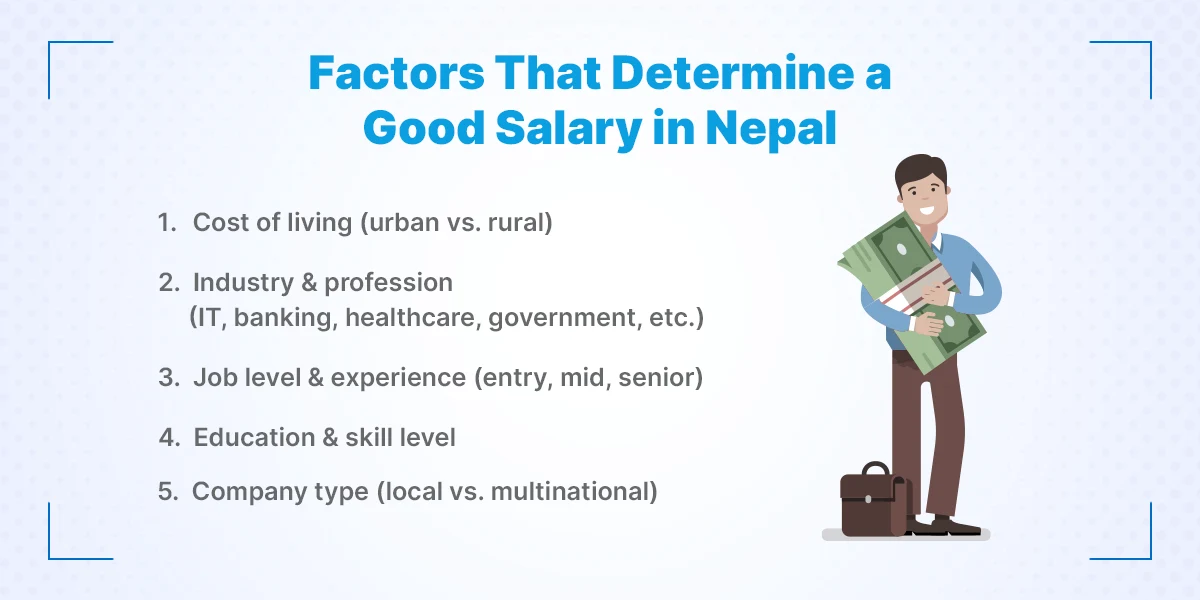
1. Cost of Living (Urban vs. Rural)
The cost of living is one of the biggest reasons why the good salary number changes. If you live in a busy city like Kathmandu, you face higher rent, transport, and food prices. This means you need more money just to meet basic needs. In rural areas, housing and food often cost less, so even a smaller income can feel comfortable. Your surroundings decide how much of your salary is left after expenses. That leftover amount often decides whether you think your pay is “good” or “barely enough.” Simply put, where you live changes how far your money goes.
2. Industry & Profession
The type of work you do determines what you think is a fair salary. Some industries naturally pay more because the skills needed are rare or the work is high-value. If you work in a well-paying industry, your expectations for a good salary will be higher. On the other hand, if you’re in a field with generally lower salaries, even a smaller paycheck might feel okay compared to others around you. This means the good salary idea is not just about money but also about what’s normal in your profession.
3. Job Level & Experience
As you move up in your career, your view of a good salary changes. When you’re starting out, a small income might feel great because it’s more than you’ve earned before. Over time, as you take on more responsibilities and gain skills, your expenses and expectations grow. Senior roles usually come with more pay, so what once felt like a big salary may later seem small. This shift is natural as your definition of good grows with your career.
4. Education & Skill Level
Education and skills often set the baseline for what you consider fair pay. If you’ve spent years studying or training, you’ll expect a higher salary to match that effort. People with advanced skills usually compare themselves to others with similar expertise, not to the general average. This means your learning and abilities shape your idea of what’s acceptable. For someone without specialized skills, a smaller income might still feel fine, but for a specialist, it could seem too low.
5. Company Type (Local vs. Multinational)
The kind of company you work for can raise or lower your idea of a good salary. Multinational companies usually offer better pay and benefits, so employees there may expect more wherever they work. In smaller local companies, pay might be lower, but employees could feel satisfied if it matches the standard in that environment. Over time, switching between these company types can change what you see as fair or good. This is because your surroundings reset your salary expectations.
What is the Average Salary in Nepal?
In 2026, the average salary in Nepal is around NPR 25,000 to NPR 40,000 per month, which is about NPR 300,000 to NPR 480,000 per year. This is the general figure across different jobs and industries. Some people earn much more, while others earn less, depending on the type of work and where they live. This range is a middle point. It means half of the workers earn below this, and half earn above it. It’s not the same as a good salary. A good salary depends on personal needs and lifestyle, but the average helps you understand the general pay level in the country.
Over the past few years, salaries in Nepal have slowly increased, but not as fast as the cost of living. In 2020, the average monthly wage was closer to NPR 28,000–30,000. Since then, small yearly raises and new job opportunities, especially in IT, banking, and hospitality, have pushed it higher. However, rising rent, food prices, and fuel costs have made it harder for workers to feel like they’re earning more.
In urban areas like Kathmandu and Pokhara, the average is often on the higher end of the range. This is because there are more jobs in skilled industries, and companies there tend to pay more. In rural areas, wages are usually lower, partly because the cost of living is lower, and many jobs are in agriculture or small businesses.
However, the salary trend in Nepal is expected to grow slowly. More companies are offering competitive pay to keep skilled workers from moving abroad. Industries like IT and e-commerce are also creating better-paying jobs. If the economy continues to grow and more skilled jobs open up, the average could reach NPR 50,000 to NPR 70,000 per month in the next five years. So, while the average salary in Nepal gives you a broad picture, it’s just one part of the story. Your own good salary will always depend on your lifestyle, expenses, and career path.
Salary Ranges by Job Level in Nepal
Salaries in Nepal often depend on your job level. Entry-level workers earn less, while experienced or senior staff earn more. Executive positions usually get the highest pay in any company. Knowing these ranges helps you understand what to expect at different stages of your career. Let’s look at each level in simple terms.
1. Entry-Level Salaries
Entry-level jobs are for people who are just starting their careers. In Nepal, these jobs usually pay between NPR 20,000 and NPR 30,000 per month. This can include fresh graduates or those with little work experience or internships. The pay is enough to cover basic expenses, but not much extra. Jobs in IT, banking, or multinational companies may offer slightly higher starting salaries. Many entry-level workers also get small bonuses or perks. These jobs are more about learning and gaining experience than earning a lot. Over time, this experience helps you move to higher-paying roles.
2. Mid-Level Salaries
Mid-level jobs are for people with a few years of experience. Salaries at this level usually range from NPR 40,000 to NPR 70,000 per month. Mid-level employees often have more responsibility and manage small teams or projects. Companies value them for their experience and skills. Salaries can vary a lot depending on the industry and company size. These roles may also include bonuses, health benefits, and other perks. People at this level usually start saving or investing more. The pay starts to feel comfortable compared to entry-level jobs.
3. Senior-Level Salaries
Senior-level jobs are for experienced professionals, managers, or team leaders. Salaries usually range from NPR 70,000 to NPR 120,000+ per month. These roles involve important decisions and leadership responsibilities. Senior staff often supervise teams and handle big projects. Their experience and expertise make them valuable to companies. Many also get bonuses and other benefits. The salary at this level allows for a comfortable lifestyle and some savings. Moving into senior roles usually requires years of hard work and skill development.
4. Executive Salaries
Executive roles include top-level positions like CEOs, directors, or company heads. Salaries in these positions often start at NPR 150,000 and can go much higher. Executives are responsible for the company’s overall success. They make major decisions and lead the entire organization. These roles require years of experience and strong leadership skills. Executive jobs usually include bonuses, profit sharing, and other benefits. At this level, the salary is enough for a very comfortable lifestyle. Most people see this as the peak of a career in Nepal.
High-Paying Jobs in Nepal and Their Salaries
Some jobs in Nepal pay more than others. These high-paying jobs often require special skills, education, or experience. They can give you a comfortable lifestyle and extra savings. Knowing which jobs pay well can help you plan your career. Let’s look at the top-paying fields and what they usually earn.
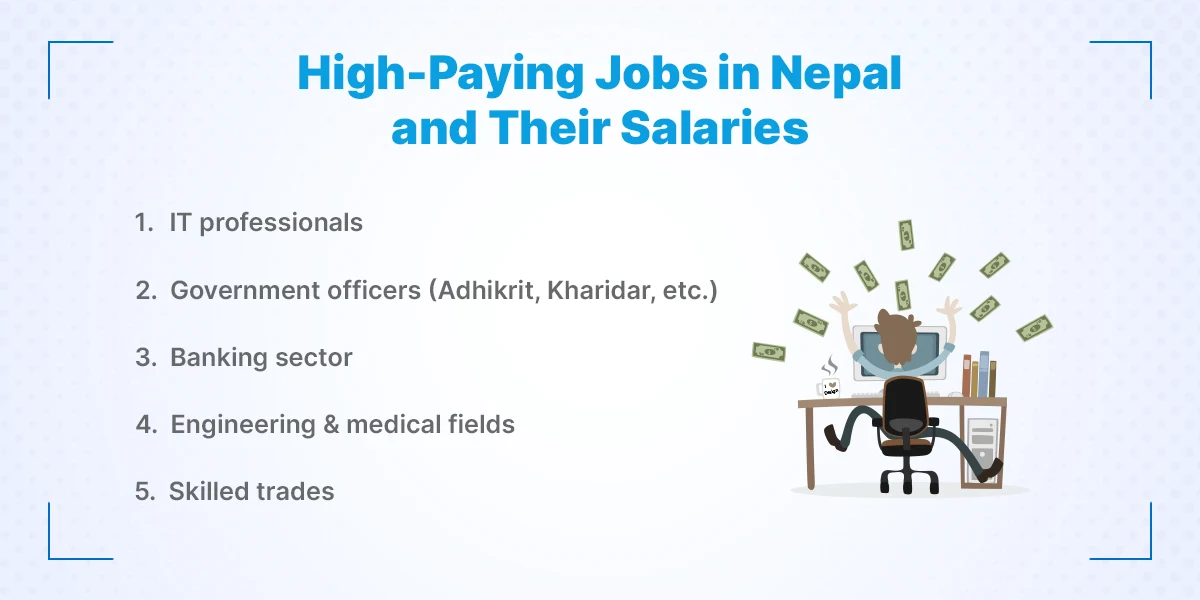
1. IT Professionals
IT jobs are among the highest-paying jobs in Nepal. Software developers, system engineers, and web designers often earn between NPR 50,000 to NPR 120,000+ per month, depending on experience. Multinational companies usually pay more than local firms. Skilled IT professionals with specialized knowledge, like AI or cybersecurity, can earn even higher. These jobs are in high demand, so experienced workers have better negotiation power. Many IT companies also offer bonuses, health benefits, and flexible work hours. This makes IT careers very attractive for young professionals.
2. Government Officers
Government jobs are considered stable and secure in Nepal. The salary of Kharidar or Adhikrit in Nepal is around NPR 35,000 to NPR 50,000 per month. Senior officers can earn over NPR 80,000 with allowances and perks. These jobs also come with benefits like pensions and paid leave. Promotion depends on experience and performance. Many people choose government jobs for long-term security, even if private jobs sometimes pay more. Overall, government positions are respected and reliable.
3. Banking Sector
Jobs in banks are popular and pay well. Entry-level bank officers earn about NPR 35,000 to NPR 50,000 per month. Experienced officers, managers, or branch heads can earn NPR 70,000 to NPR 150,000. Banks often give bonuses, incentives, and other benefits. Skilled employees with expertise in finance, loans, or investments are in high demand. The sector also offers a clear path for promotion. Banking jobs are attractive for those who want steady pay and career growth.
4. Engineering & Medical Fields
Engineers and medical professionals usually earn higher salaries in Nepal. Civil, mechanical, and IT engineers can earn NPR 40,000 to NPR 100,000 per month, depending on experience. Doctors, specialists, and surgeons earn even more, sometimes over NPR 150,000 per month. These jobs require degrees and training, but the rewards are high. Hospitals, construction firms, and multinational companies often pay better than smaller workplaces. Experience, specialization, and reputation make a big difference. These fields also offer stability and social respect.
5. Skilled Trades
Skilled trades like electricians, plumbers, carpenters, or mechanics can also earn good money. Salaries range from NPR 25,000 to NPR 60,000 per month for experienced workers. Those who start their own business can earn even more. Skilled trades are in demand everywhere, both in cities and towns. Training and certification can increase pay. Hard work and reputation matter a lot in these fields. These jobs are practical and often provide a steady income without a college degree.
How Much Salary is Needed to Live Comfortably in Nepal?
To live comfortably in Nepal, most people need around NPR 60,000 to NPR 80,000 per month in cities, and NPR 30,000 to NPR 50,000 in rural areas, depending on lifestyle and family size.
1. Comfortable Living in Major Cities
In cities like Kathmandu, Pokhara, and Lalitpur, living costs are higher. Rent for a decent apartment can take a big part of your salary. Food, transport, and utilities also cost more than in rural areas. With NPR 60,000 to NPR 80,000 per month, you can cover your bills, eat well, travel occasionally, and save a little. If you have extra expenses like school fees or loans, you might need more. Many people share apartments or use public transport to save money. Even with a modest lifestyle, this range usually feels comfortable in cities.
2. Comfortable Living in Rural Areas
In rural towns or villages, life is cheaper. Housing is less expensive, and many families grow or buy food locally at lower costs. Here, a monthly salary of NPR 30,000 to NPR 50,000 can provide a comfortable life. You can cover basic needs, travel occasionally, and even save a little. People living in rural areas often spend less on transport. Healthcare costs may be lower, too, though specialized treatment might require city travel. Rural salaries feel enough because expenses are lower, even if the pay is smaller than in city jobs.
3. Household Size Considerations
The size of your family also changes what comfortable means. A single person can manage with less, while a family of four needs more money to cover food, school, and utilities. Larger households may need more than NPR 80,000 in a city to feel comfortable. Even in rural areas, bigger families have higher expenses, like schooling and healthcare. Families with children or elderly members need extra savings for emergencies. Household size is a major factor in deciding what salary is enough. Your comfort depends on both your earnings and who you support.
Comparison: Good Salary in Nepal vs. Neighboring Countries
Salaries in Nepal are different from those in neighboring countries like India, Bangladesh, Bhutan, and China. Differences happen because of the economy size, currency value, and living costs. A good salary in one country may feel small or large in another. Here’s a simple comparison:
| Country | Good Monthly Salary (Approx.) | Good Yearly Salary (Approx.) | Notes on Living Costs & Economy |
|---|---|---|---|
| Nepal | NPR 60,000 – 80,000 | NPR 720,000 – 960,000 | Cities are expensive; rural areas are cheaper; salary depends on job and skills. |
| India | INR 50,000 – 80,000 | INR 600,000 – 960,000 | Big cities like Mumbai or Bangalore are costly; salary expectations vary by region. |
| Bangladesh | BDT 40,000 – 60,000 | BDT 480,000 – 720,000 | Dhaka and Chittagong are expensive; rural areas are cheaper; the currency value is lower than in Nepal. |
| Bhutan | BTN 35,000 – 55,000 | BTN 420,000 – 660,000 | Smaller economy; cost of living moderate; fewer high-paying industries. |
| China | CNY 8,000 – 15,000 | CNY 96,000 – 180,000 | Big cities like Beijing and Shanghai are very costly; salaries vary a lot by region and profession. |
Tips to Earn a Good Salary in Nepal
Earning a good salary in Nepal is not just about working hard. It’s also about working smart. The right skills, choices, and strategies can make a big difference. Small actions today can lead to higher pay tomorrow. Here are some practical steps to help you earn more.
1. Upskilling & Training
Learning new skills is one of the easiest ways to increase your salary. Companies pay more for employees who can do specialized work. You can take courses, workshops, online classes, or trainings in Nepal to improve your abilities. Skills in IT, digital marketing, finance, or management are highly valued. Even small certifications can make a difference. Upskilling shows employers that you are serious about growth. Over time, it can lead to promotions or better job offers. Staying updated in your field is very important for higher pay.
2. Switching Industries
Sometimes moving to a different industry can help you earn more. Some industries, like IT, banking, or healthcare, pay higher salaries than others. If your skills fit a high-paying sector, switching can be smart. You might need some extra training, but it is often worth it. Changing jobs also helps you avoid being stuck in low-paying roles. Many professionals in Nepal earn more after moving to better-paying sectors. Research carefully and choose an industry with growth potential. Finding where your skills are most needed can increase your income.
3. Negotiating Salary Effectively
Negotiating your pay can make a big difference. Many people accept the first offer, but asking politely for more is normal. Know your worth and explain why you deserve a higher salary. Comparing salaries in your industry can strengthen your case. Even small increases add up over time. Negotiation shows confidence and professionalism. Employers usually respect workers who ask the right way. Being prepared makes it easier to get a better deal.
4. Remote/Online Opportunities
Remote and online jobs can pay more than local salaries in Nepal. Many foreign companies hire Nepali professionals at competitive rates. You can work in IT, design, writing, teaching, or digital marketing online. Freelancing platforms make it easier to find such work. Remote jobs often offer more flexibility, too. Earnings in dollars or other foreign currencies increase your income in Nepal. Combining local and online work can boost your total earnings. Exploring online opportunities opens doors you didn’t have before.
Conclusion
A good salary in Nepal depends on many things, like your location, job, experience, education, and skills. In cities like Kathmandu or Pokhara, you need more money to live comfortably, while rural areas are cheaper. Industries, company type, and career level also affect what is considered a good salary. Over the years, average salaries have slowly increased, but the cost of living is rising too. To earn more, you can upskill, switch to high-paying industries, negotiate your salary, or explore online and remote work.
Remember, a good salary is not just about numbers; it is about covering your needs, saving for the future, and living without constant stress. Planning smartly and improving your skills can help you achieve the comfort and lifestyle you want.
Understand the current minimum salary in Nepal and its impact on daily life and use this knowledge to plan your next career move.
Frequently Asked Questions
Submit your comments

Get Our App On



SEO Training for Freshers in Nepal: Skills, Career & Job Opportunities
VIEW DETAILS
SEO Training vs. Self-Learning: Which Is Right for You?
VIEW DETAILS
How to Choose Between Two Job Offers
VIEW DETAILS
Digital Marketing Training Interview Questions and Answers for Freshers
VIEW DETAILS


Loading Comments...