


Finding the right career opportunity in the healthcare sector can feel frustrating, especially when job openings are limited, competition is intense, and clear guidance is hard to find. Many qualified doctors, nurses, and health professionals apply repeatedly but still struggle to get interview calls or understand what employers truly expect.
Fortunately, Nepal’s healthcare industry is expanding across hospitals, NGOs, private clinics, and government projects, creating steady demand for skilled professionals. With the right approach, knowledge, and preparation, these opportunities become much easier to access.
This guide will walk you through how to get health jobs in Nepal step by step, from understanding requirements to applying through the best platforms. By the end, you will have a clear, practical strategy to secure the right role with confidence.
In this blog
Types of Health Jobs in Nepal
Health jobs in Nepal are not limited to doctors and nurses only. There are many roles for people with different skills, education levels, and interests. Some jobs focus on treating patients, while others support health programs, hospitals, or communities. Understanding these categories helps you choose the right path and apply with confidence.
1. Clinical & Direct Patient Care
These jobs involve working directly with patients in hospitals, clinics, or health centers. Doctors and physicians diagnose illnesses and decide treatment plans. Nurses take care of patients daily, give medicines, and support doctors. Pharmacists prepare and explain medicines to patients. Medical lab technicians test blood, urine, and other samples to help doctors find diseases. Radiology staff use machines like X-rays and ultrasound to check inside the body. Physiotherapists help patients recover movement after injury or surgery. Paramedics and optometrists also play an important role in emergency care and eye health.
2. Public & Community Health
Public health jobs focus on improving health at the community level, not just treating one patient. Public health officers plan programs to prevent disease and promote healthy habits. Health communicators spread awareness through campaigns and training. Epidemiologists and researchers study disease patterns and health problems. Health data analysts work with reports and numbers to support decisions. Program managers and coordinators handle health projects run by NGOs or government bodies. Community mobilizers work closely with local people and guide them on health services. These roles are common in NGOs, INGOs, and government programs.
3. Management & Administration
Management jobs support the smooth running of hospitals and clinics. Hospital or clinic managers handle daily operations and staff coordination. HR, finance, and admin teams manage hiring, salaries, records, and office work. Accreditation officers make sure health centers follow rules and quality standards. These roles usually do not involve patient care directly. Good planning and communication skills are very important here. Many professionals move into management after gaining health sector experience. These jobs are stable and offer long-term career growth.
4. Specialized & Support Roles
These roles support healthcare using technical and professional skills. Biomedical engineers manage and fix medical machines and equipment. IT and data professionals handle hospital software, records, and digital systems. Occupational health staff focus on worker safety and health at workplaces. These jobs are growing as hospitals use more technology. They often work behind the scenes but are very important. Strong technical skills are needed for these roles. Many private hospitals and large organizations hire for these positions regularly.
How to Get Health Jobs in Nepal: Step-by-Step
To get health jobs in Nepal, choose the right role based on your skills, gain hands-on experience, prepare a clear CV, and apply through trusted job platforms. Getting jobs in the health sector is not about luck; it is about following the right steps in the right order. Many candidates miss opportunities because they rush the process or apply without proper preparation. The steps below will help you move forward with a clear and practical plan.
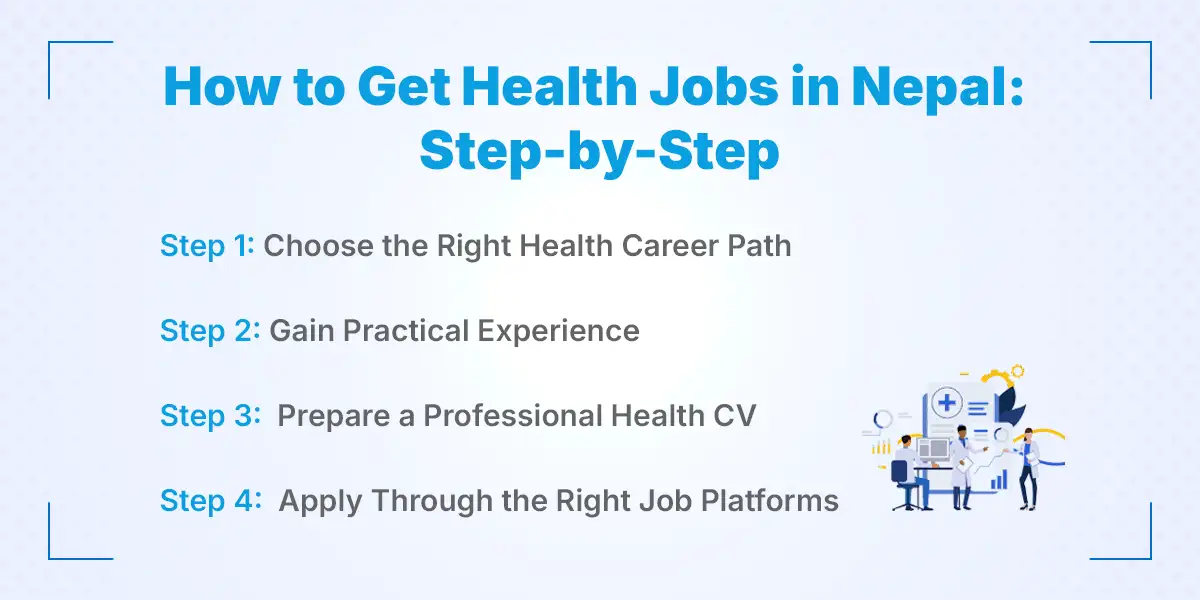
Step 1: Choose the Right Health Career Path
Start by understanding which health role matches your education and interests. Not everyone needs to become a doctor or nurse to work in healthcare. You can choose clinical, public health, management, or support roles. Check the demand for your role in hospitals, NGOs, or government offices. Look at the required qualifications before deciding on your path. Choosing the right role saves time and reduces rejection. It also helps you focus your learning and job search. A clear career path makes applications stronger.
Step 2: Gain Practical Experience
Practical experience is very important in health jobs. Hospitals and organizations prefer candidates who have hands-on training. Internships help you understand real work environments. Volunteering in clinics, health camps, or NGOs also adds value. Even short-term experience can improve your chances. It builds confidence and basic skills. Experience also helps you make professional connections. These connections often help in job referrals.
Step 3: Prepare a Professional Health CV
Your CV is the first thing employers see. Keep it simple, clean, and easy to read. Mention your education, training, and experience clearly. Use simple language and avoid long paragraphs. Include licenses and council registration details if required. Customize your CV based on the job role. A well-prepared CV increases interview chances. Always double-check for spelling mistakes.
Step 4: Apply Through the Right Job Platforms
Applying in the right place matters a lot. Use trusted job portals that list health jobs in Nepal. Visit hospital and NGO websites for direct vacancies. Follow the official social media pages of health organizations. Apply early and follow instructions carefully. Do not apply blindly to every job. Focus on roles that match your profile. Smart applications bring better results.
Qualifications Required for Health Jobs in Nepal
Before applying for health jobs, it is important to know what employers expect from candidates. Many people apply without meeting basic requirements and get rejected early. Qualifications are not only about degrees but also licenses and skills. Understanding these clearly saves time and improves your chances of getting hired.
1. Educational Requirements
Most health jobs require a related education background. Doctors need a medical degree, while nurses need nursing education. Paramedical roles usually require a diploma or bachelor 's-level courses. Public health jobs often ask for a public health degree. Management roles may need health administration or management studies. Some support roles accept technical or IT education. Always check the minimum education for each job. Higher education often gives better job options.
2. Licensing and Registration
Many health jobs in Nepal need official registration. Doctors must register with the Nepal Medical Council. Nurses must be registered with the Nepal Nursing Council. Pharmacists and paramedics also have their own councils. Without registration, you cannot legally work in most roles. Employers usually ask for a valid license copy. Make sure your license is active and updated. Renew it on time to avoid problems. Registration builds trust with employers.
3. Skills Employers Look for in Health Jobs
Skills are just as important as education. Employers look for good patient care and basic technical skills. Communication skills help you work with patients and teams. Teamwork is very important in healthcare settings. Basic computer skills are often required now. Time management helps handle busy workdays. A positive attitude is always valued. These skills help you grow faster in your career.
Best Places to Find Health Jobs in Nepal
Searching for health jobs becomes much easier when you know the right places. Many people only rely on one source and miss good openings. Health jobs are shared through online platforms, hospitals, and professional networks. Using more than one method gives better results.
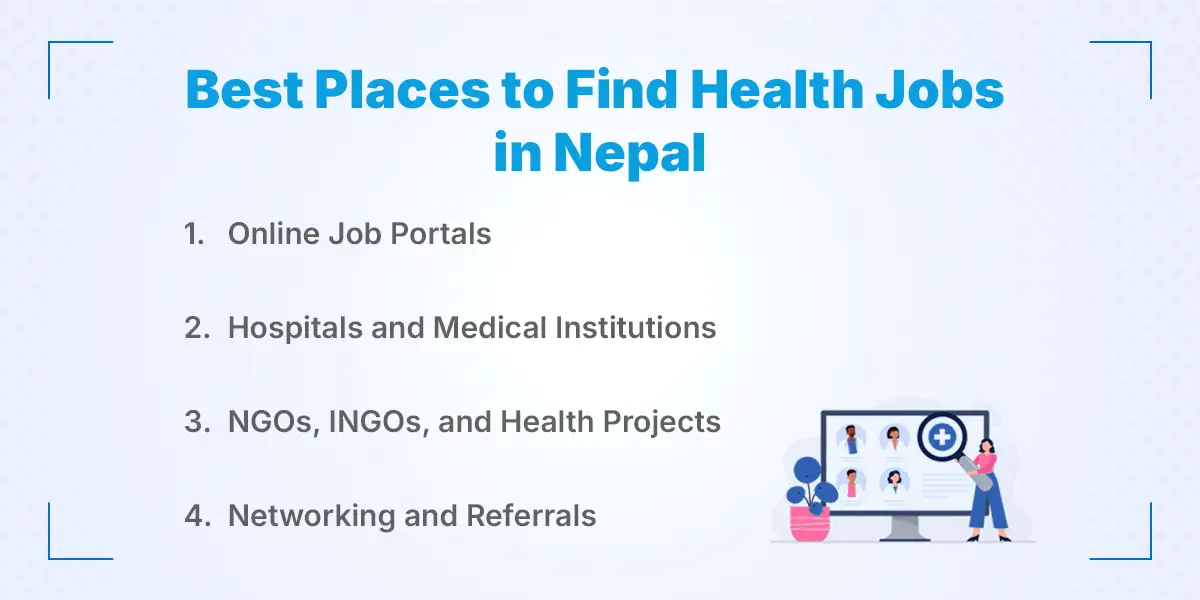
1. Online Job Portals
Online job portals like Kumari Job are a common place to find health jobs in Nepal. Many hospitals, clinics, and NGOs post vacancies there. You can search for jobs based on your role and experience. These platforms are easy to use and save time. You can apply to many jobs from one place. Some portals focus mainly on healthcare roles. Keep your profile complete and updated. Check new postings regularly.
2. Hospitals and Medical Institutions
Hospitals often announce jobs directly. Teaching hospitals and private hospitals both hire regularly. Many post vacancies on their websites or social pages. Some hospitals accept direct CV submissions. Visiting hospital sites helps you find trusted openings. Keep your documents ready for quick application. Local hospitals may offer good entry-level roles. Direct contact sometimes increases response chances.
3. NGOs, INGOs, and Health Projects
NGOs and INGOs offer many health-related jobs. NGO INGO jobs often focus on community and public health work. Health projects hire staff for specific programs. Many roles are contract-based but valuable for experience. Vacancies are shared on project websites and job portals. Fieldwork experience is often preferred. These jobs help build strong career skills. They also offer learning and growth.
4. Networking and Referrals
Networking is very useful in the health sector. Many jobs are filled through referrals. Staying connected with seniors and colleagues helps a lot. Attend health events and training sessions. Join professional groups and online forums. Let people know you are job hunting. Referrals build trust with employers. Networking often leads to faster hiring.
Government Health Jobs in Nepal
Government health jobs in Nepal are a popular choice because they offer job security, stable income, and social respect. Government jobs are mainly provided by federal, provincial, and local governments. Health professionals work in government hospitals, health posts, primary health care centers, and public health offices. Most government health jobs are filled through official exams and notices. The competition is high, but the benefits attract many candidates. These roles are suitable for both freshers and experienced professionals. Long-term career growth is one of the main advantages.
Government health jobs are mainly announced through Lok Sewa Aayog (Public Service Commission) and local government offices. Candidates usually need the required education, a valid license, and exam preparation. The hiring process may take time, but it is transparent. Once selected, employees receive a fixed salary, allowances, and pension benefits. Transfers and promotions are based on rules and experience. These jobs also offer opportunities to serve rural and underserved areas.
Common government health job roles include:
- Medical Officers and Specialist Doctors
- Staff Nurses and ANM
- Health Assistants and Community Medical Assistants
- Public Health Officers
- Lab Technicians and Pharmacists
- Health Inspectors and Supervisors
Apart from permanent roles, the government also offers contract and project-based health jobs. These jobs are often linked to vaccination programs, maternal health projects, and disease control programs. Local governments frequently hire health workers on short-term contracts. These roles are easier to enter compared to permanent positions. They are a good option for fresh graduates to gain experience. Contract jobs also help build a strong profile for future permanent roles.
To succeed, candidates should regularly check official notices, prepare for exams early, and keep documents ready. Government health jobs reward patience, preparation, and consistency.
Salary and Career Growth in Health Jobs in Nepal
Health jobs in Nepal offer a wide range of salary levels depending on the role, experience, sector, and location. Entry-level roles often start with modest pay, but salaries gradually increase with experience, skills, and specialization. Government jobs usually give stable pay with allowances and long-term benefits, while NGOs and the private sector may offer higher initial pay but less security. Career growth is possible through higher education, experience, certifications, and leadership roles.
Typical salary ranges in health jobs (approximate monthly figures):
- Entry-level roles (ANM, HA, junior positions): NPR 15,000 to NPR 35,000.
- Mid-level positions (nurses, health assistants, technicians): NPR 30,000 to NPR 60,000+.
- Experienced public health professionals and specialists: NPR 50,000 to NPR 100,000+.
- Doctors and senior clinicians: NPR 80,000 to over NPR 200,000 (private or specialized roles).
For example, nurses with a basic diploma may earn around NPR 25,000 to NPR 40,000 monthly, while those with higher degrees and more experience can reach NPR 50,000 to NPR 80,000 or more, especially in leadership roles or bigger hospitals. Doctors’ salaries start modestly after internship but increase significantly with experience and specialization, often moving above NPR 100,000 in established positions.
Career growth in health jobs also comes through promotions, advanced degrees, and professional development. Nurses can move to senior nurse, ward manager, or nursing educator roles. Health assistants and public health workers can advance to supervisory or manager roles as they gain experience and training. Specialists like surgeons, internal medicine doctors, and senior clinicians command higher pay and leadership responsibilities. Additionally, experienced professionals often find better opportunities abroad, where salaries are much higher than in Nepal.
Understanding salary trends and planning your career path helps you make informed choices and set realistic goals for growth in the health sector.
Conclusion
Getting health jobs in Nepal is challenging but completely achievable with the right approach. Success depends on choosing the right career path, gaining practical experience, and preparing a strong CV. Focusing on the correct job platforms, whether online portals, hospitals, NGOs, or government offices, increases your chances of landing interviews. Government roles provide stability, while private and NGO jobs may offer higher pay and faster growth.
Continuous learning, skill development, and networking are key to long-term career advancement. By understanding the qualifications, licensing, and skills required, you can confidently target roles that match your profile. With patience and a clear strategy, you can secure a rewarding health job in Nepal and build a meaningful, stable career.
Frequently Asked Questions
Submit your comments

Get Our App On



SEO Training for Freshers in Nepal: Skills, Career & Job Opportunities
VIEW DETAILS
SEO Training vs. Self-Learning: Which Is Right for You?
VIEW DETAILS
How to Choose Between Two Job Offers
VIEW DETAILS
Digital Marketing Training Interview Questions and Answers for Freshers
VIEW DETAILS


Loading Comments...