



You have spent months learning Python, R, and machine learning, but getting a data science job in Nepal can still seem hard. Many skilled people find it tough to get noticed, even though they have the right skills and training.
Data science is one of the fastest-growing job areas in Nepal, with jobs in tech companies, banks, telecoms, and startups. To succeed in this field, you need not only technical skills but also to understand the job market, create a strong portfolio, and present yourself well to employers.
This guide will help you understand the data science job market in Nepal, show you the most needed skills, explain what you can expect to earn, and give you a step-by-step plan to get your dream job.
In this blog
What is a Data Science Job?
A data science job is all about using data to help businesses make better decisions. Companies today collect huge amounts of data every day, from customer purchases to website visits, and they need people who can turn that data into meaningful insights. That’s where data scientists come in.
In simple terms, a data science professional looks at numbers, patterns, and trends to answer important questions. For example, a company might ask: Which product is selling the most? Why are some customers leaving? How can we improve sales? A data scientist uses data to provide clear answers.
Data science roles can vary, but here are some common tasks you might do:
- Collect and clean data from different sources
- Analyze data to find trends and patterns
- Create reports and dashboards to show findings
- Build models to predict future outcomes
- Work with teams to make data-driven decisions
It’s important to know that a data science job is not just about numbers. You also need to understand the business side of things. For example, knowing what the company wants to achieve helps you focus on the right problems.
Difference from related roles:
- Data Analyst: Focuses more on analyzing data and creating reports
- AI/ML Engineer: Builds systems that can learn and make predictions automatically
- Business Intelligence Analyst: Turns data into insights, mainly for business strategy
In short, a data science job is about turning raw data into clear, useful information that helps companies make smart choices.
Scope of Data Science Jobs in Nepal
Data science is becoming one of the most in-demand careers in Nepal. Businesses across industries are realizing the value of data in improving decisions, increasing efficiency, and boosting profits. This means there are growing opportunities for skilled data professionals.
Industries hiring data scientists in Nepal include:
- Banking and Finance: Analyzing customer behavior, predicting loan defaults, and managing risk
- Telecommunications: Improving network performance, customer retention, and marketing strategies
- IT and Tech Companies: Building machine learning models, AI solutions, and data-driven apps
- E-commerce and Retail: Understanding customer preferences, optimizing sales, and managing inventory management
- Healthcare: Predicting disease trends, managing hospital data, and improving patient care
Local vs Remote Opportunities
Nepal has many local opportunities in banks, tech companies, and startups. At the same time, remote data science jobs from global companies are becoming popular, giving Nepali professionals the chance to work internationally without leaving the country.
Future Demand in Nepal
The demand for data scientists is expected to grow significantly. As more businesses adopt digital tools, the need for professionals who can handle data, generate insights, and support decision-making will continue to rise. Companies will look for people not just with technical skills, but also with problem-solving abilities and business understanding.
In short, the scope of data science jobs in Nepal is wide and growing, offering opportunities across industries, both locally and remotely. With the right skills and experience, aspiring professionals can build a rewarding and stable career in this field.
Types of Data Science Jobs in Nepal
Data science is a broad field, and there are many types of jobs you can do depending on your skills and interests. Some roles focus on analyzing data, while others build systems that use data to make predictions. Different companies need different types of data professionals, so it’s important to know what each role involves. Here are the main types of data science jobs in Nepal and what they do.
1. Data Scientist
A data scientist is someone who collects, analyzes, and interprets large amounts of data. They look for patterns, trends, and insights to help companies make smart decisions. Data scientists often use programming languages like Python or R and tools like SQL. They also build models that can predict future outcomes. This role requires both technical skills and an understanding of business needs. Many companies in banking, tech, and e-commerce hire data scientists.
2. Data Analyst
Data analysts focus on understanding and organizing data. They clean the data, create charts, and make reports for managers. Their main job is to show what is happening now or what has happened in the past. They don’t usually build complex models but provide clear information to help teams make decisions. To get a data analyst job, you must have a proper understanding of tools like Excel, SQL, and Tableau.
3. Machine Learning Engineer
Machine learning engineers build systems that can learn from data automatically. They design models that predict outcomes, like customer behavior or sales trends. They work closely with data scientists to turn research into practical applications. This role is more technical and requires knowledge of programming, algorithms, and AI tools.
4. Business Intelligence Analyst
Business intelligence (BI) analysts focus on helping businesses make strategic decisions. They collect data from different sources and turn it into dashboards or reports. Their goal is to show trends that can improve sales, reduce costs, or increase efficiency. BI analysts often use tools like Power BI, Tableau, or SQL.
5. Data Engineer
Data engineers build and maintain the systems that store and process data. They make sure data flows smoothly from different sources and is ready for analysis. They work behind the scenes to support data scientists and analysts. This role requires knowledge of databases, cloud platforms, and programming.
How to Apply for Data Science Jobs in Nepal?
To get a data science job in Nepal, you need the right skills, a strong portfolio, a good resume, and smart job search and interview strategies. Many aspirants focus only on learning technical skills, but landing a job also requires planning your applications carefully. From building a portfolio to preparing for interviews, every step matters in increasing your chances of getting hired. Let’s break it down step by step.
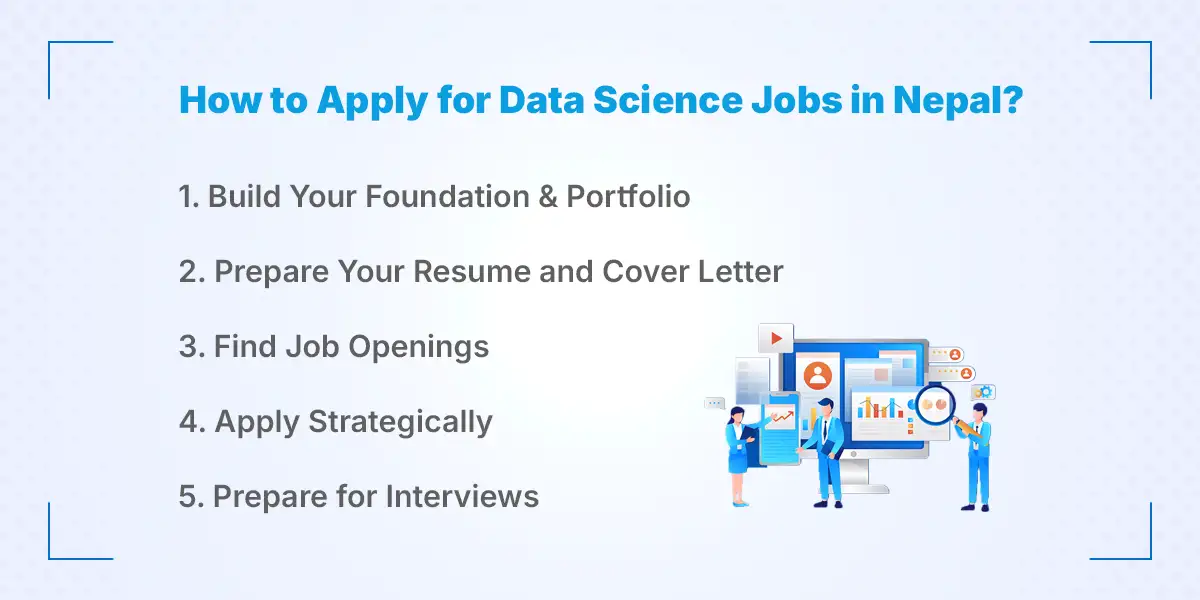
1. Build Your Foundation & Portfolio
Before applying, make sure you have strong foundational skills in programming, statistics, and data tools. Work on small projects or internships to gain real-world experience. Create a portfolio showcasing your work, like data analysis reports, machine learning models, or dashboards. A clear, organized portfolio helps employers see your practical abilities. You can use platforms like GitHub to display your projects. Even simple projects that solve real problems can make a big difference.
2. Prepare Your Resume and Cover Letter
Your resume should clearly highlight your skills, projects, and any internships or certifications. Keep it concise and relevant to data science roles. A tailored cover letter explaining why you’re interested in the role and what you bring to the company adds extra value. Use simple, clear language and avoid technical jargon unless necessary. Make sure both documents are error-free and professional.
3. Find Job Openings
Look for data science job openings on Nepali job portals, company career pages, and LinkedIn. Networking with professionals in the field can also help you discover hidden opportunities. Some global companies offer remote roles that are open to candidates in Nepal. Regularly checking multiple sources increases your chances of finding the right role.
4. Apply Strategically
Don’t just send your resume everywhere. Apply to jobs where your skills and experience match the requirements. Customize your resume and cover letter for each application. Keep track of applications and follow up politely if needed. Quality matters more than quantity in job applications.
5. Prepare for Interviews
Prepare for both technical and behavioral questions. Review your projects and be ready to explain your approach and results. Practice coding problems and data-related questions. Learn about the company and its business so you can relate your answers to their needs. Confidence and clear communication are just as important as technical knowledge.
Required Skills for Data Science Jobs
To succeed in a data science job, you need a mix of technical, analytical, and soft skills. Technical skills help you work with data, while analytical skills allow you to make sense of it. Soft skills make it easier to communicate your findings and work in a team. Employers in Nepal look for candidates who can combine all these skills to solve real business problems effectively.
1. Technical Skills (Programming, Tools)
Technical skills are the backbone of data science. You need to know programming languages like Python or R for data analysis. SQL is important for working with databases, and tools like Excel, Tableau, or Power BI help in visualizing data. Some roles may require knowledge of machine learning libraries or cloud platforms. Practice using these tools on real projects to get comfortable. Employers value hands-on experience more than just theory.
2. Analytical and Problem-Solving Skills
Data science is all about solving problems with data. You need to be able to find patterns, interpret results, and make data-driven decisions. Critical thinking helps you understand which approach works best for a problem. Being curious and asking the right questions is key. You should also be able to simplify complex information so others can understand it.
3. Soft Skills
Soft skills are just as important as technical ones. Communication helps you explain insights to non-technical teams. Teamwork is crucial since data projects often involve multiple people. Time management and organization ensure you meet deadlines. Employers in Nepal prefer candidates who are adaptable, patient, and willing to learn continuously.
Salary of Data Scientist Jobs in Nepal
Data scientist salaries in Nepal vary widely based on your experience, skills, and the company you work for. Salaries grow as you gain experience and take on bigger responsibilities. Let’s break this into clear parts so you can understand what to expect at each stage.
1. Entry‑Level Salary Range
Entry‑level data scientists are usually those with 0–2 years of experience. In Nepal, entry‑level pay often starts from around NPR 30,000 to NPR 60,000 per month for fresh graduates or junior roles. Employers often hire entry‑level candidates who are still building experience and may work under guidance while learning on the job. At this stage, your focus is on learning tools like Python, SQL, and data visualization software. With real project work and certification, your pay can improve faster over time.
2. Mid‑Level and Senior Salary
Once you reach mid‑level (about 2–5 years of experience), salaries typically rise to between NPR 60,000 and NPR 100,000 or more per month. Mid‑level data scientists handle bigger projects and make more decisions independently. Senior professionals with strong experience and leadership roles can earn above NPR 1,00,000 per month, and in some cases even more, depending on skills and company size. Senior roles often include leading teams, advising on strategy, and working on advanced analytics.
3. Factors Affecting Salary
Several things influence your salary in Nepal:
- Experience: More years usually means higher pay.
- Skills: Knowledge of machine learning, big data tools, or cloud tech can boost your earnings.
- Company Type: Larger tech firms or multinational companies often pay more than small local firms.
- Location: Salaries in cities like Kathmandu may be higher than in smaller towns.
In simple terms, as you grow in experience and skill level, your earning potential in data science in Nepal increases significantly. With the right growth plan, it is possible to build a strong and well‑paid career.
Where to Find Data Science Jobs in Nepal?
You can find data science jobs in Nepal through job portals like Kumari Job, LinkedIn, company career pages, and professional networking. While technical skills are important, applying through the right channels can speed up and improve your job search. Let’s explore the main ways to find data science roles in Nepal.
1. Job Portals in Nepal
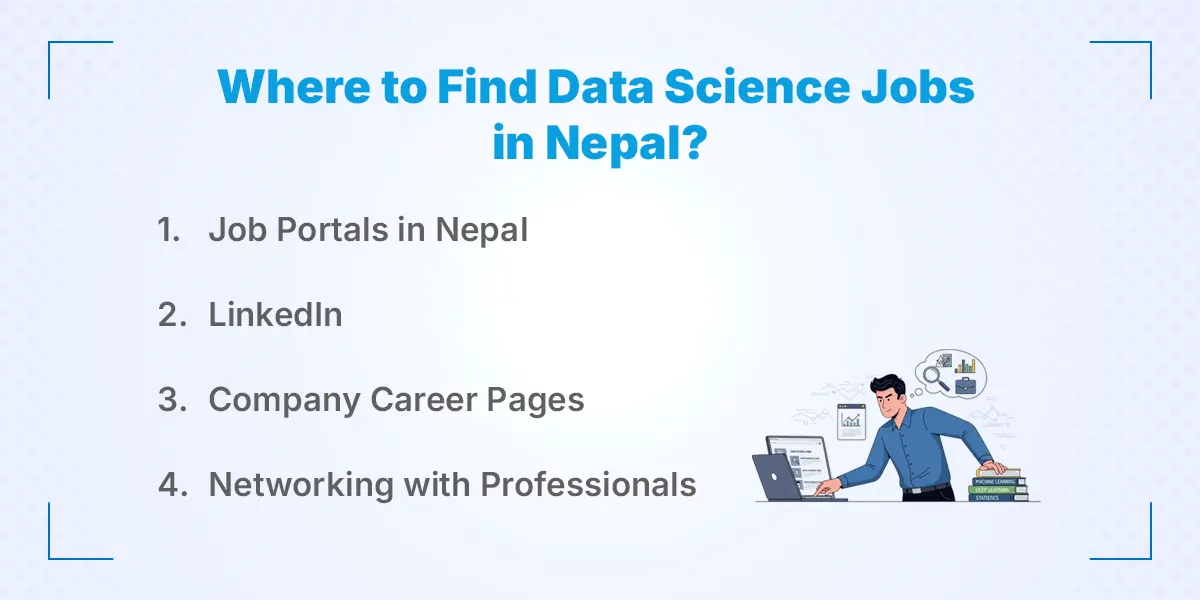
Local job portals are one of the easiest ways to find data science jobs. Sites like Kumari Job regularly post job vacancies in IT, banking, and startups. You can filter jobs by location, experience level, and industry. Make sure to upload an updated resume and set job alerts to get notifications. Checking portals daily increases your chances of applying early.
2. LinkedIn
LinkedIn is not just a professional network; it’s a powerful job search platform. Many companies post data science roles directly on LinkedIn. You can also connect with recruiters, follow companies, and join data science groups to stay updated. Engaging with posts and sharing your projects can help you get noticed.
3. Company Career Pages
Many large companies post job openings on their official websites. Banks, telecoms, IT firms, and startups in Nepal often have career sections where you can apply directly. Applying through the company pages sometimes gives you an advantage because your application goes straight to HR. Keep a list of preferred companies and check their pages regularly.
4. Networking with Professionals
Networking is one of the most effective ways to find jobs, especially in Nepal. Attend workshops, webinars, and meetups related to data science. Reach out to alumni, colleagues, or mentors who work in the field. Personal connections can sometimes lead to opportunities not advertised publicly.
Challenges and Opportunities in Data Science Careers
Data science is an exciting career, but like any field, it comes with its own challenges and opportunities. Understanding both can help you prepare better and make the most of your career in Nepal.
Challenges
One of the main challenges in data science is the skill gap. Many job seekers have theoretical knowledge but lack hands-on experience with real projects. Employers also look for candidates who can solve business problems, not just work with data. Another challenge is competition. Data science is a popular career choice, so you’ll often compete with others who have similar skills and certifications. Keeping your knowledge up-to-date is essential because tools, technologies, and trends in data science change rapidly.
Opportunities:
Despite the challenges, there are many opportunities for growth. Companies across sectors are investing in data-driven decision-making, which increases demand for skilled professionals. You can also specialize in areas like machine learning, artificial intelligence, business intelligence, or data engineering. Specialization helps you stand out and command higher salaries.
Some key opportunities include:
- Working in diverse industries like banking, IT, telecom, e-commerce, and healthcare
- Access to remote jobs from global companies while working from Nepal
- Continuous learning and career advancement through certifications and projects
- Becoming a consultant or freelancer in data science
In short, while competition and skill gaps are real challenges, data science in Nepal offers strong growth potential and opportunities for those who keep learning, specializing, and adapting to industry needs.
Conclusion
Data science jobs in Nepal offer significant growth and career potential for those with the right skills. Companies in banking, IT, telecom, e-commerce, and healthcare are increasingly relying on data to make smarter decisions, creating a strong demand for professionals who can analyze data and provide insights. Success in this field comes from a combination of technical skills, practical experience, and the ability to communicate results effectively.
With opportunities available both locally and remotely, aspiring data scientists can choose paths that suit their interests, from analytics and business intelligence to machine learning and AI. By building a portfolio, staying updated with trends, and applying strategically, you can secure a rewarding and high-impact role in Nepal’s growing data science industry.
Frequently Asked Questions
Submit your comments

Get Our App On



SEO Training for Freshers in Nepal: Skills, Career & Job Opportunities
VIEW DETAILS
SEO Training vs. Self-Learning: Which Is Right for You?
VIEW DETAILS
How to Choose Between Two Job Offers
VIEW DETAILS
Digital Marketing Training Interview Questions and Answers for Freshers
VIEW DETAILS


Loading Comments...