



Remote HR jobs are quickly changing how human resources work is done across the world, and Nepal is no exception. Today, many professionals are choosing remote HR jobs to enjoy flexibility, global exposure, and better work-life balance. With businesses hiring talent across borders, HR work-from-home roles are growing faster than ever.
In Nepal, digital tools, cloud-based HR systems, and online recruitment platforms have made remote HR work more accessible. From recruitment and payroll to employee support and compliance, HR professionals can now manage key tasks without being tied to a physical office. However, many Nepali job seekers still struggle to understand which remote HR roles are available, what skills are needed, and where to apply.
This guide solves that problem. It covers the types of remote HR jobs in Nepal, required skills and experience, salary expectations, and trusted platforms to find these roles. By the end, you will clearly know how to start or grow a successful remote HR career in Nepal.
In this blog
Remote HR & Recruitment Jobs in Nepal
The demand for remote HR jobs in Nepal is growing as more and more companies adopt flexible and digital work models. Many organizations now accept online HR services for hiring, employee support, and HR operations, making work-from-home jobs available for junior, mid-level, and senior HR professionals. This shift creates new career paths for HR talent seeking both stability and flexibility, while businesses benefit by accessing skilled professionals without location limits.
Nepali HR professionals can now work with local companies as well as international employers, including startups, IT firms, BPOs, and outsourcing companies. Remote HR roles involve managing distributed teams, following international HR standards, and supporting global recruitment needs. Unlike traditional office jobs, remote HR work focuses on results, virtual collaboration, and using digital tools for communication, reporting, and coordination. While the location changes, the core HR responsibilities remain the same, providing exposure, growth, and competitive pay.
What Types of Remote HR Jobs Are Available in Nepal?
Remote HR jobs in Nepal include roles like Talent Acquisition Partner, Recruiter, HR Consultant, and Payroll Support positions. These jobs allow professionals to manage recruitment, employee support, and HR operations from anywhere using digital tools. Next, we will explore each of these remote HR roles in detail to understand their responsibilities and requirements.
1. Talent Acquisition Partner
A remote Talent Acquisition Partner focuses on planning and managing the full hiring process for a company. This role involves understanding hiring needs, sourcing candidates, and working closely with hiring managers. In many cases, Nepali professionals support international companies by handling end-to-end recruitment remotely. Since the role is results-driven, strong communication and hiring strategy skills are important. Overall, it suits HR professionals with solid recruitment experience.
2. Recruiter / Headhunter
Remote recruiters or headhunters mainly focus on finding and screening the right candidates for open roles. They use job portals, social media, and professional networks to reach potential hires. In Nepal, many recruiters work remotely for global firms and staffing agencies. The role requires good people skills and quick decision-making. As hiring demand grows, this position remains one of the most common remote HR jobs.
3. HR Operations & Payroll Support
HR operations and payroll roles handle daily HR tasks such as employee records, attendance, and salary processing. These jobs are often remote because most data is managed through HR software and cloud systems. Nepali professionals support both local and international teams by ensuring accurate and timely HR operations. Attention to detail is very important in this role. It is a good option for HR professionals who prefer structured work.
4. Learning & Development (L&D) Roles
Remote L&D roles focus on employee training, skill development, and performance improvement. Professionals design training content, manage online sessions, and track learning progress. Many international companies hire Nepali HR talent to support virtual training programs. This role combines HR knowledge with creativity and planning. It is ideal for those interested in long-term employee growth.
5. HR Generalist
A remote HR Generalist handles a wide range of HR tasks, from recruitment to employee support. Instead of working on one area, this role covers multiple HR functions. In Nepal, HR generalists often work remotely for startups and small companies. Strong time management and multitasking skills are needed. This role is suitable for professionals with broad HR experience.
6. HR Consultant
Remote HR consultants provide expert advice to businesses on HR policies, systems, and compliance. They usually work on a project or contract basis with different companies. Many Nepali HR consultants support international clients by offering cost-effective and skilled services. This role requires strong experience and problem-solving ability. It is best suited for senior HR professionals seeking flexible work.
Core Responsibilities of Remote HR Professionals
The core responsibilities of remote HR professionals include recruitment, onboarding, performance management, compliance, and team communication. They ensure smooth HR operations using digital tools while supporting employees and management across locations. Next, we will break down each of these responsibilities to understand what they involve in a remote HR role.
1. Recruitment and Candidate Screening
Remote HR professionals manage the full hiring process using digital platforms and online tools. This includes posting jobs, reviewing applications, and conducting virtual interviews. They also assess candidate skills, culture fit, and availability for remote work. In addition, they coordinate with hiring managers across different time zones to ensure smooth hiring decisions. As a result, strong organization and clear communication are essential in this role.
2. Employee Onboarding and Documentation
Remote HR teams handle onboarding by guiding new hires through online orientation and training sessions. They prepare digital contracts, company policies, and employee records using secure HR systems. At the same time, they ensure new employees understand company rules, tools, and work expectations. This process helps new hires settle in quickly, even without face-to-face interaction. A well-managed onboarding experience improves retention and early performance.
3. Performance Management Support
Performance management in remote HR focuses on tracking goals, feedback, and progress through digital tools. HR professionals support managers by setting clear performance metrics and review schedules. They also help resolve performance issues by collecting feedback and suggesting improvement plans. Since remote teams rely on trust and clarity, regular check-ins play a key role. This approach keeps employees engaged and aligned with company goals.
4. HR Compliance and Reporting
Remote HR professionals ensure that company policies follow labor laws and internal guidelines. They maintain accurate records related to attendance, contracts, and employee data. In addition, they prepare reports for management on hiring, performance, and workforce trends. This data helps leaders make informed decisions. Careful handling of compliance reduces legal risks for the company.
5. Communication with Remote Teams
Clear communication is one of the most important responsibilities in HR work, especially when it’s remote. HR professionals act as a bridge between management and employees across locations. They share updates, handle employee concerns, and support team coordination through digital channels. Moreover, they help maintain a positive work culture in a virtual environment. Consistent communication builds trust and teamwork in remote settings.
Qualifications & Skills Required for Remote HR Jobs
The qualifications and skills required for remote HR jobs include relevant education, HR experience, strong communication, and proficiency with digital HR tools. These skills help professionals manage recruitment, employee support, and HR operations effectively from any location. Here, we will explore the specific education, technical skills, and experience needed to succeed in remote HR roles.
1. Education Qualifications to Become an HR
Most remote HR jobs require a bachelor’s degree in Human Resources, Business Administration, Management, or a related field. In Nepal, candidates with HR-focused courses or certifications have an added advantage. While formal education builds a strong base, a practical understanding of HR processes is equally important. Some employers also value short-term HR training programs that focus on recruitment and compliance. Overall, education helps HR professionals handle responsibilities with confidence.
2. Essential HR Skills for Remote Work
Strong communication skills are critical for remote HR roles, as most interactions happen online. HR professionals must clearly explain policies, hiring steps, and expectations through calls, emails, and chats. Experience with ATS tools, HR software, and remote collaboration tools helps manage tasks efficiently. In addition, time management and problem-solving skills are essential when working independently. These skills ensure smooth HR operations in a remote setup.
3. Technical & Digital Skills
Remote HR professionals rely heavily on digital tools to manage daily tasks. Common tools include HRMS platforms, ATS systems, and LinkedIn Recruiter for sourcing talent. Video interviewing tools are used to assess candidates, while spreadsheets and reporting tools help track HR data. Being comfortable with these systems improves accuracy and productivity. As technology keeps evolving, continuous learning is important in this role.
4. Experience Required for Remote HR Jobs
Experience requirements vary based on the role and company size. Entry-level remote HR jobs may require basic HR or recruitment experience, while senior roles often demand several years of practical work. Employers prefer candidates who understand remote work processes and global hiring standards. Experience with international teams is a strong advantage. In most cases, hands-on experience matters more than job titles.
How to Work Remotely as an HR in Nepal?
To work remotely as an HR in Nepal, you need the right skills, experience, and a strong remote-ready profile. This includes building your CV, developing digital HR skills, and applying through trusted platforms. Here, we will outline step-by-step how Nepali professionals can find, prepare for, and succeed in remote HR roles.
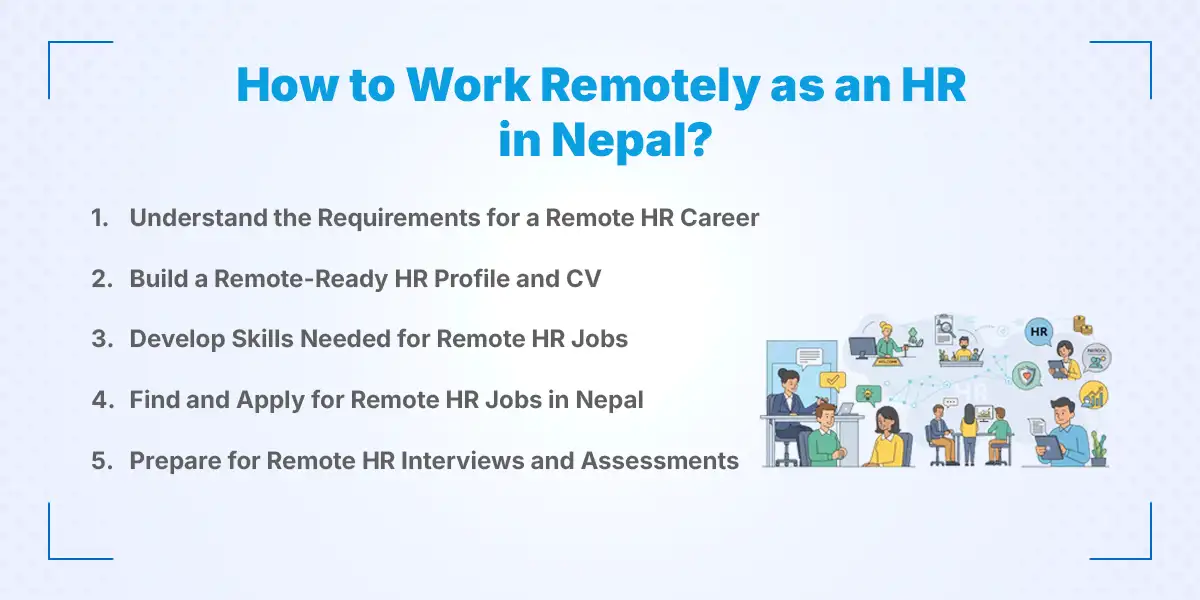
1. Understand the Requirements for a Remote HR Career
Before starting a remote HR career, it is important to understand what employers expect. Most companies look for strong HR basics, digital tool knowledge, and the ability to work independently. Since remote work involves minimal supervision, self-discipline and accountability matter a lot. In addition, many roles require working with global teams and different time zones. Understanding these requirements helps you prepare better and avoid mismatched roles.
2. Build a Remote-Ready HR Profile and CV
A remote-ready HR profile should clearly highlight your HR skills, tools, and work results. Instead of listing duties, focus on achievements like successful hiring, process improvement, or system management. Your CV should also mention experience with remote work, virtual hiring, or global teams if available. Keeping your LinkedIn profile updated increases visibility to international employers. A strong profile makes it easier to find a remote HR job.
3. Develop Skills Needed for Remote HR Jobs
To succeed in remote HR roles, you need a mix of HR knowledge and digital skills. Learning ATS systems, HR software, and virtual communication tools is essential. At the same time, improving written communication helps avoid confusion in remote settings. Soft skills like problem-solving and adaptability also play a big role. These skills support long-term growth in a remote HR career in Nepal.
4. Find and Apply for Remote HR Jobs in Nepal
Knowing where to apply is key when learning how to get remote HR jobs. Trusted job portals, recruitment agencies, and professional networks often list verified remote HR roles. Platforms like Kumari Job help connect Nepali HR professionals with local and international employers. Applying regularly and customizing your CV for each role improves your chances. Consistent effort is important when trying to find a remote HR job.
5. Prepare for Remote HR Interviews and Assessments
Remote HR interviews are usually conducted through video calls or online assessments. Candidates should prepare by testing their internet, camera, and communication setup in advance. Employers often assess problem-solving skills and real HR scenarios during interviews. Clear answers and practical examples make a strong impression. Good preparation increases confidence and success in remote hiring processes.
Where to Find Remote HR Jobs in Nepal?
You can find remote HR jobs in Nepal through job portals like Kumari Job, recruitment agencies, LinkedIn, and freelance platforms. These sources connect professionals with local and international companies offering work-from-home HR roles. Here, we will explore each of these options in detail to help you find the right remote HR opportunity:
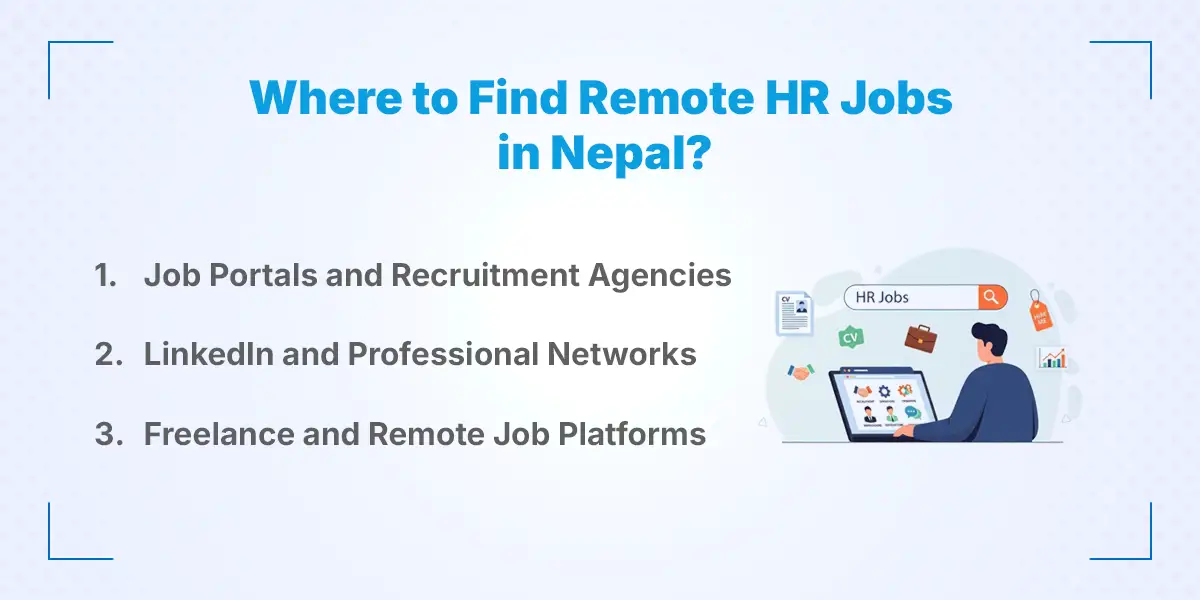
1. Job Portals and Recruitment Agencies
One of the easiest ways to find remote HR jobs in Nepal is through trusted job portals and recruitment agencies. Platforms like Kumari Job list verified remote opportunities for HR professionals across different industries. Recruitment agencies also help match your skills with the right employers and provide guidance during the application process. Regularly checking these sources increases your chances of landing a suitable remote role.
2. LinkedIn and Professional Networks
LinkedIn and other professional networks are powerful tools for finding remote HR roles. You can connect directly with hiring managers, join HR groups, and stay updated on job openings. Many international companies also post remote vacancies exclusively on LinkedIn. Actively networking and showcasing your skills online improves visibility and creates opportunities beyond local job portals.
3. Freelance and Remote Job Platforms
Freelance and remote job platforms are ideal for flexible HR roles and project-based work. Websites like Upwork, Fiverr, and Remote.co often list short-term or ongoing HR tasks that can be done from Nepal. These platforms allow professionals to build an international client base and gain global exposure. Combining these opportunities with job portals helps expand your options for remote HR work.
Salary Expectations for Remote HR Jobs in Nepal
On average, remote HR jobs in Nepal offer salaries ranging from NPR 25,000–40,000 per month for entry-level positions, while experienced professionals can earn between NPR 60,000–150,000 or more, depending on the role and company. Salaries can be higher for international companies hiring Nepali talent.
1. Entry-Level Remote HR Salary in Nepal
Entry-level HR professionals usually start with roles like HR assistant, recruiter, or HR generalist. Their pay can range from NPR 15,000-30,000 in local companies, depending on the company size, location, and the complexity of tasks assigned. Smaller local companies may offer lower salaries, while multinational firms often provide better pay and benefits. In international companies, HR professionals can begin from USD 500–1,500/month (about NPR 67,000–200,000), often in part-time or freelance roles. Experience, certifications, and HR skills also play a major role in determining compensation.
2. Experienced Remote HR Salary in Nepal
Experienced HR professionals, such as HR managers, talent acquisition partners, or consultants, can command higher salaries. Mid-level HR positions earn around NPR 25,000–60,000 in Nepalese companies. Senior roles can command even higher, ranging from NPR 60,000–2,00,000+. HR professionals working remotely in international companies earn even higher, with their salaries ranging from USD 2,000–6,000 per month. They often handle multiple responsibilities, manage teams, and support strategic decisions. These roles are ideal for those who have proven HR expertise and remote work experience.
Companies Providing Remote HR Jobs in Nepal
Several companies in Nepal, like international startups, outsourcing firms, recruitment agencies, IT companies, and BPOs, are the top employers for remote HR jobs. These organizations hire Nepali HR professionals to manage recruitment, payroll, employee support, and HR operations from anywhere. Here, we will look at each type of company and the opportunities they offer for remote HR careers.
1. International Startups and Outsourcing Firms
Many international startups and outsourcing firms hire Nepali HR professionals to manage recruitment, onboarding, and HR operations remotely. These companies often work with global teams and value flexibility, making remote HR roles common. Nepali professionals gain exposure to international HR standards and best practices while working from home. Startups and outsourcing firms also provide opportunities to take on varied responsibilities, which helps build diverse HR experience.
2. Recruitment Agencies and Job Portals
Recruitment agencies and job portals in Nepal, like Kumari Job, play a key role in connecting HR talent with companies offering remote roles. They often act as intermediaries between employers and candidates, helping match skills with the right positions. Many agencies also offer guidance on CV preparation and interview preparation for remote jobs. By using these platforms, Nepali HR professionals can access verified opportunities from local and international companies.
3. IT Companies, BPOs, and Global HR Service Providers
IT companies, BPOs, and global HR service providers frequently hire remote HR professionals for tasks like payroll, employee engagement, and talent acquisition. These organizations often operate across multiple countries, so remote HR staff support teams in different time zones. Nepali professionals benefit from exposure to international HR processes and digital tools. Working with these companies also provides competitive salaries and professional growth opportunities in virtual HR roles.
Conclusion
Remote HR jobs in Nepal are opening exciting opportunities for professionals who want flexibility, growth, and global exposure. From recruitment and onboarding to HR operations and performance management, remote roles let you contribute meaningfully without being tied to an office. With the right skills, experience, and digital tools, Nepali HR professionals can work for local companies or international firms while building a rewarding career. Platforms like Kumari Job make it easier to find verified remote positions and connect with the right employers.
If you are ready to take the next step, start by updating your CV, sharpening your HR and digital skills, and actively exploring remote opportunities. With remote HR work, you not only grow professionally but also enjoy the freedom to manage your time and career on your terms. The future of HR is remote, and you can be part of it.
Frequently Asked Questions
Submit your comments

Get Our App On



SEO Training for Freshers in Nepal: Skills, Career & Job Opportunities
VIEW DETAILS
SEO Training vs. Self-Learning: Which Is Right for You?
VIEW DETAILS
How to Choose Between Two Job Offers
VIEW DETAILS
Digital Marketing Training Interview Questions and Answers for Freshers
VIEW DETAILS


Loading Comments...