



Finding a dream job can feel like a mountain to climb, especially when you are looking at top-tier organizations like the World Bank. If you have been searching for vacancies at World Bank Nepal, you probably know how competitive these roles are.
Many talented Nepalese professionals feel stuck, not knowing where to find these world bank vacancies in Nepal or how to actually get hired. This guide is here to change that. Here, you will explore everything you need to know, from the types of jobs available to the secrets of a successful application, so you can stop wondering and start applying.
In this blog
Overview of World Bank Vacancies
The World Bank Group is one of the most respected employers in the world, and its office in Nepal is a hub for high-impact development work. When you join them, you aren't just getting a job; you are getting a front-row seat to global development and a chance to shape Nepal’s future. Because of their global reputation, vacancies here attract the brightest minds in the country.
Hiring trends at the World Bank are moving toward more specialized and local expertise. They want people who understand the local context of Nepal but can also work with international standards. This means there is a growing demand for experts who can bridge the gap between global policy and local implementation.
Common Job Vacancies at the World Bank Group Nepal
The World Bank Nepal office frequently hires for roles like Economist, Environmental Specialist, and Financial Management Specialist to support its various development projects. These positions are core to their mission of reducing poverty and increasing shared prosperity across the country. Let’s look at some of the specific roles you might find during your search.
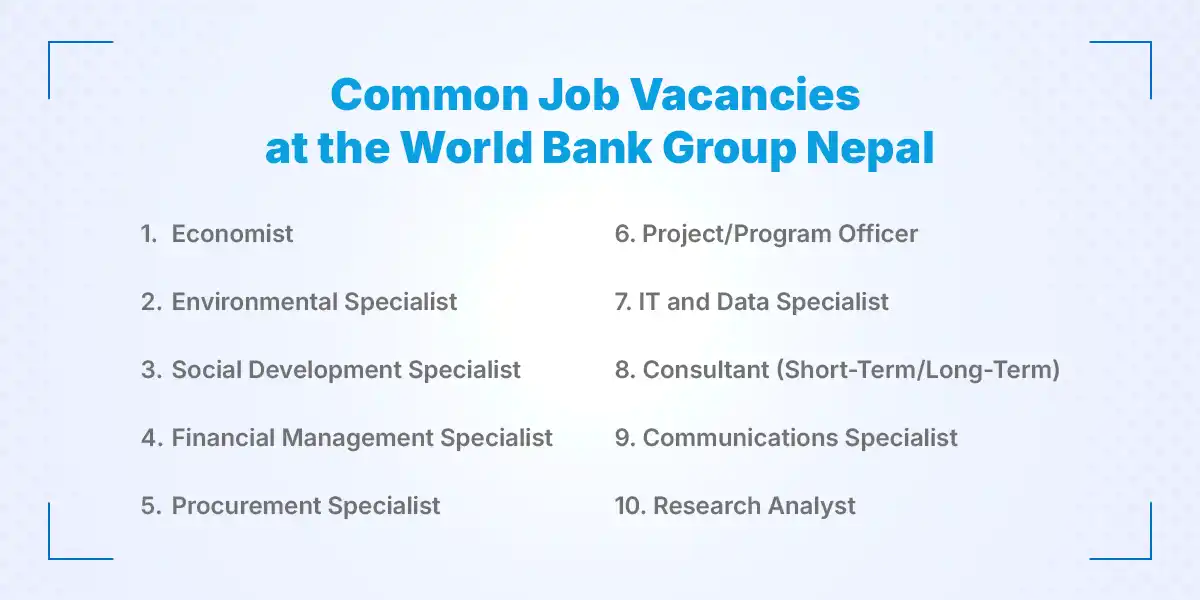
1. Economist
An Economist at the World Bank plays a key role in analyzing Nepal's financial health and suggesting growth policies. You will be tasked with collecting data and writing reports that help the government make better financial decisions. It is a high-stakes role that requires a deep love for numbers and a clear understanding of market trends. Your work will directly influence how millions of dollars are invested in national development.
2. Environmental Specialist
As an Environmental Specialist, you will ensure that every Bank-funded project in Nepal is green and sustainable. This involves checking if new roads or bridges might harm the local ecosystem and suggesting ways to fix those risks. You will work closely with engineering teams to keep development in harmony with nature. It is a perfect role for those passionate about protecting Nepal’s natural beauty while building infrastructure.
3. Social Development Specialist
A Social Development Specialist focuses on the human side of projects, ensuring that local communities are treated fairly. You will be the voice for people who might be affected by large construction projects, making sure their rights are protected. This role involves a lot of fieldwork, talking to locals, and managing social risks like displacement. It is an essential position for ensuring that progress does not leave anyone behind.
4. Financial Management Specialist
The Financial Management Specialist is the watchdog who makes sure project funds are spent exactly where they are supposed to be. You will review budgets, audit accounts, and ensure that every rupee is accounted for according to international rules. This job requires extreme attention to detail and a strong background in accounting or finance. By keeping the books clean, you help maintain the trust between the Bank and the people of Nepal.
5. Procurement Specialist
A Procurement Specialist manages the buying process for goods and services needed for development projects. You will handle everything from drafting bid documents to selecting the best contractors for a job. It is your responsibility to make sure the process is fair, transparent, and gets the best value for money. Without this role, the physical work of building schools or hospitals simply wouldn't happen.
6. Project/Program Officer
Project Officers are the keeps development initiatives moving forward on a daily basis. You will monitor timelines, coordinate between different teams, and solve problems as they pop up during implementation. This is a very active role that requires excellent organizational skills and the ability to juggle many tasks at once. It is a great fit for someone who enjoys seeing a plan turn into reality on the ground.
7. IT and Data Specialist
In a world driven by information, the IT and Data Specialist keeps the Bank’s systems running smoothly and securely. You will manage complex databases, ensure data privacy, and provide technical support to the local team. Beyond just fixing computers, you will help analyze data to find patterns that can improve project outcomes. It is a vital role for modernizing how development work is done in Nepal.
8. Consultant (Short-Term/Long-Term)
Consultants are hired for their specific expertise on a project-by-project basis, offering a flexible way to work with the Bank. Whether you are an expert in irrigation or digital literacy, you might be brought in for a few months to provide specialized advice. These roles are excellent for building your resume and getting a foot in the door at the organization. Many full-time staff members actually started their careers as short-term consultants.
9. Communications Specialist
The Communications Specialist tells the story of the World Bank’s work to the public and the media in Nepal. You will be responsible for writing press releases, managing social media, and creating content that explains complex projects in simple terms. This role is about building relationships and ensuring that the Bank’s impact is well-understood by everyone. If you are a great storyteller with a knack for strategy, this is the role for you.
10. Research Analyst
Research Analysts do the heavy lifting of gathering evidence and data to support new project ideas. You will spend your time diving into surveys, academic papers, and local reports to find the facts that matter. Your findings will be used by senior specialists to design programs that actually work for the people of Nepal. It is an ideal starting point for young professionals who want to build a career in development research.
Internships at World Bank Nepal
The World Bank offers several internship paths, such as the Summer Internship Program and the WBG Pioneers Program, to help students gain early career experience. These internship programs are designed to give you a taste of what it’s like to work in a global environment while contributing to real projects. They are highly sought after by university students across Nepal.
1. Summer Internship Program
The Summer Internship is a global program that often includes placements in country offices like Kathmandu. It usually runs from June to September and is open to students currently enrolled in a Master's or PhD program. During this time, you will work under a mentor and contribute to high-level research or project tasks. It is a fantastic way to network with international experts early in your career.
2. Short-term Consultant Roles
While technically a contract, many junior "Short-Term Consultant" (STC) roles act like advanced internships for recent graduates. These positions allow you to work on specific tasks for up to 150 days in a fiscal year, giving you deep technical exposure. You will be treated as a professional team member and expected to deliver high-quality work. Many young Nepalese professionals use this as a stepping stone to permanent roles within the development sector.
3. Research-based Internships
Research internships are perfect for those who want to focus on data analysis and policy writing. You will often assist senior economists or specialists in gathering local data for Systematic Country Diagnostics or other major reports. This role helps you sharpen your analytical tools and learn how global policy is crafted using local evidence. It is a high-value experience for anyone looking to go into academia or high-level policy work.
Eligibility Criteria for World Bank Nepal Jobs
To land a job at the World Bank in Nepal, you generally need a Master's degree and several years of relevant work experience. They look for people who are not just smart, but also have a track record of getting things done in challenging environments. Let’s break down the three main pillars of eligibility.
1. Educational Requirements
Most professional roles at the Bank require at least a Bachelor’s degree, but a Master’s is almost always preferred. If you are applying for a Specialist or Economist role, having a degree from a recognized university in Economics, Finance, or Public Policy is a huge plus. The Bank values academic excellence, so a strong GPA and relevant certifications can help your application stand out. Even for administrative roles, a solid educational foundation is expected.
2. Work Experience
The bank typically looks for candidates with 2 to 10+ years of experience, depending on how senior the position is. For local roles in Nepal, having experience with government ministries, NGOs, or other international agencies is highly valued. They want to see that you understand the local landscape and have successfully managed projects before. If you have worked on large-scale development programs, make sure to highlight that in your CV.
3. Skills Required
Beyond your degree, you need a specific set of skills to thrive in this environment. Excellent English, both speaking and writing, is non-negotiable because you will be communicating with colleagues all over the world. You also need strong analytical skills to make sense of complex data and turn it into actionable advice. Being tech-savvy and having expertise in your specific field, like climate change or transport, is also essential.
How to Get a Job in the World Bank from Nepal?
Applying for a role involves visiting the official World Bank Careers page and submitting a tailored application through their online portal. You cannot just email your CV to a friend who works there; everything must go through the formal system. Follow these steps to make sure your application is seen.
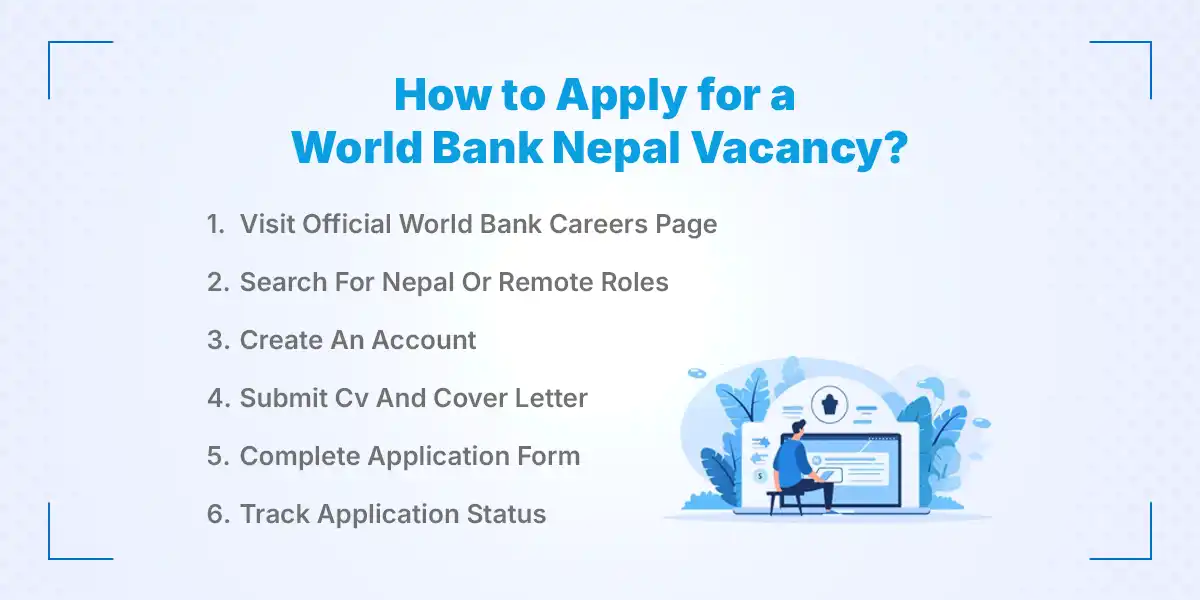
1. Visit Official World Bank Careers Page
The first step is always to go to the source: the World Bank Careers website. This is the only place where every single global and local vacancy is listed officially. You can browse through different categories or use the search bar to find what you are looking for. It is a good habit to check this page every week so you don't miss any new opportunities in Nepal or worldwide.
2. Search For Nepal Or Remote Roles
Once you are on the portal, use the Location filter to search for Nepal or jobs in Kathmandu. Sometimes, you might also find "Remote" or "South Asia" roles that allow you to stay in Nepal while working on regional projects. Make sure to read the job description carefully to see if the position is a "Local Hire" or an "International Hire." This will tell you if the role is meant specifically for people already in the country.
3. Create An Account
To apply, you will need to create a personal profile on the World Bank’s hiring system. This involves providing your basic contact details and setting a password for your account. Having an account allows you to save your progress if you can't finish the application in one sitting. It also lets the system notify you when new jobs that match your skills are posted.
4. Submit CV And Cover Letter
This is the most important part: uploading your CV and a cover letter that is written specifically for that job. Don't use a generic CV; instead, use keywords from the job description to show you are a perfect match. Your cover letter for the bank vacancy should explain why you want to work for the Bank and what unique value you bring. Think of it as your one chance to talk to the recruiter before they decide to call you.
5. Complete Application Form
After uploading your documents, you will have to fill out an online form with your work history and education. The system might also ask you screening questions about your years of experience or specific technical skills. Be very honest and accurate here, as this data is often used for the first round of sorting. Take your time to double-check everything before hitting the Submit button.
6. Track Application Status
Once you have submitted, you can log back into your account at any time to see where your application stands. You will see status updates like “Under Review" or "Shortlisted" as the process moves forward. Don't be discouraged if it takes a while; the Bank receives thousands of applications and the review process is very thorough. Being patient and checking the portal once a week is the best way to stay informed.
Where to Find World Bank Job Vacancies in Nepal?
You can find the latest World Bank vacancies on their official portal, LinkedIn, and trusted local platforms like Kumari Job. While the official site is the ultimate source, using multiple channels ensures you are always in the loop. Here is where you should be looking.
1. Official World Bank Careers Portal
The official careers portal is the most reliable place to find and apply for jobs. Every vacancy, from full-time staff positions to temporary contracts, is posted here first. The site also provides helpful resources on the hiring process and what the Bank looks for in candidates. If you want the most up-to-date information, this should be your primary destination.
2. Trusted Job Platforms
For Nepalese seekers, local platforms like Kumari Job are excellent for catching notices about local vacancies. While they may not always post the official vacancy directly, they definitely post updates and notices for the latest openings to keep you in the loop. These sites often aggregate job posts from international organizations, making it easier for you to see everything in one place. They also provide localized tips and career advice that can help you navigate the Nepalese job market. Using a trusted local platform adds an extra layer of convenience to your search.
2. LinkedIn Job Postings
The World Bank is very active on LinkedIn, and they often post featured vacancies there to reach a wider audience. Follow the world bank and related pages and you will see job alerts right in your newsfeed. It is also a great way to see which of your professional connections might already work there. Often, recruiters will post about specific hiring drives on their personal LinkedIn profiles as well.
World Bank Nepal Selection and Interview Process
The hiring process at the World Bank is structured, transparent, and usually takes about 60 to 90 days from the application deadline. It is designed to find the absolute best fit for every role through multiple layers of screening. Here is what you can expect after you click submit.
1. Apply
As mentioned, you start by submitting your online application during the two-week window when the job is open. This is your foundation, and everything that follows depends on the quality of your CV and cover letter. Ensure your documents are clear, professional, and free of any errors. Once the window closes, the recruitment team starts their work.
2. Longlist
The recruitment team does a quick first pass to see who meets the basic eligibility criteria. They look at your degree, years of experience, and your answers to the screening questions. Candidates who pass this initial check are put on a longlist. If you don't make it to this stage, it usually means you didn't meet one of the core requirements of the job.
3. Shortlist
Next, a selection panel made up of experts in the field reviews the longlist in more detail. They pick the top 3 to 5 candidates who are the strongest match for the specific role. This small group is then shortlisted for the interview stage. Being shortlisted is a huge achievement, as it means you are among the best of the best who applied.
4. Interviews
Shortlisted candidates are invited for interviews, which can be over video or in person with a panel. You might be asked behavioral questions about how you handled past work challenges. Some roles also require a "written test" or a "case study" where you have to solve a real-world problem. This stage is all about showing your technical skills and how well you fit into the team culture.
5. Selection & Offer
After the interviews, the hiring team picks the one candidate who performed the best and fits the organization's needs. They will conduct reference checks, reaching out to your previous employers to verify your work. If everything clears, they will send you an official Letter of Appointment. This letter will outline your salary, benefits, and start date.
6. Appointment
The final step is the formal appointment, which happens after a background check and security clearance. You will then go through an onboarding process to help you settle into your new role. This includes learning about the Bank’s policies and meeting your new team members. At this point, you will have officially been a part of the World Bank Group!
What are the Salary and Benefits at World Bank Nepal?
Working at the World Bank in Nepal comes with a highly competitive international salary and a world-class benefits package. They aim to attract top talent by offering perks that few other employers in the country can match. Here is what makes their offer so attractive.
1. Competitive International Salary
The Bank pays internationally competitive salaries, which means they are often higher than what you would find in the local private or public sector. While the exact numbers depend on your grade level and experience, salaries are reviewed every year to stay fair. For professional roles, the pay is designed to reflect the high level of expertise required. It is a stable and lucrative career path for any dedicated professional.
2. Health Insurance
One of the best perks is their comprehensive medical and dental insurance plan for staff and their families. This plan covers major health costs and gives you access to top-tier healthcare providers. Whether you are at headquarters or in the Nepal office, the Bank ensures that you and your loved ones are protected. It provides a huge sense of security that is hard to find elsewhere.
3. Paid Leave and Holidays
The Bank offers a generous amount of paid time off, including annual leave, sick leave, and parental leave. You also get to enjoy all official holidays observed by the Nepal office. They strongly believe in a good work-life balance, allowing you plenty of time to recharge. This focus on well-being helps prevent burnout and keeps the team productive.
4. Professional Development Opportunities
When you join the Bank, your learning doesn't stop; they invest heavily in your growth. You will have access to thousands of online courses, specialized training, and even mentorship programs. They often send staff for international workshops or rotations in other country offices to broaden their skills. It is an environment where you are constantly encouraged to become a better version of yourself.
5. Exposure to Global Projects
Working here gives you the chance to collaborate on projects that span multiple countries and regions. You will work with experts from different cultures and learn about global best practices in development. This exposure is priceless and makes your professional profile incredibly strong worldwide. You aren't just working for Nepal; you are part of a global movement for change.
Why Work at World Bank Nepal?
Choosing to work at the World Bank means choosing a career that has a real impact on people's lives while offering personal stability. It is one of the few places where your daily tasks contribute directly to ending poverty in Nepal. Here are the top reasons why it is a dream employer.
1. Global Career Opportunities
A job at the World Bank Nepal office is often the beginning of a truly global career. Many staff members start in their home country and eventually move to roles in Washington D.C. or other country offices. The World Bank name on your CV is recognized everywhere, opening opportunities in international companies. It is a launchpad for anyone with big dreams.
2. Work on Impactful Development Projects
You will be part of projects that bring clean water to villages, build safer roads, and improve schools across Nepal. Seeing the tangible results of your work on the ground is incredibly rewarding. You aren't just pushing paper; you are helping solve the biggest challenges facing our nation. That sense of purpose is what keeps people motivated every day.
3. Networking with International Experts
You will be working side-by-side with some of the world's leading experts in economics, health, and climate change. The chance to learn from these people is a benefit in itself. You will build a professional network that spans the globe, giving you insights into how the world really works. These connections often last a lifetime and can guide your career for years to come.
4. Competitive and Stable Career Path
The World Bank is a very stable organization, providing long-term career security that is rare in the development sector. Once you are in, there are clear paths for promotion and moving into more senior roles. They value loyalty and hard work, offering a workplace where you can grow for decades. It is a place where you can truly build a life and a legacy.
Tips to Get Selected for World Bank Jobs
The secret to getting hired is not just having a great degree, but showing exactly how you fit the World Bank’s unique needs. You need to be strategic and professional at every step of the application. Here are some "insider tips" to give you an edge.
1. Tailor Your CV to the Role
Never send a one-size-fits-all CV; instead, rewrite it for every job you apply for. Look at the Selection Criteria section of the job post and use the same language in your resume. If they ask for stakeholder engagement, make sure those exact words appear under your past work experience. This helps both the automated systems and the human recruiters see you as a perfect match.
2. Highlight Development Sector Experience
If you have worked with NGOs, INGOs, UN agencies, or the government, make sure that is front and center. The Bank values people who already understand how "development" works and are familiar with the challenges of the sector. Highlight any projects where you had to work with local communities or government officials. This shows you have the practical knowledge to hit the ground running.
3. Showcase Measurable Impact
Instead of just saying you “managed a project”," say you "managed a project that increased school enrollment by 20% in two years." The Bank loves numbers and results. Use data to prove that you didn't just do your job, but you actually made things better. This kind of impact-driven writing makes your application much more convincing.
4. Prepare for Competency-based Interviews
The World Bank often uses behavioral interviews where they ask you to tell stories about your past work. Use the STAR method (Situation, Task, Action, Result) to keep your answers structured and clear. Practice talking about a time you handled conflict or solved a difficult problem. Being prepared with specific examples will make you sound confident and professional.
5. Build Strong English Writing Skills
Since reports and emails are a huge part of the job, your writing needs to be top-notch. Practice writing clearly and concisely without using too much fluff. If your cover letter has even one typo, it could hurt your chances, so always proofread carefully. Good writing shows that you are organized and can represent the Bank professionally on a global stage.
Conclusion
Landing a role at the World Bank in Nepal is a life-changing milestone that offers more than just a paycheck; it is a gateway to global impact.
The process can feel overwhelming, but remember that every specialist working there today started exactly where you are. They had a dream, they built their skills, and they didn't give up when things got tough.
Now is the time to act. Head over to the official World Bank Careers page, set up your job profile, and start looking for your next big opportunity. Your career in global development is waiting. Go ahead and take that first step today!
Frequently Asked Questions
Submit your comments

Get Our App On



SEO Training for Freshers in Nepal: Skills, Career & Job Opportunities
VIEW DETAILS
SEO Training vs. Self-Learning: Which Is Right for You?
VIEW DETAILS
How to Choose Between Two Job Offers
VIEW DETAILS
Digital Marketing Training Interview Questions and Answers for Freshers
VIEW DETAILS


Loading Comments...