



Finding a bank job in Nepal can feel confusing and stressful. Many candidates struggle to understand where to apply, what documents are needed, or how the selection process works. You might even miss deadlines or make small mistakes that cost you the opportunity.
But don’t worry. With the right guidance, the process can become much easier. Knowing the exact steps, preparing properly, and following a clear plan can save you time and increase your chances of success.
In this guide, we’ll walk you through everything, from finding the latest bank vacancy in Nepal to applying correctly and preparing for exams. By the end, you’ll feel confident and ready to take action.
In this blog
Types of Bank Vacancies in Nepal
Banks in Nepal offer different types of jobs depending on your skills and experience. Some positions are for freshers, while others need specialized knowledge. Understanding the types of vacancies helps you choose the right role. Let’s look at the main categories of bank jobs in Nepal.
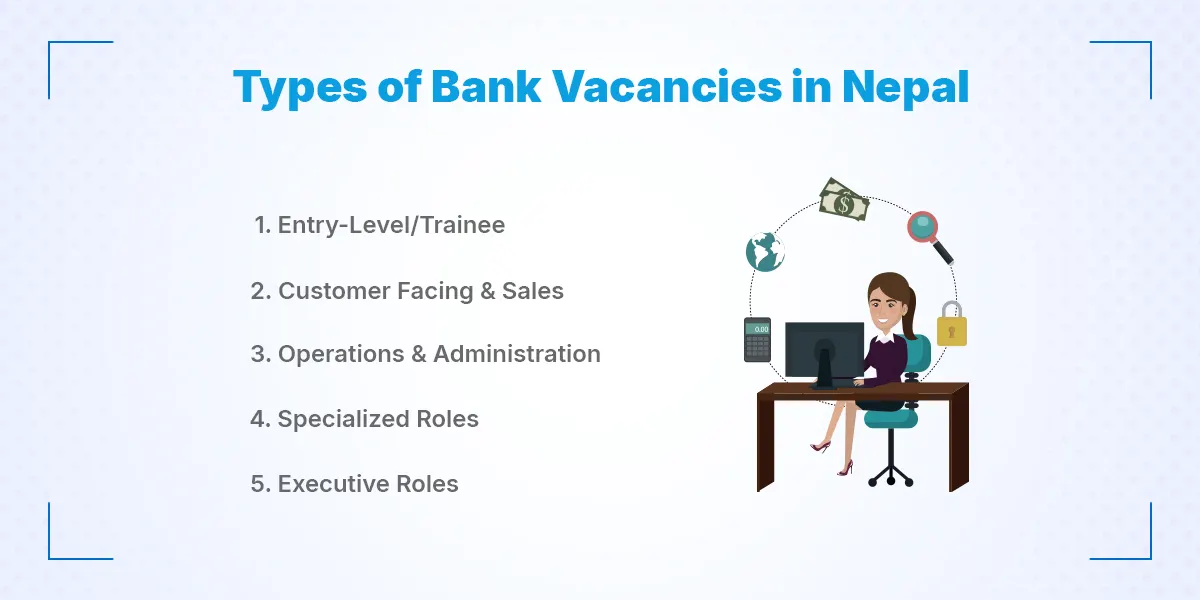
1. Entry-Level/Trainee
These positions are usually for fresh graduates. Banks hire trainees to learn basic banking operations. You may start with simple tasks like handling deposits or assisting senior staff. Training programs help you understand how the bank works. After completing training, you may get promoted to permanent positions. It’s a good way to start your banking career.
2. Customer Facing & Sales
These roles involve direct interaction with customers. Jobs include tellers, relationship officers, and sales jobs. You will help customers open accounts, solve issues, and promote bank products. Strong communication and friendliness are very important. You may also need to meet sales targets. These jobs are ideal if you enjoy talking to people and helping them.
3. Operations & Administration
This category covers back-office work in banks. Tasks include handling records, processing transactions, and managing daily operations. Attention to detail is very important. You may also support senior managers with reports or audits. Operations and admin jobs are less about selling and more about keeping the bank running smoothly. They suit people who like organized work and consistency.
4. Specialized Roles
Banks also hire for specific skill sets. These can include jobs in IT, risk management, finance, or compliance roles. You usually need relevant education or work experience. These positions help the bank in technical or strategic areas. Specialized jobs often come with higher pay. They are ideal if you have expertise in a particular field.
5. Executive Roles
Executives are in senior-level positions in banks. They handle decision-making, strategy, and team management. Experience in banking or finance is usually required. Executives guide operations, manage departments, and ensure goals are met. Leadership and problem-solving skills are very important. These roles offer high responsibility but also good career growth.
Who Can Apply for Bank Vacancies in Nepal?
Anyone meeting the age, education, and nationality requirements can apply for bank jobs in Nepal. Banks look for candidates who are qualified, skilled, and ready to work in different roles. If you know what is needed, you can focus your efforts and increase your chances of selection.
Eligibility Criteria: Age, Education, and Nationality
To apply, you must meet certain basic requirements. Usually, candidates should be Nepali citizens. Most banks have an age limit, often between 18 to 35 years, though it may vary by position. Educational requirements differ depending on the job. Entry-level roles may need a bachelor’s degree, while specialized positions might require a master’s or professional certification. Meeting these basic criteria is the first step to a successful application.
Required Skills and Qualifications for Different Banking Positions
Banks want candidates with both education and practical skills. Communication skills are crucial for customer-facing roles. For operations or administrative jobs, attention to detail is very important. Specialized roles like IT or finance need technical knowledge or certifications. Problem-solving, teamwork, and computer skills are valued across all positions. Preparing these skills in advance gives you a strong advantage.
How to Apply for a Bank Vacancy in Nepal: Step-by-Step
To apply for a bank vacancy, first find the latest announcements, check your eligibility, create an account on the bank’s website, fill out the application form, upload the required documents, and submit it carefully. Every step from finding the latest vacancies to submitting your application matters. Knowing the process in advance can save time and avoid mistakes.
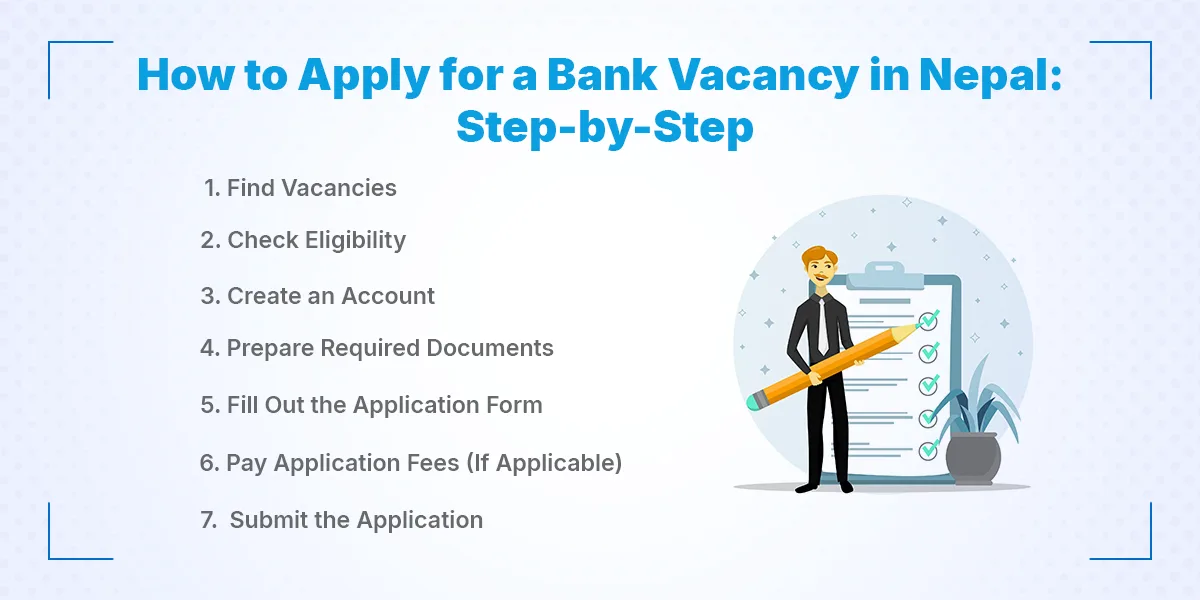
1. Find Vacancies
Start by checking official bank websites regularly. Banks often post notifications about new job openings online. You can also check job portals like Kumari Job, newspapers, and social media pages. Make a list of the vacancies that match your qualifications. Staying updated ensures you don’t miss deadlines.
2. Check Eligibility
Before applying, carefully read the eligibility criteria. This includes age, education, nationality, and required skills. Some positions may need additional certificates or experience. Make sure you meet all requirements before spending time on the application. This saves effort and increases your chance of selection.
3. Create an Account
Most banks require you to register online on their career portal. Provide accurate personal information and create a secure password. Keep your login details safe for future updates. Some banks allow offline applications, but online submission is faster and more reliable.
4. Prepare Required Documents
Collect all necessary documents before filling out the form. This usually includes academic certificates, identification proof, and experience letters. Make sure each document is clear and up-to-date. Organizing them beforehand prevents delays during submission.
5. Fill Out the Application Form
Carefully enter your personal, educational, and professional details. Double-check for mistakes in spelling, dates, and contact information. Incorrect details can lead to rejection. Take your time and fill the form accurately.
6. Pay Application Fees (If Applicable)
Some banks require an application fee for processing. Check the amount and payment method before proceeding. Pay the fee on time using the bank’s accepted options. Keep the receipt as proof of payment for future reference.
7. Submit the Application
After completing the form and payment, submit the application. Save a copy or print the confirmation page. This ensures you have proof of submission. Wait for updates on exams or interviews from the bank.
Where to Find Bank Vacancy Announcements in Nepal?
You can find bank vacancy announcements in Nepal on official websites, job portals like Kumari Job, social media, and networking platforms. Checking multiple sources ensures you don’t miss any opportunity. Staying updated helps you apply on time and increases your chances of selection.
1. Official Bank Websites
Most banks post their latest job openings on their official websites. You can visit the careers or recruitment section to see announcements. This is the most reliable source for authentic information. Notifications usually include eligibility, job description, and deadlines. Bookmark the pages to check regularly. Some banks even allow online application directly through their site.
2. Online Job Portals
Popular job portals in Nepal also list bank vacancies. Website like Kumari Job is widely popular. You can filter jobs by location, bank, or position. Setting up email alerts helps you get notifications instantly. Portals often provide deadlines, instructions, and links to apply online.
3. Networking Platforms like LinkedIn
LinkedIn is useful for professional networking and finding bank job posts. Many banks share openings through their official LinkedIn pages. You can also connect with employees to get updates and tips. Following relevant pages ensures you see announcements quickly. It also helps you learn more about the bank and its culture.
4. Social Media like Facebook
Banks sometimes post job openings on their Facebook pages. Job-related groups on Facebook also share announcements regularly. Following official pages or groups keeps you informed in real time. Social media updates are quick and easy to access on your phone. Always verify the information from official sources before applying.
Selection Process for Bank Vacancies in Nepal
Getting a bank job in Nepal involves several steps. Banks want to make sure they select the most suitable candidates. The process usually tests your knowledge, skills, and personality. Understanding each stage helps you prepare and increases your chances of success.
1. Application & Screening
The first step is submitting your application. Banks check if you meet the eligibility criteria, such as age, education, and skills. Only eligible candidates are shortlisted for the next step. Sometimes, documents are verified at this stage. Errors or missing documents can lead to rejection. It’s important to provide accurate and complete information.
2. Written Examination
Shortlisted candidates usually have to take a written or online test. The exam may cover general knowledge, banking concepts, and reasoning skills. Some banks also test mathematics, English, and computer knowledge. Time management is important to complete all questions. Preparing with past papers and practice tests helps a lot. This stage filters out candidates for further rounds.
3. Group Discussion (GD) (for officer/higher roles)
For officer-level or higher positions, banks often conduct a group discussion. Candidates are divided into small groups to discuss a topic. The bank observes communication skills, teamwork, and leadership qualities. Being confident, respectful, and clear in your points is important. Listening to others and presenting ideas effectively helps you stand out.
4. Personal Interview
The interview evaluates your personality, knowledge, and attitude. Questions may cover your resume, banking knowledge, and situational scenarios. Be honest, confident, and polite while answering. Interviews also check problem-solving and decision-making skills. Proper preparation and practice improve your chances of success.
5. Final Merit List & Appointment
After all tests and interviews, the bank prepares a merit list. Candidates are selected based on scores, experience, and performance in all stages. Those on the list receive an appointment letter. You will then complete the joining formalities and start your banking career.
Tips to Increase Your Chances of Selection
Getting selected for a bank job can be challenging because many candidates apply. But with proper preparation, you can improve your chances a lot. Small steps like practicing, planning, and organizing documents make a big difference. Here are some simple tips to help you succeed.
1. Understand the Exam Pattern
Before starting preparation, know what the exam will cover. Most banks test general knowledge, reasoning, English, and mathematics. Some positions may include computer knowledge or specialized topics. Understanding the format helps you focus on important areas. Check the number of questions and timing for each section. This makes your study plan more effective.
2. Practice Mock Tests
Solving mock tests helps you improve speed and accuracy. Try previous years’ papers if available. It also helps you get familiar with the types of questions asked. You will learn to manage time during the exam. Regular practice builds confidence and reduces stress.
3. Prepare for the Interview
Interviews are an important part of the selection process. Practice answering common banking questions and personal questions clearly. Be confident and polite while speaking. Try to explain your points with examples from experience or studies. Good communication and honesty leave a positive impression.
4. Manage Your Time Wisely
Make a study schedule and follow it strictly. Focus on weaker areas, but don’t ignore your strengths. Avoid last-minute cramming. Time management also applies to the exam, group discussion, and interview stages. Proper planning reduces pressure and increases efficiency.
5. Keep Documents Ready
Collect all required documents before applying. This includes academic certificates, ID proof, experience letters, and passport-sized photos. Check that everything is up-to-date and clear. Having documents ready avoids delays or rejection during screening. Keep copies safe for future reference.
Conclusion
Getting a bank job in Nepal is not just about applying; it’s about being prepared and confident. If you know where to find vacancies, meet the eligibility criteria, and follow the correct application steps, you are already ahead. Practicing for exams, preparing for interviews, and keeping your documents ready can make a big difference. Even small mistakes can cost opportunities, so attention to detail is very important.
Remember, consistency and planning matter more than last-minute effort. Every stage, from application to final selection, tests your skills and patience. Stay focused, stay updated, and keep improving. With the right approach, a successful banking career in Nepal is within your reach.
Want to build a reputable finance career? Explore top CA & ACCA Jobs in Nepal and start your journey today!
Frequently Asked Questions
Submit your comments

Get Our App On



SEO Training for Freshers in Nepal: Skills, Career & Job Opportunities
VIEW DETAILS
SEO Training vs. Self-Learning: Which Is Right for You?
VIEW DETAILS
How to Choose Between Two Job Offers
VIEW DETAILS
Digital Marketing Training Interview Questions and Answers for Freshers
VIEW DETAILS


Loading Comments...