



Ever wondered how students and young professionals get the opportunity to work with global organizations like the Food and Agriculture Organization (FAO)? For many individuals interested in agriculture, food security, environmental sustainability, and international development, securing an internship with FAO can be a valuable step toward building a global career. However, many students often ask the same question: how can you actually get an FAO internship in Nepal?
In this blog, we will explain how to apply for an FAO internship in Nepal, including the types of internship opportunities available, eligibility criteria, and the step-by-step application process. We will also explore the skills required to get selected, where to find FAO internship openings, and useful tips that can increase your chances of securing an internship with this international organization and other UN jobs in Nepal.
In this blog
What Is an FAO Internship? Types of FAO Internship Programs
FAO internship is a professional learning opportunity offered by the Food and Agriculture Organization (FAO) that allows students and recent graduates to gain practical experience in areas such as agriculture, food security, environmental sustainability, and international development. Interns work with FAO teams on research, projects, and policy-related activities while developing professional skills. These internships also connect interested candidates with opportunities like FAO Nepal vacancy and help individuals understand how global organizations address issues related to hunger, agriculture, and sustainable development.
1. Agriculture and Food Security Internship
The Agriculture and Food Security Internship focuses on projects related to sustainable farming, food production, and hunger reduction. Interns may assist FAO experts in conducting field research, analyzing agricultural data, and supporting food security programs. This role helps interns understand agricultural development strategies used to improve food systems. Interns may also contribute to reports and research related to crop productivity and rural livelihoods. It is ideal for students studying agriculture, agribusiness, or food security.
2. Environmental and Climate Change Internship
The Environmental and Climate Change Internship focuses on environmental sustainability and climate resilience in agriculture. Interns may work on projects that study the impact of climate change on farming systems and natural resources. They assist with environmental research, data collection, and project documentation. Interns may also support programs aimed at promoting sustainable land and water management. This internship is suitable for students in environmental science, climate studies, or natural resource management.
3. Research and Data Analysis Internship
The Research and Data Analysis Internship involves supporting FAO research teams by collecting, organizing, and analyzing data related to agriculture and food systems. Interns may work with statistical data, research reports, and development studies. They assist experts in preparing research documents, policy briefs, and analytical reports. This internship helps students gain experience in research methods and data-driven decision-making. It is particularly beneficial for students interested in research and development careers.
4. Communication and Program Support Internship
The Communication and Program Support Internship focuses on supporting FAO’s outreach, communication, and project coordination activities. Interns may assist with preparing reports, managing project documentation, and creating communication materials such as articles, newsletters, or social media content. They also support project teams in organizing meetings and coordinating activities. This internship helps develop skills in communication, program management, and international development work.
5. Policy, Development, and Project Management Internship
This internship provides experience in development policy and project management related to agriculture and food systems. Interns may assist in analyzing policies, preparing project proposals, and supporting program implementation. They work closely with FAO professionals involved in development planning and international cooperation. Interns also gain exposure to how global development programs are designed and managed. This opportunity is ideal for students studying development studies, economics, or public policy.
How to Get an FAO Internship in Nepal? Step-by-Step Guide
To get an FAO internship in Nepal, you need to identify available internship opportunities, meet the eligibility criteria, prepare the required documents, and apply through the official FAO career portal. The selection process typically involves application screening and sometimes an interview with FAO professionals. Understanding the application steps can help students prepare better and improve their chances of getting selected for an internship in Nepal. Following a clear step-by-step approach makes the FAO internship application process more organized and effective.
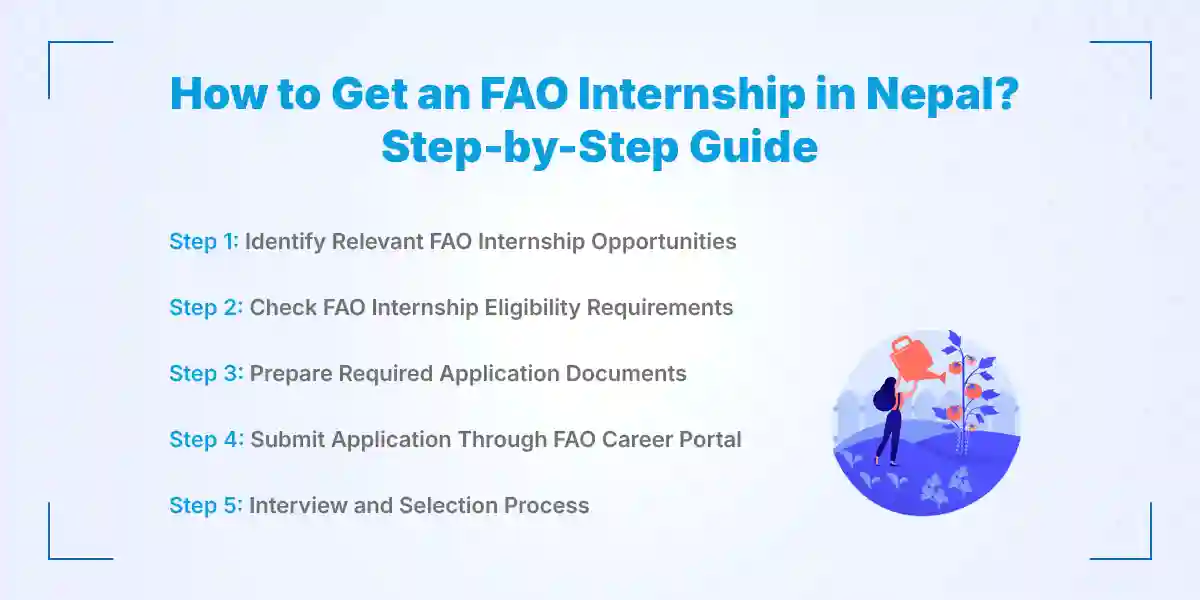
Step 1: Identify Relevant FAO Internship Opportunities
The first step in getting an FAO internship is identifying internship opportunities that match your academic background and career interests. FAO offers internships in areas such as agriculture, food security, environmental sustainability, research, and development programs. Candidates should regularly check FAO’s official career portal and internship announcements. It is important to review the internship description and responsibilities carefully. Choosing the right opportunity increases the chances of submitting a strong application.
Step 2: Check FAO Internship Eligibility Requirements
Before applying, candidates must review the eligibility requirements for the FAO internship program. Typically, applicants should be enrolled in a university program or have recently graduated from a relevant field such as agriculture, environmental science, economics, or development studies. FAO also expects applicants to have good academic performance and strong communication skills. Some roles may require knowledge of international development or research methods. Ensuring you meet these requirements helps avoid application rejection.
Step 3: Prepare Required Application Documents
Applicants need to prepare several important documents before applying for an FAO internship. These documents usually include a professional CV, a motivation letter, academic transcripts, and proof of enrollment or graduation. The motivation letter should explain your interest in FAO’s work and how your skills align with the internship role. It is important to highlight relevant academic experience, research work, or volunteer activities. Well-prepared documents can significantly strengthen your application.
Step 4: Submit Application Through FAO Career Portal
Once the documents are ready, candidates must submit their application through the official FAO career portal. Applicants need to create an account, complete the online application form, and upload the required documents. It is important to review all information before submitting the application to ensure accuracy. The FAO recruitment team then reviews the applications based on qualifications and relevance. Submitting a well-prepared application improves the chances of being shortlisted.
Step 5: Interview and Selection Process
After the application screening stage, shortlisted candidates may be invited for an interview or further evaluation. The interview process usually focuses on the candidate’s academic background, skills, and interest in FAO’s development work. Applicants may also be asked about their understanding of food security, agriculture, or environmental sustainability, so it is important to prepare for interview effectively. This stage allows FAO recruiters to assess whether the candidate fits the internship role. Successful candidates are then offered internship positions based on their performance.
Eligibility Criteria for FAO Internship
FAO internship program has specific eligibility requirements to ensure that applicants have the academic background and interest needed to contribute to FAO’s development work. These criteria usually focus on education level, enrollment status, language ability, and interest in agriculture or international development. Candidates must meet these requirements before applying through the FAO career portal. Understanding the eligibility criteria helps applicants prepare a stronger and more relevant internship application.
1. Academic Qualification Requirements
Applicants for an FAO internship are usually required to have a strong academic background in relevant fields. Common study areas include agriculture, environmental science, economics, development studies, food security, or related disciplines. Universities and academic performance are also considered during the selection process. Having coursework or research experience related to FAO’s work areas can strengthen an application. A solid academic foundation helps interns contribute effectively to FAO projects.
2. Enrollment or Graduation Status
FAO typically requires candidates to be currently enrolled in a university program or to have recently graduated. Many internship opportunities are designed for undergraduate or postgraduate students who want to gain professional experience. Recently graduated students may also apply within a certain period after completing their degree. This requirement ensures that interns can connect their academic knowledge with practical work experience. Being actively involved in education helps candidates qualify for the program.
3. Language Proficiency Requirements
Strong language skills are important for working in international organizations like FAO. Candidates are usually expected to have good proficiency in English, as it is widely used in international communication and reporting. Knowledge of additional UN languages such as French, Spanish, or Arabic can also be an advantage. Effective communication skills help interns collaborate with professionals from different countries. Language proficiency ensures that interns can participate in research, documentation, and project coordination tasks.
4. Nationality and Age Criteria
Applicants must be nationals of an FAO member country, as the internship program is open to individuals from countries that are part of the organization. While FAO does not always enforce strict age limits, candidates are typically students or young professionals early in their careers. Being within the target academic or early-career stage improves eligibility. Applicants must also meet general internship program requirements defined by FAO. These criteria help maintain fairness and consistency in the selection process.
5. Interest in Agriculture, Food Security, or Development
A genuine interest in agriculture, food security, rural development, or environmental sustainability is an important factor for FAO internship candidates. FAO focuses on addressing global challenges such as hunger, sustainable agriculture, and climate change. Applicants who demonstrate knowledge or passion for these topics often stand out during the selection process. Relevant coursework, research projects, or volunteer experiences can strengthen an application. Showing commitment to FAO’s mission increases the chances of being selected for the internship.
Skills Needed to Get Selected for an FAO Internship
To get selected for an FAO internship in Nepal, candidates need a combination of technical knowledge, research abilities, and strong communication skills. FAO often works on complex development projects related to agriculture, food security, and environmental sustainability. Therefore, interns must be able to analyze data, support research, and collaborate with international teams. Developing the right set of skills can significantly increase the chances of securing an internship with FAO.
1. Research and Data Analysis Skills
Research and data analysis skills are essential for interns working on FAO projects. Interns often assist in collecting agricultural data, analyzing reports, and supporting research related to food security and rural development. These skills help in identifying trends, preparing project reports, and supporting evidence-based decision-making. Knowledge of research methods and statistical tools can be particularly useful in this role. Strong analytical abilities allow interns to contribute effectively to FAO’s development programs.
2. Communication and Report Writing Skills
Good communication and report-writing skills are important for presenting research findings and supporting project documentation. FAO interns may be required to prepare reports, summaries, or policy briefs related to development projects. Clear writing helps communicate complex information in a structured and understandable way. Strong verbal communication skills are also useful when working with international teams and stakeholders. These abilities ensure smooth coordination and professional documentation of project activities.
3. Knowledge of Agriculture and Food Security Issues
Understanding agriculture and global food security challenges is highly valuable for FAO interns. FAO focuses on improving agricultural productivity, reducing hunger, and promoting sustainable farming systems. Interns with knowledge of these issues can better support project activities and research initiatives. Academic background or coursework related to agriculture, rural development, or environmental studies can be beneficial. Demonstrating awareness of global development challenges strengthens an internship application.
4. Project Coordination and Organizational Skills
Project coordination and organizational skills help interns manage tasks and support development programs efficiently. Interns may assist with organizing meetings, managing project documentation, and coordinating with different teams. Being organized ensures that tasks are completed on time and project activities run smoothly. These skills are particularly useful in international organizations where multiple stakeholders are involved. Strong coordination abilities help interns contribute effectively to project implementation.
5. Teamwork and Cross-Cultural Collaboration Skills
FAO operates in a global environment where professionals from different countries and backgrounds work together. Interns must be able to collaborate effectively with team members from diverse cultures and disciplines. Teamwork skills help create a positive and productive working environment. Respecting cultural differences and maintaining professional relationships are important in international organizations. These abilities allow interns to work successfully within FAO’s multicultural teams.
Where to Find FAO Internship Opportunities in Nepal?
You can find FAO internships in Nepal opportunities through the FAO official career portal and job portals like Kumari Job, along with other international job platforms. These platforms regularly publish internship announcements and allow candidates to apply online. Checking these sources frequently helps applicants stay updated about new FAO internship openings and deadlines.
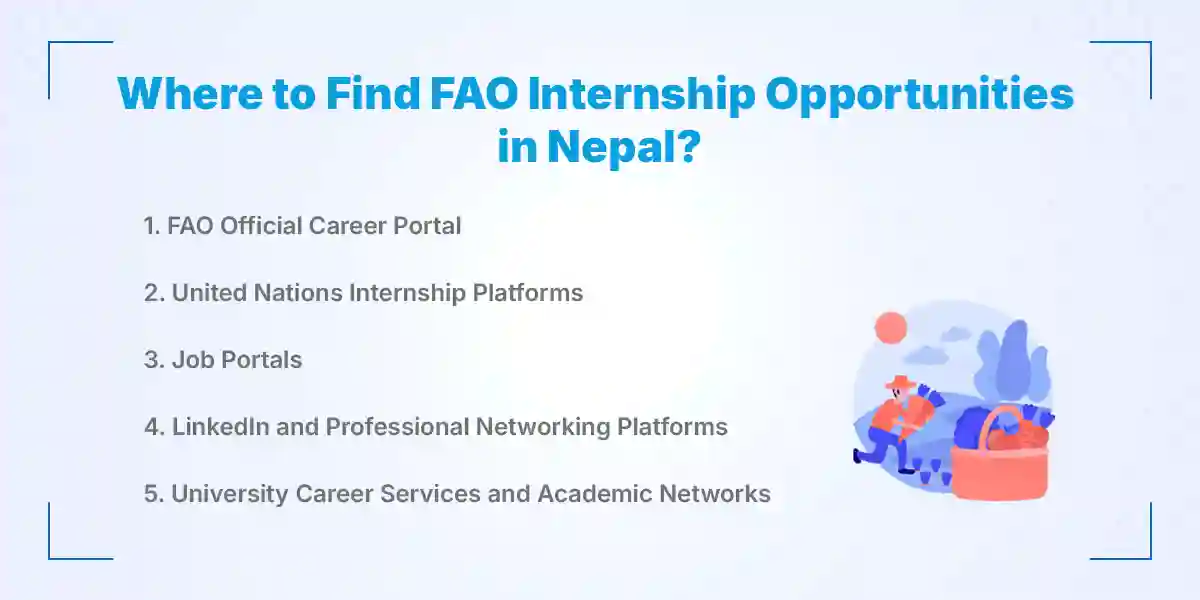
1. FAO Official Career Portal
FAO official career portal is the primary platform where FAO publishes internship opportunities worldwide. Candidates can create an account, search for available internships, and apply directly through the online system. The portal also provides detailed information about internship roles, eligibility criteria, and application deadlines. Applicants can filter opportunities based on location, field of study, or program type. Regularly checking this portal increases the chances of finding suitable FAO internship openings.
2. United Nations Internship Platforms
Many United Nations career platforms also advertise FAO internship opportunities and related development roles. These platforms list internships from different UN agencies, including FAO, UNICEF, and UNDP. Candidates can explore multiple opportunities in international organizations through these portals. The platforms also provide useful information about internship programs and recruitment procedures. Using UN internship websites can help applicants discover global development internship opportunities.
3. Job Portals
Online job portals such as Kumari Job can also be helpful for finding FAO internship opportunities in Nepal. International organizations, NGOs, and development agencies sometimes publish internship vacancies on these platforms. Job seekers can search for internship roles, upload their CVs, and apply directly through the portal. These websites make it easier to track new job and internship openings in one place. Regularly checking job portals helps candidates stay informed about development sector opportunities.
4. LinkedIn and Professional Networking Platforms
LinkedIn and other professional networking platforms are useful tools for discovering FAO internship announcements. Many organizations and professionals share internship opportunities through posts and job listings. Candidates can follow FAO pages, development organizations, and industry professionals to stay updated about openings. Networking with professionals working in agriculture, development, or international organizations can also provide valuable insights. Active engagement on professional platforms increases visibility and access to opportunities.
5. University Career Services and Academic Networks
University career centers and academic networks can also help students find FAO internship opportunities. Many universities collaborate with international organizations and share internship announcements with students. Career offices may also guide on preparing CVs, motivation letters, and internship applications. Professors and academic advisors sometimes recommend students for development internships. Using university networks can be very helpful for students seeking international internship opportunities.
Benefits of Doing an FAO Internship
Doing FAO internship in Nepal provides valuable professional experience for students and young professionals interested in international development. Interns gain practical exposure to real-world projects related to agriculture, food security, and sustainable development. The experience also helps them develop important professional skills and understand how global organizations operate. Overall, an FAO internship can strengthen a candidate’s career prospects in international organizations, NGOs, and development sectors.
1. Practical Experience in International Development Projects
One of the main benefits of an FAO internship is the opportunity to gain hands-on experience in international development projects. Interns may assist with research, data analysis, project documentation, and field activities related to agriculture and food security. This experience helps them understand how development programs are designed and implemented. Working on real projects also allows interns to apply their academic knowledge in practical settings. Such exposure is highly valuable for building a strong career in development work.
2. Networking with Global Development Professionals
FAO internship allows interns to interact with professionals from different countries and backgrounds. These professionals include development specialists, researchers, policy experts, and project managers. Building relationships with experienced professionals can help interns gain mentorship and career guidance. Networking also creates opportunities for future collaborations and job recommendations. Strong professional connections can be very helpful when pursuing careers in international organizations.
3. Exposure to Food Security and Agricultural Policies
Interns working with FAO gain deeper knowledge of global food security challenges and agricultural policies. They learn how international organizations address issues such as hunger, sustainable farming, and rural development. This exposure helps interns understand policy-making processes and development strategies. Interns may also assist in research related to agricultural programs and food systems. Such knowledge is valuable for careers in agriculture, environmental sustainability, and development policy.
4. Opportunity to Work with United Nations Experts
FAO is a specialized agency of the United Nations, which means interns have the chance to work alongside experienced UN professionals. These experts often have extensive knowledge in fields such as agriculture, development economics, and environmental management. Interns can learn directly from their expertise and observe how global development projects are managed. Working with UN professionals also provides insights into international organizational structures. This experience can be highly beneficial for future careers in global development organizations.
Career Opportunities After an FAO Internship
Completing an FAO internship in Nepal can open doors to several career opportunities in the international development and agriculture sectors. Interns gain valuable experience, professional connections, and exposure to global development programs. This experience helps candidates stand out when applying for roles in international organizations, NGOs, research institutions, and policy development agencies. An FAO internship also strengthens professional skills that are highly valued in the development sector.
1. Jobs in International Organizations and UN Agencies
An FAO internship can create pathways to careers in international organizations and other United Nations agencies. Candidates who gain experience with FAO often become more competitive when applying for roles in organizations such as UNDP, UNICEF, and WFP. These organizations frequently recruit professionals with experience in international development and policy work. Interns who demonstrate strong performance during their internship may also receive recommendations for future roles. Such experience can help build long-term careers in global development institutions.
2. Opportunities in NGOs and INGOs
Many former FAO interns pursue careers in non-governmental organizations (NGOs) and international NGOs (INGOs). These organizations work on projects related to agriculture, food security, rural development, and environmental sustainability. FAO internship experience helps candidates understand development programs and project management processes, and can open pathways to NGO INGO Jobs in Nepal. NGOs and INGOs often look for professionals who have worked with international organizations. This background can significantly improve employment opportunities in the development sector.
3. Careers in Agricultural Development and Food Security
FAO internships provide strong foundations for careers in agricultural development and food security programs. Professionals in this field work on improving agricultural productivity, supporting farmers, and promoting sustainable food systems. Many development projects require experts who understand agricultural policies and rural development strategies. Interns who gain knowledge in these areas can contribute to programs focused on reducing hunger and improving food security. Such roles are available in both government and international development agencies.
4. Research and Policy Development Roles
FAO internship experience is also valuable for individuals interested in research and policy development careers. Interns often participate in research projects, data analysis, and policy discussions related to agriculture and food systems. This experience helps them develop strong analytical and research skills. Research institutions, think tanks, and policy organizations often hire professionals with such backgrounds. Working in research and policy roles allows individuals to contribute to evidence-based development strategies.
Tips to Increase Your Chances of Getting an FAO Internship
Getting selected for an FAO internship in Nepal can be competitive, as many students and young professionals apply for these opportunities. To stand out, applicants should focus on building relevant skills, preparing strong application documents, and demonstrating a genuine interest in FAO’s work areas. A well-prepared application and a clear understanding of food security and development issues can significantly improve selection chances. Following a few practical strategies can help candidates present themselves as strong and capable applicants.
1. Build Relevant Academic and Field Experience
Having a relevant academic background and field experience can greatly strengthen an FAO internship application. Students studying agriculture, environmental science, economics, or development studies often have an advantage. Participating in research projects, volunteer programs, or development-related activities can demonstrate practical knowledge. Field experience helps candidates understand real-world challenges related to agriculture and food security. These experiences show recruiters that the candidate is genuinely interested in development work.
2. Write a Strong Resume and Motivation Letter
A well-structured resume and motivation letter play an important role in the FAO internship selection process. The resume should clearly highlight academic achievements, relevant skills, and previous experiences related to development or research. The motivation letter should explain why the candidate wants to work with FAO and how their background aligns with the organization’s mission. Strong writing and clear presentation make the application more professional. A compelling motivation letter can leave a positive impression on recruiters.
3. Highlight Interest in Food Security and Agriculture
Since FAO focuses on agriculture and global food security, applicants should clearly demonstrate their interest in these areas. This can be done by mentioning relevant coursework, research projects, internships, or volunteer experiences. Showing awareness of global challenges such as hunger, climate change, and sustainable agriculture can strengthen the application. Candidates who understand FAO’s mission are more likely to stand out. Demonstrating passion for these issues shows commitment to FAO’s goals.
4. Prepare Well for Internship Interviews
Preparing well for the internship interview is essential for candidates who are shortlisted. Applicants should research FAO’s projects, mission, and areas of work before attending the interview. They may be asked questions about agriculture, development challenges, or their academic experiences. Practicing clear and confident communication can improve interview performance. Being prepared also shows professionalism and a genuine interest in the internship opportunity.
Conclusion
Getting an FAO internship in Nepal can be a valuable opportunity for students and young professionals interested in agriculture, food security, and international development. The internship provides hands-on experience, exposure to global development projects, and the chance to work with experts in the field. By understanding the eligibility criteria, preparing strong application documents, and developing relevant skills, candidates can significantly improve their chances of securing this opportunity. Regularly checking the FAO career portal and other job platforms is also important to stay updated about new internship openings.
Overall, an FAO internship can serve as a strong foundation for building a career in international organizations, NGOs, and development sectors. The experience gained through such internships helps individuals develop professional networks, research abilities, and practical knowledge of global development challenges.
Frequently Asked Questions
Submit your comments

Get Our App On



SEO Training for Freshers in Nepal: Skills, Career & Job Opportunities
VIEW DETAILS
SEO Training vs. Self-Learning: Which Is Right for You?
VIEW DETAILS
How to Choose Between Two Job Offers
VIEW DETAILS
Digital Marketing Training Interview Questions and Answers for Freshers
VIEW DETAILS


Loading Comments...