



Finding a good cashier job in Nepal can be confusing. Many people apply without knowing how much they will actually earn, and end up disappointed when the salary is less than expected. It feels frustrating to work hard but not get a clear picture of your pay.
In this guide, we will break down everything about cashier salaries in Nepal. You will learn what freshers earn, how experience changes pay, and which industries offer the best salaries.
By the end, you will understand how much cashiers earn, what factors affect salary, and how you can plan your career to earn more.
In this blog
What is the Average Cashier Salary in Nepal?
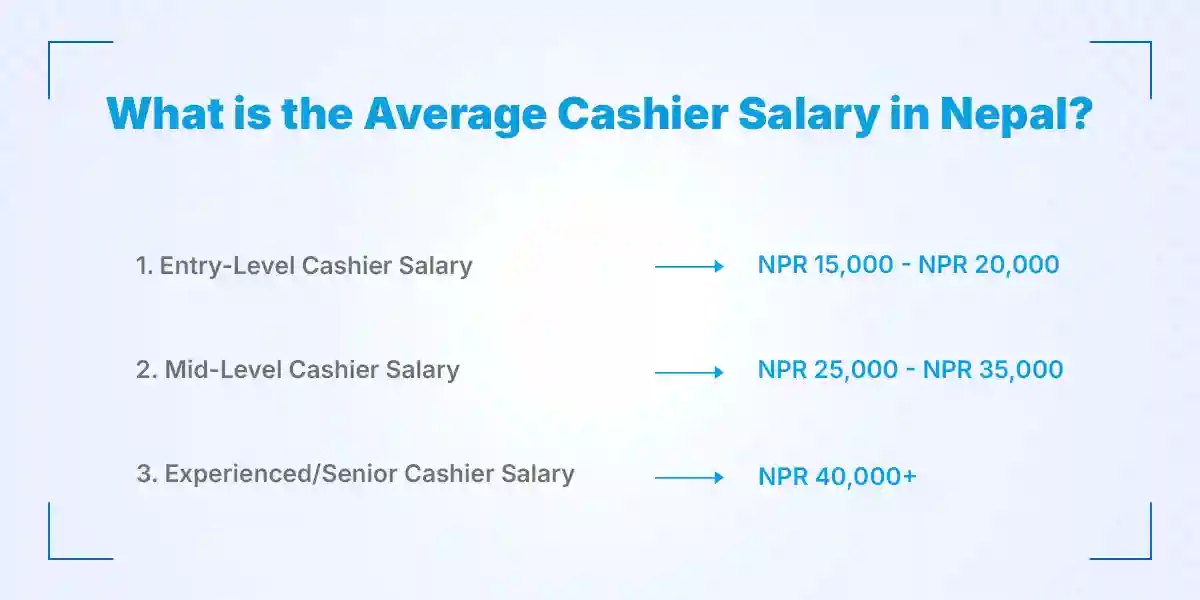
In Nepal, the average salary in Nepal for a cashier typically ranges from NPR 15,000 for beginners to over NPR 40,000 for senior professionals in the banking or high-end retail sectors. This wide range exists because your take-home pay depends heavily on the type of company you work for and how many years you have spent behind the counter. Understanding these specific pay brackets helps you set realistic expectations before you walk into a job interview or ask for a raise.
1. Entry-Level Cashier Salary
If you are a fresh graduate or a student looking for your first job, this is where you will likely start. Most small grocery stores, local cafes, and small retail shops in Nepal offer a starting range of NPR 15,000 to NPR 20,000 to newcomers. At this stage, your main task is learning how to handle cash and basic billing software correctly. Since you don't have much experience yet, employers focus more on your honesty and basic math skills. You might find that some places also offer small daily food allowances on top of this basic pay. It is a great way to get your foot in the door and understand how businesses run. Many people use this phase to build the confidence needed for bigger roles in the future, especially when exploring entry-level jobs in Nepal.
2. Mid-Level Cashier Salary
Once you have 2 to 4 years of experience, you can move into the higher salary bracket of NPR 25,000 to NPR 35,000. Mid-level cashiers usually work in larger supermarkets like Bhat-Bhateni, popular clothing brands, or busy restaurants. By now, you are expected to work faster, handle difficult customers smoothly, and manage busy rush hours without making mistakes. Employers pay more here because they trust you to handle larger sums of money and help train newer staff. You are likely familiar with various POS (Point of Sale) systems and digital payment methods like Fonepay or eSewa. This role often comes with better benefits, such as Dashain bonuses and formal provident fund contributions, making it a solid step forward when exploring mid-level jobs.
3. Experienced/Senior Cashier Salary
Reaching the senior level usually requires 5 or more years of experience, where salaries often reach NPR 40,000 or more. Senior cashiers in commercial banks or luxury hotels often earn these higher rates due to the heavy level of responsibility. In these roles, you aren't just scanning items; you might be managing a whole team of cashiers or handling complex financial documents. Accuracy is everything at this level, as you are dealing with very high transaction volumes every single day. Large corporate houses and international chains in Nepal are the primary employers willing to pay these premium rates. Besides the high salary, these positions usually offer the best job security and comprehensive insurance packages.
Cashier Salary in Nepal by City and Location
Where you work in Nepal makes a huge difference in how much you take home at the end of the month. While the job is the same, a cashier in a busy city mall usually gets a higher salary than someone in a small town. This is because big cities have more customers and higher costs of living. Let’s look at what you can expect to earn in different parts of the country, especially when comparing jobs by city.
1. Cashier Salary in Kathmandu
As the capital city, Kathmandu offers the highest pay for cashiers, usually between NPR 20,000 and NPR 35,000. Because the city is full of big shopping malls and banks, there is always a high demand for staff. The higher pay helps workers cover expensive house rents and transport costs within the valley. If you work in a popular area like Durbar Marg, you might even earn a bit more.
2. Salary in Pokhara, Biratnagar, and Other Cities
In major cities like Pokhara and Biratnagar, a cashier can expect to earn between NPR 18,000 and NPR 28,000. These cities have many large department stores and hotels where the work is steady, and the pay is fair. In Pokhara, you might even get extra tips or service charges if you work near the lakeside tourist areas. While the pay is slightly lower than in Kathmandu, living there is also a bit cheaper.
3. Urban vs Rural Cashier Salary Differences
In rural areas or small villages, the salary for a cashier is often between NPR 15,000 and NPR 20,000. Most jobs in these areas are in small local shops or family businesses that have smaller budgets. However, you don't need as much money to live comfortably in a village compared to the city. Many local employers also provide free snacks or meals, which helps you save more of your actual salary.
Factors That Affect Cashier Salary in Nepal
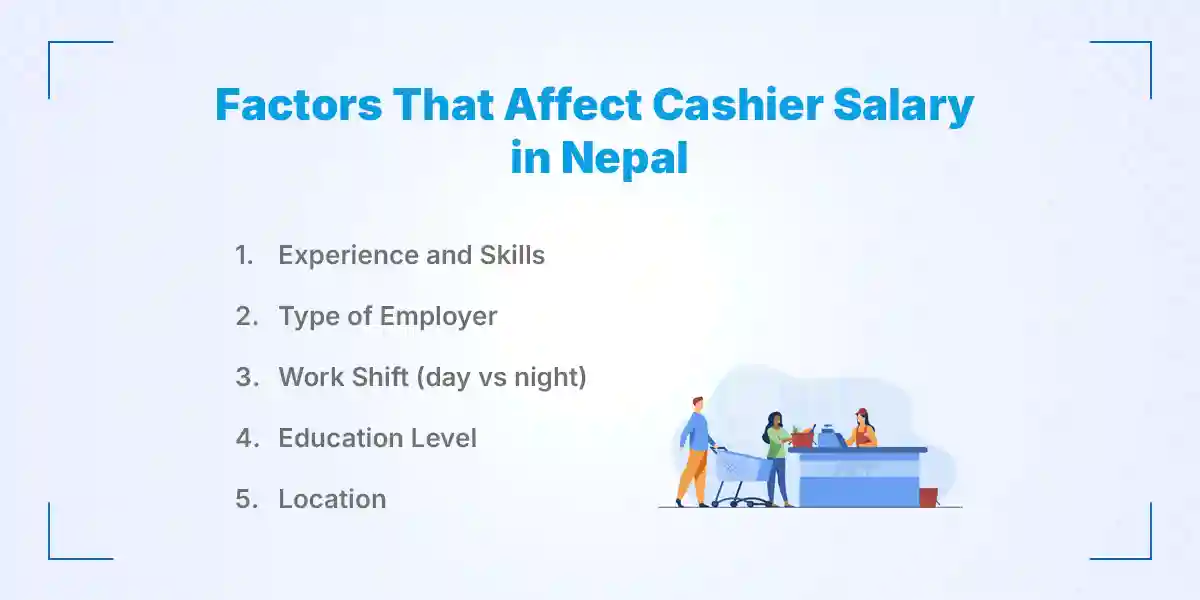
In Nepal, not every cashier gets the same paycheck at the end of the month. Many things can change your salary, like where you work or how much you know about the job. Some factors might help you earn a few thousand extra, while others might keep your pay at the starting level. Knowing these factors helps you understand how to ask for a better salary.
1. Experience and Skills
If you have worked as a cashier before, you can usually ask for a higher salary. A person with 3 years of experience will earn much more than someone who is just starting their first day. Being fast with numbers and knowing how to use computer billing software like Tally or POS systems is very important. Employers like to pay more to someone who can handle a long line of customers without making mistakes. Good communication and being polite also help you get promoted faster.
2. Type of Employer
Where you work is one of the biggest factors in how much you get paid. A small local grocery shop might only pay the basic minimum, while a big supermarket chain like Bhat-Bhateni or a commercial bank will pay much more. Banks and large corporate offices often offer extra benefits like bonuses and insurance that small shops cannot provide. If you work for an international brand or a luxury hotel, your salary will naturally be on the higher side. Generally, the bigger the company, the better your monthly paycheck will be.
3. Work Shift (day vs night)
The time of day you work can also change your total take-home pay. Most cashiers work during the day, but some places, like 24-hour convenience stores, hospitals, and big hotels, need people at night. Since night shifts are harder and less popular, many employers offer an extra "night allowance" to encourage staff. This can add a nice amount to your basic salary every month. If you are comfortable working late hours, it is a great way to increase your earnings.
4. Education Level
While you don't always need a big degree to be a cashier, having a Grade 12 or a Bachelor’s degree in Management can help. Many banks and large showrooms in Nepal specifically look for staff who have finished their +2 studies. If you have a background in accounting or math, employers trust you more with large sums of cash. This trust often leads to a higher starting salary compared to someone with less education. It also makes it easier for you to move up to a manager role later on.
5. Location
As we discussed before, the city you live in plays a huge role in your salary. Working in a busy hub like Kathmandu or Pokhara usually pays more because the cost of living there is very high. In contrast, a shop in a small village might pay less because its expenses and customer numbers are lower. However, in cities, you might spend more on rent and bus fare, so keep that in mind. Always check the local market rates in your specific town before saying yes to a job offer.
What Skills Can Increase Your Cashier Salary?
To earn a higher salary as a cashier in Nepal, you need to master digital billing software, fast cash handling, and great customer service skills. While the basic job is simple, employers in big supermarkets and banks pay much more to staff who can work quickly without making mistakes. Learning these specific skills can help you move from a basic salary to a much better monthly income.
1. Technical Skills (POS and Billing Software)
Most big stores in Nepal now use computer systems to make bills, so knowing how to use POS (Point of Sale) software is a must. You should try to learn popular local software like IMS, Swastik, or Tally, which are used in many supermarkets and restaurants. If you can handle barcode scanners and generate sales reports on your own, you become very valuable to your boss. Employers are always happy to pay extra to someone they don't have to train from scratch. Building strong IT skills also makes you look more professional during your job interview.
2. Digital Payment Skills (eSewa, Khalti, and Fonepay)
Nowadays, many people in Nepal prefer to pay with their phones rather than carrying cash. You need to be very fast at using apps like eSewa, Khalti, and Fonepay to accept these payments correctly. It is important to know how to check the transaction history to make sure the money has actually arrived in the store's account. Sometimes there are network issues, and a skilled cashier knows how to handle these technical glitches calmly. If you can manage both physical cash and digital wallets smoothly, you can easily apply for higher-paying jobs in big shopping malls.
3. Soft Skills (Communication and Accuracy)
Being a cashier is not just about numbers; it is also about how you talk to people. You are often the last person a customer sees, so a friendly smile and polite speaking can make them want to come back. You also need to have high accuracy so that you never give back the wrong change or make a mistake on the bill. If your cash drawer always matches perfectly at the end of the shift, your manager will trust you more. This trust often leads to faster promotions and yearly salary increases.
4. Basic Accounting and Inventory Knowledge
If you understand the basics of accounting, you can help the business track what items are selling the most and what is out of stock. Many cashiers in Nepal also help with inventory management, which means keeping an eye on the store's products. Knowing how to record daily sales and manage a simple ledger makes you more than just a cashier; it makes you a mini-manager. Small businesses especially look for people who can handle these extra tasks and are willing to pay more for them. It also prepares you for a future career as an accountant or a store supervisor.
How to Increase Your Cashier Salary in Nepal?
To increase your cashier salary in Nepal, you should move to higher-paying industries like banking, learn advanced billing software, and gain at least two years of solid experience. While starting pay might feel low, taking small steps to improve your value can lead to much better offers. By focusing on these three specific areas, you can stop working for basic wages and start earning a professional salary.
1. Switching Industries
One of the fastest ways to get a big raise is to move from a small retail shop to a more profitable industry. For example, moving from a local grocery store to a commercial bank or a luxury hotel can often double your monthly pay. Banks in Nepal pay much more because the responsibility is higher and the work is more formal. You can also look for jobs in large international showrooms or high-end restaurants in Kathmandu. These sectors usually have better budgets and offer extra benefits that small businesses cannot afford.
2. Gaining Experience
In the world of billing and cash handling, time is money, and having a few years on your resume makes you very attractive to employers. A cashier with 3 to 5 years of experience is much less likely to make mistakes with large sums of cash. When you have proven that you are honest and fast, you can negotiate for a much higher salary during your next job interview. Most big supermarkets in Nepal prefer hiring experienced staff and are willing to pay a premium for them. Staying with one reputable company for a long time can also lead to yearly raises and promotions.
3. Upskilling Strategies
You can boost your income by learning skills that go beyond just pressing buttons on a calculator. Start by mastering advanced accounting software like Tally or specialized POS systems used by big retail chains. You should also become an expert in digital payments like Fonepay and eSewa so you can handle technical issues quickly. Taking a short course in basic office management or customer service can also set you apart from other applicants. The more problems you can solve for your boss, the more they will be willing to pay to keep you on their team.
Where to Find Cashier Jobs in Nepal?
You can find the best cashier jobs in Nepal on top online job portals like Kumari Job, follow company websites, use LinkedIn, and join local Facebook groups. Knowing exactly where to look is half the battle when you are trying to start or grow your career. By checking these four platforms regularly, you will never miss out on a great vacancy in your city.
1. Online Job Portals
The easiest way to find cashier vacancies is by visiting trusted job sites like Kumari Job. Employers from supermarkets, banks, and hotels post new hiring ads here every single day. You can easily create a free profile, upload your CV, and apply to multiple places with just one click. Using these websites saves you the time and energy of walking from shop to shop with your paper resume. It is the best place to find real jobs with clear salary details.
2. Company Career Pages
Big supermarkets like Bhat-Bhateni or commercial banks often post jobs directly on their own websites. If you have a dream company you want to work for, you should check their "Careers" or "Vacancies" page once a week. They usually have a special online form you need to fill out to apply for cashier roles. Sometimes, these big brands do not put their ads anywhere else to save money. Applying directly shows the HR team that you really want to work for them.
3. LinkedIn
LinkedIn is a great app for making professional connections and finding high-paying cashier jobs in large corporate houses. You can follow HR managers of different banks and luxury hotels to see when they are hiring new staff. Many companies post quick updates about walk-in interviews directly on their LinkedIn feeds. Make sure your profile looks neat and clearly shows your past billing experience. It is a very smart way to stand out from the crowd and get noticed by top employers.
4. Facebook Job Groups
Many small and medium-sized businesses in Nepal use Facebook to find local staff quickly. You can join popular groups like "Jobs in Kathmandu" or "Pokhara Job Vacancy" to see fresh posts every morning. Store owners often just leave a phone number and ask you to call them or drop a message on WhatsApp. It is a very fast way to get an interview for a local grocery shop or a cafe near your house. Just be careful and make sure the job post looks real before you share your personal details.
Is a Cashier Job Worth It in Nepal?
Many young people wonder if working as a cashier in Nepal is a good career choice. The simple answer is yes, especially if you are just starting out. For fresh graduates, students, or anyone looking to enter the job market quickly, it is one of the easiest jobs to get. You do not need a tough degree or years of experience to land your first role in a local mart, a clothing store, or a busy cafe. It teaches you real-life skills about money and how businesses actually run on a daily basis.
Here are a few reasons why a cashier job is worth your time:
- Easy Entry: You can easily find cashier jobs in almost every city, from small grocery shops to big shopping malls.
- Skill Building: You learn how to talk to different customers, handle physical cash safely, and use computer billing software.
- Career Growth: Starting as a cashier is a great first step. Many people move up to become store managers, accountants, or even bank tellers later.
- Flexible Hours: Many places offer morning or evening shifts, making it a very good part-time option for college students.
However, it is important to know that the starting pay can be low, and standing on your feet all day can be very tiring. The job also requires a lot of honesty and high focus because you are dealing with other people's money.
Overall, if you want a fast, easy way to start earning your own money and gain basic office skills, a cashier job is totally worth it.
Conclusion
So, how much does a cashier really earn in Nepal? The clear answer is that your monthly salary will usually fall between NPR 15,000 and NPR 40,000. Your exact pay depends on your skills, your experience, and the city you work in.
If you are just starting at a local shop, you will get basic pay. But if you learn digital billing systems and get a job at a commercial bank or a big supermarket in Kathmandu, you can earn a very good salary. These top jobs also give you extra benefits like Dashain bonuses and health insurance. A cashier job is a great starting point for your career. Know your true market worth, keep learning, and your income will surely grow.
Frequently Asked Questions
Submit your comments

Get Our App On



SEO Training for Freshers in Nepal: Skills, Career & Job Opportunities
VIEW DETAILS
SEO Training vs. Self-Learning: Which Is Right for You?
VIEW DETAILS
How to Choose Between Two Job Offers
VIEW DETAILS
Digital Marketing Training Interview Questions and Answers for Freshers
VIEW DETAILS


Loading Comments...