



Have you ever looked at healthcare jobs and wondered if a medical lab technologist actually earns a good salary in Nepal? Many students feel confused because different sources show different income numbers. Parents also worry if this career can give a stable future. Salary questions can create stress when you are trying to choose the right path.
Well, BSc MLT is becoming a popular choice as hospitals and labs grow fast in Nepal. More tests, more labs, more jobs. That means more earning possibilities, too.
In this guide, you will get clear and real information about the BSc MLT salary in Nepal. Simple language. No confusing terms. By the end, you will know how much you can earn and how your income can grow step by step.
In this blog
What is BSc MLT, and Why Is It a High-Demand Course in Nepal?
BSc MLT stands for Bachelor of Science in Medical Laboratory Technology. It is a four-year health science course where students learn how to test blood, urine, and other samples to help doctors find diseases. Medical lab technicians do not work directly with patients like nurses or doctors. They work behind the scenes, but their job is equally important in saving lives. Every correct report supports treatment. Every quick test result brings faster care. That is why this field is highly respected in hospitals and diagnostic centers.
Today, the demand for lab services in Nepal is growing nonstop. People do more health checkups. Hospitals are increasing. New private labs open in almost every city. And with that, job needs are rising too.
Role of Medical Lab Technologists
- They test blood, urine, and other samples for diagnosis.
- They help doctors detect infections, diabetes, cancer, and many other conditions.
- They handle lab machines and maintain the accuracy of test reports.
- They support emergency care with fast results during critical cases.
As Nepal’s healthcare sector continues to develop, trained lab technicians are needed everywhere. From big hospitals in Kathmandu to small clinics outside the valley, there are opportunities. More awareness about health has made regular tests a normal thing. That means more work for labs.
Because of this strong growth, BSc MLT has become one of the most promising careers in Nepal. It offers good job security, a stable income, and a chance to work in Nepal or abroad.
BSC MLT Salary in Nepal by Sector
The average salary of BSc MLT graduates in Nepal varies depending on where they work. The pay changes a lot depending on whether you work in a government hospital, a private lab/clinic, or with an NGO or INGO. Knowing these differences helps you see where you might start and how much you could earn over time. Let’s look at each sector.
1. Government Hospital
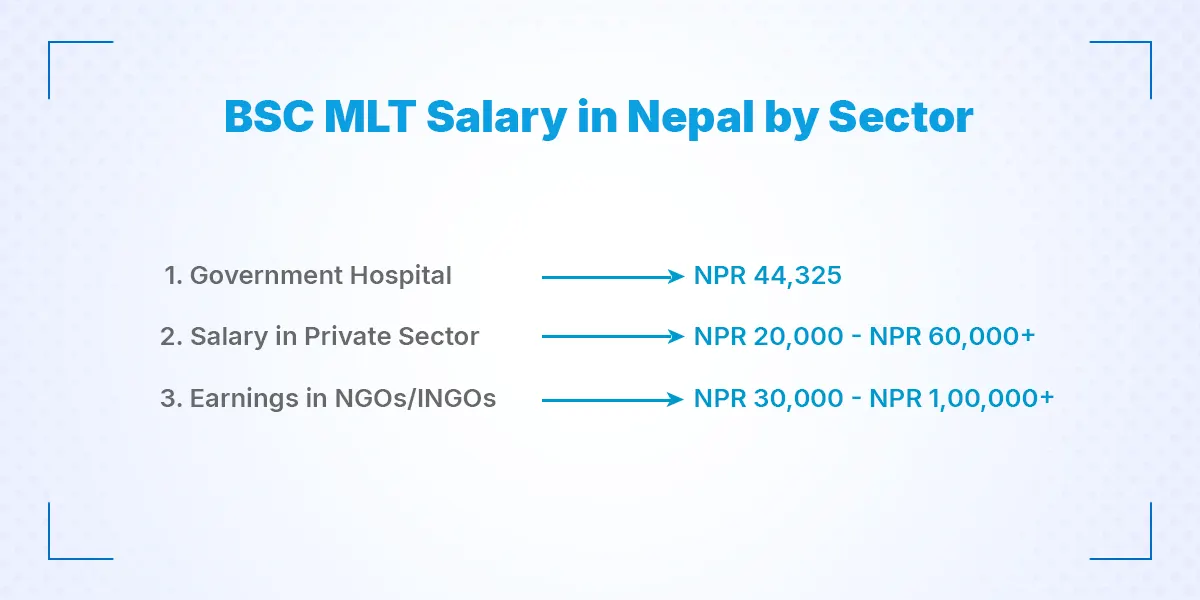
If you work in a government hospital as a lab technologist with a BSc MLT, you can expect a base salary of around NPR 44,325. That pay is set by official government salary slabs. Government jobs usually come with other benefits, such as job security and perks. Shifts may be fixed, and you get standard allowances. Many people see government hospitals as stable and reliable workplaces. The work environment tends to follow regular rules and procedures. For a fresh BSc MLT graduate, this is often the safest entry-level place.
2. Private Sector
In private hospitals, clinics, or diagnostic centers, salary ranges widely, from NPR 20,000 to NPR 60,000+. It depends a lot on the size of the hospital or lab and how busy it is. Small labs may pay on the lower side. Larger clinics and labs may offer more, especially if you have good skills or work long hours. Sometimes, extra shifts or overtime can push earnings higher. Private labs may also offer quicker promotions or pay raises. But job security and benefits may vary compared to government jobs. It’s more flexible with potential reward but also some unpredictability.
3. NGOs / INGOs / Non-Profit / Research Institutions
Working in NGOs/INGOs or research-based institutions often offers a different pay range, from roughly NPR 30,000 up to NPR 100,000+. Salary here depends on the organization, projects, and funding. Well-funded programs or international grants often pay more. Sometimes, lab work for research or special health projects brings higher pay. There may also be added perks like training opportunities, health insurance, or allowances. These jobs can offer both good pay and experience with varied lab work. For many BSc MLT graduates, this sector becomes a mix of decent income and interesting exposure.
BSC MLT Salary in Nepal Based on Experience Levels
The salary of a lab technician in Nepal can change a lot depending on how much experience you have. As you gain years of work, better skills, and maybe take on more responsibility, pay tends to go up. Below is a rough idea of how earnings can grow from a fresh graduate to a senior-level professional after completing a BSc MLT
1. Entry-level BSc MLT Salary After Graduation
When you are just starting your career after completing a BSc MLT, the salary usually begins on the lower side. Fresh graduates working in smaller labs or basic clinics earn around NPR 15,000 to NPR 25,000 per month. In bigger private hospitals or well-known diagnostic centers, the starting salary can be slightly better, around NPR 25,000 to NPR 30,000, depending on work shifts and workload. At this level, most responsibilities are simple routine tests, basic report handling, and learning lab procedures step by step. The income might not feel very high at first, but it is the stage where you gain real experience and build confidence.
2. Mid-level Salary for Lab Technologists with Credentials
After three to five years of experience, salaries start to grow at a steady pace. Many mid-level lab technicians in Nepal earn around NPR 30,000 to NPR 40,000 per month. In busy private labs with heavy test flow, the pay often moves above NPR 40,000 to NPR 50,000 or more. The work becomes more responsible during this stage. You handle more advanced machines, help guide new staff, and deal with more complex tests. This is the period where your earnings improve and your skills become solid.
3. Senior-level Earnings for Experienced Lab Supervisors and Specialists
When you reach a senior level with seven to ten years or more experience, the salary improves a lot. Senior lab technicians, supervisors, or specialists often earn above NPR 70,000 per month in top hospitals, research centers, or large diagnostic institutions. Those with very strong experience or working in well-funded projects can even reach around NPR 80,000 to NPR 90,000 or more monthly. At this point, you handle leadership roles, manage lab teams, ensure quality control, and deal with high-value tasks. This level brings both higher income and strong job respect.
Allowances and Benefits for BSc MLT Professionals
Salary is not the only earning source for BSc MLT graduates in Nepal. Many hospitals and labs offer extra benefits that improve overall income and job satisfaction. These benefits make the job more stable and fair. Let’s look at the common allowances and perks that medical lab technicians receive in Nepal.
1. Overtime Pay and Shift Duty Allowance
Hospitals and medical labs operate from early morning to late night, and some even run 24 hours. Because of this, lab technicians often work extra shifts. When that happens, they receive overtime pay, which adds a good amount to their monthly income. Night duty allowance is also common since working at night can be tough. Busy labs offer even more overtime opportunities, especially during peak testing seasons. These allowances help boost total earnings without changing the basic salary. It is one of the simplest ways for BSc MLT staff to increase their monthly take-home pay.
2. Health Insurance and Pension Benefits
Many hospitals provide health insurance to their lab staff. This reduces medical costs for the employee and sometimes for family members too. In government jobs, pension benefits and social security plans are also included. This gives long-term financial safety, especially after years of work. Private institutions also offer insurance, but benefits vary depending on the organization. These perks make the job feel more secure, both for health and the future.
3. Training and Professional Development Sponsorships
To keep up with new lab technology and testing trends, many employers offer training programs. Some hospitals even sponsor short courses, workshops, or skill certifications for their lab technicians. This helps them learn new techniques and operate modern machines. Better skills often lead to promotions and higher salaries. Working in such environments feels exciting because you keep growing. For many BSc MLT graduates, these development opportunities are just as important as the salary itself.
Factors Affecting BSC MLT Salary in Nepal
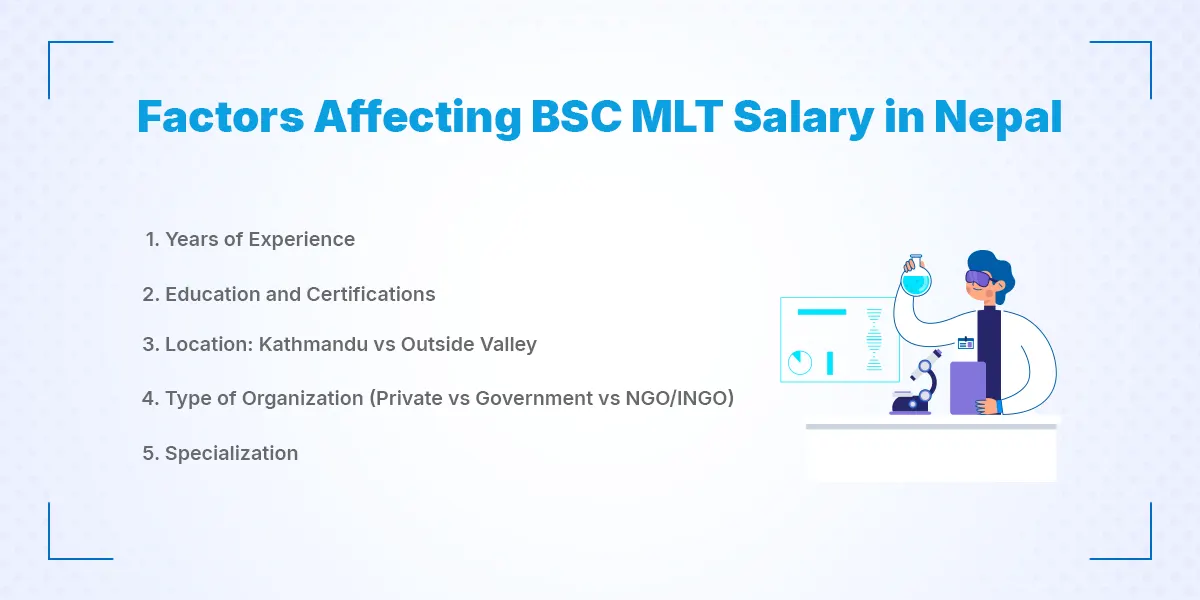
Salary for BSc MLT professionals in Nepal is not fixed. It depends on many factors like experience, skills, and where you work. Even two people with the same degree may earn differently based on these points. Understanding these factors can help you plan your career better and increase your earnings over time.
1. Years of Experience
One of the biggest factors affecting salary is experience. Fresh graduates usually earn less, while professionals with several years of work experience get higher pay. The longer you work, the more responsibility you handle, and the higher your salary can go. Employers value experience because experienced staff make fewer mistakes and can manage lab work efficiently. Even small improvements in skill over the years can reflect in better pay. This is why career growth matters for BSc MLT graduates.
2. Education and Certifications
Higher education and extra certifications can boost your salary. For example, a lab technologist with an MSc in Medical Laboratory Technology may earn more than someone with only a BSc. Short-term certifications in specialized tests or lab equipment also make you more valuable. Hospitals and labs are willing to pay more for trained staff who can handle complex tasks. This is a simple way to increase your income without changing your job.
3. Location: Kathmandu vs Outside Valley
Salary also depends on where you work. Lab technicians in Kathmandu or other major cities often earn more than those working outside the valley. Bigger cities have more advanced hospitals, private labs, and higher living costs, so pay is adjusted accordingly. Working outside Kathmandu may have a lower salary but can offer other benefits like easier living and less competition. Location choice can influence both your earnings and lifestyle.
4. Type of Organization (Private vs Government vs NGO/INGO)
The type of organization you work for affects your salary, too. Government jobs usually offer stable pay and benefits, but may start lower than private hospitals. Private labs can pay more, especially if the lab is big or busy, but job security may vary. NGOs and INGOs sometimes pay higher salaries, depending on project funding and position. Each organization type has its pros and cons, and salary is one of the main differences.
5. Specialization
Specialization within medical lab technology also affects pay. Technologists with skills in areas like microbiology, pathology, biochemistry, or molecular testing may earn more. Specialized skills are in high demand in larger hospitals and research centers. Even a small specialization can give you an edge when negotiating salary. Choosing a specialization carefully can have a long-term impact on your earnings.
Career Growth and Promotion Scope in Medical Laboratory Technology
BSc MLT offers strong career growth in Nepal and abroad. As you gain experience, you can get thousands of job opportunities, specialize in certain areas, and pursue advanced education. Each step brings better pay, more responsibility, and professional recognition.
Most graduates start as lab technicians, handling routine tests and sample preparation. With experience, you can become a lab technologist, performing advanced tests and guiding juniors. After a few years, promotion to lab supervisor or manager is possible, managing lab operations, staff, and budgets.
Common Job Positions
- Lab Technician: Entry-level, routine tests.
- Lab Technologist: Mid-level, advanced tests, supervise juniors.
- Lab Supervisor: Manages lab operations and quality control.
- Lab Manager: Oversees the entire lab department and administration.
Specializing in fields like Microbiology, Biochemistry, Hematology, or Pathology increases demand and salary. Advanced education, such as MSc MLT, MPH, or PhD, opens doors to senior roles, research, and teaching opportunities.
Overall, a career in medical laboratory technology is rewarding, stable, and full of growth potential. With skills, specialization, and further studies, BSc MLT graduates can build a successful and long-lasting career in Nepal’s healthcare sector.
Conclusion
BSc MLT in Nepal offers stability, growth, and good earning potential. Salaries vary by experience, specialization, and workplace, but even entry-level graduates earn a steady income with opportunities to increase it over time. Mid-level and senior technicians enjoy higher pay, leadership roles, and benefits like overtime and health insurance.
Specializations and advanced degrees open doors to research, hospitals, and international jobs. For anyone seeking a respected healthcare career with long-term prospects, BSc MLT provides a clear path to professional growth, financial stability, and meaningful work. With the right skills and dedication, graduates can build a rewarding career in Nepal’s expanding medical sector.
Frequently Asked Questions
Submit your comments

Get Our App On



SEO Training for Freshers in Nepal: Skills, Career & Job Opportunities
VIEW DETAILS
SEO Training vs. Self-Learning: Which Is Right for You?
VIEW DETAILS
How to Choose Between Two Job Offers
VIEW DETAILS
Digital Marketing Training Interview Questions and Answers for Freshers
VIEW DETAILS


Loading Comments...