

Baristas typically earn NPR 20,000 to NPR 50,000+ per month, which reflects the average salary in Nepal for this role. This means most baristas take home about NPR 390,000 annually, or roughly NPR 32,500 per month. Salaries vary by experience, location, training, and work setting, with Kathmandu generally offering higher pay than smaller cities.


Kumari Job
Aug 07, 2025
Last Updated:
Dec 16, 2025
Ever wondered how much the person making your favorite coffee earns? Baristas are becoming a big part of Nepal’s growing cafe scene. Coffee shops are opening up everywhere, from busy streets in Kathmandu to quiet corners in small towns. And behind every cup, there’s a barista working hard to make it just right. But what do they actually get paid for all that effort?
In this blog, we’ll break down the barista salary in Nepal for 2026. We’ll cover how much they earn at different levels, which cafes pay more, and what extra perks they get. You’ll also find out how to become a barista if you’re thinking about it as a career. Let’s dive in and see what it really looks like to work as a barista in Nepal.
In this blog
What is the Average Barista Salary in Nepal in 2026?
1. Current Salary Trends
Most baristas in Nepal earn around NPR 32,500 per month. Fresher jobs in the barista sector might have a salary of around NPR 19,550 per month. Based on experience and skill, salaries go up to NPR 50,000+ or more. This is combining both the monthly base pay and tips or bonuses. In cities, coffee culture and wages tend to be stronger. Rural areas often pay less due to fewer high-end cafes.
2. Entry-level vs Experienced Baristas
Entry-level jobs with 0–2 years of experience might have a salary of around NPR 20,000 per month. With two to five years' experience, the average pay is about NPR 40,000+ monthly. With 5 to 10 years of experience, it is about NPR 50,000+. Experience does matter a lot. The more experience you have, the more your salary increases.
3. Monthly and Yearly Breakdown in NPR
Baristas make, on average, some NPR 32,500 a month, or NPR 390,000 annually. At the lowest level, that would be approximately NPR 15,550 a month. At the highest level, wages can be up to NPR 50,000+ a month. Base pay is roughly NPR 15,000–30,000/month, with tips or bonus added in Kathmandu. The overall total monthly salary in Kathmandu is around NPR 38,800.
4. Mention of Kathmandu vs Other Cities
In the capital city, Kathmandu, the baristas get paid more because there is high demand and a higher-end cafe. Here, the average total remuneration is approximately NPR 40,000 per month. Cities like Pokhara or Butwal also pay a similar amount. But other smaller towns pay less. The quality of the cafe, foot traffic, and local cost of living are variables. So location is an important variable in compensation.
Factors Affecting a Barista’s Salary in Nepal
Not every barista in Nepal earns the same salary. Some get a higher salary, and some are given only the minimum wage. It simply depends on some important factors like experience, workplace, and working hours. Let's see the prime factors that decide how much a barista is offered as salary in Nepal.

1. Experience and Training
Experienced baristas get higher salaries. If you've been in the workforce for a few years, you can already manage rush hours and prepare drinks quickly. This makes you more valuable. Training is also important. Those who undergo barista training or attend coffee-making training usually receive promotions. Some coffee shops only look for individuals with the right coffee machine skills. If you're a newbie, you will probably start getting low wages. But as time progresses, your wage increases as you gain more knowledge.
2. Location (Urban vs Rural)
Where you work does count a lot. In big cities like Kathmandu or Pokhara, there is higher pay. They have more cafes, higher prices, and more customers. So, baristas here get better pay. But in rural or small-town locations, there is lower pay. Fewer cafes mean fewer jobs. Some may only pay minimum salary with nothing but tips. City work also has more opportunities to move up in your career.
3. Café Type (Franchise or Local)
Employment with a chain or franchise usually means more money. Branded locations like Himalayan Java or other similar chains give more structured paychecks. Small, independent cafes do not have the budget to offer large salaries. But they may offer more flexible hours or a welcoming atmosphere. Franchise cafes may even include uniforms, lunches, or even training. So the cafe essentially controls how much you make. The bigger brands usually offer more stability and benefits.
4. Working Hours and Shifts
Overtime typically means more money, especially if it's overtime pay. Full-time jobs pay more than part-time jobs. Early morning and late night shifts are usually very in-demand, so tips could be better. Some cafes offer extra pay for late-night shifts. Working on weekends or holidays may give you bonuses too. Baristas who are flexible enough to pick up any shift are more valued. But long shifts can be draining as well, so balance is key.
Tip: If you want to earn more as a barista in Nepal, focus on learning latte art, improving communication skills, and working in busy cafés in cities like Kathmandu or Pokhara. These places offer better pay and growth.
Where to Find Barista Jobs in Nepal?
You can find barista jobs in Nepal by looking on online job portals, Facebook groups, LinkedIn, or by visiting cafes in person, which are common channels for hospitality jobs in Nepal. It is not that tough to find a barista job nowadays, as many cafes frequently need new staff, especially in busy locations. If you know where to look, you can land a job in a matter of days.
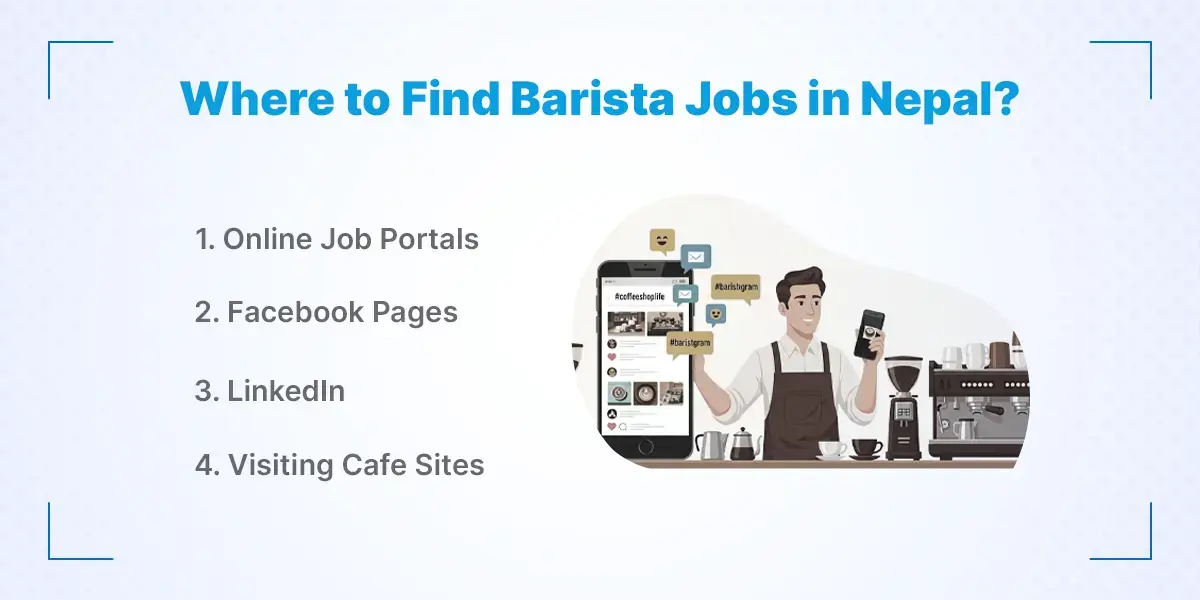
1. Online Job Portals
Job portals are one of the simplest ways to look for barista jobs in Nepal. Websites like Kumari Job open vacancies for baristas in a number of restaurants and cafes jobs. You can easily search for "barista" and then see what type of job is on offer. Most websites also have pay scales and requirements for jobs. You just need to sign up for free and apply online. Some of the companies call you if your profile is good. It is quick and simple. You can apply to hundreds of jobs in a day. Just keep your CV ready.
2. Facebook Pages and Groups
Facebook can be a huge resource in getting local jobs. Cafes put up postings for job vacancies on their page or within groups like "Jobs in Nepal" or "Cafe Jobs Kathmandu." You can even send a message to a cafe directly if you see a vacancy post. They might even respond faster than email. These are casual postings, so you don't really need to have a long resume. Just state that you're interested and have general experience. Suitable for students or anyone fresh from college. But you need to check from time to time, because jobs disappear in an instant.
3. LinkedIn
LinkedIn is a professional site. Big cafe chains or hotel groups often place barista job postings here. If your profile is strong, it might help. You can even become friends with HR managers or cafe owners. This can help you get jobs that are not always officially advertised. Write a short note to express your interest. Even if you are a fresher, showing passion and eagerness is important. LinkedIn also shows employment locations, salaries, and who posted the job listing. It is more suitable for those who wish to work with branded cafes or hospitality organisations.
4. Visiting Café Websites and Social Media Pages
Many cafes in Nepal post job openings on their own websites, Facebook pages, or Instagram stories. Some don’t use job portals and prefer to hire through their social channels. You can visit their pages, check the latest posts, and see if they’ve shared anything about hiring. Big cafe chains like Himalayan Java often post updates online. It’s a good idea to follow your favourite cafes and check their stories regularly. Sometimes they post urgent hiring needs for baristas. A quick message with your interest and basic info can go a long way.
Did You Know? Some cafés in Nepal don’t post their job openings on Facebook or Instagram. So, it’s smart to check websites like Kumari Job. You might find barista jobs there that aren’t listed anywhere else.
Do Baristas in Nepal Get Tips and Other Benefits?
Yes, most of the baristas in Nepal do get daily tips and small additional incentives like meals, uniforms, or staff discounts. Busy cafe baristas generally get tips from happy customers. On average, they can earn between NPR 100 and NPR 400 per day in tips, depending on traffic and location. In popular cafes in Kathmandu, tips can also add a great portion of their monthly income. In other cafes, tips are collected in a jar and distributed to the whole staff. Others permit individual baristas to retain their own. Either way, tips are part of the regular job and a nice gratuity.
Most cafes also give out small perks. A free meal during shift, a clean uniform, or even a free coffee are some of the examples. They might not sound like much, but they help reduce daily expenses. Some cafes even cover your travel or send out small birthday presents. Small things like these keep workers happy and motivated. Not every cafe gives all of them, but most give one or two at least.
Apart from tips and meals, baristas may also get staff discounts, especially in chain or branded cafes. Some offer bonuses around holidays or for good performance. When you work overtime, you can also get overtime pay. But this depends on the policies of the cafe. Permanent employees usually get more benefits than part-timers. So while the minimum salary appears normal, these additions add a lot to the monthly pay.
Career Growth: Can a Barista Make a Good Living in Nepal?
Yes, a barista can advance their career and make more money over time. Most baristas start with entry-level positions, but once they have some experience, they can get promoted. Some are supervisors, while others are promoted to cafe managers. With every promotion, their salary and workload also increase. It may take a few years, but it is possible if you're responsible and hard-working.
Baristas also have chances to work in the hospitality industry or join international coffee chains. Big hotels, restaurants, and brands often look for skilled baristas. If you’re trained and good at customer service, these places may offer better pay and job benefits. Some baristas even go abroad for work after gaining a few years of experience in Nepal.
The other great option is to work as a freelance barista, be an instructor, or even open your own cafe. Some people in Nepal have already turned barista skills into small business ventures. You can start a coffee cart or a small cafe in your hometown. It takes work and planning, but it is possible. In the long run, the barista can be more than a job; it can be a long-term career.
How to Become a Barista in Nepal?
To become a barista in Nepal, you need basic training, a good attitude, and some hands-on practice. You don't have to have a college degree. All they want is for you to be friendly, honest, and trainable. If you enjoy interacting with people and coffee, that's already a huge advantage. Being confident and eager can get you your first job.
It's even preferable if you join a barista training. There are plenty of course schools in Kathmandu and the big cities that teach you about coffee-making, customer service, and machine use. These courses run for several weeks and give you a certificate. Some cafes also offer in-shop training once you're employed. So, even as a beginner, you can still start and progress step by step.
You can also learn from online videos and practice at home. Attempt to visit nearby cafes and get to know the baristas. Ask them stuff and learn from their experience. Once you get a job, keep improving your skills. With time, you'll be faster, better, and more confident. That is how most baristas in Nepal start, and you can too!
Conclusion
Working as a barista in Nepal is a solid way of making money, especially if you are fresh to the industry or require a job with flexible working hours. While experience, location, and business ensure payment differs, most baristas earn tips, perks, and chances to advance. Provided that you're open to learning, you're pleasant, and you work industriously, this job can bring about new prospects in the hospitality industry.
For those aspiring to be baristas, finding a brief training course and practising with hands-on skills can prove useful. You can upgrade to a superior job after some time or even start your own cafe. As more and more people fall in love with coffee every single day, the cafe industry in Nepal is still booming. So, becoming a barista today may open the door to even more fabulous things tomorrow.
Want to build a career in the hospitality industry in Nepal? Explore exciting career opportunities in the nation's hotels, restaurants, and cafes today!
Frequently Asked Questions
Baristas in Nepal usually earn between NPR 20,000 and NPR 50,000 per month. The salary depends on experience, location, and the type of cafe.
The maximum salary for a barista in Nepal can go above NPR 50,000+ per month in high-end cafes or with many years of experience.
The minimum salary for a barista in Nepal is around NPR 19,550 per month, mostly for beginners or those working in small local cafes.
Yes, most baristas receive daily tips from customers. In busy cafes, tips can be a good extra income.
Yes, it’s a good job for those who enjoy customer service and coffee culture. It also offers growth and flexibility, especially in cities.
You can become a barista by taking a short training course or learning on the job. Many cafes hire beginners with the right attitude.
Yes, many cafes hire students for part-time shifts. It’s a popular part-time job due to flexible hours and friendly work environments.
Large or branded cafes like Himalayan Java and international chains usually pay the highest salaries. They also offer better perks and training.
Submit your comments

Get Our App On



SEO Training for Freshers in Nepal: Skills, Career & Job Opportunities
VIEW DETAILS
SEO Training vs. Self-Learning: Which Is Right for You?
VIEW DETAILS
How to Choose Between Two Job Offers
VIEW DETAILS
Digital Marketing Training Interview Questions and Answers for Freshers
VIEW DETAILS


Loading Comments...