



Many applicants chase hotel roles yet face confusion during searches. People struggle with unclear requirements, sudden rejections, or weak preparation that blocks progress. Stress rises when candidates cannot match training with active openings. Lack of direction slows growth for motivated beginners and skilled workers. Uncertain steps create frustration during each attempt.
In this blog, readers gain a clear path that explains how to approach hospitality jobs in Nepal through structured steps. Content shows vacancy types, needed training, required documents, proven search methods, and smart application habits. Readers understand each stage using simple guidance built for quick action. This approach supports confident preparation for career growth within the hospitality field.
In this blog
What Are Hospitality Jobs in Nepal?
Hospitality jobs in Nepal are service-focused roles that support hotels, resorts, restaurants, and tourism centers. These positions handle guest care, food service, room upkeep, front-desk tasks, and overall customer support for people who want to find hospitality jobs that match their skills. Teams create smooth experiences for visitors through steady communication and organized work. Roles vary from entry-level service posts to advanced managerial duties. Growing tourism shapes strong demand for trained staff across many units.
Why Hospitality Jobs Remain in Demand?
- Tourism growth increases hiring across hotels and service outlets.
- Travelers expect smooth service, which creates constant staffing needs.
- Expanding resorts open new roles for trained workers.
- Urban growth raises demand for restaurants, cafés, and guest houses.
- Flexible entry paths support beginners seeking quick employment.
- Training programs prepare youth for service roles without long study periods.
- Seasonal peaks create repeated openings across regions.
Types of Hospitality Vacancies in Nepal
Nepal offers service roles across hotels, resorts, restaurants, and tourism centers. Vacancies support guest care, food service, room upkeep, kitchen work, and management duties. Each unit hires staff with practical skills, clear communication, and steady discipline. Growing demand creates openings for beginners and trained workers across regions. Career paths expand quickly for candidates who show commitment.
1. Front-Office and Guest-Service Roles
Front-office teams greet guests, manage bookings, and guide visitors through service points. Staff handle calls, check-ins, and inquiries with calm communication. These roles demand patience, clarity, and strong presentation. Workers maintain a smooth flow during busy hours through quick support. Training in customer care strengthens performance. Growth leads toward supervisor or duty manager posts.
2. Food and Beverage Roles
Food and beverage staff serve meals, prepare orders, and support dining operations. Workers maintain hygiene, pace, and accuracy during peak hours. Roles require strong coordination with kitchen teams. Clear communication supports smooth table service. Training in service etiquette improves results. Experience leads toward captain or outlet supervisor roles.
3. Kitchen and Culinary Roles
Kitchen teams prepare meals, manage ingredients, and maintain clean stations. Staff follow recipes, portion standards, and safety rules. Culinary training supports steady growth across sections. Workers help chefs during busy periods through quick preparation. Clear coordination helps maintain timing for each dish. Experience leads toward cook or chef positions.
4. Housekeeping and Maintenance Roles
Housekeeping staff clean rooms, manage linens, and maintain hygiene across hotel spaces. Workers handle tools, chemicals, and schedules with care. Clear routines support consistent results each day. Maintenance units fix equipment, manage repairs, and keep systems running. These roles demand discipline and strong attention. Steady work leads toward team leader posts.
5. Management and Administrative Roles
Management teams plan operations, guide staff, and monitor service quality. Administrators handle HR tasks, accounts, procurement, and scheduling. These roles demand leadership skills and steady decision-making. Experience supports accurate planning across units. Strong communication links departments smoothly. Long service leads to senior management positions.
Where to Find Hospitality Jobs in Nepal?
You can find hospitality jobs in Nepal in job portals like Kumari Job, which publish clear openings with role details. Applicants explore multiple platforms to track vacancies across hotels, restaurants, and resorts. Training centers, online pages, and walk-in boards support strong visibility for active posts. Consistent searches help motivated workers respond quickly. Steady checks raise success during busy hiring cycles.
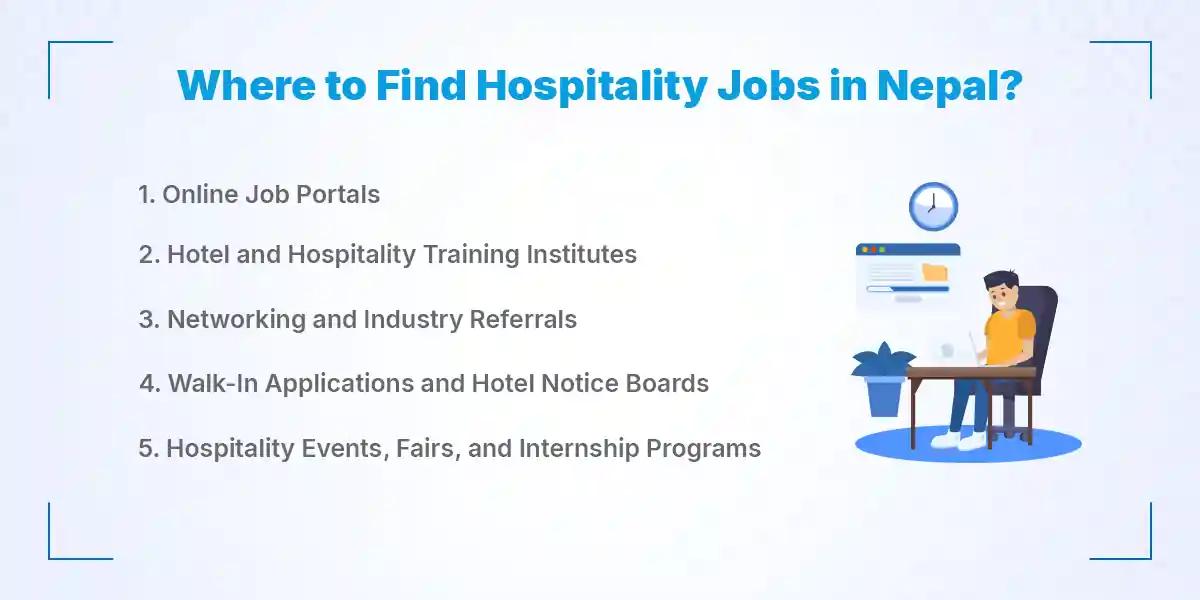
1. Online Job Portals
Kumari Job lists fresh roles for front-office, kitchen, housekeeping, and management units. Sites share descriptions, skill needs, and documents required. Applicants compare positions across hotels without confusion. Each listing shows deadlines that guide timely action. Regular checks prevent missed posts. Quick applications improve selection chances.
2. Hotel and Hospitality Training Institutes
Training centers share openings linked with partner hotels. Institutes guide learners toward entry roles based on completed courses. Staff help candidates prepare documents suited for service units. Job fairs held by institutes support strong placement. Clear guidance boosts confidence. Many beginners gain their first jobs through these networks.
3. Networking and Industry Referrals
Colleagues, trainers, and senior workers share leads for active roles. Referrals help applicants approach employers with stronger trust. Workers gain updates on shifts, seasonal needs, or vacant units. Steady connections support faster entry into service teams. Clear communication strengthens relationships. Good impressions improve chances.
4. Walk-In Applications and Hotel Notice Boards
Hotels post updates on boards near entrances or reception areas. Applicants visit properties and submit CVs directly to HR staff. Walk-ins support quick interaction with hiring teams. Direct contact helps workers show confidence and communication clarity. Many outlets prefer walk-ins for urgent shifts. Early visits raise visibility.
5. Hospitality Events, Fairs, and Internship Programs
Events gather employers seeking trained workers for growing units. Fairs allow applicants to meet HR teams, share CVs, and discuss roles. Internship programs introduce beginners to real workflows. Supervisors observe performance during training hours. Strong interns gain offers quickly. Regular participation increases opportunities.
Qualifications Required for Different Hospitality Jobs
Hospitality roles require skill, discipline, and training that match service tasks. Entry posts accept beginners who show energy and steady communication. Mid roles demand experience gained from daily duties across busy units. Senior posts require leadership, planning, and technical depth. Clear preparation supports progress within this field. Focused effort helps candidates meet expectations for each level.
1. Entry-Level Roles
Entry posts welcome candidates with short training or basic certificates. Workers show punctuality, clarity, and customer focus during shifts. Simple tasks build confidence across service points. Short courses support stronger performance. Growth moves toward mid positions after consistent work. Commitment shapes early progress.
2. Mid-Level Roles
Mid-level roles demand experience gained from front-office, food service, kitchen work, or housekeeping. Workers guide juniors, handle busy hours, and solve small issues quickly. Practical training supports accuracy across units. Clear communication strengthens teamwork. Solid experience prepares staff for leadership tasks. Consistent results help workers stand out.
3. Senior-Level Roles
Senior posts require leadership skills, planning strength, and deep sector knowledge. Managers guide teams, plan schedules, and maintain service quality. Management training supports better outcomes. Strong reasoning helps solve complex problems. Clear decisions shape daily flow across departments. Long experience supports movement toward higher roles.
Is Professional Degree Required for Hospitality Jobs?
No, most hospitality roles do not require long academic degrees. Short training supports beginners who want practical skills for daily tasks. Mid or senior posts benefit from diplomas or management courses that strengthen leadership and help workers understand factors that influence chef salary across hotels. Hotels value proven ability gained through steady experience. Focused learning helps workers progress across departments.
How to Apply for Hospitality Jobs in Nepal?
You can apply for hospitality jobs in Nepal directly from hotel career pages or job portals like Kumari Job, which share updated openings. Applicants follow simple steps that guide selection, document preparation, and submission. Clear planning supports faster action across service units. Strong focus helps workers match skills with active roles. Steady preparation improves success during competitive cycles.
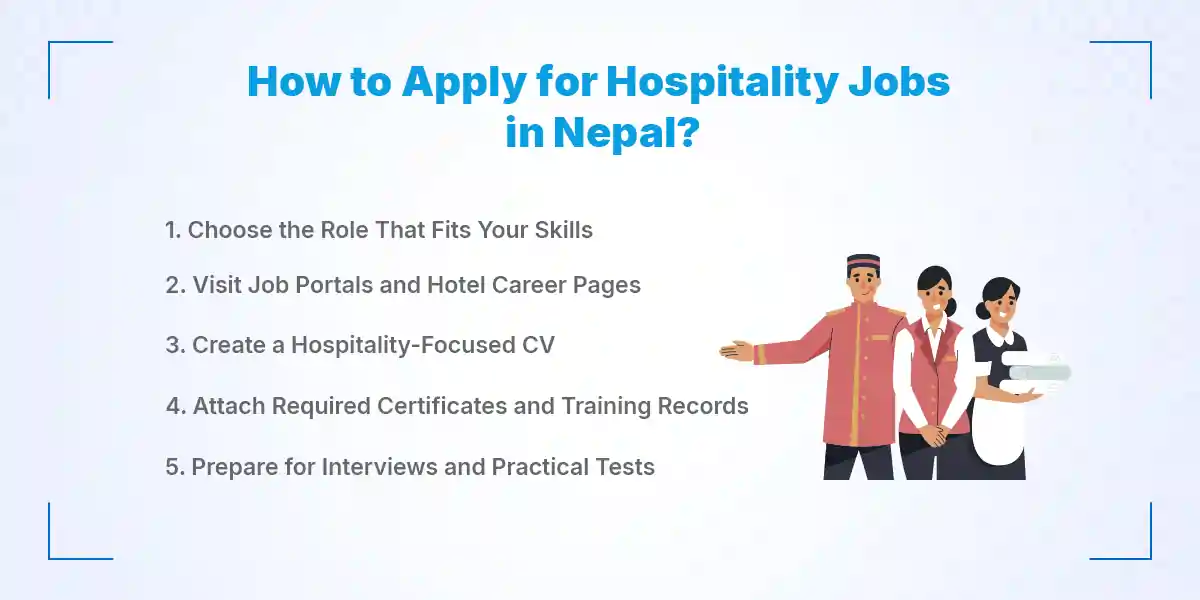
Step 1: Choose the Role That Fits Your Skills
Applicants study units such as front office, food service, housekeeping, or kitchen work. Each unit demands different strengths, so careful selection helps workers build growth paths. Candidates review tasks linked with each role to judge readiness. Training or past exposure guides smart choices. Clear direction supports smooth preparation. Strong alignment improves long-term progress.
Step 2: Visit Job Portals and Hotel Career Pages
Portals show descriptions, skill needs, and deadlines that support quick action. Career pages reveal openings posted by hotels seeking trained staff. Applicants compare roles across units before sending documents. Each platform shows clear instructions that guide submission. Steady checks prevent missed chances. Early action raises visibility.
Step 3: Create a Hospitality-Focused CV
Applicants write professional CV that highlight service tasks, training, and communication strengths. Clear structure helps HR teams scan entries quickly. Workers list duties that match roles across hotels. Short summaries show achievements gained during past service. Updated records support accurate screening. Strong presentation improves selection chances.
Step 4: Attach Required Certificates and Training Records
Training papers confirm practical ability gained from courses. Clear scans help HR teams verify skills without delay. Certificates from institutes support credibility across service units. Applicants attach IDs, letters, and other needed files. Clean formatting helps maintain order. Strong documents build trust.
Step 5: Prepare for Interviews and Practical Tests
Applicants study basic service rules, hygiene steps, and communication tasks. Practice builds confidence during face-to-face rounds. Workers answer questions with a calm tone and clear examples. Some hotels test service, arrangement, or food tasks. Strong preparation for interview helps workers show their ability. Good performance supports final selection.
Training and Courses That Improve Hospitality Hiring Chances
Training helps workers gain skills needed for service tasks across hotels and restaurants. Short courses build confidence for beginners seeking quick entry. Practical lessons support strong performance during busy hours. Advanced programs guide workers toward supervisory roles. Focused learning strengthens long-term growth. Steady practice prepares candidates for higher responsibilities.
1. Hotel Management Courses
Hotel management courses teach planning, coordination, and guest handling. Lessons cover operations, leadership basics, and service standards, which help learners understand factors that influence hotel management salary in different outlets. Students learn communication habits required for daily tasks. Practical sessions show how teams manage peak hours. These programs open doors to mid-level roles across outlets. Steady practice supports faster progress.
2. Food Production and Culinary Training
Culinary courses train workers to prepare dishes, handle tools, and maintain hygiene. Students learn portion rules and cooking methods used in hotels. Practice builds the speed needed during rush periods. Strong technique supports consistency across kitchens. Trainers guide learners through safe handling steps. Growth moves toward cook or chef posts.
3. Front-Office and Customer Care Training
Front-office courses teach booking systems, greeting methods, and guest support. Learners practice calm communication for stressful moments. Training helps workers solve issues with clear direction. Tools used in reception desks become easier through repetition. Guidance improves confidence during check-ins. Strong habits support quick advancement.
4. Housekeeping and Hygiene Programs
Housekeeping training shows cleaning steps, safety rules, and room setup methods. Learners study schedules that maintain a steady flow. Correct use of tools supports safe handling. Practice builds precision during daily tasks. Trainers focus on hygiene that shapes guest experience. Strong results lead toward team leader roles.
5. Barista and Bartender Training
These courses teach drink preparation, speed, and presentation. Learners handle machines, tools, and ingredients through guided sessions. Training builds a smooth workflow during busy hours, which also helps learners understand factors that influence barista's salary across cafés and hotels. Clear service habits improve customer satisfaction. Experience supports work in cafés, lounges, and hotel bars. Strong skill leads toward senior beverage roles.
Salary Expectations in Nepali Hospitality Sector
Nepal’s hospitality sector pays beginners around NPR 15,000-40,000 each month, which helps applicants understand the average salary range for early roles. Mid-level workers with two to five years of service earn roughly NPR 30,000-60,000+. Senior managers or executive chefs reach NPR 150,000-250,000+ inside premium hotels. Pay shifts based on location, hotel rating, skill strength, and tourism growth. Clear progress follows consistent performance across units.
1. Entry-Level Salary Range
Entry workers join as trainees or assistants with limited experience. Hotels pay roughly NPR 15,000-40,000 depending on role, workload, and location. Staff learn routines through daily tasks that shape future growth. Training helps beginners increase value across units. Strong habits support movement toward mid-level roles. Steady effort builds confidence for harder duties.
2. Skilled and Professional Roles
Workers with two to five years of service move into mid-level positions that demand a stronger ability. Pay reaches NPR 30,000-60,000+ based on performance. These roles require accuracy during peak hours. Staff guide juniors and solve small issues that appear during shifts. Clear communication improves teamwork. Consistent results support fast progression.
3. Supervisory and Managerial Roles
Supervisors and managers handle planning, staff coordination, and quality checks. Pay rises sharply inside high-rated hotels and busy outlets. Salaries reach NPR 80,000-120,000+ in many properties. Premium hotels pay NPR 150,000-250,000+ for senior chefs or department heads. Strong reasoning supports complex decisions. Long experience drives upward movement.
4. Growth Potential
Growth depends on skill, training, performance, and location. Workers move from service tasks toward leadership after steady improvement. Hotels promote staff who show discipline and clear communication. Additional courses expand options across units. Tourism recovery increases openings. Strong dedication shapes future income.
Conclusion
Strong demand across hotels, resorts, cafés, and service outlets creates steady openings for motivated workers. Roles suit beginners seeking quick entry or trained staff aiming for higher responsibility. Clear steps, focused training, smart searches, and organized documents help applicants move toward roles that match skills. Steady growth follows workers who show calm communication, discipline, and problem-solving during busy hours.
Career paths expand as employees gain technical ability, customer handling practice, and leadership habits. Pay improves with experience, location shifts, and advanced courses. Candidates who check verified portals, visit career pages, and prepare early gain stronger visibility during hiring cycles. Consistent effort supports long-term progress across service units. Good preparation shapes successful applications.
Frequently Asked Questions
Submit your comments

Get Our App On



SEO Training for Freshers in Nepal: Skills, Career & Job Opportunities
VIEW DETAILS
SEO Training vs. Self-Learning: Which Is Right for You?
VIEW DETAILS
How to Choose Between Two Job Offers
VIEW DETAILS
Digital Marketing Training Interview Questions and Answers for Freshers
VIEW DETAILS


Loading Comments...