



If you are thinking about choosing archaeology as a career, one big question keeps coming to mind: how much can you actually earn? Many students and job seekers in Nepal feel confused because clear salary information is hard to find. You may love history, culture, and fieldwork, but you also need a stable income to plan your future. This doubt often stops people from moving forward.
That is why understanding the Archaeologist's salary in Nepal is so important before making a decision. Knowing the real pay range helps you set the right expectations and avoid future regret.
In this blog, you will learn the average salary, what affects earnings, career growth options, and whether archaeology is worth your time and effort in Nepal.
In this blog
Who is an Archaeologist?
An archaeologist is a person who studies human history by examining old objects, sites, and remains. Instead of reading history only from books, archaeologists learn directly from the past by digging, observing, and recording physical evidence. In Nepal, archaeologists play a very important role because the country is rich in ancient temples, monuments, and historical settlements.
An archaeologist works to understand how people lived in the past, what tools they used, how they built homes, and how cultures changed over time. Their work helps protect national heritage and pass knowledge to future generations. Many people think archaeology is only about digging, but the job is much wider than that.
What Does an Archaeologist Do?
- Study ancient tools, statues, coins, bones, and buildings
- Take part in excavation and field research
- Record and document historical findings carefully
- Work to protect and preserve heritage sites
- Write reports and research papers
- Help museums display historical items
- Support tourism and cultural education
In Nepal, archaeologists often work with government offices, museums, universities, and heritage projects. Some also work with NGOs and international teams. The job needs patience, interest in history, and a love for learning. While the work can be physically demanding, it is meaningful and respected.
Simply put, an archaeologist helps us understand where we came from and why our history matters today.
What is the Average Archaeologist’s Salary in Nepal?
The average archaeologist's salary in Nepal ranges from NPR 25,000 to NPR 1,00,000+ per month, depending on experience and job level. This salary range is considered a good salary in Nepal and helps students and job seekers understand what they can expect at different career stages. It also shows how income grows with skills, experience, and responsibility in the archaeology field.

1. Entry-Level Archaeologist
Entry-level archaeologists are usually fresh graduates or individuals with minimal field experience. They often start as field assistants, junior researchers, or documentation helpers. At this stage, monthly pay typically ranges from NPR 25,000 to NPR 50,000, depending on the employer. Government positions offer stable income, while NGOs or short-term projects may pay slightly more. The focus at this level is on learning, gaining hands-on experience, and understanding excavation and research processes.
2. Mid-Level Archaeologist
Mid-level archaeologists generally have three to five years of experience. They take on more responsibility, like supervising small teams or managing parts of excavation projects. Their monthly salary usually falls between NPR 50,000 and NPR 70,000. This stage requires stronger skills in reporting, site management, and research analysis. Many archaeologists also start participating in international projects, gaining exposure and higher pay. Career growth becomes clearer, and income stability improves.
3. Senior Archaeologist
Senior archaeologists have long experience and significant expertise in the field. They lead major excavation projects, advise teams, and make critical research decisions. Salaries at this level can exceed NPR 1,00,000 per month, especially in government leadership roles or international assignments. This level offers professional respect, career stability, and opportunities to influence heritage preservation policies. Senior roles require advanced research, planning, and management skills.
Factors That Influence Archaeologists’ Salary in Nepal
The salary of an archaeologist in Nepal is not fixed. It depends on several important factors that decide how much you can earn. Understanding these factors helps you plan your career and know what to focus on for better pay. Let’s look at the main things that affect an archaeologist’s salary.
1. Education and Academic Qualification
The level of education plays a big role in salary. A bachelor’s degree in archaeology or history can get you fresher jobs. A master’s degree or a PhD can help you earn more and take higher positions. Specialized courses or certifications in heritage management can also increase your pay. Employers usually pay more for candidates with strong academic backgrounds. Better education often means you get important roles in projects. It also helps in working with international organizations.
2. Work Experience
Experience is one of the biggest factors for salary growth. Fresh graduates earn less because they are still learning. After 3-5 years, mid-level archaeologists start earning more as they take responsibility. Senior archaeologists with 10+ years of experience can lead big projects and earn the highest salaries. Experienced professionals are trusted with excavation planning and reporting. More experience usually means better career stability. Employers also value fieldwork skills gained over time.
3. Type of Employer
The employer affects salary a lot. Government jobs usually offer fixed and stable pay, but it may be lower than international projects. NGOs, INGOs, and private research organizations often pay more, especially for field projects. Museums and universities may pay moderately but offer learning and career growth opportunities. Salaries also vary depending on project funding. Some employers offer additional allowances for fieldwork. Choosing the right employer can significantly impact your earnings.
4. Location and Project Type
Where you work also matters for salary. Working in Kathmandu or at major heritage sites may pay more than in remote areas. Large excavation projects with international funding usually have higher salaries. Short-term or small local projects may offer less pay. Some projects provide extra benefits like accommodation or travel allowances. The work environment can affect both income and experience gained. Choosing projects wisely helps in building both skills and salary growth.
Qualifications Required to Become an Archaeologist in Nepal
To become an archaeologist in Nepal, you need the right education and practical experience. Your qualifications determine the type of job you can get and the salary you can earn. Both academic degrees and fieldwork are important for building a successful career. Some government positions also require passing specific exams, so knowing the requirements early helps you plan better.
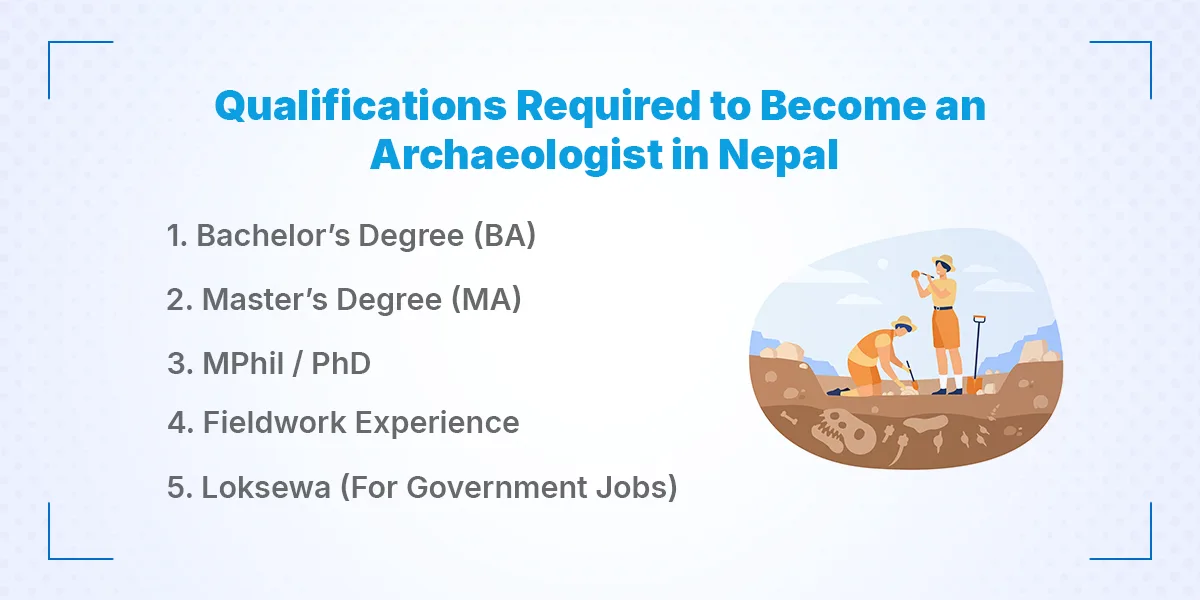
1. Bachelor’s Degree (BA)
A bachelor’s degree in archaeology, history, or a related subject is the first step to becoming an archaeologist. Common courses in Nepal include a BA in Nepalese History, Culture, and Archaeology or a BA in History. These programs give you basic knowledge about ancient cultures, excavation methods, and research techniques. After a BA, you can get entry-level jobs like a field assistant or junior researcher. This degree also allows you to continue higher studies later.
2. Master’s Degree (MA)
A master’s degree helps you move to mid-level roles and earn higher salaries. Popular programs include MA in Nepalese History, Culture and Archaeology (Tribhuvan University) or MA in Archaeology and Buddhist Archaeological Sites (Lumbini Buddhist University). With an MA, you can handle more responsibility in research, documentation, and excavation projects. It also gives deeper knowledge about Nepal’s history and heritage.
3. MPhil / PhD
An MPhil or PhD is needed if you want to work as a senior archaeologist, researcher, or academic. These degrees focus on advanced research, writing reports, and leading projects. Candidates with PhDs often work in universities, research institutions, or international projects. The salary for senior roles with these qualifications is usually the highest in Nepal.
4. Fieldwork Experience
Practical experience in excavation, documentation, or heritage conservation is very important. Fieldwork helps you apply your academic knowledge in real-life projects. Many employers look for candidates who have worked on real archaeological sites. The more fieldwork you have, the higher your chances of getting better roles and pay.
5. Loksewa (For Government Jobs)
For government archaeology jobs, passing the Loksewa (Public Service Commission) exam is often required. This exam tests your knowledge of archaeology, history, and general awareness. Clearing Loksewa opens opportunities in government offices, heritage sites, and museums. Government jobs also provide stable pay, career growth, and additional benefits.
Why is the Demand for Archaeologist Growing in Nepal?
The demand for archaeologists in Nepal is increasing steadily. Nepal is rich in history, temples, monuments, and ancient settlements. Protecting and studying these sites requires trained professionals. At the same time, more students and job seekers are considering archaeology as a career because it combines learning, travel, and cultural work. Knowing why this demand is growing helps you understand career opportunities and potential salary.
Several factors are driving the demand for archaeologists in Nepal:
- Heritage Conservation – Many old temples, monuments, and historical sites need preservation. Archaeologists help protect these sites from damage, natural disasters, and urban development.
- Tourism Growth – Nepal’s tourism industry is expanding. Tourists are interested in heritage sites, museums, and cultural tours. Archaeologists help maintain and promote these attractions.
- Research and Education – Universities and research institutions need archaeologists to teach, conduct studies, and write reports. This supports cultural knowledge and historical understanding.
- Government Projects – The government regularly launches heritage conservation and excavation projects. These create jobs for trained archaeologists.
- International Collaboration – Many international organizations fund projects in Nepal. Archaeologists are needed to work on research, excavation, and preservation.
- Cultural Awareness – People are becoming more aware of the importance of preserving Nepal’s history. This awareness increases demand for skilled archaeologists.
Overall, archaeology is not just about digging; it’s about protecting history, educating people, and supporting tourism and research. The growing attention to Nepal’s cultural heritage is creating new opportunities, making this a promising career choice for students and professionals.
Conclusion
The Archaeologist Salary in Nepal varies depending on your experience, education, and the type of job you take. Entry-level roles start modestly, while mid-level and senior positions grow as you gain skills and responsibility. Choosing between government projects, private organizations, or international collaborations also influences pay.
While it may not be the highest salary compared to other careers, archaeology offers unique benefits like learning, travel, and the chance to preserve Nepal’s history. For those who love culture, heritage, and research, this career can be both fulfilling and rewarding. With dedication, experience, and continuous learning, archaeologists in Nepal can achieve steady career growth and professional recognition.
Also exploring the latest engineering jobs in Nepal? Explore verified openings, apply easily, and start building a strong engineering career today.
Frequently Asked Questions
Submit your comments

Get Our App On



SEO Training for Freshers in Nepal: Skills, Career & Job Opportunities
VIEW DETAILS
SEO Training vs. Self-Learning: Which Is Right for You?
VIEW DETAILS
How to Choose Between Two Job Offers
VIEW DETAILS
Digital Marketing Training Interview Questions and Answers for Freshers
VIEW DETAILS


Loading Comments...