



Many students dream of becoming doctors, but they feel lost when it comes to choosing a specialty and understanding how much they can earn. And for many, anesthesiology feels confusing because people only see the surgeon in the spotlight, not the one who makes every surgery safe. That confusion often creates stress, doubt, and fear of choosing the wrong path.
But once you understand what anesthesiologists actually do and how much they earn in Nepal, the picture becomes clearer. You start to see the career, the demand, and the income in a simple way.
In this blog, you’ll get a clear breakdown of the anesthesiologists' salary in Nepal, the career path, the demand, and everything you should know before choosing this field.
In this blog
Who is an Anesthesiologist?
An anesthesiologist is a medical doctor who plays a crucial role in surgeries and other medical procedures. While surgeons perform operations, anesthesiologists ensure that patients are safe, comfortable, and pain-free during these procedures. They are often called the “behind-the-scenes heroes” of the operating room because their work is critical to the success of surgeries.
In simple words, anesthesiologists are responsible for managing pain, monitoring vital signs, and keeping patients stable before, during, and after surgery. They are trained to handle emergencies that can arise during operations and make quick decisions to save lives.
Here’s what an anesthesiologist typically does:
- Gives anesthesia to patients, making them unconscious or numb, depending on the type of procedure.
- Monitors the patient’s heart rate, blood pressure, breathing, and oxygen levels during surgery.
- Adjusts anesthesia levels during procedures to ensure safety and comfort.
- Manages pain after surgery with medications and other techniques.
- Provides care for patients in intensive care units (ICU) and emergency situations.
- Works closely with surgeons, nurses, and other medical staff to plan and execute safe surgeries.
Anesthesiologists specialize in various areas, including pediatric anesthesia (for children), cardiac anesthesia (for heart surgery), and critical care medicine.
In Nepal, anesthesiologists are in high demand because hospitals need skilled professionals to perform surgeries and manage emergencies safely. Their role is not limited to the operating room. They also help in trauma care, intensive care, and pain management clinics.
In short, anesthesiologists are highly trained doctors who ensure patient safety, comfort, and survival during critical medical procedures. Without them, modern surgery as we know it would not be possible.
What is the Average Anesthesiologists Salary in Nepal?
The average salary of anesthesiologists in Nepal ranges from NPR 40,000 to 1,50,000+, depending on experience and role, making it one of the most competitive doctor salaries in Nepal compared to other medical fields. Anesthesiology is one of the most important medical fields in Nepal. Salaries can vary a lot based on experience, hospital type, and responsibilities. Knowing the salary range helps you plan your career and understand what to expect.
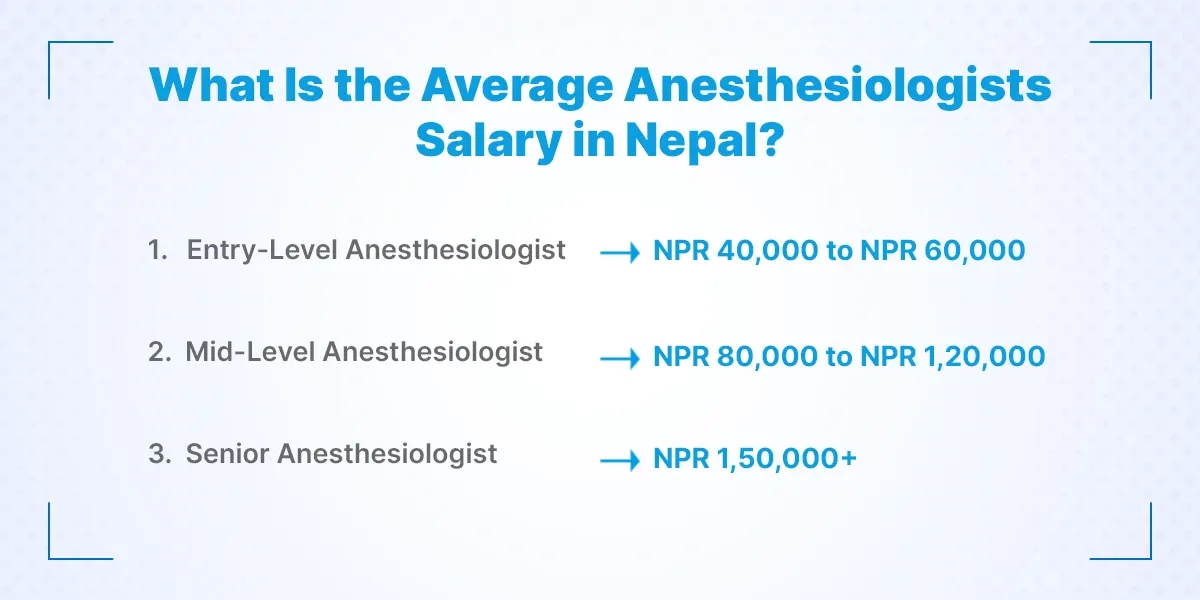
1. Entry-Level Anesthesiologist
Entry-level anesthesiologists are usually fresh MD graduates or those who have just started their careers. They mostly work in government hospitals or smaller private clinics. At this stage, they earn around NPR 40,000 to NPR 60,000 per month. They handle basic anesthesia procedures and monitor patients with guidance from senior doctors. This period is mostly about learning and gaining practical experience. Night shifts and extra duties can increase their income slightly. Although the pay is modest, the experience is very valuable for career growth.
2. Mid-Level Anesthesiologist
Mid-level anesthesiologists have a few years of experience and more confidence in handling surgeries independently. They usually earn between NPR 80,000 and NPR 1,20,000 per month. At this level, they can manage more complex surgeries and supervise junior staff. Some also begin teaching in medical colleges or taking specialized cases. Extra work, like on-call duties or night shifts, adds to their earnings. It is a stable stage with better pay and responsibilities compared to the entry level.
3. Senior Anesthesiologist
Senior anesthesiologists are highly experienced and often work in big hospitals or private medical centers. Their monthly income crosses NPR 1,50,000. They handle complicated surgeries, supervise the whole anesthesia team, and sometimes manage ICU or critical care units. Many also earn extra by teaching or consulting for private clinics. At this stage, they have high respect, responsibility, and financial rewards.
Factors That Influence Anesthesiologists Salary in Nepal
Several things affect how much anesthesiologists earn in Nepal. Salary is not fixed and changes depending on work setting, skills, and responsibilities. Some doctors earn more because they work in bigger hospitals or have special training. Understanding these factors helps you see why salaries can be different for different people.
1. Hospital Type and Size
The type and size of the hospital make a big difference in earnings. Anesthesiologists in large private hospitals usually earn more compared to those in government jobs. Big hospitals often have more complicated surgeries, so they need experienced anesthesiologists. Smaller hospitals may pay less, but can give you easier work schedules. Teaching hospitals sometimes offer extra income if you also teach students. The location matters too; hospitals in cities tend to pay more than in rural areas.
2. Experience, Specialization, and Certifications
Experience is one of the most important factors in salary. Doctors who have worked for several years earn more than fresh graduates. Specialization in areas like cardiac anesthesia or pain management can also increase pay. Certifications and additional training show your expertise, which hospitals value. The more skills you have, the higher your chances of getting better pay. Mid-career and senior anesthesiologists usually earn significantly more than entry-level doctors.
3. Workload and ICU/OT Responsibilities
The number of hours you work and the responsibility level affect earnings, too. Doctors who manage ICUs or complicated operating theater cases often earn extra. Heavy workload or managing multiple surgeries can increase pay. Hospitals sometimes give bonuses for handling more critical patients. Less busy hospitals may pay less because the work is lighter.
4. Shift, On-call Hours, and Overtime Pay
Many anesthesiologists work night shifts or are on call for emergencies. Hospitals often give extra money for these hours. Overtime and weekend duties also increase monthly income. Doctors who handle more shifts earn noticeably more than those with fixed schedules.
Additional Earnings and Benefits for Anesthesiologists
Apart from basic salary, anesthesiologists in Nepal can earn extra money in several ways. These additional earnings make the career more rewarding. Knowing these benefits helps you understand the full income potential. Extra work and opportunities can add significantly to monthly pay.
1. On-call Allowances and Night Duty Payments
Many anesthesiologists are required to be on call or work night shifts. Hospitals usually pay extra for these hours. This allowance can increase the monthly income noticeably, and doctors should also be aware of the TDS system in Nepal on such additional earnings. The more shifts you take, the more you earn. It also helps hospitals cover emergencies at any time. On-call duties can be challenging, but the extra pay is often worth it.
2. Teaching Income from Medical Colleges
Anesthesiologists can also earn money by teaching in medical colleges. Many hospitals are connected to teaching institutions. Doctors may give lectures, guide students, or supervise practical sessions. This adds to their monthly income. Teaching also improves professional reputation and opens networking opportunities. It is a flexible way to earn extra while still practicing medicine.
3. Private Practice and Part-time Opportunities
Some anesthesiologists take private cases or work part-time in other clinics. This can include surgeries in private hospitals or specialized procedures. Income from private practice is often higher than regular hospital pay. Part-time work gives flexibility and adds significantly to overall earnings. Many doctors combine hospital work with private practice to maximize income.
What Qualifications Are Required to Become an Anesthesiologist in Nepal?
To become an anesthesiologist in Nepal, you need an MBBS degree, NMC registration, internship, work experience, entrance exam, postgraduate MD in anesthesiology, and specialist registration. Becoming an anesthesiologist is a long but rewarding journey. It requires dedication, proper training, and official recognition from medical authorities. Each step ensures you are skilled, safe, and ready to handle critical medical situations. Let’s break down the requirements in simple terms.
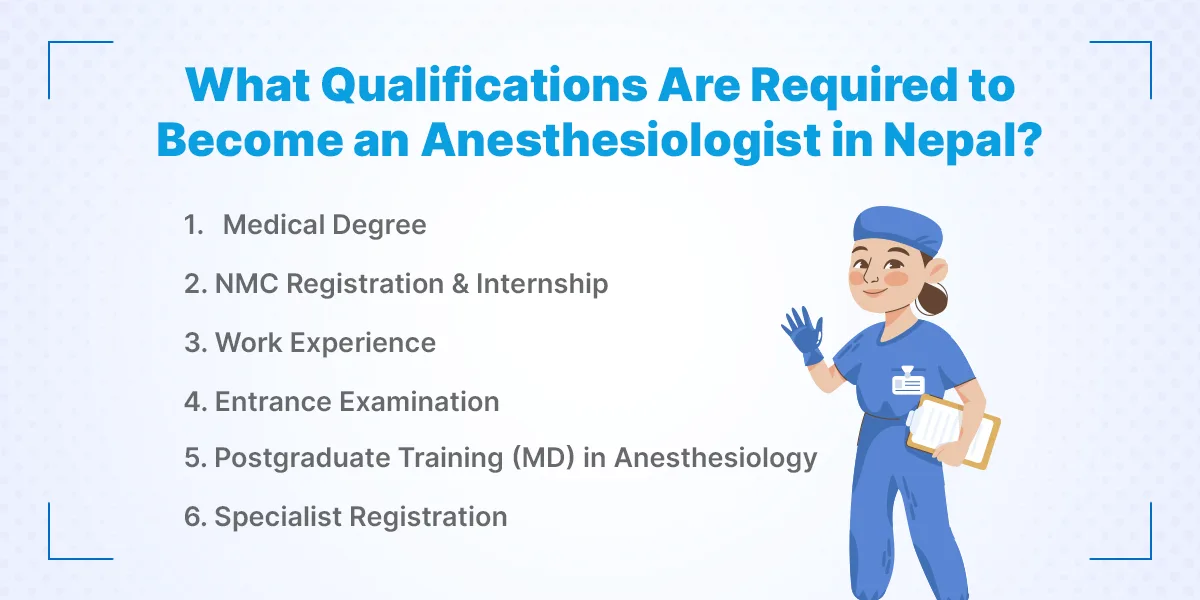
1. Medical Degree
The first step is completing an MBBS degree from a recognized medical college. This usually takes five and a half years, including practical training. The degree teaches basic medicine, surgery, and patient care. Without it, you cannot move forward in a medical career. Your foundation in medical knowledge is very important for anesthesiology.
2. NMC Registration & Internship
After MBBS, you must register with the Nepal Medical Council (NMC). Registration allows you to legally practice medicine in Nepal. You also need to complete a one-year internship in a hospital. During this time, you rotate through different departments to gain practical experience. This helps you understand patient care and hospital work.
3. Work Experience
Some hospitals or postgraduate programs prefer candidates with prior work experience. Working as a junior doctor gives you hands-on skills. You learn to handle emergencies and assist senior doctors in surgeries. Experience also builds confidence and prepares you for specialization.
4. Entrance Examination
To enter a postgraduate program in anesthesiology, you must pass a competitive entrance exam. This exam tests your medical knowledge and readiness for advanced training. Passing it is essential to get a seat in an MD program. Preparation and understanding of medical subjects are key.
5. Postgraduate Training (MD) in Anesthesiology
After passing the entrance exam, you enroll in an MD program in anesthesiology. This training usually takes three years. You learn advanced anesthesia techniques, patient monitoring, pain management, and critical care. You also gain experience in different types of surgeries.
6. Specialist Registration
Finally, after completing the MD program, you must register as a specialist with the NMC. This allows you to work as a certified anesthesiologist in Nepal. Specialist registration proves your qualification and expertise. It is the last step before starting an independent career in anesthesiology.
Why is the Demand for Anesthesiologists Growing in Nepal?
The demand for anesthesiologists in Nepal is rising due to more surgeries, limited trained professionals, and growth in private healthcare. Anesthesiology is becoming one of the most needed medical fields in Nepal. Hospitals need skilled doctors to handle surgeries safely and manage critical care. At the same time, not enough trained anesthesiologists are available, which increases demand. With the right skills and experience, you can find thousands of job opportunities today in Nepal. Here are some reasons why this job remains in demand:
- Rise in surgeries: Hospitals are performing more surgeries every year, including emergency and specialized operations. Anesthesiologists are needed in every operation to keep patients safe.
- Growth of ICU and critical care units: More hospitals now have ICUs and critical care units. These departments rely heavily on anesthesiologists to monitor patients continuously.
- Limited number of trained professionals: There are fewer anesthesiologists compared to the number of surgeries and ICU patients. This shortage makes skilled doctors very valuable.
- Expanding private healthcare market: Private hospitals are growing quickly in cities like Kathmandu and Pokhara. They need anesthesiologists for surgeries and ICU care, often offering better pay.
- Opportunities for career growth: Because of the high demand, anesthesiologists can find better job security, promotions, and chances to specialize. New doctors have many paths to build their careers.
Overall, more surgeries, fewer trained professionals, and private hospital growth make anesthesiology a highly demanded career in Nepal.
Challenges Faced by Anesthesiologists in Nepal
Being an anesthesiologist is rewarding, but it comes with many challenges. The job can be stressful and demanding at times. Doctors have to make critical decisions quickly to save lives. Understanding these challenges helps you see both the reality and the dedication required in this field.
1. High Workload and Burnout
Anesthesiologists often work long hours, especially in busy hospitals. They handle multiple surgeries and emergency cases in a single day. Constant alertness is required to monitor patients and adjust anesthesia levels. This can lead to mental and physical exhaustion. Burnout is common, especially for doctors with little rest between shifts. Hospitals sometimes struggle to provide enough staff, increasing the workload. Managing stress becomes essential to maintain performance and health.
2. High-Risk Job
The job carries a high level of risk because anesthesiologists deal directly with life-supporting systems. A small mistake in dosing or monitoring can have serious consequences. They must be ready for sudden complications during surgery. This constant responsibility can be stressful, but it is part of the profession. Proper training and experience help reduce risks, but the pressure remains high.
3. Work-Life Balance Issues
Anesthesiologists often work irregular hours, night shifts, and emergency calls. This can affect personal life and family time. Long hours and on-call duties make it difficult to maintain a routine. Balancing professional responsibilities and personal life is a common struggle in this field. Those who manage it well usually have better job satisfaction.
4. Limited Resources in Rural Settings
Many rural hospitals in Nepal have fewer machines, medicines, and trained staff. Anesthesiologists working in these areas face extra challenges. They often have to improvise while ensuring patient safety. The lack of proper equipment makes their job harder and more stressful. Despite these challenges, rural anesthesiologists play a crucial role in saving lives.
Salary Comparison with Other Medical Specialties
Anesthesiologists in Nepal earn a solid income, often well above the average salary in Nepal. However, their pay differs from other medical specialties. Comparing salaries helps students and young doctors understand which careers offer higher income and growth opportunities. Salaries can still vary depending on experience, hospital type, and extra responsibilities, so knowing the differences is important.
General physicians in Nepal usually earn less than anesthesiologists. Fresh doctors may start with around NPR 30,000–50,000 per month, and mid-level physicians might earn up to NPR 80,000–1,00,000. Their workload is often heavy, but the pay is generally lower because surgeries and critical care require higher responsibility.
Surgeons, on the other hand, tend to earn more than anesthesiologists, especially in private hospitals. Experienced surgeons in specialized fields can earn significantly higher than most anesthesiologists. For example, if we look at a highly specialized doctor like a neurosurgeon, the neurosurgeon's salary in Nepal is usually much higher, often crossing NPR 2,00,000 per month in top hospitals. These are considered among the highest-paying jobs in the medical field due to the complexity, risk, and expertise required.
Other specialists, like cardiologists or orthopedic surgeons, may also earn more than anesthesiologists, depending on their experience and private practice opportunities. However, anesthesiologists still have a stable and growing income, especially if they take on ICU responsibilities, teaching roles, or private practice work.
In short, anesthesiologists earn well compared to general doctors but slightly less than highly specialized surgeons. Their income is reliable, opportunities are growing, and the demand is high, making it a rewarding career choice for aspiring doctors in Nepal.
Conclusion
Becoming an anesthesiologist in Nepal is a rewarding career that combines skill, responsibility, and opportunity. Anesthesiologists play a crucial role in surgeries, ICU care, and emergency situations, making their work highly valued. Salaries vary based on experience, hospital type, and extra duties like teaching or private practice, but overall, the profession offers a stable and growing income.
Despite challenges such as long hours, high responsibility, and limited resources in rural areas, anesthesiology provides career growth, respect, and financial security. Compared to general physicians, anesthesiologists earn well, and while specialized surgeons may earn more, anesthesiology remains a promising and reliable medical field. For anyone pursuing medicine, this specialty offers both meaningful work and rewarding opportunities.
Looking for your next healthcare opportunity? Explore the best healthcare jobs in Nepal and take the next step in your medical career.
Frequently Asked Questions
Submit your comments

Get Our App On



SEO Training for Freshers in Nepal: Skills, Career & Job Opportunities
VIEW DETAILS
SEO Training vs. Self-Learning: Which Is Right for You?
VIEW DETAILS
How to Choose Between Two Job Offers
VIEW DETAILS
Digital Marketing Training Interview Questions and Answers for Freshers
VIEW DETAILS


Loading Comments...