


Are you confused about which skill can secure growth, income stability, and career flexibility in the coming years? Many learners struggle with outdated degrees, limited job options, and slow professional progress. Rising competition and changing hiring demands make skill selection stressful. Choosing wrongly can cost years of effort.
In this blog, Is Digital Marketing Worth Learning in 2026? is explored through career demand, skills, opportunities, income scope, and learning paths. Each section explains practical value, market relevance, and long-term potential. This guide helps readers decide whether digital marketing fits future career goals.
In this blog
What is Digital Marketing?
Digital marketing is the promotion of products or services using online channels such as search engines, social media platforms, websites, email, and paid advertising. Businesses use digital strategies to reach target audiences, generate leads, and drive sales through measurable online activities. This approach focuses on data, user behavior, and performance tracking.
Digital marketing helps brands connect with customers across devices and platforms in real time. Marketers analyze traffic, engagement, and conversions to improve results. Skills include content creation, search optimization, paid advertising, and audience targeting. Demand grows as businesses shift budgets from offline promotion to online growth.
Is Digital Marketing Worth Learning in 2026?
Yes, digital marketing is worth learning in 2026 because it continues to grow as businesses prioritize online presence, customer engagement, and measurable results. The field offers career flexibility, high demand, and multiple opportunities for income and skill development. Learning digital marketing equips individuals with practical skills that are relevant across industries, making it a valuable investment for future career growth.
Reasons Why Digital Marketing is Worth Learning:
- Businesses are increasingly shifting budgets from traditional marketing to online platforms.
- High demand for skilled digital marketers across industries ensures job security.
- Offers opportunities for freelancing, remote work, and entrepreneurship.
- Careers in digital marketing provide flexibility in role selection and industry exposure.
- Skills like SEO, social media, and content marketing are transferable across businesses.
- Continuous learning keeps professionals relevant with emerging trends and technologies.
- Entry-level to managerial roles allow career progression and higher earning potential.
Why Digital Marketing Is Still a High-Demand Skill in 2026?
Digital marketing is still a high-demand skill because businesses increasingly rely on online channels to reach, engage, and convert customers. Companies need professionals who can manage campaigns, analyze data, and optimize strategies for maximum return on investment. The rapid growth of e-commerce, social media platforms, and digital advertising tools makes these skills crucial for both startups and established companies. Individuals with expertise in digital marketing remain competitive in the job market, and companies actively seek talent to maintain online visibility and drive growth. The scope of digital marketing continues to expand, offering diverse career paths and long-term opportunities.
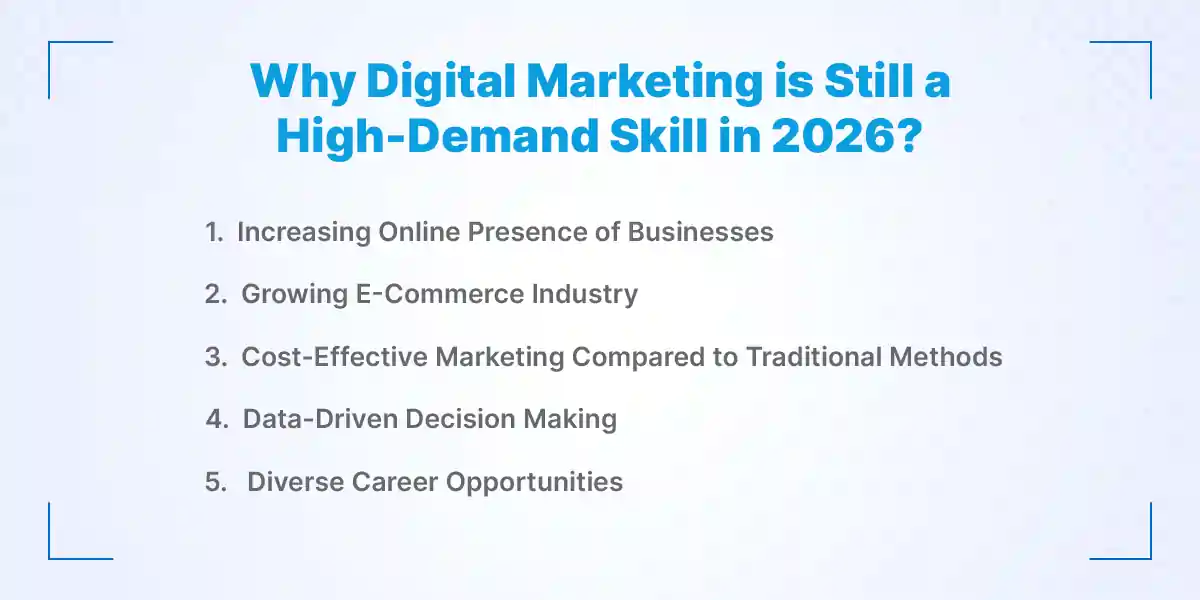
1. Increasing Online Presence of Businesses
Businesses of all sizes are expanding their digital footprint to reach wider audiences. Websites, social media pages, blogs, and mobile apps are now essential for customer engagement. Skilled digital marketers help design strategies that improve brand visibility, attract traffic, and retain customers. Companies without strong online presence risk losing market share to competitors. Developing creative campaigns further strengthens brand recognition and customer loyalty.
2. Growing E-Commerce Industry
The e-commerce sector continues to expand rapidly, driving demand for digital marketing expertise. Online stores require SEO, paid advertising, email campaigns, and social media marketing to generate traffic and sales. Marketers optimize product listings, manage promotions, and analyze consumer behavior to increase conversion rates. This growth ensures a steady need for professionals who can support digital sales channels. E-commerce expansion also opens opportunities in niche markets and specialized marketing roles.
3. Cost-Effective Marketing Compared to Traditional Methods
Digital marketing offers measurable results at a lower cost than traditional advertising like TV, print, or radio. Businesses can run targeted campaigns, monitor performance in real time, and adjust strategies efficiently. Skills in paid ads, social media campaigns, and search engine marketing allow companies to achieve higher ROI with limited budgets. This cost advantage keeps digital marketers in high demand. Efficient allocation of resources allows companies to scale campaigns without excessive spending.
4. Data-Driven Decision Making
Digital marketing relies heavily on analytics to track performance and optimize strategies. Professionals analyze website traffic, ad campaigns, and customer interactions to improve outcomes. Knowledge of tools like Google Analytics, social media insights, and reporting dashboards is essential. Companies value marketers who can make informed, data-backed decisions that boost efficiency and sales. Data insights also help predict trends and refine future marketing strategies.
5. Diverse Career Opportunities
Digital marketing offers roles across industries, from startups to multinational corporations. Positions range from SEO specialists and content marketers to social media managers and paid ads experts. Freelancing, consulting, and remote work options expand career flexibility. This variety ensures continuous demand and multiple pathways for skill application and growth. Professionals can also specialize in high-demand niches like video marketing or influencer management.
Types of Digital Marketing You Can Learn in 2026?
Types of digital marketing you can learn in 2026 cover strategies that help businesses grow their online presence, attract customers, and generate measurable results. Each type focuses on a specific channel or method, requiring unique skills and practical knowledge. Learning multiple digital marketing domains increases employability and career flexibility. Mastering these areas enables professionals to design campaigns, analyze data, and optimize performance across platforms.
1. Search Engine Optimization (SEO)
SEO involves optimizing websites to rank higher on search engine results pages (SERPs) for targeted keywords. Professionals work on both on-page SEO, including meta tags, content optimization, and internal linking, and off-page SEO, such as backlinks and domain authority building. Technical SEO ensures fast loading speed, mobile-friendliness, and proper site structure. Effective SEO improves organic traffic, brand visibility, and conversion potential. Continuous algorithm updates require marketers to stay current with best practices. Advanced SEO training equips professionals with in-depth knowledge and practical skills to excel in complex optimization projects.
2. Search Engine Marketing (SEM)
SEM focuses on paid advertising campaigns, primarily through platforms like Google Ads and Bing Ads. Marketers design keyword-targeted ads, manage budgets, and optimize campaigns for maximum ROI. Skills include bid management, ad copywriting, audience segmentation, and performance tracking. SEM delivers immediate traffic and measurable results, complementing long-term SEO strategies. Regular monitoring and A/B testing improve campaign efficiency and reduce costs.
3. Social Media Marketing
Social media marketing leverages platforms such as Facebook, Instagram, LinkedIn, and TikTok to promote products or services. Professionals create engaging content, manage posting schedules, and analyze engagement metrics. Paid social campaigns allow precise audience targeting based on demographics, interests, and behavior. Social media marketers also handle community management, brand reputation, and influencer collaborations. Continuous trend analysis ensures campaigns remain relevant and effective.
4. Content Marketing
Content marketing involves creating valuable and relevant material to attract and retain audiences. This includes blogs, videos, infographics, podcasts, and e-books. Marketers focus on storytelling, search optimization, and aligning content with the buyer’s journey. High-quality content builds trust, authority, and engagement, ultimately driving conversions. Performance metrics such as page views, shares, and time on site guide strategy improvements.
5. Email Marketing
Email marketing uses targeted email campaigns to nurture leads, build customer relationships, and drive sales. Skills include list segmentation, personalization, subject line optimization, and campaign analytics. Marketers design newsletters, promotional emails, and drip campaigns to maintain engagement. Proper email marketing increases retention rates and encourages repeat business. Compliance with anti-spam laws and regular testing is essential for success.
6. Affiliate and Influencer Marketing
Affiliate and influencer marketing involves collaborating with third-party promoters to increase reach and sales. Affiliate marketers manage partner relationships, track performance, and optimize commission-based campaigns. Influencer marketing focuses on working with social media personalities to promote products authentically to their audience. Both strategies rely on tracking, reporting, and performance-based optimization to maximize ROI. These methods expand brand visibility beyond owned channels
Career Opportunities in Digital Marketing in 2026
Digital marketing offers diverse career opportunities in 2026, spanning entry-level to senior positions across industries. The demand for skilled professionals continues to grow as businesses increase online spending. Roles vary from technical positions like SEO and paid ads to creative jobs in content and social media management. Freelancing and remote work further expand career flexibility. With proper skills and certifications, professionals can progress quickly and specialize in high-demand areas. Digital marketing career in Nepal provides local opportunities for growth, skill application, and long-term professional advancement.
1. Digital Marketing Executive
Digital Marketing Executives handle overall online campaigns, including SEO, social media, content, and email marketing. They coordinate between teams, implement strategies, and track performance metrics. Entry-level executives gain exposure to multiple marketing channels, preparing them for specialized or managerial roles. Strong organizational and analytical skills are crucial for success. They also monitor competitor activities to adjust strategies effectively.
2. SEO Specialist
SEO Specialists focus on improving website rankings and organic traffic. They conduct keyword research, optimize on-page and off-page elements, monitor analytics, and stay updated with search engine algorithms. Their work directly impacts visibility, lead generation, and brand authority. Proficiency in tools like Google Analytics, Ahrefs, or SEMrush is essential. SEO specialists also collaborate with content teams to align strategies with business goals. SEO jobs offer opportunities to apply these skills across industries and grow professionally.
3. Social Media Manager
Social Media Managers plan and execute campaigns on platforms like Facebook, Instagram, LinkedIn, and TikTok. They create content calendars, engage with audiences, run paid campaigns, and track metrics. Managers also develop strategies to increase brand awareness and community engagement. Creativity, communication, and trend analysis are key skills. They frequently test content formats and posting times to maximize reach and engagement.
4. Content Marketing Strategist
Content Marketing Strategists plan and produce content aligned with business goals and audience needs. They manage blogs, videos, infographics, and newsletters, ensuring relevance and SEO optimization. Strategists analyze engagement metrics to improve campaigns and guide marketing teams. Storytelling, research, and analytical thinking are critical for this role. They also coordinate with designers, writers, and social media teams to maintain consistency across channels.
5. Paid Ads / PPC Specialist
PPC Specialists manage paid advertising campaigns on Google, social media, and other platforms. They handle bid strategies, ad creation, audience targeting, and performance tracking. Specialists optimize campaigns to achieve maximum ROI while reducing costs. Knowledge of ad platforms, analytics, and A/B testing is essential. They also prepare reports and recommendations to improve future campaigns.
6. Freelance and Remote Jobs
Freelancing allows professionals to work independently for multiple clients in SEO, content, social media, or paid ads. Remote roles provide flexibility to work from anywhere while contributing to global projects. Freelancers must manage timelines, communication, and deliverables efficiently. Continuous skill updates and networking enhance opportunities and earnings. They also build personal brands to attract long-term clients and projects.
Where to Learn Digital Marketing in 2026?
You can learn digital marketing in 2026 in training centers like Kumari Job, which offer structured programs covering SEO, social media, content marketing, and paid campaigns. These programs provide practical experience, live projects, and guidance from experienced professionals. Online resources, blogs, and internships complement formal training, helping learners gain hands-on skills. Choosing the right platform ensures an updated curriculum, career support, and real-world exposure. Learning from multiple sources enhances understanding and prepares students for industry demands.
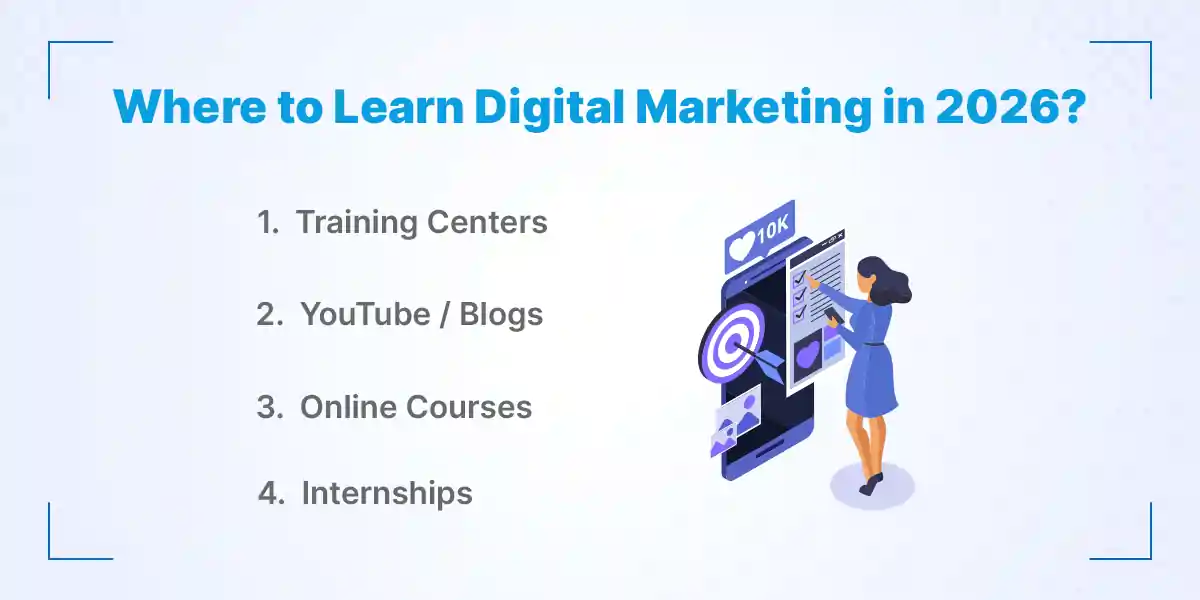
1. Training Centers
Training centers like Kumari Job provide structured programs with experienced instructors, practical assignments, and live project exposure. They cover key domains such as SEO, content marketing, social media, and paid campaigns. Students receive mentorship, personalized feedback, and career guidance throughout the course. Certification from such centers adds credibility to your profile, making it easier to secure jobs. The programs are designed to provide value for money by combining theoretical knowledge with hands-on practice, ensuring learners gain skills that can be directly applied in real-world marketing roles. Flexible classroom or online batch options allow students to choose based on their schedule. Advanced digital marketing training in Kathmandu equips learners with in-depth knowledge and practical expertise to excel in competitive roles.
2. YouTube / Blogs
YouTube channels and digital marketing blogs offer free tutorials, case studies, and strategy insights. Learners can access step-by-step guides, tools, demonstrations, and expert advice at their own pace. Following credible channels ensures accurate and up-to-date information. Regular practice and applying tips from videos or blogs help build practical skills. Combining multiple content sources provides a broader understanding of digital marketing techniques.
3. Online Courses
Online courses from platforms like Coursera, Udemy, or Skillshare provide comprehensive digital marketing training. They cover SEO, social media, content marketing, paid ads, and analytics. Interactive modules, quizzes, and project assignments enhance learning retention. Many courses offer certificates recognized by employers. Flexible schedules allow learners to balance study with work or other commitments.
4. Internships
Internships offer hands-on experience in real-world digital marketing projects. Interns work on SEO, social media campaigns, content creation, and paid ads under professional guidance. This exposure builds practical knowledge, a portfolio, and industry contacts. Digital marketing internships often lead to job offers or freelance opportunities. They help bridge the gap between theoretical knowledge and applied marketing skills.
Conclusion
Learning digital marketing in 2026 is a smart investment for anyone seeking career growth, flexibility, and high-demand skills. With businesses increasingly shifting online, professionals trained in SEO, social media, content marketing, and paid advertising remain essential. Structured learning through training centers like Kumari Job, online courses, and internships ensures practical skills, industry exposure, and credibility.
A career in digital marketing offers multiple pathways, from entry-level positions to managerial roles, freelancing, and remote work opportunities. Continuous learning and adapting to new tools and trends make this field future-proof. With the right skills and practical experience, digital marketing can provide long-term career stability, earning potential, and professional growth in 2026 and beyond.
Explore more training in Nepal with Kumari Job to gain practical skills and industry-ready knowledge. Start your journey today and enhance your career opportunities in 2026.
Frequently Asked Questions
Submit your comments

Get Our App On


SEO Training for Freshers in Nepal: Skills, Career & Job Opportunities
VIEW DETAILS
SEO Training vs. Self-Learning: Which Is Right for You?
VIEW DETAILS
How to Choose Between Two Job Offers
VIEW DETAILS
Digital Marketing Training Interview Questions and Answers for Freshers
VIEW DETAILS


Loading Comments...