


Many beginners feel confused about where to start, unsure which skills matter, or how online promotion actually works. This confusion creates slow progress and weak results, leading to doubt about career moves. People want guidance that cuts noise and delivers direction they can act on. Clear structure removes fear and helps learners choose a path with confidence.
In this blog, guidance about types of digital marketing that support anyone exploring online promotion is given. Readers will learn what each branch means, how it works, and why mastering these skills boosts career value. This guide also explains learning sources, scope of digital marketing across industries, and future opportunities after gaining practical ability.
In this blog
What is Digital Marketing and Why is it Important?
Digital marketing is online promotion using websites, search engines, social platforms, email, and ads to reach people. It helps brands communicate with users, build trust, and drive sales through targeted messages. This field grows fast because buyers spend more time online and companies need visible presence to succeed. Anyone learning these skills gains practical power to promote products, services, or personal brands in a growing marketplace, and many learners strengthen experience through internships in Nepal to apply knowledge on real projects.
Why digital marketing matters:
- It improves reach by connecting businesses with massive audiences across different online spaces.
- It supports precise targeting, ensuring messages reach people who need or want the service.
- It reduces cost compared to traditional advertising, saving money while scaling impact.
- It provides live analytics, showing what works and what fails for quick improvement.
- It speeds up growth by increasing brand presence and customer interaction.
- It strengthens customer loyalty through repeated engagement and valuable content.
- It opens new career paths for learners, offering remote work, freelancing, and stable jobs.
What are the 5 Types of Digital Marketing?
Five types of digital marketing are SEO, social media marketing, content marketing, email marketing, and paid advertising. These areas help brands reach audiences, share messages, and convert interest into sales. Each branch demands different abilities yet connects to a shared goal of growth. Understanding these categories helps beginners pick a direction, build confidence, and develop strong digital marketing skills over time.
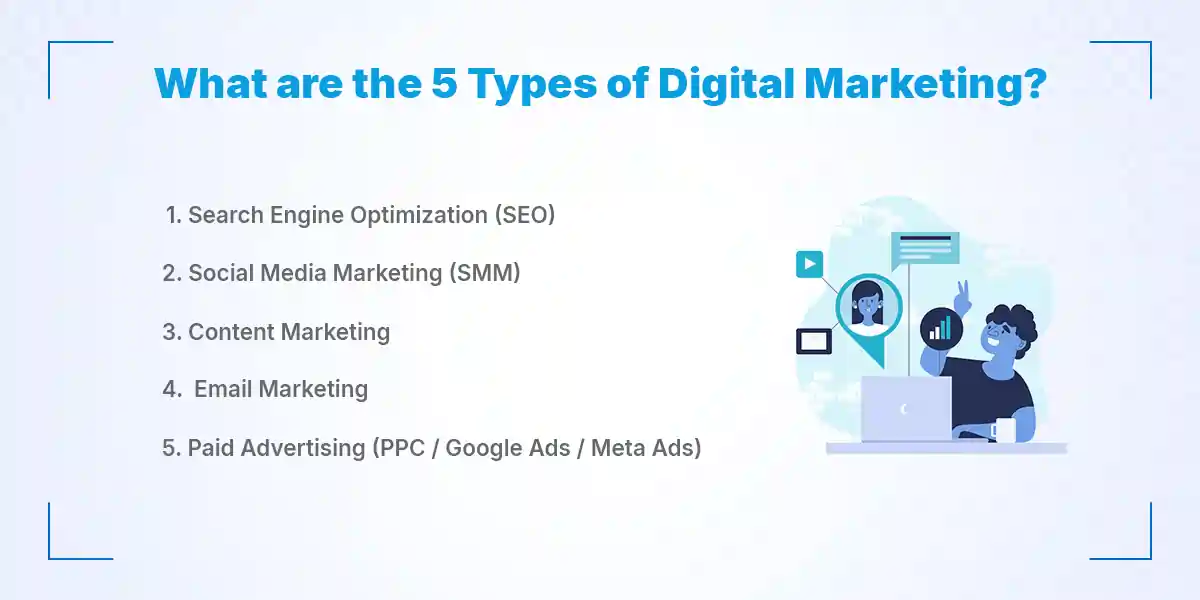
1. Search Engine Optimization (SEO)
SEO is improving pages so search engines show them higher when users search. It works through keywords, fast loading speed, useful content, and strong links pointing to pages. When done well, pages appear for searches like “best trekking company Nepal” or “accounting course Kathmandu,” creating trust without paid ads. SEO supports long term visibility that brings visitors repeatedly. People often begin with SEO because results compound over time, and many later move toward advanced SEO training to deepen skills and compete in markets like Nepal.
2. Social Media Marketing (SMM)
Social media marketing uses channels like Facebook, Instagram, LinkedIn, and TikTok to engage audiences. Brands share posts, reels, stories, or live video to build community and influence choices. Organic posting builds trust through value driven content, while paid ads boost reach and push faster action. This mix helps companies stay visible where people spend daily time. Many brands depend on this strategy to humanize connection and spark conversation.
3. Content Marketing
Content marketing shares helpful text, visuals, or video that educates or entertains. Blogs answer problems, videos show how something works, and infographics simplify knowledge. This strategy builds authority and keeps audiences returning. Good content increases SEO success and supports other channels. Consistent publishing shapes credibility and keeps interest alive.
4. Email Marketing
Email marketing sends messages directly to inboxes through newsletters, offers, or updates. It nurtures leads by guiding readers from interest to purchase through planned sequences. Tools like Mailchimp or automation workflows save time by sending messages at set stages. Strong subject lines and relevant tips keep readers active. Many companies value email because it maintains control over audience reach without platform rules.
5. Paid Advertising (PPC / Google Ads / Meta Ads)
Paid ads show messages instantly to selected audiences across Google, Facebook, and other platforms. Campaigns target age, location, interest, search terms, or behaviors, allowing precise control. Analytics show which ads work and where money should go for better outcomes. This channel boosts quick traffic and drives conversions faster than organic growth. Firms use paid ads when they need immediate results or fast testing.
Where Can You Learn Digital Marketing?
You can learn digital marketing in training institutes like Kumari Job, online platforms like HubSpot, and self paced channels such as YouTube. These sources offer structured lessons, practice tasks, and certifications useful in hiring. Learners gain skills through guided teaching or free content, depending on time and budget. Choosing any method depends on learning style, time availability, and career goals, and many people begin by searching for trusted digital marketing training centers to start their journey.
1. Online Courses
Coursera gives professional tracks taught by universities with graded projects to test skills. Google Digital Garage shares beginner friendly modules with certification useful for fresh learners. HubSpot Academy offers strong inbound marketing training with practical templates. Udemy provides wide lessons with lifetime access plus user ratings to judge quality. These platforms suit people wanting flexibility and remote study.
2. Local Institutes or Training Centers
Kumari Job delivers hands on training suited for Nepalese learners seeking job ready skills. This includes classroom guidance, live projects, and personal support which boosts confidence. Other centers also run short courses covering SEO, Ads, and social media for entry level learners. Classroom learning gives feedback, networking chances, and motivation. Many institutes promote advanced digital marketing training for deeper expertise. Learners gain exposure to peer discussions and live assignments.
3. YouTube Tutorials and Blogs
Free tutorials reveal practical steps for setting up campaigns, tracking results, or creating content. Google Search Console and Ads tutorials help people improve skills with real examples. Continuous watching and reading teaches updates fast and exposes real case studies. This learning works well when matched with practice on live accounts. Tutorials help visual learners understand workflows easily.
4. Internships
Internships introduce beginners to real client work and help them apply skills. Learners take on tasks such as social posts, campaign setup, or SEO updates under guidance. This creates a portfolio that proves ability when applying for jobs. Many training centers support placement and digital marketing internships for fresh learners to build confidence and credibility.
What Can You Do After Learning Digital Marketing?
You can build income, start a career, or launch projects after learning digital marketing. Skills gained allow people to support companies, freelance, or grow personal brands. Beginners can enter entry roles while experienced learners shift into strategy or leadership. This flexibility attracts students, job seekers, and entrepreneurs. Many learners also move into teaching or training once they gain real experience.
1. Job Roles You Can Pursue
Learners can work as SEO Specialists improving visibility for websites. Social Media Managers run pages, create posts, and track engagement. Performance Marketers handle paid ads and track conversions for return on spending. Content Writers create blogs, scripts, or captions that educate and attract users. Digital Strategists plan campaigns and guide teams for results. Companies seek these roles because demand rises across sectors.
2. Freelancing and Consulting
Freelancers offer services on platforms like Upwork and Fiverr for global clients. Digital marketers also advise local businesses needing guidance on social posts or ads. Consulting work suits people who prefer independence, project variety, and flexible hours. Earnings grow with repeat clients and strong portfolios.
3. Start Your Own Business or Brand
Blogging allows creators to earn through ads or affiliate links. Dropshipping lets people sell products online without owning stock. Agency creation gives room to provide SEO, ads, or content services to many clients. Personal branding builds trust that later converts into sales, offers, or collaborations. Many creators build careers by promoting their ideas consistently.
4. Work in Corporate or Startup Teams
Learners join marketing departments to run campaigns and track performance. Ecommerce firms need digital marketers for product promotion. Travel companies use online promotion to reach tourists and grow bookings. HR and training firms rely on content and ads to fill courses or jobs. Team roles provide stable work, structured learning, and benefits.
Who Should Learn Digital Marketing?
Anyone seeking modern career growth, business expansion, or personal branding should learn digital marketing. These skills fit students, entrepreneurs, job seekers, freelancers, creators, and career switchers. Learning them opens earning paths, helps you secure digital marketing jobs, and strengthens future opportunities.
1. Students
Students learn digital marketing to gain practical skills before entering jobs. It improves confidence because they can apply theory to real tasks. Many students also start side projects that earn income through writing, ads, or social channels. These early wins make resumes stronger and attract internship calls.
2. Entrepreneurs
Entrepreneurs use these skills to promote services, reach customers, and reduce ad spending. They understand customer behavior better and grow faster with useful insights. Knowing promotion basics helps founders test ideas before paying agencies. This control leads to smoother decision making and faster pivots.
3. Job Seekers
Job seekers learn digital skills to stand out and improve their resumes. Employers value people who help with promotion, content, or campaign support. Digital knowledge increases interview callbacks because roles demand online presence. It also provides backup freelance income while waiting for full time roles.
4. Freelancers
Freelancers use digital marketing to offer services, attract clients, and set pricing. Skills like SEO, ads, or writing generate steady projects across months. They gain freedom in location and schedule, which suits flexible lifestyles. Some freelancers eventually form agencies or teams as demand grows.
5. Creators and Influencers
Creators and influencers grow audiences through digital marketing methods. They use content, analytics, and ads to reach more people. Skills help them collaborate with brands, increase reach, and diversify income streams. Digital understanding also improves consistency and storytelling, raising audience loyalty.
6. Career Switchers
Career switchers learn digital marketing to open new job paths without starting from zero. People from sales, hospitality, education, or finance often adopt these skills because demand is high. Learning digital marketing speeds transition into roles with remote work options and steady growth. This direction suits anyone needing fresh opportunities or looking to restart their career.
Where Can You Look for Digital Marketing Jobs?
You can look for digital marketing job opportunities in job portals like Kumari Job where high quality roles are posted. Other portals, company websites, and LinkedIn listings also announce fresh openings. Networking through training centers and internships adds bonus leads. Building portfolios and applying consistently increases chances of interviews. Many companies also hire through referrals, so connecting with peers or mentors pays off. Joining local groups or attending workshops exposes learners to hidden vacancies, especially when combined with job oriented digital marketing training that improves placement chances.
Conclusion
Learning digital marketing opens doors for students, job seekers, career switchers, and entrepreneurs. It gives practical skills that apply to business promotion, personal branding, freelancing, or employment. Beginners often start with one branch, then expand into specialized areas as confidence grows.
As platforms keep changing, skill growth continues through practice, projects, and internships. Anyone willing to learn can build a career, earn income, or grow a brand through consistent effort. With clear training, portfolio building, and active job searching, digital marketing becomes a reliable path toward long term opportunity.
Explore trainings in Nepal that upgrade your skills and help you become job ready faster. Start your learning journey with Kumari Job and gain practical experience that builds confidence and career growth.
Frequently Asked Questions
Submit your comments

Get Our App On


SEO Training for Freshers in Nepal: Skills, Career & Job Opportunities
VIEW DETAILS
SEO Training vs. Self-Learning: Which Is Right for You?
VIEW DETAILS
How to Choose Between Two Job Offers
VIEW DETAILS
Digital Marketing Training Interview Questions and Answers for Freshers
VIEW DETAILS


Loading Comments...