



Nepali businesses face daily problems from skill shortages, low motivation, and outdated processes. Managers try to fix problems, but small steps often fail due to budget limits or unclear strategies. Many founders and HR staff feel stuck because challenges grow faster than solutions. This pain builds stress across operations and pushes companies toward loss of talent, unstable performance, and missed targets. Growing competition adds extra strain on groups already balancing rising workloads.
This blog contains top HR Challenges Faced by Nepali Companies and explains why each issue demands attention. HR teams gain stronger results once problem patterns become clear, goals gain structure, and improvement plans follow simple steps. Understanding these issues helps leaders build smoother hiring cycles, stronger teams, and better employee experiences.
In this blog
What is Human Resource Management (HRM)?
Human Resource Management is a system that guides hiring, training, performance support, and workplace coordination. HRM builds structure inside teams, supports employee growth, and ensures smooth operations across business roles. Clear processes help companies manage people efficiently while reducing confusion during daily tasks, and this connects closely with understanding the hr scope in nepal for long-term career growth and organizational development. Strong HRM also supports planning, goal setting, and overall workplace stability.
Core Functions of HRM
Human Resource Management covers activities that support hiring, skill growth, performance tracking, and workplace coordination. These functions help companies maintain clarity, reduce confusion, and build stronger teams. Clear systems guide staff toward steady improvement.
1. Recruitment and Selection: HR teams screen applicants, assess skills, and match individuals with role needs to build a capable workforce. Clear selection steps reduce mismatches and support stronger retention.
2. Training and Development: Training programs raise capability and align skills with current industry demands. Consistent learning builds confidence and improves performance across departments.
3. Performance Management: Performance management tracks progress using measurable goals and routine reviews. HR teams guide improvement and support accountability in daily work.
4. Compensation and Benefits: Compensation systems offer salaries and extra rewards that motivate staff and support retention. Fair pay structures help companies attract skilled applicants.
5. Employee Relations: Employee relations maintain workplace harmony through communication and issue handling. Strong relations encourage trust, teamwork, and smoother operations.
Consult with an HR Specialist Today!
Major HR Challenges Faced by Nepali Companies
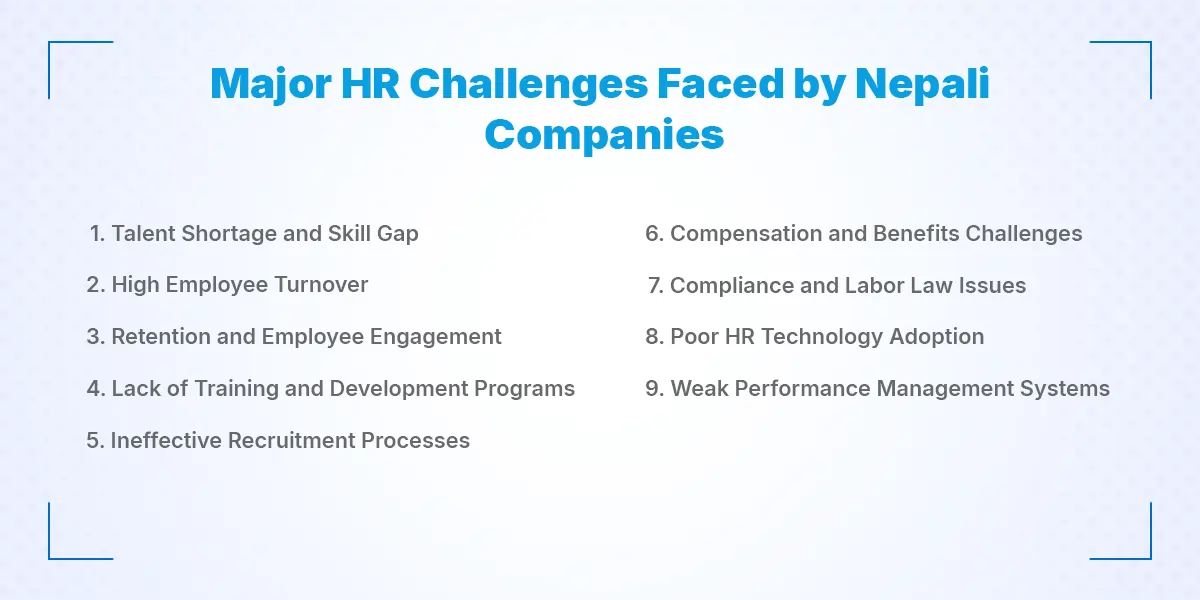
Major HR challenges faced by Nepali companies are linked to skill shortages, slow systems, and shifting workforce expectations. Many organizations operate with limited tools and unclear structures, which reduces stability. These issues weaken morale, interrupt workflow, and restrict long-term growth. Strong solutions require consistent planning and simple improvements across HR processes.
1. Talent Shortage and Skill Gap
Nepali companies face difficulty finding candidates who can handle tasks from day one. Academic courses rarely match workplace needs, widening gaps between theory and practice. HR teams spend extra time preparing staff for basic duties, raising operating costs, and this challenge grows when vacancy announcement and recruitment processes fail to reach skilled applicants. These shortages slow expansion plans and delay project execution.
2. High Employee Turnover
Many workers leave for higher salaries or overseas positions, creating constant staffing pressure. Limited growth opportunities push young employees toward roles with clearer advancement. Frequent exits disrupt workflow and increase hiring expenses. Companies lose valuable knowledge when experienced workers depart early.
3. Retention and Employee Engagement
Motivation drops when employees lack clear direction or supportive leadership. Weak culture reduces trust and teamwork across departments. Engagement falls further when recognition remains irregular, and communication stays unclear. These conditions create frustration that encourages staff to explore other opportunities.
4. Lack of Training and Development Programs
Many companies avoid training due to budget pressure or short-term priorities. Staff rarely receive learning support, slowing skill improvement and confidence. This gap lowers productivity and weakens long-term performance. Teams become less competitive when they fail to update skills consistently.
Struggling to Build a Strong Workforce in Your Company?
Let professionals handle HR policies, compliance, onboarding, and employee issues.
5. Ineffective Recruitment Processes
Hiring is slow when teams depend on manual steps and outdated methods. Delays push strong applicants toward faster employers, reducing access to talent. Confusing processes also increase mismatches between job roles and candidate strengths. These issues create recurring hiring cycles that drain time and focus.
6. Compensation and Benefits Challenges
Pay levels often fail to match market standards, especially within smaller firms. Limited benefits make roles less attractive in competitive sectors. Skilled workers leave early when salary growth remains slow or unclear. These gaps reduce employer appeal and weaken long-term retention.
7. Compliance and Labor Law Issues
Frequent policy updates require careful attention from HR teams to avoid mistakes. Missing or unclear documents increase legal risk during audits. Companies struggle when rules shift quickly, and staff lack proper guidance. These gaps create confusion that affects daily HR decisions.
8. Poor HR Technology Adoption
Low HRMS adoption forces teams to depend on paper-based systems with frequent errors. Manual attendance, payroll, and record updates slow operations and reduce accuracy. Limited digital tools make decision-making harder and less timely. Companies fall behind when they ignore simple automation options.
9. Weak Performance Management Systems
Many companies lack defined KPIs, leaving employees unsure about expected output. Informal evaluations create bias and weaken trust between staff and managers. Inconsistent feedback prevents employees from improving effectively. These issues reduce accountability and weaken overall performance quality.
10. Managing a Multigenerational Workforce
Gen Z, Millennials, and senior staff follow different communication styles and expectations. Companies struggle to balance these needs, which increases internal tension. Miscommunication grows when leaders fail to adjust approaches for each group. These differences affect teamwork, decision-making, and workplace harmony.
Get Expert Recruiting Services
How Nepali Companies Can Overcome HR Challenges?
Nepali companies can reduce HR challenges by adopting practical systems that support skill building, structured hiring, and fair growth opportunities. Strong processes create stability and help managers guide teams with clear direction. Consistent improvement across HR activities strengthens performance, reduces turnover, and supports long-term progress, and this becomes even more effective when leaders understand the benefits of hr consulting service for guiding better decisions. Focused actions allow organizations to handle workforce demands with greater confidence.
1. Strengthen Training and Upskilling Programs
Regular learning programs help employees update skills and handle tasks with better confidence. Companies that invest in workshops or practical courses build stronger teams and reduce dependency on external hiring. Upskilling also increases motivation by showing staff a clear path for improvement. These steps raise productivity and support higher-quality outcomes across departments.
2. Use HR Consulting Services
HR consulting service provides expert guidance for companies that lack internal resources. Consultants help set up systems, review gaps, and build processes that match company needs. These services support compliance, hiring structure, and performance planning with greater accuracy. Clear recommendations help leaders make faster decisions without trial-and-error delays.
3. Build Better Work Culture and Career Growth Plans
A supportive work culture increases motivation and reduces employee frustration. Clear growth paths help staff understand long-term opportunities and stay committed to their roles. Teams feel more stable when leadership communicates consistently and offers recognition. Strong culture also improves trust, teamwork, and daily cooperation.
4. Improve Recruitment Strategy
Companies gain better results when they update hiring methods and reduce manual processes. Structured screening and faster evaluations help secure skilled applicants before competitors act, especially when supported by trusted recruitment companies that broaden the talent reach. Clear job descriptions and transparent steps reduce mismatches during selection. These improvements create smoother hiring cycles and lower recruitment costs.
5. Align Compensation with Market Standards
Fair pay increases retention and strengthens employer reputation among job seekers. Companies that match market standards attract stronger talent and reduce unnecessary turnover. Competitive benefits also increase job satisfaction and long-term commitment. Updated compensation plans show employees that their contributions hold real value.
Which Company Provides the Best HR Consulting Services in Nepal?
Kumari Job provides the best HR consulting services in Nepal for companies that need structured guidance and dependable support. Their team offers practical solutions that match real workplace needs, helping organizations set up clear systems for hiring, compliance, and performance planning. Kumari Job’s services deliver strong value because they focus on actionable steps rather than complicated processes. Companies receive support that saves time, reduces errors, and strengthens overall HR stability without unnecessary costs.
Conclusion
Nepali companies face recurring HR challenges linked to skill gaps, high turnover, weak processes, and limited internal systems. These issues slow productivity and create pressure on teams that already manage heavy workloads. Many organizations struggle because outdated methods no longer match current workforce expectations.
Modern HR practices help companies run smoothly through clear structures, defined goals, and consistent support for employee growth. Updated systems improve hiring, training, performance tracking, and overall workplace coordination. Better processes also reduce confusion and strengthen daily operations.
For practical guidance that strengthens HR structure, check out the services that will help your company. These solutions help companies build stable processes, reduce confusion, and move toward steady growth.
Frequently Asked Questions
Submit your comments

Get Our App On



SEO Training for Freshers in Nepal: Skills, Career & Job Opportunities
VIEW DETAILS
SEO Training vs. Self-Learning: Which Is Right for You?
VIEW DETAILS
How to Choose Between Two Job Offers
VIEW DETAILS
Digital Marketing Training Interview Questions and Answers for Freshers
VIEW DETAILS


Loading Comments...