


Many companies and job seekers get confused when they hear the terms vacancy announcement and recruitment. It sounds like the same thing, but it isn’t. That confusion often leads to missed applicants, slow hiring, or unclear expectations from both sides.
But once you understand the difference, everything becomes easier. You know what to expect, what steps come next, and how the hiring process actually moves forward.
In this blog, we’ll break both terms down in the simplest way. No tricky words. Just clear explanations that help you understand how each one works and how they connect. By the end, you’ll know exactly why both matter and how they support different parts of the hiring process.
In this blog
What is a Vacancy Announcement?
A vacancy announcement is simply a public notice that a company is looking to hire someone. It’s the message that tells job seekers, “We have an open position, and you can apply.” Think of it as the first step that connects an employer with potential candidates. It’s not the whole hiring process, but it starts everything.
The purpose of a vacancy announcement is very clear. It helps companies reach the right people, share important job details, and invite applications. When this announcement is clear and easy to understand, it becomes much easier for job seekers to decide whether the job fits them. And for employers, it helps attract more relevant and qualified applicants.
A good vacancy announcement usually includes a few key elements. These small details help job seekers understand what the company wants and how they can apply. Here’s what most announcements include:
- Job title
- Short description of the role
- Required skills or qualifications
- Work location
- Salary range, if available
- Application deadline
- Contact details or apply link
To make it even clearer, here’s a simple example of a standard vacancy announcement:
Example:
ABC Company is looking for a Marketing Assistant. The role includes helping with content creation, social media posts, and basic campaign reporting. Applicants must have good communication skills and basic computer knowledge. The position is based in Kathmandu, and freshers can also apply. Interested candidates can send their CV to [email protected] by December 10.
This type of announcement gives job seekers everything they need to move forward and apply with confidence.
Explore Hiring and Management Tools
What is Recruitment?
Recruitment is the full process of finding the right person for a job. It starts much earlier than posting a vacancy and ends only after the new employee joins the company. Unlike a vacancy announcement, recruitment is a complete cycle that involves planning, searching, selecting, and hiring.
The recruitment process usually moves step by step. First, a company understands what kind of employee it needs. Then they search for candidates through different channels. After that comes screening, interviews, skill tests, final selection, and finally, onboarding. Each of these steps helps a company make sure they are choosing the right fit.
Recruitment is also a long-term HR activity. It’s not something done in one day or with one job post. Companies plan their hiring needs based on growth, team structure, workload, and future goals. Because of this, recruitment becomes an ongoing part of HR work, not just an action taken when a position opens.
This is why recruitment requires proper planning and strategy. A company needs to understand the role clearly, define expectations, choose the right hiring methods, filter applications carefully, and make fair decisions. It also includes background checks, reference checks, and salary discussions. Screening is an important part of this process because it helps a company shortlist the most suitable candidates from a large pool of applicants.
So, recruitment is not just one action. It’s a complete journey that helps companies build the right team and helps job seekers find roles that match their skills and goals.
Vacancy Announcement vs Recruitment: Key Differences
Vacancy announcements and recruitment sound similar, but they actually cover different parts of the hiring process. One focuses on informing job seekers, while the other focuses on selecting the right candidate. Understanding both helps employers plan better and helps job seekers know what to expect.
| Point of Difference | Vacancy Announcement | Recruitment |
|---|---|---|
| Basic Meaning | A public notice that a job is open. | The complete process of finding and hiring the right person. |
| Main Purpose | To inform job seekers and invite applications. | To select, evaluate, and hire the best candidate. |
| Scope | Narrow. It is only one step of hiring. | Broad. Covers the entire hiring cycle from planning to onboarding. |
| Timeline | Short-term, and usually happens once a job opens. | Long-term, and can continue even before and after job postings. |
| Who Handles It | Often handled by communication teams, HR, or job portals. | Handled mainly by HR, recruiters, and hiring managers. |
| Activities Involved | Writing, posting, and promoting the job announcement. | Screening, interviews, tests, evaluations, background checks, and onboarding. |
| Focus | Reaching the right audience. | Choosing the right candidate. |
| When It Happens | After the company decides to hire someone. | Starts when the company identifies a staffing need. |
| Output | Applications from interested candidates. | A final selected employee. |
| Tools Used | Job portals, social media posts, vacancy boards. | HR tools, ATS systems, interviews, tests, and screenings. |
| Decision-Making Role | Limited. It only announces the opening. | High. Recruitment drives the final hiring decision. |
What Happens After a Vacancy Announcement?
The process after a vacancy announcement moves through clear steps that take the company from collecting applications and shortlisting to interviewing and giving a final offer. Once a job post goes live, the hiring workflow becomes more structured. Each step helps the company filter applicants and find the right match for the role. And for job seekers, understanding these steps helps set the right expectations.
1. Application Collection
Right after the vacancy is posted, the company begins receiving applications through email, job portals, or an online form. This stage focuses on gathering as many relevant candidates as possible. Some companies receive a small number of CVs, while others receive hundreds, depending on the job and industry. The goal here is simply to collect information, not to judge or filter anyone yet. HR teams often organize applications into folders or tracking systems to keep everything in order. This step gives the company a full view of the available talent. It also marks the starting point of the entire selection phase.
2. Screening and Shortlisting
Once all or most applications are collected, HR begins screening them one by one. They review each CV to ensure qualifications, experience, and skills match the job requirements. That is why it is important to make a proper CV while applying. Some companies also use automated tools to speed up this process, especially when there are too many applications. After reviewing everything, HR creates a shortlist of the most suitable candidates. These candidates are then moved forward for interviews or tests. Screening helps reduce the number of applicants so the company can focus on people who are more likely to fit the role. It also saves time for both HR and hiring managers.
3. Interview Scheduling
After shortlisting, HR contacts selected candidates to schedule interviews. Depending on the company, the interview may be online or face-to-face. Sometimes there are multiple interview rounds, and HR has to coordinate the timings for each stage. This step requires clear communication so candidates know the date, time, and format of the interview. HR also informs the hiring team and blocks time on their calendar. Proper scheduling helps avoid delays and ensures both sides are well prepared. A smooth interview schedule leaves a positive impression on candidates.
4. Selection and Offer
When interviews and assessments are completed, the company decides who is the best fit for the role. HR and hiring managers review performance, interview feedback, and other details before making the final choice. Once the decision is made, HR prepares the offer letter, including salary and job terms. They contact the selected candidate to share the good news and discuss any final questions. After the candidate accepts, HR completes the paperwork and begins planning the onboarding process. This step closes the hiring cycle and officially welcomes the new employee to the company.
Need to Hire the Best Talent?
Post your vacancy on Nepal’s most trusted job portal and reach thousands of active job seekers instantly.
Common Mistakes Companies Make
Hiring becomes difficult when companies repeat the same mistakes without noticing. Many of these mistakes look small, but they affect the whole process. They slow down hiring, confuse job seekers, and reduce the chances of finding the right person. Understanding these mistakes helps companies improve their approach and make the hiring process smoother.
1. Confusing a Job Posting with Recruitment
Many companies treat a job posting as the full hiring process, which creates a big gap in expectations. A job post is only an announcement, but recruitment involves many more steps. When a company mixes these two, they either rush the process or delay it without planning. This confusion can lead to poor screening, unclear timelines, and weak communication. Job seekers also get confused when the next steps are not clear. Companies need to remember that a job post is just the starting point. Recruitment continues until the final offer and onboarding are complete.
2. Posting Unclear Vacancy Announcements
Some job posts lack important details, which makes applicants unsure about the role. Missing information like job duties, skills, or deadlines increases confusion. This leads to irrelevant applications because job seekers do not fully understand what the company wants. Clear and simple announcements attract more suitable candidates. When companies explain the role properly, it saves time during screening. It also creates a better impression of the company. A clear job post helps both the employer and the applicant.
3. Not Screening Applications Properly
A common mistake is rushing through CVs or not reviewing them deeply. When screening is weak, good candidates may get ignored, and unsuitable candidates move forward. This affects the whole hiring process later on. Proper screening gives a better shortlist and makes interviews more effective. Companies that invest a little more time in screening often find better matches. It also reduces the risk of selecting the wrong person. Good screening is one of the strongest parts of a successful recruitment process.
4. Delayed Responses to Applicants
Slow communication is another issue many companies face. When HR takes too long to reply, candidates lose interest or accept other offers. Delays also create a negative impression and reduce trust. Even a simple message like “We are reviewing your application” can keep applicants engaged. Fast responses show professionalism and respect. Clear timelines make the process easier for everyone. A timely reply helps maintain a positive relationship with job seekers and keeps the hiring process moving smoothly.
Complete Steps in a Professional Recruitment Process
Recruitment is more than just posting a job. It is a structured process that helps companies find the right candidate efficiently. Each step plays an important role in making sure both the company and the candidate benefit from the process.
1. Planning the Hiring Needs
The first step is to understand why the company needs a new employee. HR and managers decide if the role is new or a replacement. They also plan the budget, timing, and skills required. Proper planning helps avoid rushed decisions later. It ensures the company knows exactly what type of employee is needed. Without this step, the recruitment process can become confusing.
2. Preparing Job Descriptions
Next, a clear job description is created. It includes responsibilities, required skills, experience, and qualifications. A good job description helps attract the right candidates. It also ensures that applicants know what is expected. HR and managers work together to make it accurate. This step saves time during screening and interviews.
3. Vacancy Posting and Promotion
After the job description is ready, the vacancy is posted. Companies use job portals, social media, internal referrals, and websites. Promoting the vacancy widely helps reach more suitable candidates. It also increases the chances of receiving applications quickly. Clear communication in the post is very important. This step connects the company with potential applicants.
4. Application Collection
Once the vacancy is live, applications start coming in. HR collects all CVs through email, online portals, or forms. They organize the applications to make the next steps easier. This ensures no applicant is missed or overlooked. Collecting properly also makes screening faster. It sets a solid base for the rest of the process.
5. Candidate Screening and Shortlisting
After collecting applications, HR reviews each CV. They check qualifications, skills, and experience. Candidates who meet the requirements are shortlisted for interviews. Proper screening saves time and effort for both HR and managers. It also improves the chances of selecting the right candidate. Shortlisting ensures only suitable candidates move forward.
6. Interview and Skill Testing
Shortlisted candidates are invited for interviews. Depending on the role, there can be multiple rounds. Some companies also include skill tests or practical assignments. This step helps evaluate both knowledge and abilities. Clear communication of interview schedules is important. It also gives candidates professional experience.
7. Final Selection and Onboarding
After interviews and tests, the best candidate is selected. HR prepares the offer letter and discusses salary and benefits. Once the candidate accepts, onboarding begins. This includes paperwork, introductions, and basic training. A smooth onboarding process helps the new employee settle quickly. It completes the recruitment cycle professionally.
How Kumari Job Helps With Vacancy Announcements?
Kumari Job helps companies reach the right candidates by making vacancy announcements more visible and effective. Their platform handles posting, promotion, and optimization so employers can attract suitable applicants quickly. With simple tools and professional support, companies can save time and get better results.
1. Job Posting Services
Kumari Job posts vacancies directly on its platform for maximum visibility. Companies can easily upload job details and manage listings. Once posted, thousands of potential candidates can view the job. The platform allows updates and edits anytime. This simplifies the hiring process and saves time. Companies don’t need to post jobs across multiple sites manually.
2. Featured Vacancy Promotions
Vacancies can be highlighted as featured to stand out on the website. Featured jobs get more visibility and attention from job seekers. This is especially useful for urgent or high-priority roles. More views usually mean more applications from relevant candidates. Promotions help fill positions faster. It also improves the company’s brand presence on the platform.
3. Social Media Boost
Kumari Job shares vacancies on popular social media platforms. This expands reach beyond regular job portal users. Candidates who don’t actively check job sites can still see the opening. Social sharing increases engagement and applications. It also enhances the employer’s visibility online. This step complements regular posting for better results.
4. SEO-Optimized Job Listings
All job posts are optimized for search engines so candidates can find them easily. SEO helps increase traffic from Google and other search engines. More visibility leads to more applications from relevant candidates. It also strengthens the company’s online presence. SEO optimization ensures the vacancy reaches both active and passive job seekers. This makes hiring faster and more efficient.
How does Kumari Job Support Full Recruitment?
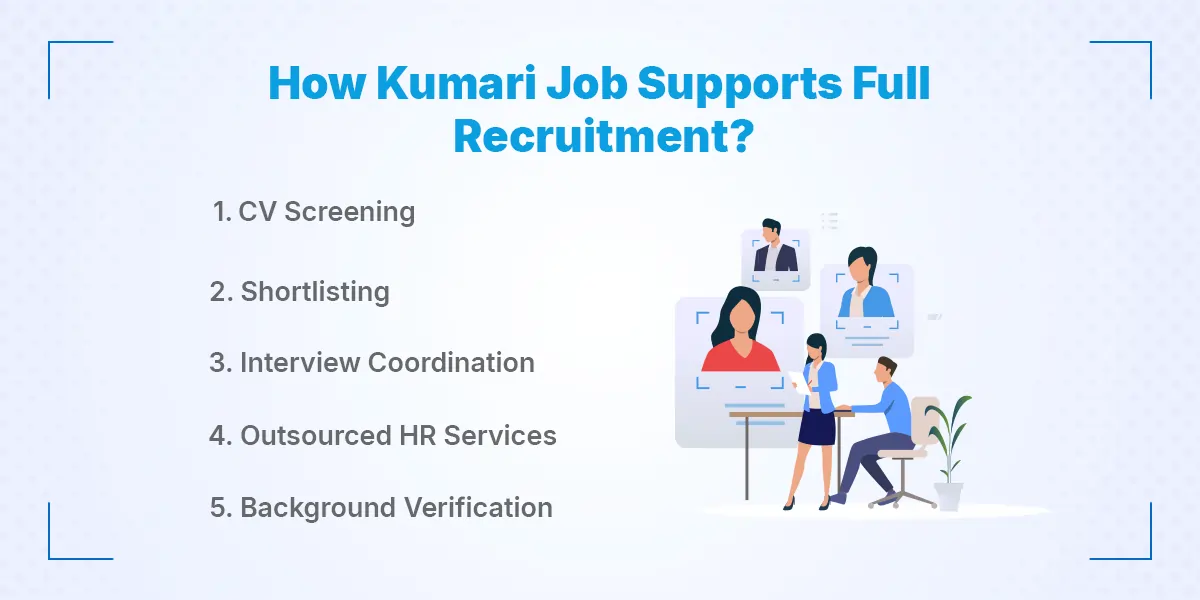
Kumari Job helps companies manage the full recruitment process by handling candidate screening, coordination, and verification. Their platform and services simplify every step so employers can focus on choosing the right fit. With professional support and organized tools, hiring becomes faster, smoother, and more reliable.
1. CV Screening
Kumari Job reviews incoming applications to identify candidates who match the job requirements. CVs are checked for skills, experience, and qualifications. This saves HR teams time and ensures only relevant candidates move forward. Screening helps maintain a high-quality shortlist. It also reduces the risk of overlooking strong candidates. Companies can trust that the initial filtering is handled professionally.
2. Candidate Shortlisting
Shortlisted candidates are selected based on their qualifications and suitability for the role. This step narrows down the pool to the most relevant applicants. Shortlisting ensures interviews are focused on the best-fit candidates. It speeds up the hiring process and improves decision-making. Employers get a ready list of top candidates to interview. This makes recruitment more organized and efficient.
3. Interview Coordination
Kumari Job schedules and manages interviews between candidates and the company. They handle communication, timings, and notifications. This avoids delays and confusion for both sides. Candidates are kept informed about the process. Employers can focus on evaluating candidates without worrying about scheduling issues. Coordinated interviews ensure a smooth experience for everyone.
4. Outsourced HR Services
Kumari Job provides support for companies that need extra HR assistance. This includes recruitment planning, applicant management, and process guidance. Outsourced services help companies save time and resources. HR teams can focus on strategic decisions while operational tasks are managed. It ensures that the recruitment process remains professional and organized.
5. Background Verification
Before final selection, Kumari Job conducts background checks for accuracy and reliability. This includes verifying education, previous employment, and references. Background verification helps prevent hiring risks. It gives employers confidence in the candidate’s profile. Candidates also feel the process is fair and trustworthy. This step ensures that the final hiring decision is safe and informed.
Conclusion
Understanding the difference between a vacancy announcement and full recruitment is essential for smooth hiring. A vacancy announcement simply informs potential candidates that a job is open, while recruitment is the complete process of finding, evaluating, and hiring the right person. Both play equally important roles, and one cannot replace the other. Companies that manage both effectively can attract the right talent faster, save time, and maintain a professional hiring experience.
For job seekers, knowing these differences sets clear expectations about what comes next after applying. With the right tools and support, like those offered by Kumari Job, employers can handle vacancy announcements and recruitment professionally, ensuring that each step leads to hiring the best-fit candidate efficiently and reliably.
Frequently Asked Questions
Submit your comments

Get Our App On



SEO Training for Freshers in Nepal: Skills, Career & Job Opportunities
VIEW DETAILS
SEO Training vs. Self-Learning: Which Is Right for You?
VIEW DETAILS
How to Choose Between Two Job Offers
VIEW DETAILS
Digital Marketing Training Interview Questions and Answers for Freshers
VIEW DETAILS


Loading Comments...