


Choosing sports as a career in Nepal can feel confusing when the obvious path seems to be becoming a professional athlete. Many students and sports enthusiasts do not realize that the sports industry also offers careers in coaching, fitness, management, physiotherapy, nutrition, analytics, journalism, photography, marketing, and event management.
Sports careers in Nepal are becoming more diverse as clubs, academies, schools, fitness centers, tournaments, media platforms, and sports organizations create different types of opportunities. This guide explains the best sports careers, required education and skills, opportunities for freshers, earning factors, career growth, and practical ways to enter the sports industry.
In this blog
What Are the Best Sports Careers in Nepal?
The best sports careers in Nepal include professional playing, coaching, fitness, sports management, healthcare, analytics, media, event management, and marketing. Your ideal career depends on your interests, education, skills, experience, and the type of sport you want to work in.
- Professional Athlete: Build a career in football, cricket, volleyball, basketball, athletics, martial arts, and other competitive sports through clubs, academies, tournaments, and national-level competitions.
- Sports Coach: Train athletes and students in schools, colleges, clubs, and sports academies while developing sport-specific knowledge, coaching skills, and relevant certifications.
- Fitness Trainer / Personal Trainer: Help clients and athletes improve strength, fitness, conditioning, and physical performance in gyms, fitness centers, sports clubs, or through private training.
- Sports Management Professional: Manage sports clubs, academies, tournaments, and organizations, with responsibilities such as administration, scheduling, coordination, and event planning.
- Sports Physiotherapist: Support athletes with injury prevention, rehabilitation, recovery, and physical conditioning in sports teams, hospitals, clinics, and fitness centers.
- Sports Nutritionist: Help athletes plan nutrition for training, performance, recovery, and overall health while working with athletes, gyms, academies, and sports organizations.
- Sports Analyst: Analyze matches, player performance, statistics, tactics, and sports data using analytical and technology-based skills.
- Sports Journalist: Cover matches, athletes, competitions, interviews, and sports news for newspapers, online media, television, magazines, and sports websites.
- Sports Photographer and Videographer: Capture matches, training sessions, athletes, tournaments, and promotional content for sports clubs, media companies, brands, and athletes.
- Sports Event Manager: Organize tournaments and sporting events while handling venues, schedules, logistics, sponsorships, promotion, and coordination.
- Sports Marketing Professional: Promote athletes, teams, clubs, events, and sports brands through branding, sponsorships, social media, digital marketing, and promotional campaigns.
- Sports Instructor: Teach specific sports and physical activities in schools, colleges, academies, clubs, and training centers while helping learners develop their skills.
Sports Careers in Nepal Based on Education and Skills
Sports careers in Nepal are available at different education levels, although specialized professions often require formal qualifications or professional certifications. Your education should match the type of sports career you want to pursue.
- After SEE: You can explore entry-level opportunities in sports academies, assistant roles, basic sports training, and supporting positions while continuing your education.
- After +2: Students can consider sports training, fitness-related programs, internships, academy opportunities, and entry-level sports administration roles.
- After a bachelor's degree: Graduates can explore sports management, physical education, marketing, journalism, analytics, administration, and other professional positions.
- Sports management graduates: Possible career paths include sports administration, event coordination, club management, sponsorship, and sports marketing.
- Fitness and physical education graduates: Potential opportunities include coaching, fitness training, physical education, sports instruction, and athlete conditioning.
- Sport-specific certification holders: Coaching and fitness certifications can strengthen applications for trainer, instructor, and coaching positions.
- Athletes without a formal degree: Competitive experience can support careers in professional sports, coaching, instruction, content creation, and sports entrepreneurship, although some specialized professions require formal education.
Sports Jobs in Nepal for Freshers
Freshers can start their careers with entry-level sports jobs in Nepal through internships, assistant positions, academy roles, fitness facilities, event support, media work, and sports content creation. The first job may not be a senior position, but practical experience can help you build the skills employers look for.
- Sports Academy Assistant
- Assistant Sports Coach
- Fitness Trainer Trainee
- Sports Event Intern
- Sports Management Intern
- Sports Journalism Intern
- Sports Photographer or Videographer Assistant
- Sports Social Media Assistant
- Sports Content Writer
- Tournament Support Staff
For someone without experience, volunteering at tournaments can be surprisingly useful because it demonstrates reliability, teamwork, communication, and exposure to real sporting operations. Creating a simple portfolio of match reports, photographs, videos, social media posts, or sports analysis can also help you stand out from candidates with only academic qualifications.
How Can You Build a Career in Sports in Nepal?
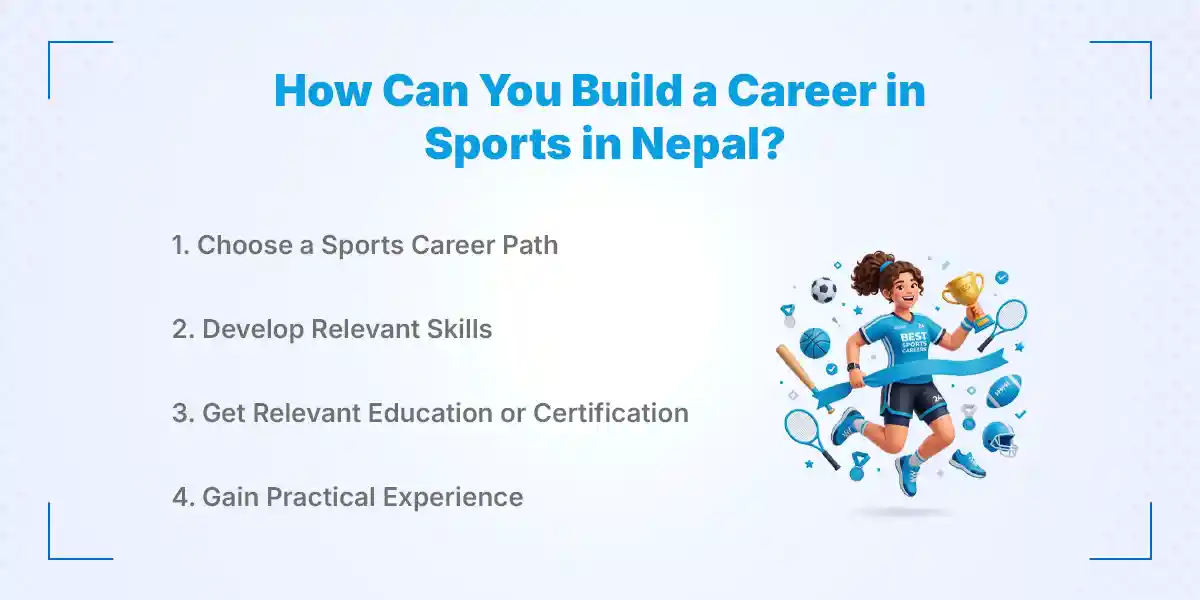
Building a sports career in Nepal requires choosing a suitable career path, developing relevant skills, gaining qualifications, and getting practical experience. You can start with a small role and gradually move toward specialized or management-level positions. The most effective path depends on whether you want to work directly with athletes, manage sports operations, or work in the business and media side of sports.
1. Choose a Sports Career Path
First, decide whether you want to become an athlete, coach, fitness professional, manager, analyst, media professional, or sports healthcare specialist. Think about whether you prefer physical work, analytical work, creative work, management, or direct interaction with athletes. Research the qualifications and entry requirements for your chosen role before investing time and money in training. A clear target makes it easier to choose relevant courses, internships, and entry-level jobs.
2. Develop Relevant Skills
Build skills that match your chosen sports career rather than trying to learn everything at once. Communication, teamwork, leadership, technical sports knowledge, digital skills, and problem-solving are useful across many sports-related jobs. For analytical roles, learn data tools and performance analysis, while media roles benefit from writing, photography, video editing, and social media skills. Regularly practicing these skills through projects or real sporting activities can make your profile stronger.
3. Get Relevant Education or Certification
Choose education or certification based on the professional requirements of your desired career. Physical education, sports management, coaching, fitness, nutrition, physiotherapy, journalism, marketing, and analytics can lead to different sports career paths. Before enrolling in a course, check whether the qualification is recognized and whether it provides practical training. The right certification can improve credibility, but it works best when combined with real-world experience.
4. Gain Practical Experience
Look for internships, volunteering opportunities, sports clubs, academies, tournaments, and local competitions where you can gain hands-on experience. Even assisting with registration, event coordination, coaching support, media coverage, or social media can teach you how the industry operates. Keep evidence of your work through certificates, references, photographs, articles, videos, or project results that can become part of your portfolio. Practical experience can help bridge the gap between academic knowledge and what employers expect from entry-level candidates.
Where Can You Find Sports Jobs in Nepal?
You can find sports jobs in Nepal through online job portals, sports organizations, clubs, academies, schools, fitness centers, media companies, event organizers, and professional networks. Checking multiple sources regularly can improve your chances because sports vacancies may be posted across different industries.
- KumariJob: Search for sports-related vacancies, internships, coaching roles, and entry-level opportunities on the job portal.
- Sports clubs and professional teams: Look for coaching, administration, fitness, media, and support positions.
- Sports academies: Explore instructor, coach, assistant, and administrative opportunities.
- Schools and colleges: Check physical education, coaching, and sports coordination roles.
- Gyms and fitness centers: Search for fitness trainer, personal trainer, and conditioning positions.
- Sports associations and organizations: Explore administration, event, development, and program roles.
- Media and broadcasting companies: Search for sports journalism, photography, video, and production positions.
- Event management companies: Look for tournament coordination, marketing, logistics, and event support jobs.
- LinkedIn and professional networks: Follow sports organizations, clubs, academies, and professionals to discover opportunities and build industry connections.
Skills Needed for a Successful Sports Career in Nepal
The most valuable skills depend on the specific career, but successful sports professionals generally combine technical knowledge with communication and workplace skills. Employers often look for people who can perform their core role while working effectively with athletes, teams, clients, managers, or audiences.
- Sports-specific technical skills: Understand the rules, techniques, tactics, and practices of your chosen sport.
- Communication: Explain ideas clearly to athletes, clients, colleagues, and audiences.
- Teamwork: Work effectively with coaches, players, officials, managers, and support staff.
- Leadership: Guide teams, manage activities, and make responsible decisions.
- Fitness and conditioning: Understand physical training when your role involves athlete or client performance.
- Coaching and mentoring: Help athletes or learners develop their skills progressively.
- Event management: Coordinate people, schedules, venues, equipment, and logistics.
- Digital marketing and social media: Promote sports teams, events, athletes, and organizations online.
- Data analysis: Use statistics and performance information to support better decisions.
- Networking: Build professional relationships with clubs, academies, athletes, employers, and industry professionals.
Salary and Earning Potential in Sports Careers in Nepal
The salary for sports jobs in Nepal can range from around NPR 15,000 to NPR 100,000+ per month, depending on the role, experience, skills, qualifications, and employer. Entry-level positions generally offer lower salaries, while experienced coaches, fitness professionals, sports managers, and specialized professionals can earn significantly more.
- Entry-level sports jobs: Freshers may earn around NPR 15,000–30,000 per month in assistant, trainee, internship, or support roles.
- Sports coaches: Coaches may earn around NPR 25,000–60,000+ per month, depending on their experience, sport, and certifications.
- Fitness trainers: Fitness and personal trainers can earn approximately NPR 20,000–50,000+ per month, with private clients providing additional income.
- Sports management and event management: Experienced professionals may earn around NPR 30,000–80,000+ per month depending on their responsibilities and organization.
- Sports media and content: Sports journalists, photographers, videographers, and content professionals may earn around NPR 20,000–60,000+ per month, with freelance work offering additional earning opportunities.
- Professional athletes: Athlete earnings can vary widely and may come from salaries, competition prizes, sponsorships, endorsements, and performance-based payments.
- Freelance and private coaching: Private coaching, personal training, sports classes, and freelance projects can increase total monthly income.
- Certifications and experience: Relevant certifications, practical experience, specialization, and a strong portfolio can help professionals qualify for better-paying sports jobs in Nepal.
Career Growth Opportunities in Nepal's Sports Industry
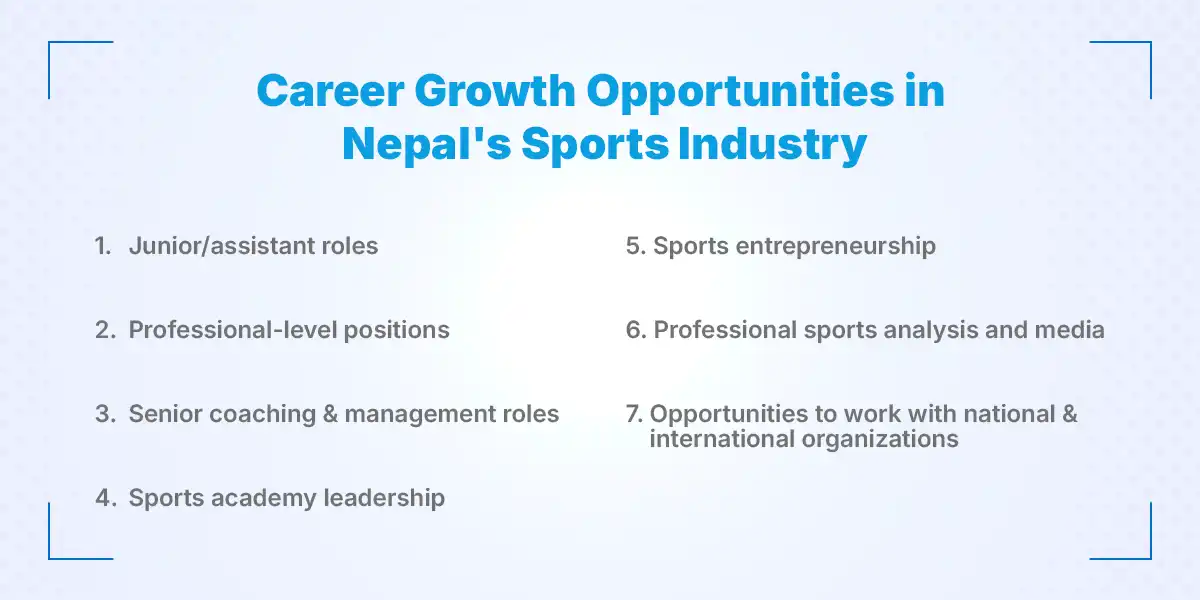
Career growth in Nepal's sports industry can progress from junior or assistant positions to professional, senior, management, leadership, and entrepreneurial roles. With experience, specialized skills, qualifications, and networking, sports professionals can move into higher-level positions or work with national and international sports organizations.
1. Junior and Assistant Roles
Beginners can start as assistant coaches, sports instructors, event assistants, fitness trainees, media assistants, or academy support staff. These roles help build practical experience and industry connections.
2. Professional-Level Positions
With experience and relevant qualifications, professionals can move into positions such as sports coach, fitness trainer, sports analyst, event manager, journalist, or sports marketing professional. Strong performance and specialized skills can help increase career opportunities.
3. Senior Coaching and Management Roles
Experienced professionals can progress to head coach, senior trainer, sports manager, team coordinator, or department leadership positions. These roles usually involve managing teams, athletes, programs, budgets, or sporting activities.
4. Sports Academy Leadership
Experienced sports professionals can become academy directors, senior coaches, program managers, or training coordinators. Leadership roles involve developing training programs, managing staff, and improving athlete development.
5. Sports Entrepreneurship
Professionals can start their own sports academy, fitness center, coaching service, sports event company, media platform, or sports-related business. Entrepreneurship allows experienced professionals to create services based on market demand and their specialized skills.
6. Professional Sports Analysis and Media
Sports analysts, journalists, photographers, videographers, and content creators can progress into senior media, broadcasting, analysis, or production positions. Developing strong technical and digital skills can create opportunities with larger sports organizations and media platforms.
7. National and International Opportunities
Experienced professionals can pursue opportunities with national sports associations, international organizations, professional clubs, tournaments, and sports development programs. Strong qualifications, proven experience, professional networks, and sport-specific expertise can improve access to these opportunities.
Conclusion
A successful sports career in Nepal does not have to begin and end with professional competition. The stronger opportunity is to identify where your natural strengths fit within the wider sports ecosystem and then build specialized skills, recognized qualifications, practical experience, and professional connections around that direction.
Whether you want to coach athletes, analyze performance, manage events, create sports content, work in fitness, or pursue a professional playing career, start building evidence of your ability instead of waiting for the perfect vacancy. For current sports vacancies and career opportunities in Nepal, explore relevant openings on KumariJob and take the next step toward your sports career.
Frequently Asked Questions
Submit your comments

Get Our App On



SEO Training for Freshers in Nepal: Skills, Career & Job Opportunities
VIEW DETAILS
SEO Training vs. Self-Learning: Which Is Right for You?
VIEW DETAILS
How to Choose Between Two Job Offers
VIEW DETAILS
Digital Marketing Training Interview Questions and Answers for Freshers
VIEW DETAILS


Loading Comments...